


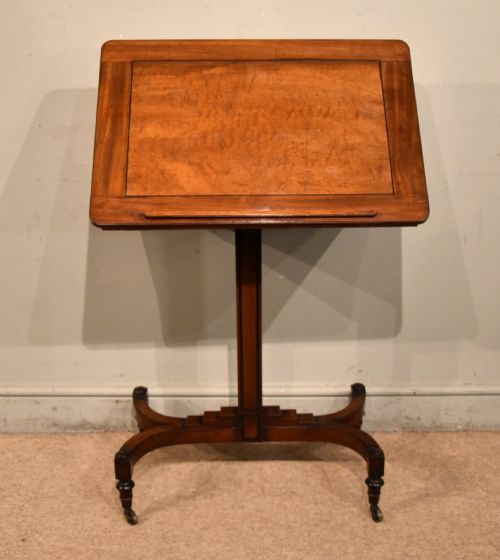
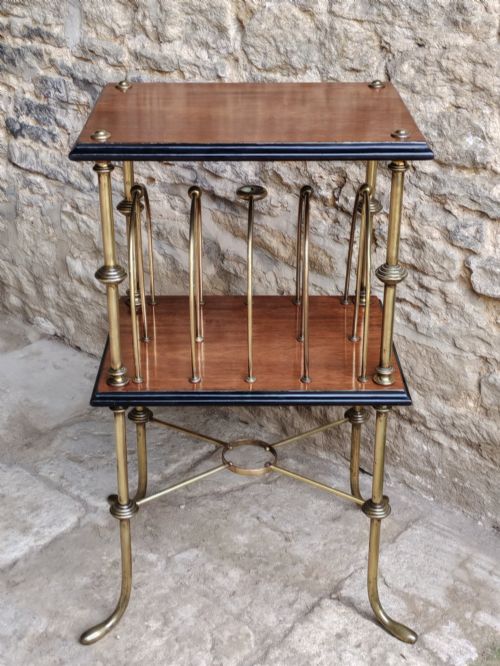
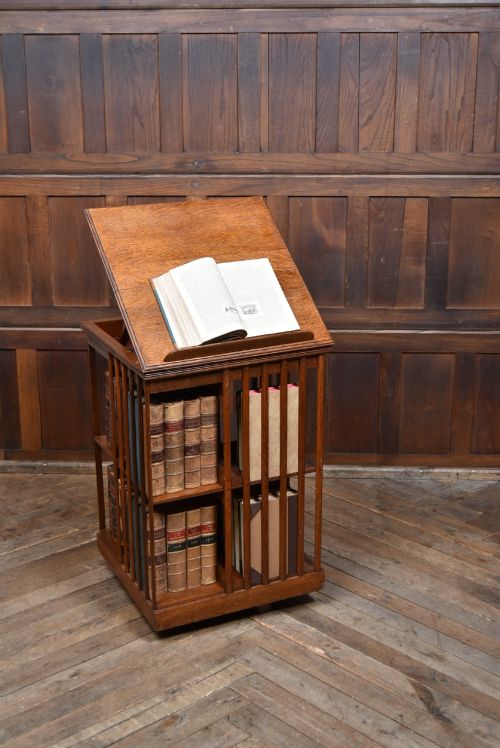
Mahogany Reading Stand
A mahogany reading stand brings practical 19th-century utility and rich timber tones directly into a modern study.
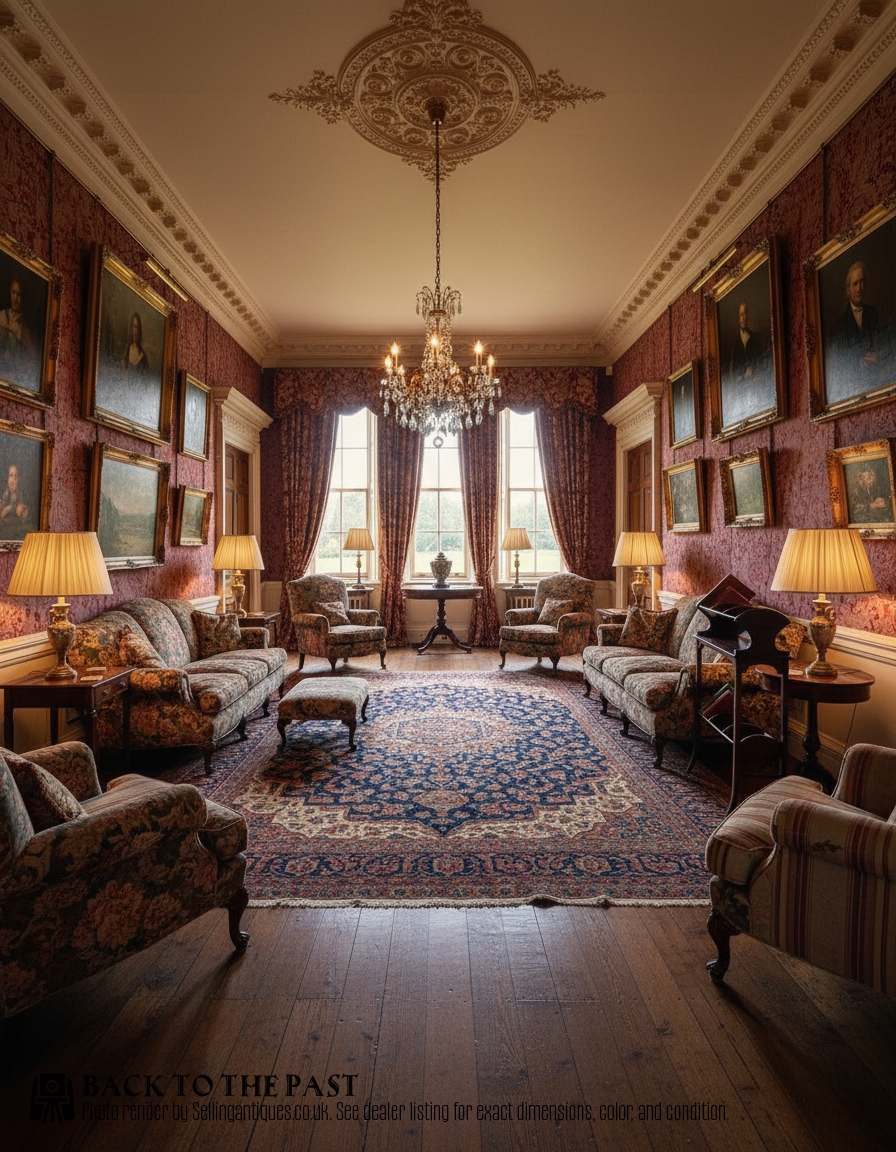
Mahogany Reading Stand
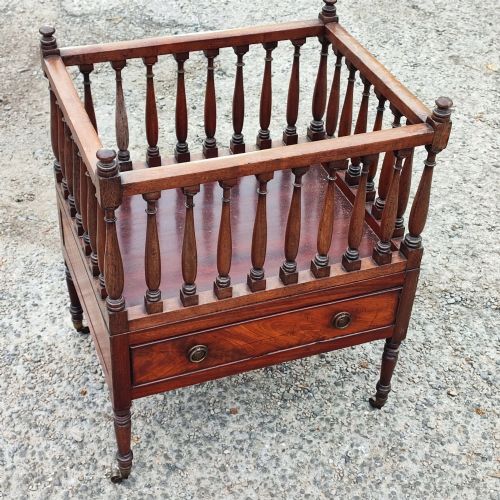
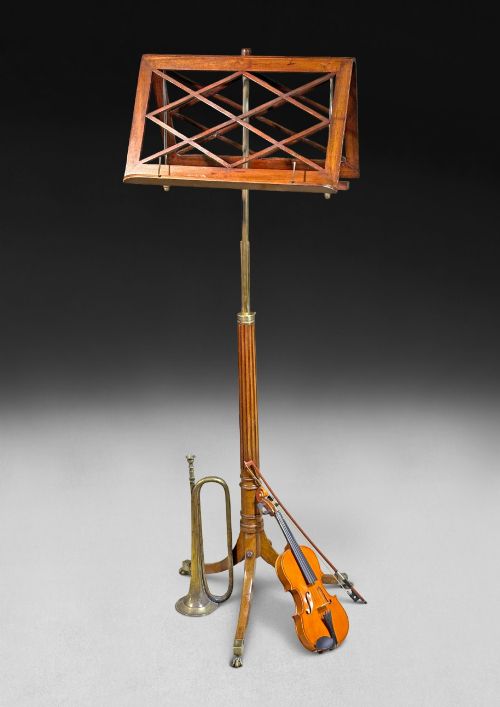
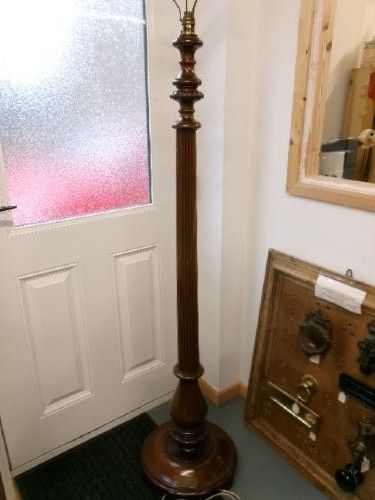
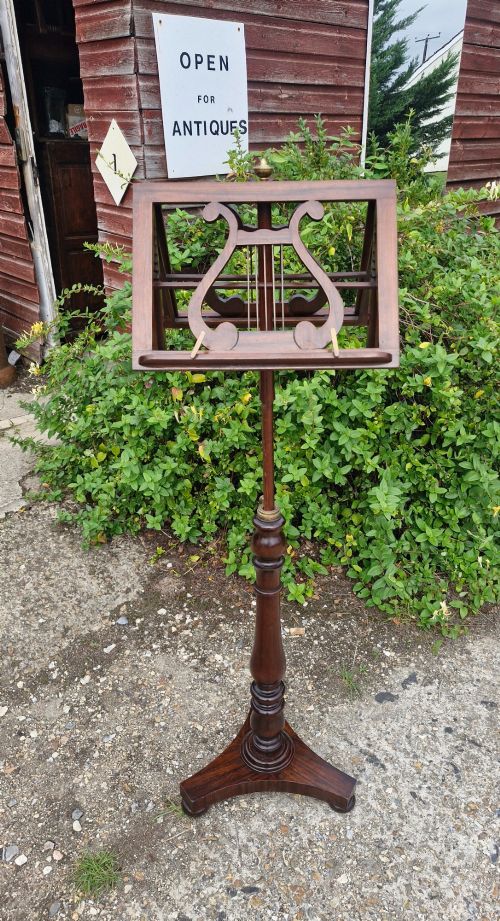
A mahogany reading stand encompasses adjustable table-top rests, floor-standing music lecterns, and multi-functional library tables designed for hands-free study. These pieces span the Georgian, Regency, and Victorian periods, reflecting a time when personal libraries required specialised furniture for heavy volumes and folios.
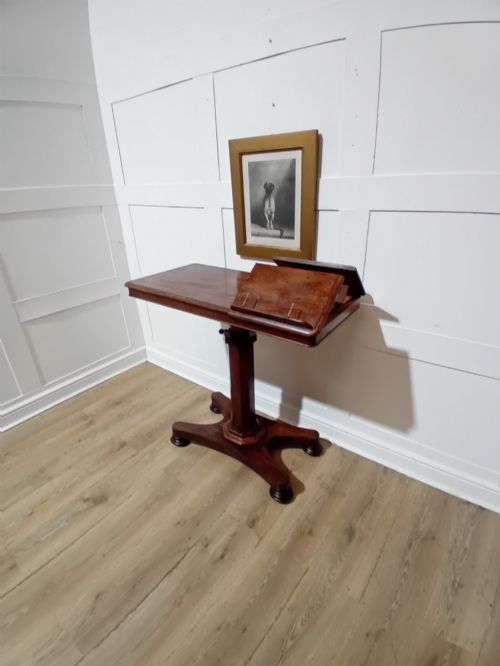
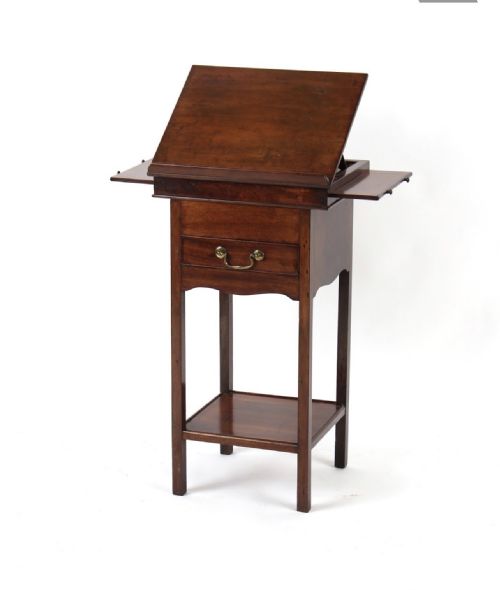
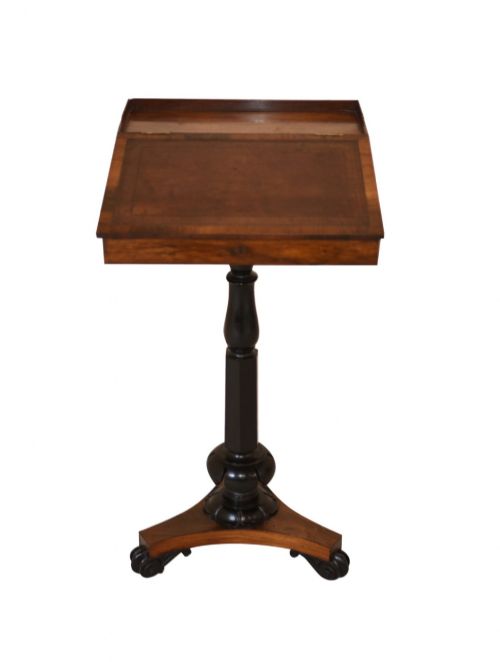
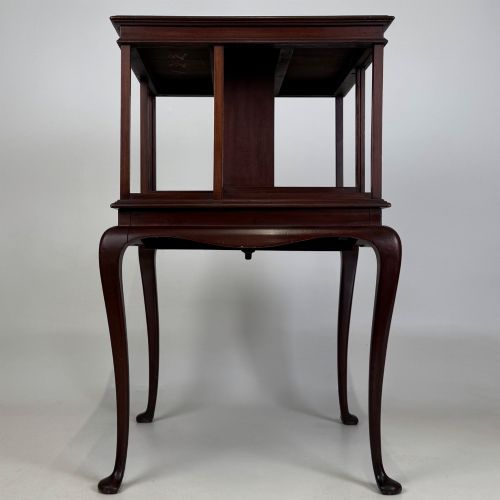
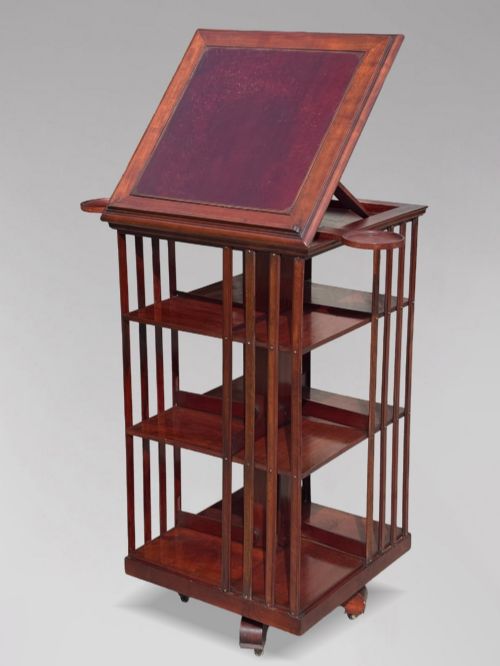
You are most likely to encounter adjustable reading tables and revolving bookcases on this page, alongside occasional library pieces fitted with brass ratchets and folding book-rests. Many examples merge the functions of a side table with a tilting book surface, serving both domestic and institutional interiors.

Materials and Technique
Makers relied primarily on solid and veneered mahogany, often selecting Cuban varieties for their deep grain and density, supplemented by secondary timbers such as oak. Construction frequently incorporates brass ratchets, screws, and sliding arms to achieve the mechanical adjustments necessary for tilting the reading surface.
Advanced mechanisms allow tables to rise and fall via central screw columns or brass mechanisms patented by makers like Carter of London. Fine details include satinwood inlay, turned supporting pillars, and castor feet designed to move heavy reading desks across library floors.
Mahogany Reading Stand Retail Price Guide 2026
Typical asking prices for mahogany reading stand among the pieces listed under this phrase on Sellingantiques today, from the lower quarter to the upper quarter. They describe what is for sale here now, not the wider market.
Listings feature mahogany, brass, and cast iron across Regency, Victorian, and Edwardian periods.
Assessing Standard and Mechanism
The distinction between standard and superior pieces rests on the complexity and original execution of the adjusting mechanism. Robust brass ratchets, smooth rise-and-fall columns, and intact brass candle arms or book retainers elevate a piece beyond simple domestic carpentry.
Timber selection and secondary detailing also define the tier of a piece, separating plain utility stands from cabinet-maker pieces featuring fine inlay, carved lyre supports, or documented workshop provenance.
Gillows·Leveson and Sons·James Mein of Kelso·Carter of London
The Mahogany Reading Stand Glossary
- Ratchet
- A mechanical notched adjustment bar that holds a reading stand's book rest at various angles.
- Metamorphic
- Furniture designed to transform from one form, such as a side table, into another, such as a reading desk or music stand.
- Whatnot
- A multi-tiered open shelving unit used for displaying or storing books and small objects, frequently paired with reading surfaces.
- Bouillotte
- A type of small table or floor lamp featuring a raised gallery edge, often adapted for reading or card playing.
- Duet stand
- A wider music or reading stand designed to accommodate two readers simultaneously.
Mahogany Reading Stand: Frequently Asked Questions
How do adjustable reading stands work?
Most antique reading stands utilise a brass ratchet mechanism mounted beneath the book rest, allowing the user to select several angles for comfortable viewing.
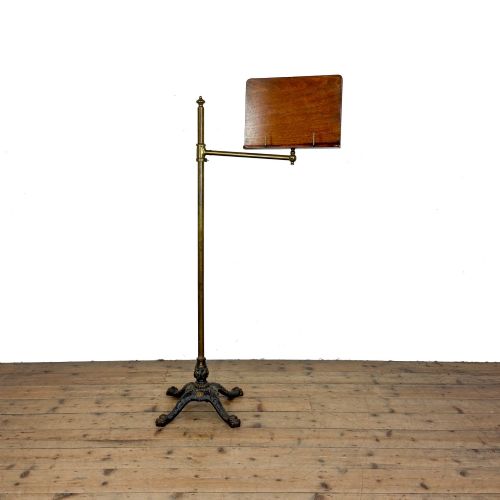
Floor-standing models often employ a central screw column or weighted rise-and-fall shaft to alter the overall height of the lectern.
Were these stands used for books or music?
They served a dual purpose for both heavy library folios and sheet music, depending on the specific form of the ledge or surface.
Tilted surfaces equipped with brass page holders generally catered to musicians, while broader flat tables with book rests suited scholars.
How do I care for mahogany timber?
Mahogany benefits from occasional treatment with traditional beeswax to nourish the grain and protect the polish from drying out.
Keep these stands away from direct heat sources and strong sunlight to prevent the timber from warping or fading over time.
How can I tell a Regency stand from a Victorian one?
Regency stands often feature clean classical lines, sabre legs, and crisp brass inlay reflecting neoclassical design preferences.
Victorian iterations tend to be heavier, incorporating more elaborate turned columns, carved details, and complex mechanical hardware.