


Adjustable Music Stand
When you search for an adjustable music stand, you find a versatile piece of furniture designed to hold scores at a workable height.
Adjustable Music Stand
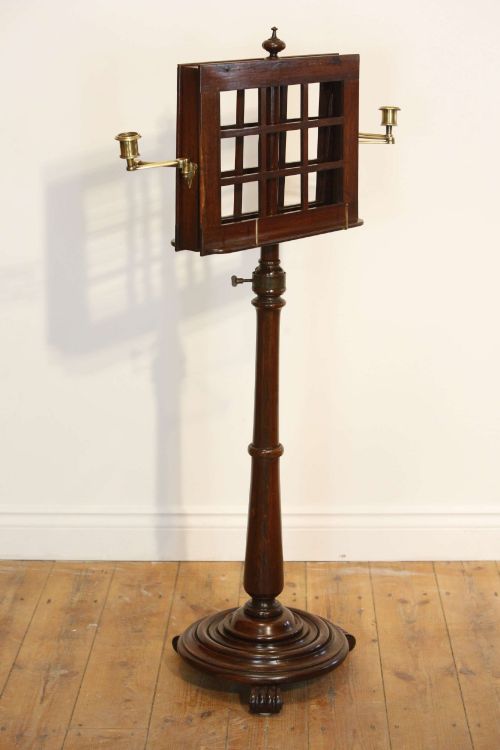
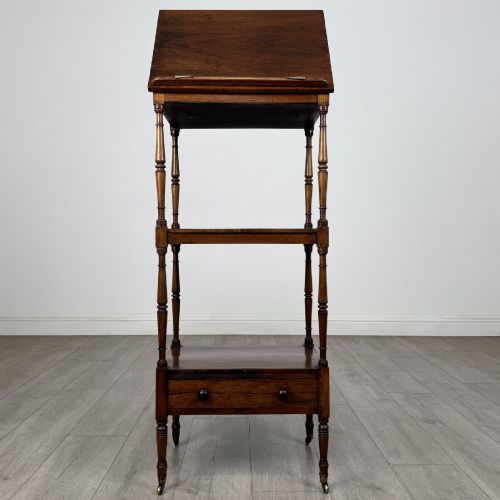
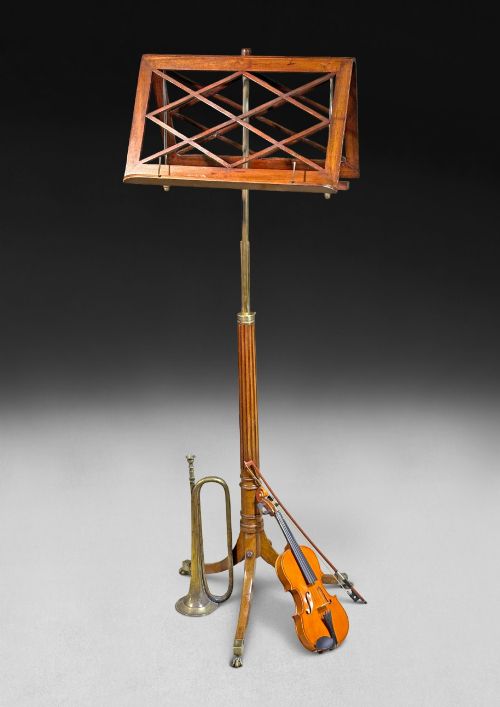
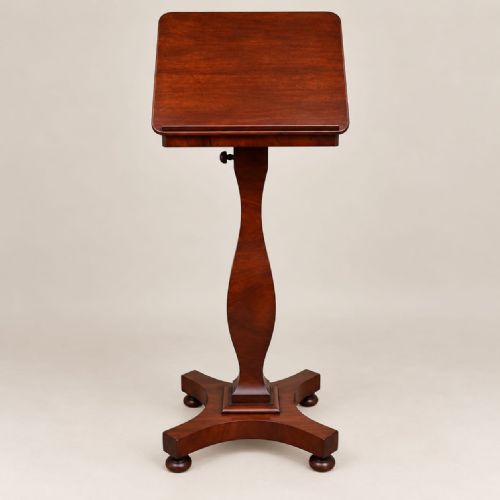
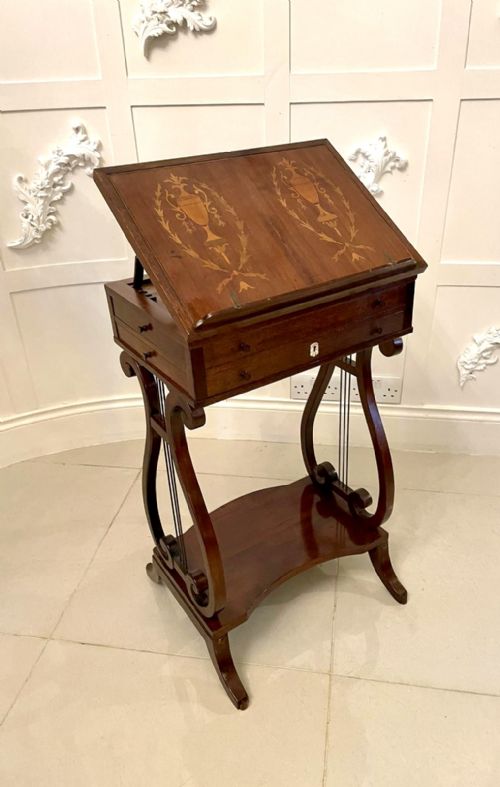
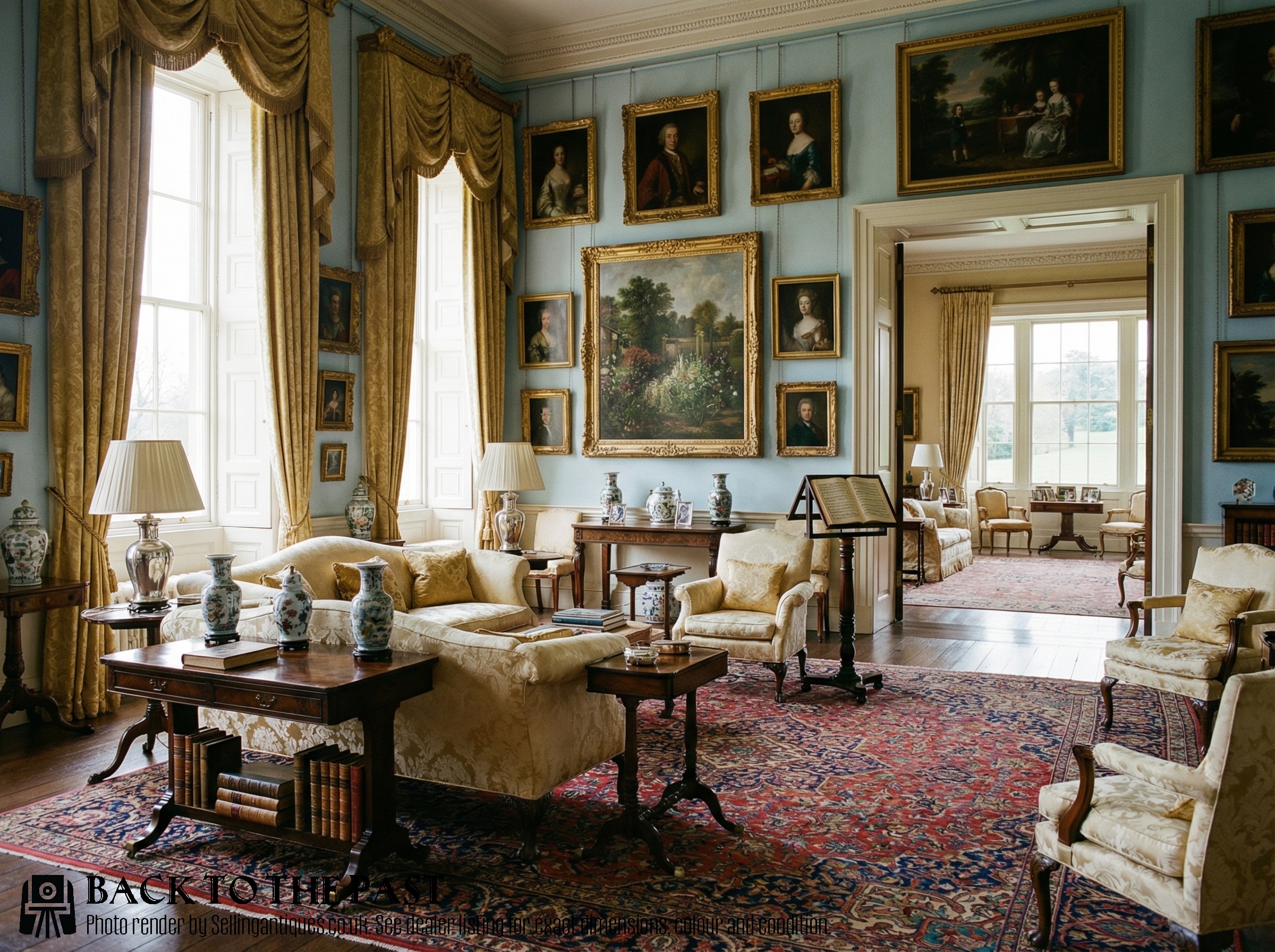
An adjustable music stand bridges the gap between domestic utility and performance, appearing across the Georgian, Regency, William IV, and Victorian eras as both freestanding tripod pieces and table-top reading desks.
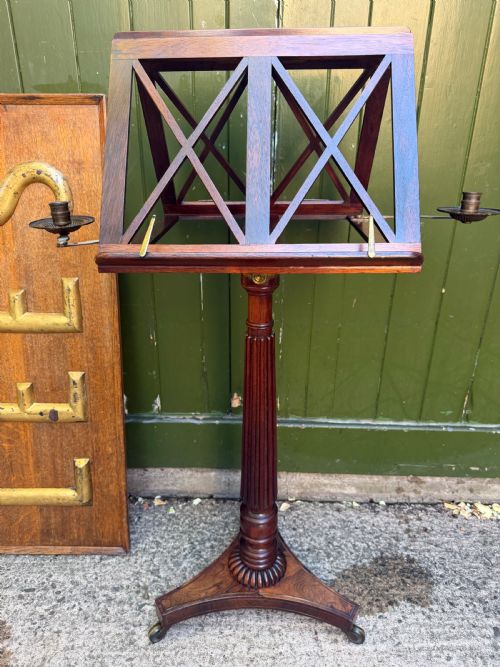
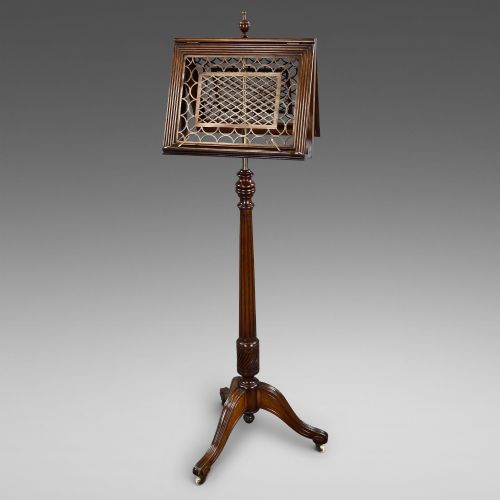
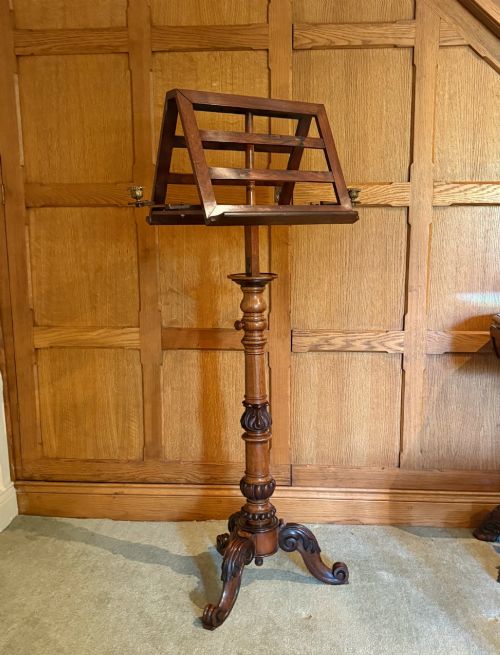
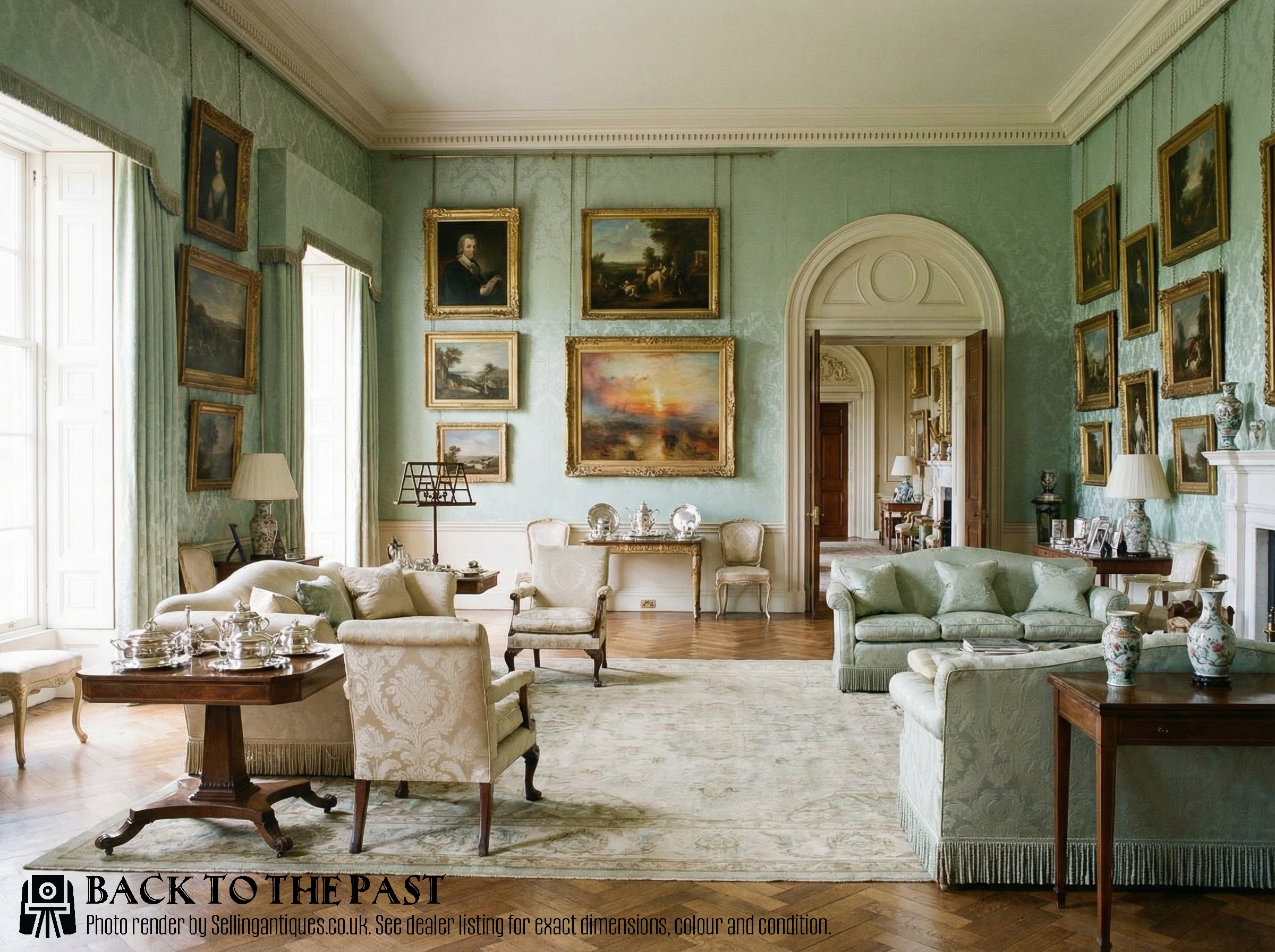
The version most commonly met on this page is the mahogany or rosewood duet stand, featuring a mechanism to alter the height and angle for two performers sharing a score.
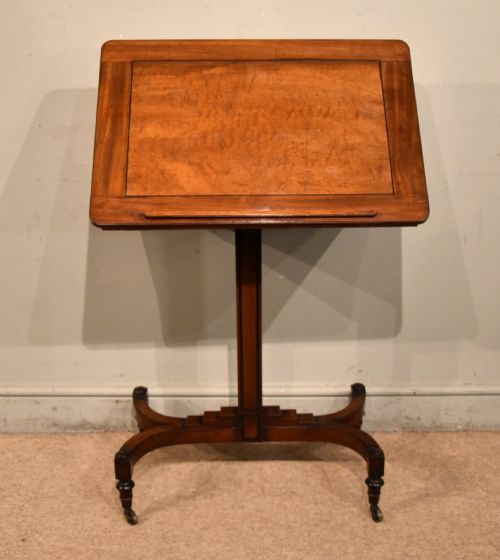
Many surviving pieces double as reading tables or lecterns, reflecting how 19th-century interiors integrated musical practice with writing and study.
Materials and Construction
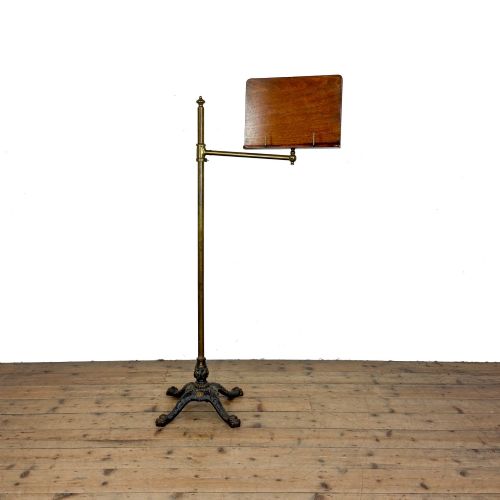
Cabinet makers utilised dense hardwoods like mahogany, rosewood, walnut, and burr walnut, often pairing them with brass mechanisms for the adjustable stems and reading desks.
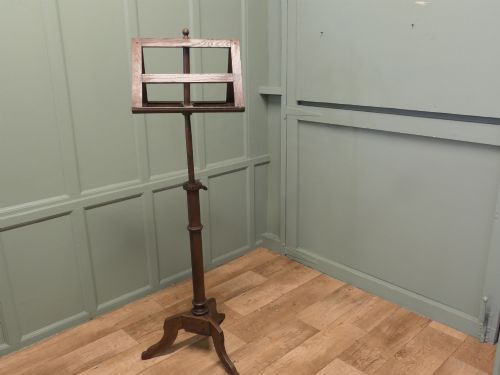
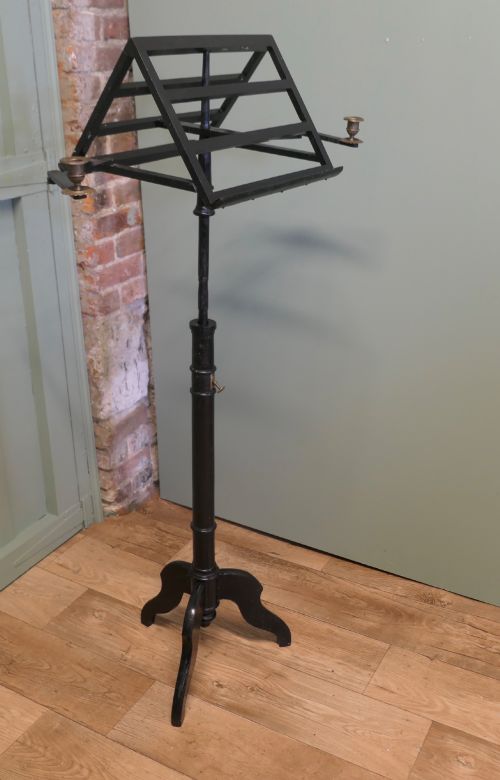
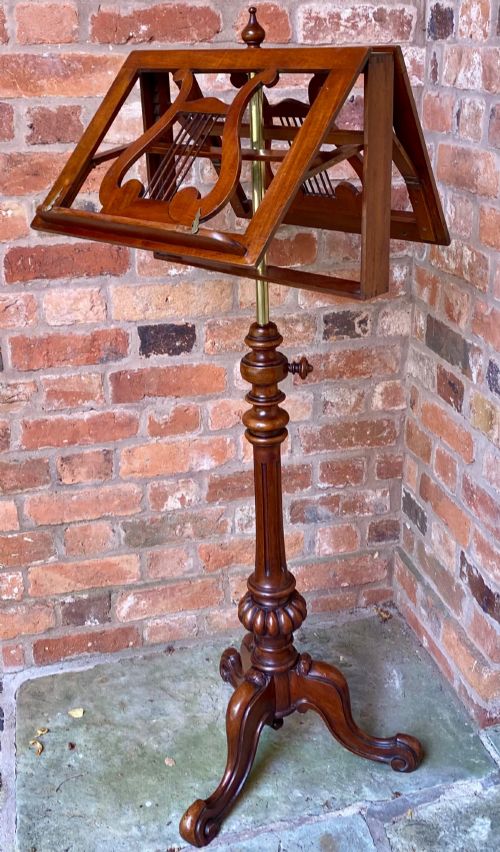
Tripod bases provide stability through carved cabriole legs or splayed feet, while table-top versions rely on sturdy folding book rests and ratchets.
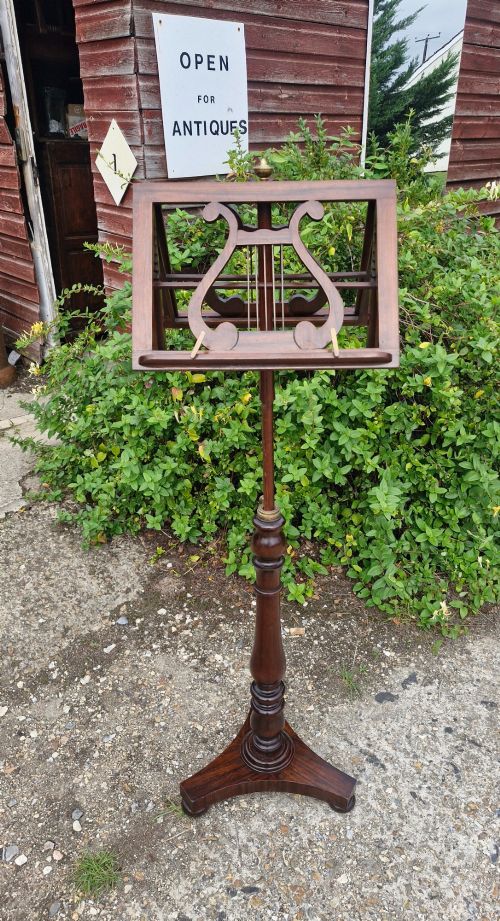
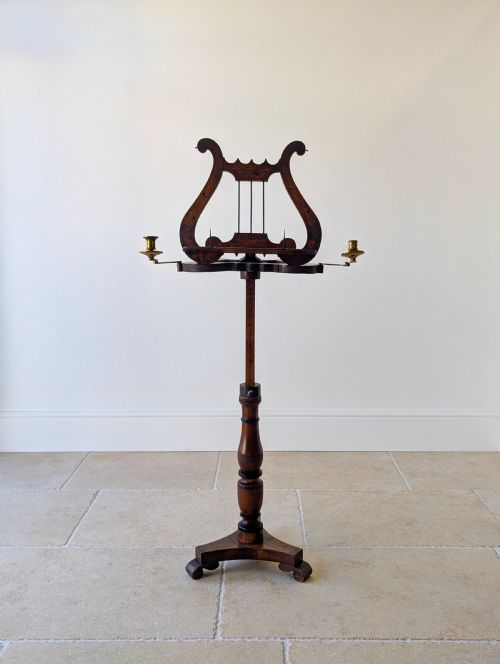
Inlaid details, fretted music racks, and lyre-shaped supports demonstrate the decorative ambition applied to functional hardware.
Adjustable Music Stand Retail Price Guide 2026
Typical asking prices for adjustable music stand among the pieces listed under this phrase on Sellingantiques today, from the lower quarter to the upper quarter. They describe what is for sale here now, not the wider market.
Listings feature woods spanning mahogany, rosewood, walnut, oak, and pine across the 19th and early 20th centuries.
Judging Quality
The distinction between ordinary utility items and exceptional pieces lies in the sophistication of the mechanical adjustment and the crispness of the carving on the tripod base or lyre support.
Finer examples bear maker attribution or patent stamps, showing superior timber selection in the figuring of the walnut or mahogany surfaces and robust brass engineering that still holds firm.
GILLOWS·Swann and Millican·Leveson London·Wheeldoms
The Adjustable Music Stand Glossary
- Duet stand
- A wide music stand designed to hold a large score shared by two musicians. These often feature double-sided or extra-wide reading ledges.
- Lyre-form
- A music stand support shaped like the classical stringed instrument. This motif appears frequently in Regency and William IV designs.
- Lectern
- A tall reading desk designed for books or manuscripts rather than musical scores. Many pieces in this category function interchangeably as both.
- Tripod base
- A three-legged support providing stable ground contact for freestanding stands. They frequently incorporate turned columns and scroll feet.
- Metamorphic
- Furniture designed to transform its function, such as a reading table that raises to become a music stand. These pieces highlight 19th-century mechanical ingenuity.
Adjustable Music Stand: Frequently Asked Questions
How do I adjust the height?
Most period stands use a brass thumbscrew or a ratchet mechanism concealed within the central column to lock the stem at the desired level.
Carefully support the weight of the desk before loosening the fitting to prevent sudden drops.
Can I use it as a reading table?
Many examples are explicitly described as reading tables or have flat surfaces adaptable for books and laptops.
The adjustable angle makes them suitable for holding heavy volumes at an ergonomic reading position.
How do I tell Regency from Victorian pieces?
Regency stands often feature cleaner classical lines, brass inlay, and lyre motifs in mahogany or rosewood.
Victorian pieces tend to show heavier carving, darker walnut timbers, and more elaborate fretwork on the music racks.
Are these stable enough for daily use?
Freestanding tripod stands distribute weight effectively, provided the joints and leg assemblies remain tight.
Heavier duet stands and table-top models offer robust platforms for modern music books or display purposes.