




Double Sided Music Stand
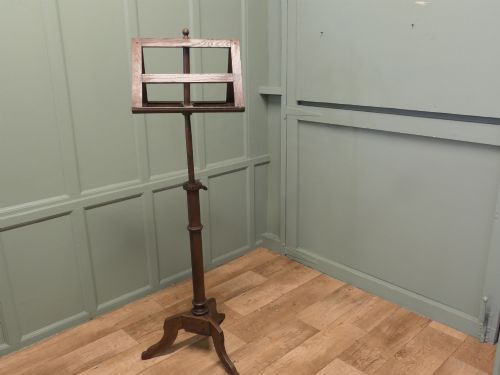
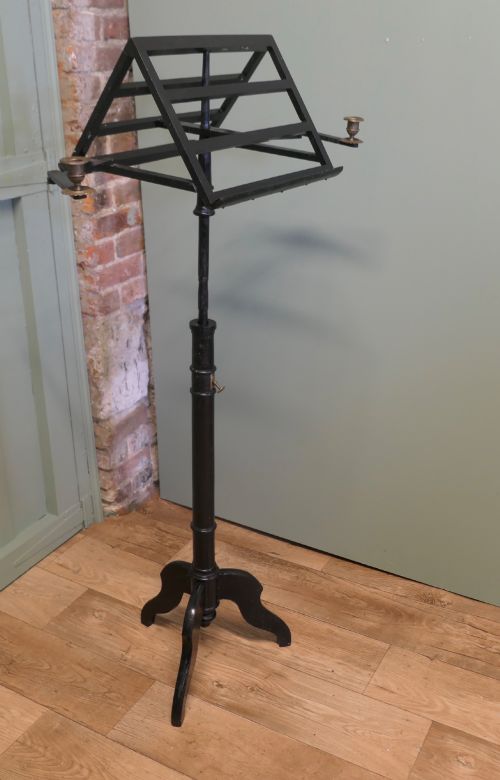
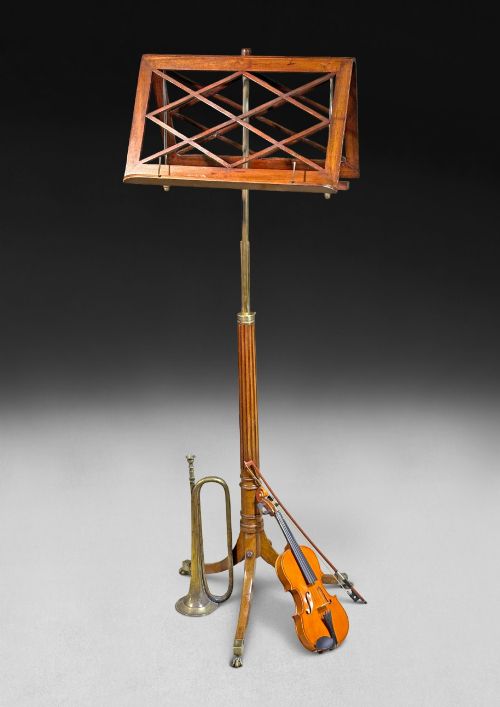
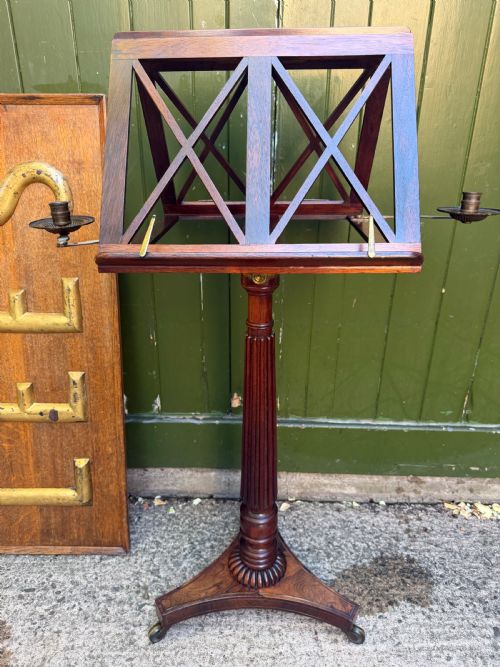
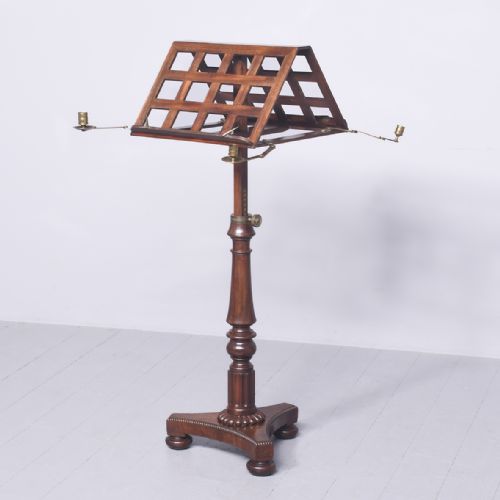
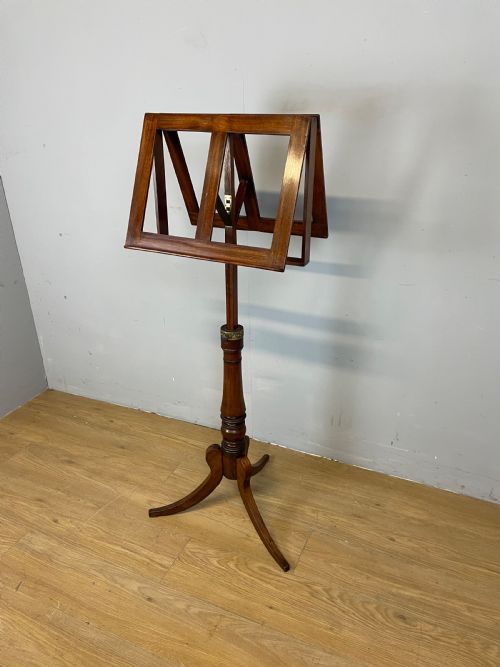
These double sided music stands are ingenious pieces designed for shared performance, bringing period timber and brass into the room.
Double Sided Music Stand
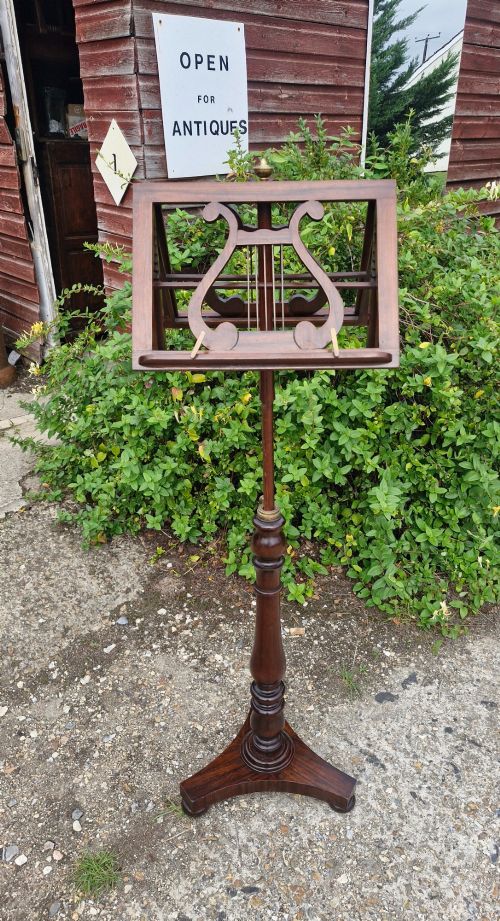
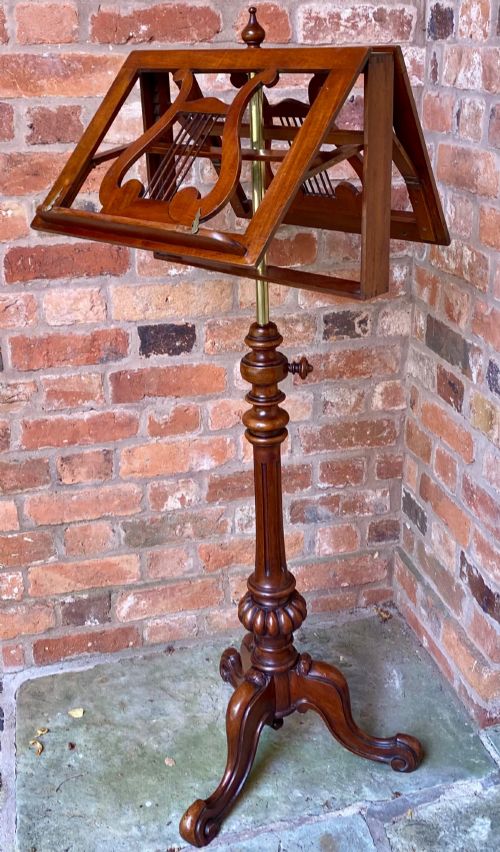
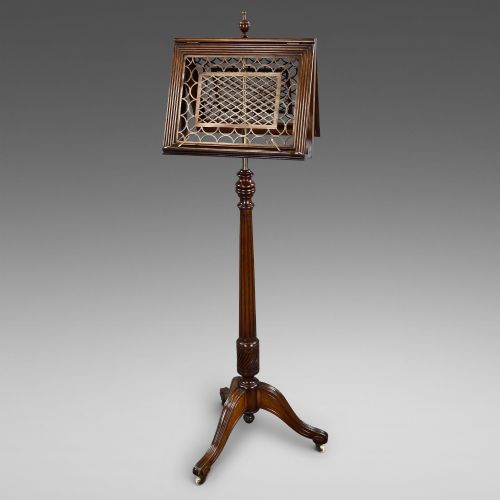
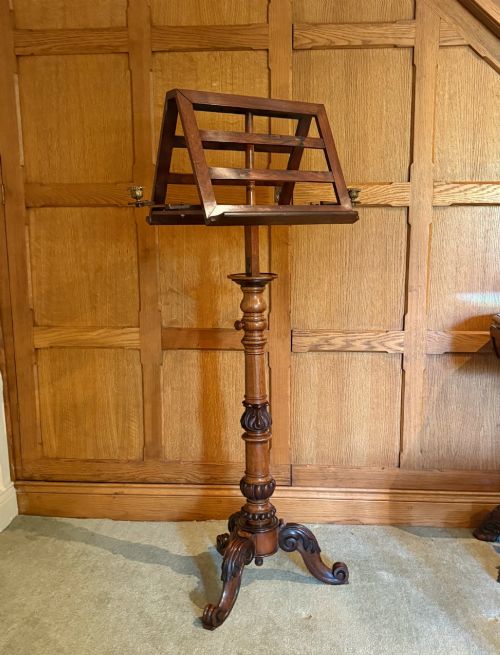
A double sided music stand is a specialised piece built to hold scores for two musicians at once. You meet these primarily in mahogany, walnut, rosewood, and occasionally fruitwood or oak.
The forms span the Regency, George IV, William IV, and Victorian eras, alongside pieces dated around eighteen-ninety and eighteen-eighty. Many feature adjustable mechanisms and rest upon tripod bases.
Makers such as Gillows contributed to this tradition, producing duet stands designed for practical musical collaboration. They appear in both British and French regional interpretations from the nineteenth century.
How they were made
Cabinet makers utilised dense hardwoods including mahogany, walnut, and rosewood, often pairing them with brass adjustments. Carved details and fretted music desks demonstrate traditional joinery and shaping techniques.
Tripod bases provide stability for the dual-facing desks, while mechanical adjustments allow height and angle changes. French examples also incorporated fruitwood and oak in their construction.
Double Sided Music Stand Retail Price Guide 2026
Typical asking prices for double sided music stand among the pieces listed under this phrase on Sellingantiques today, from the lower quarter to the upper quarter. They describe what is for sale here now, not the wider market.
Listings feature pieces spanning the Regency period, William IV, George IV, and Victorian eras, alongside nineteenth-century French and British examples.
What varies in quality
Quality rests in the precision of the adjustable mechanism and the execution of the carved or fretted woodwork. Finer examples show careful selection of mahogany, walnut, or rosewood grain across both music desks.
The integration of the tripod base and the sharpness of the brass fittings distinguish workshop-standard production from standard utilitarian pieces. Maker attribution, such as Gillows, elevates the standing of a piece within the nineteenth-century range.
Gillows
The Double Sided Music Stand Glossary
- Duet stand
- A double sided music stand designed to accommodate two players reading simultaneously. These pieces typically feature adjustable desks back-to-back.
- Tripod base
- A three-legged support structure commonly found beneath nineteenth-century music stands. This configuration ensures stability on uneven floor surfaces.
- Fretted
- Woodwork pierced with decorative open patterns. This technique lightens the visual weight of the music desk while adding ornamentation.
- Regency
- A design period spanning the early nineteenth century. Pieces from this era often display clean architectural lines and refined proportions.
Double Sided Music Stand: Frequently Asked Questions
What is a double sided music stand?
It is a specialised nineteenth-century stand featuring two music desks facing opposite directions. This allows two musicians to share a single piece of furniture during a performance.
Such stands appear in mahogany, walnut, rosewood, and oak, often supported by a tripod base with adjustable height mechanisms.
How do I date a music stand?
Dating relies on identifying stylistic markers from periods like the Regency, George IV, William IV, and Victorian eras. Timber choices such as rosewood or mahogany also offer strong chronological clues.
Mechanisms and carved details help narrow the origin to specific decades of the nineteenth century, ranging from eighteen-fifty to eighteen-ninety.
Were these stands made for homes?
Yes, they were built for domestic music rooms and parlours where duets were a common form of entertainment. The dual-facing desks accommodated two musicians playing together.
Their decorative fretted woodwork and fine timbers suited polite nineteenth-century interiors.
What woods were used for stands?
Cabinet makers predominantly used dense hardwoods such as mahogany, walnut, and rosewood. Some continental examples also incorporated fruitwood and oak.
Brass components were frequently integrated into the adjustable mechanisms and fittings of these timber pieces.