


Mahogany Sheet Music Stand
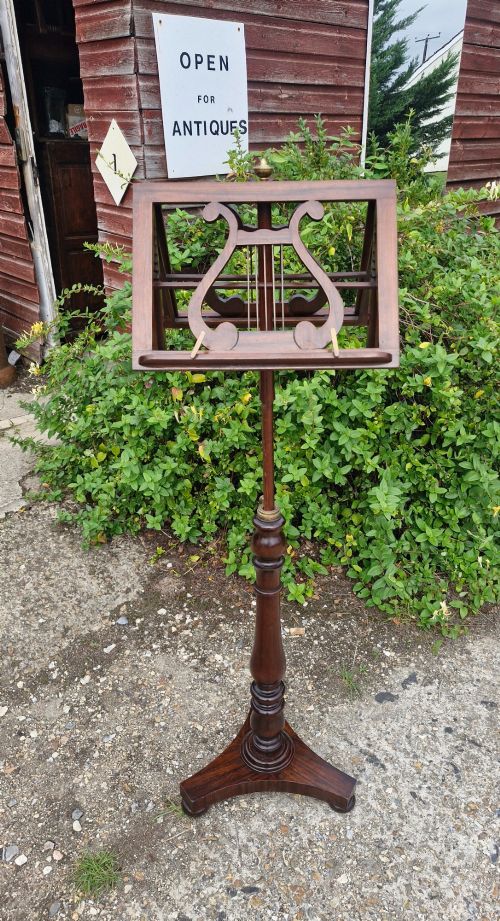
A mahogany sheet music stand is a dedicated timber accessory designed to hold scores securely while musicians play, bringing period warmth to a room.
Mahogany Sheet Music Stand
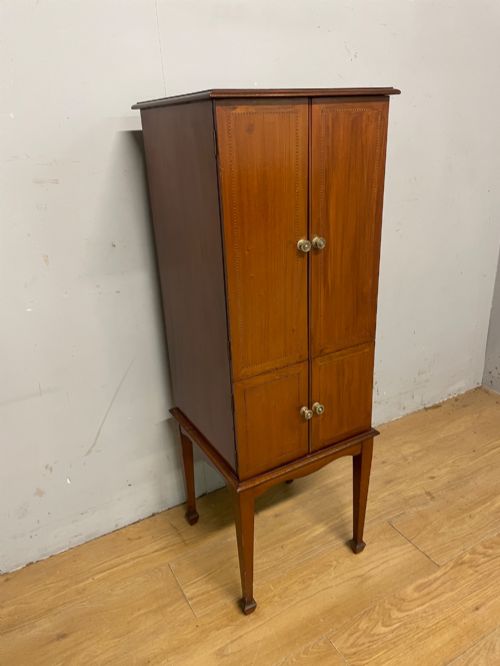
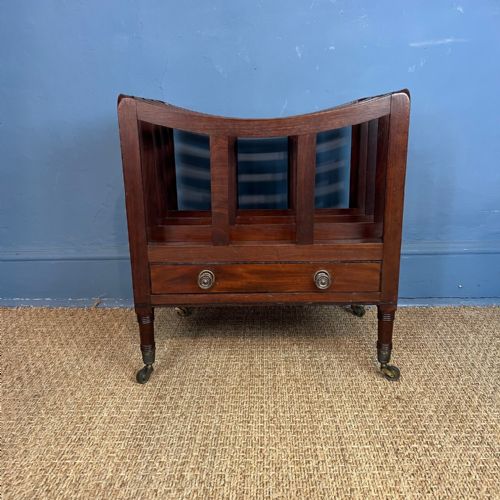
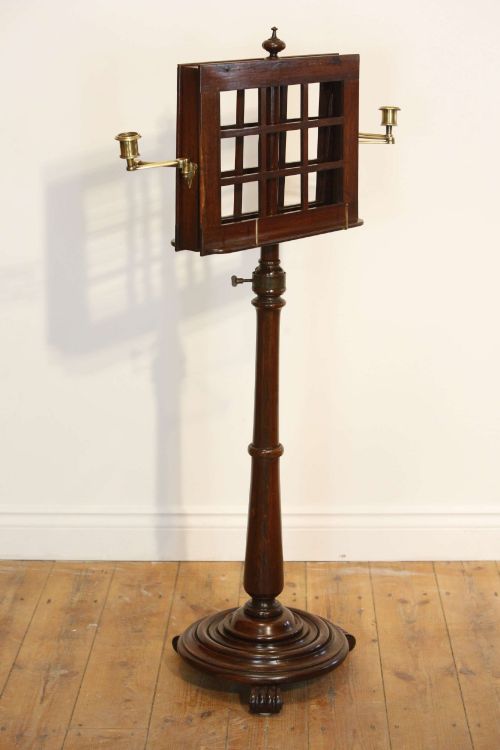
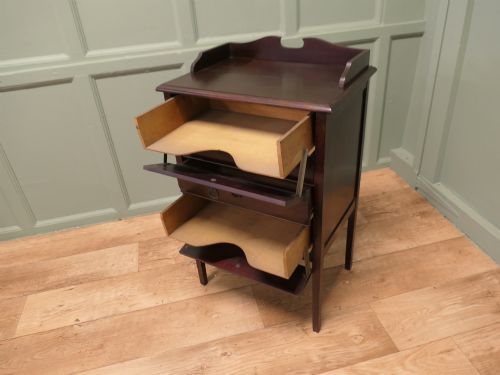
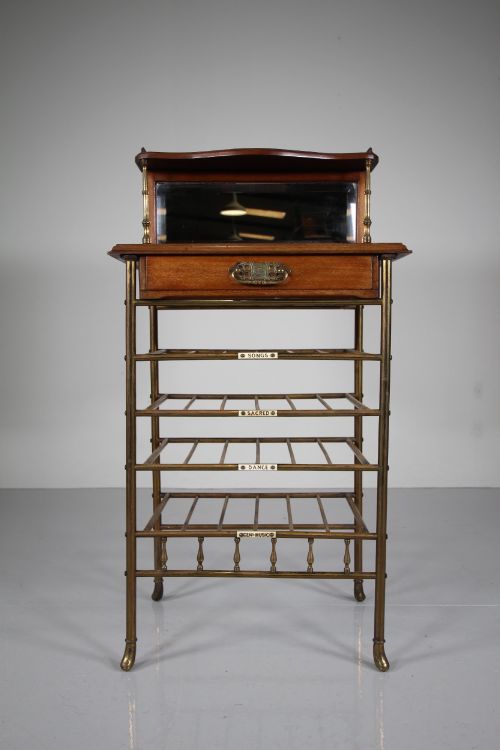
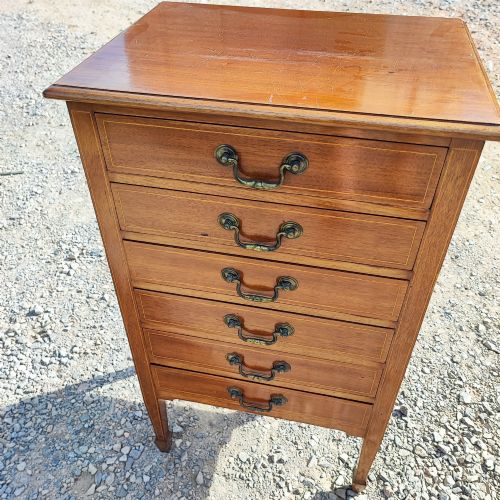
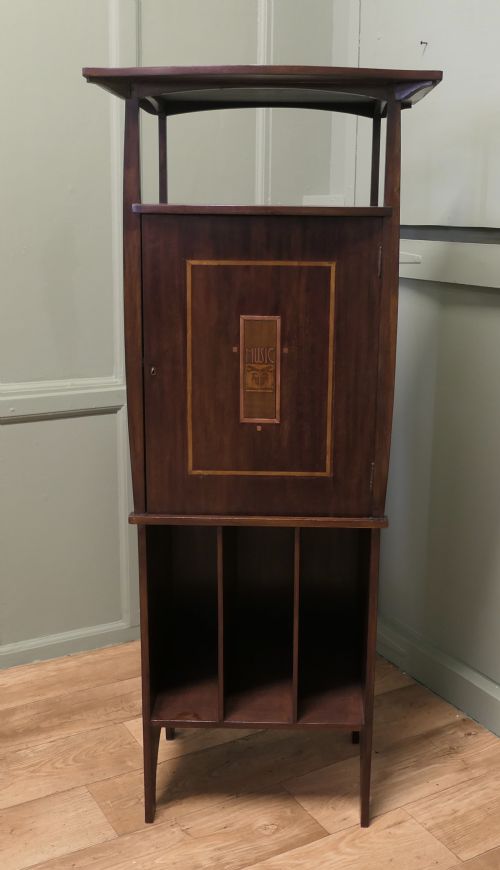
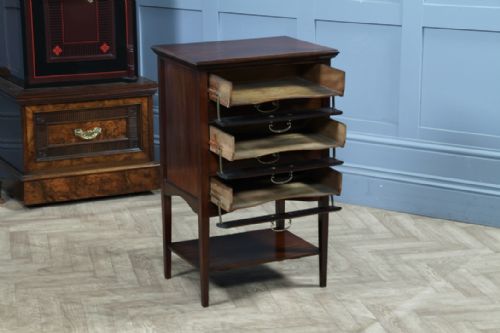
A mahogany sheet music stand spans multiple centuries of domestic and professional musical life, encompassing reading stands, duet stands, and upright music cabinets. When searching for a mahogany sheet music stand, buyers encounter versatile forms such as the compartmented Canterbury, the adjustable pedestal stand, and the enclosed cabinet.
Makers and designers from various eras utilised specific structural typologies, including boat-shaped frames, lyre-form supports, and tiered whatnot configurations. These items served households by keeping loose sheet volumes and folios organised near pianos and performance spaces.
What varies in quality
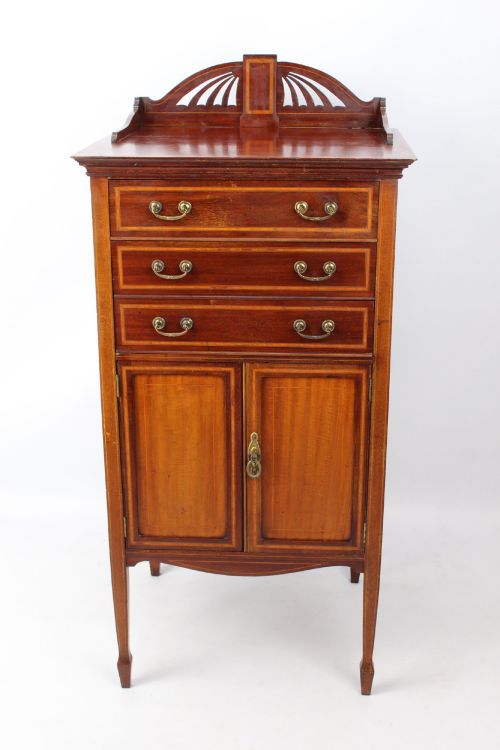
The standard of a piece depends on the choice of timber figure, such as Cuban mahogany, and the precision of the joinery in structural compartments. Finer examples display meticulous satinwood inlay and well-executed turned columns rather than plain utilitarian construction.
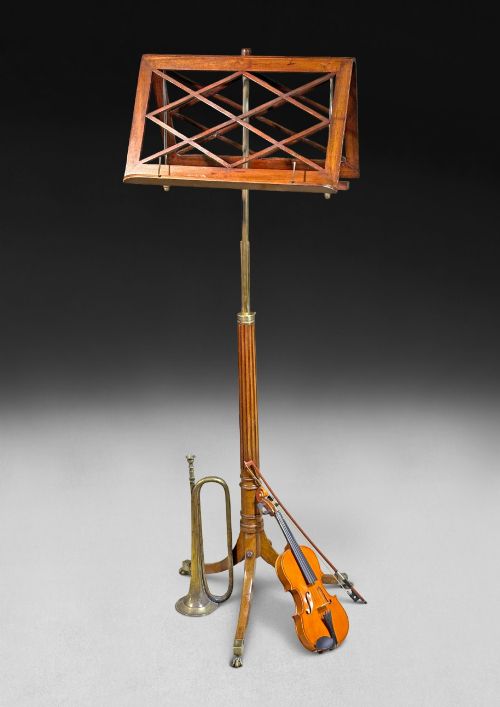
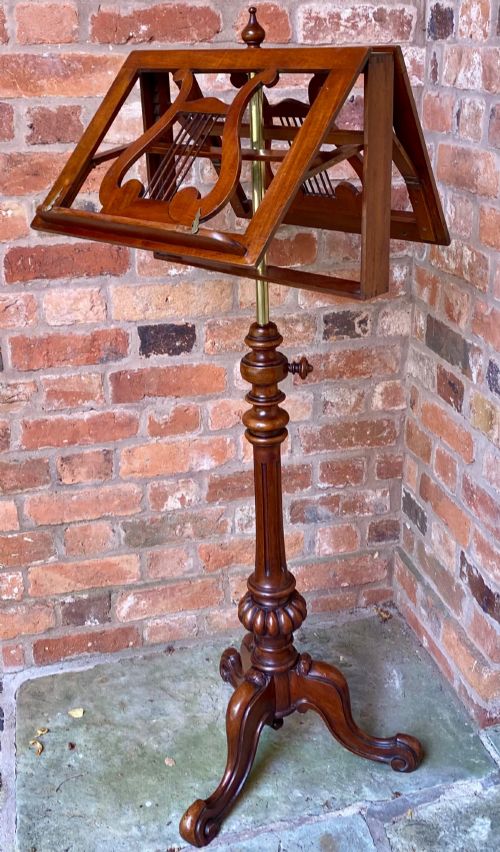
The sophistication of the mechanical adjustment mechanisms in reading and duet stands distinguishes standard workshop output from higher workshop production. Crisp carving on lyre supports and robustly cast brass fittings indicate superior execution.
Mahogany Sheet Music Stand Retail Price Guide 2026
Typical asking prices for mahogany sheet music stand among the pieces listed under this phrase on Sellingantiques today, from the lower quarter to the upper quarter. They describe what is for sale here now, not the wider market.
Materials appearing across the collection include solid mahogany, brass castors, glass panels, and satinwood inlay.
GM Elwood·JS Henry·Denby and Spinks·Gillows
The Mahogany Sheet Music Stand Glossary
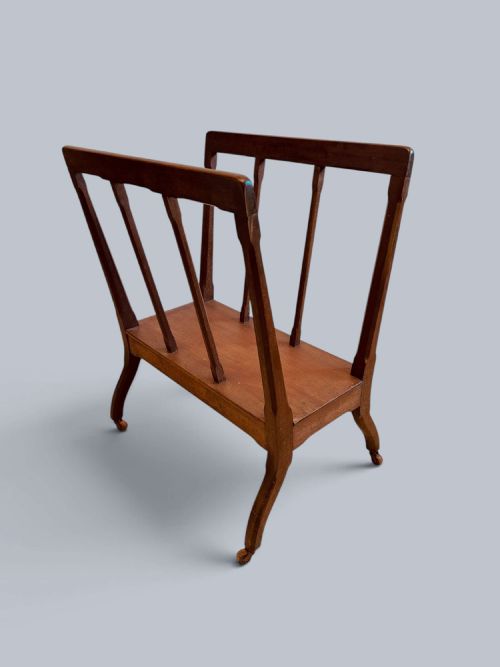
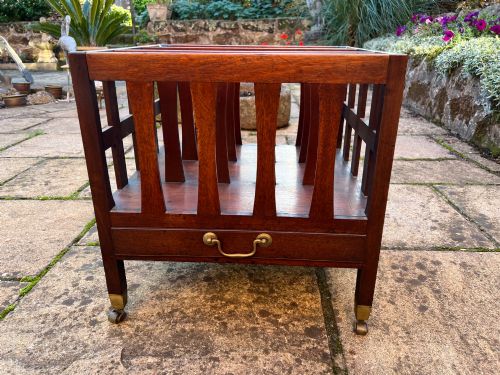
- Canterbury
- A low, open-framed piece of furniture featuring vertical partitions used to hold folios, sheet music, and magazines. It typically includes a carrying handle and small drawers beneath.
- Duet stand
- A music stand designed wide enough to accommodate two musicians reading from a shared sheet. These often feature adjustable height and tilting desks.
- Lyre-form
- A decorative structural motif shaped like an ancient Greek lyre, frequently utilised as the central support column in music stands and cabinets. It showcases intricate pierced woodwork.
- Whatnot
- An open set of multi-tiered shelving units designed for displaying or holding small objects and books. In musical contexts, these incorporate slots or cabinets for scores.
- Satinwood inlay
- A contrasting light-coloured exotic timber inserted into recesses within the darker mahogany surface to create geometric or floral patterns.
Mahogany Sheet Music Stand: Frequently Asked Questions
What is a Canterbury used for?
A Canterbury serves as a compartmented floor stand designed specifically to store sheet music, folios, and loose papers upright. They keep musical scores accessible beside pianos and seating areas.
Over time, many of these stands transitioned in use to hold contemporary magazines and books while retaining their distinctive partitioned frames and carrying handles.
How do I identify a Regency music stand?
Regency music stands typically feature classical architectural influences, including reeded columns, brass paw feet, and distinctive boat-shaped compartments. The woodwork often displays a rich, dark mahogany grain without excessive ornamentation.
Adjustable reading tables from this period utilise robust brass thumbscrews and functional ratchets designed for precise height and angle control.
Can music cabinets hold modern sheet music?
Most antique music cabinets and upright racks feature internal shelving dimensions suited to standard historical publication sizes. These compartments easily accommodate modern paper folios and bound scores.
Drawers fitted beneath the main shelving units provide secure storage for smaller musical accessories, manuscript papers, and pencils.
What distinguishes an Edwardian music cabinet?
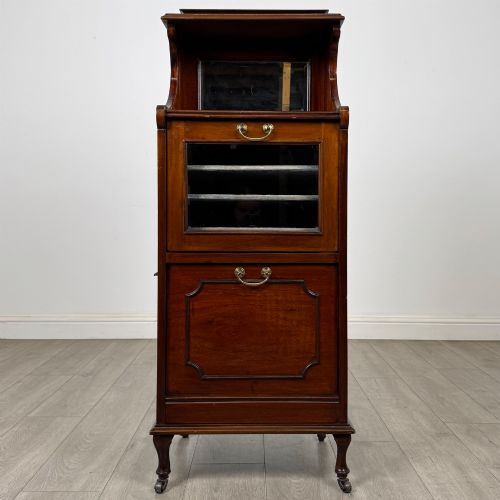
Edwardian examples often incorporate delicate satinwood inlay, glazed doors, and taller upright proportions compared to earlier low-slung Canterbury designs. These pieces reflect lighter decorative tastes popular at the turn of the twentieth century.
Many Edwardian cabinets combine enclosed storage with drop-front compartments, offering a neat solution for hiding loose sheet music away from dust.