



Nineteenth Century Canterbury
A nineteenth century canterbury brings traditional elegance and practical division to any room, offering a dedicated home for folios, sheets of music, and periodicals.
Nineteenth Century Canterbury
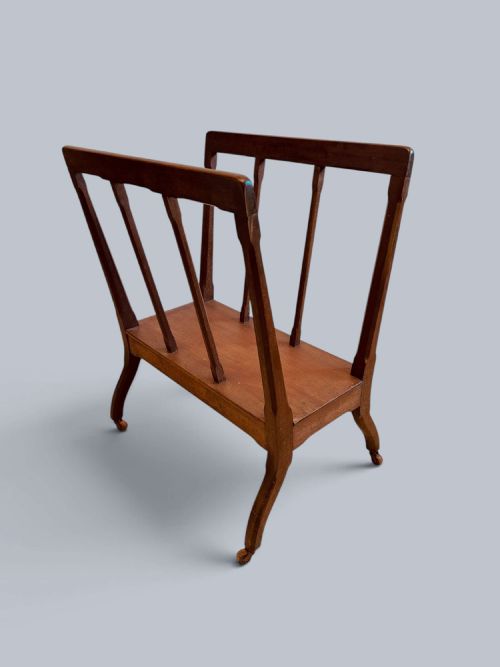
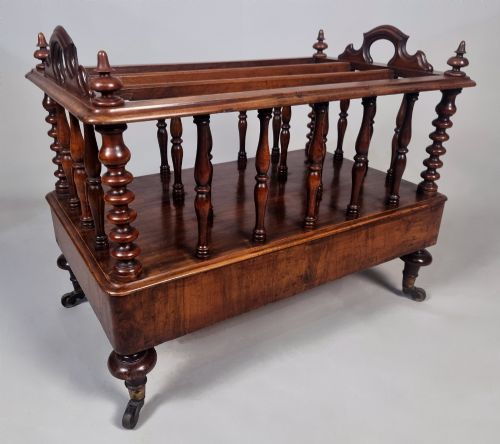
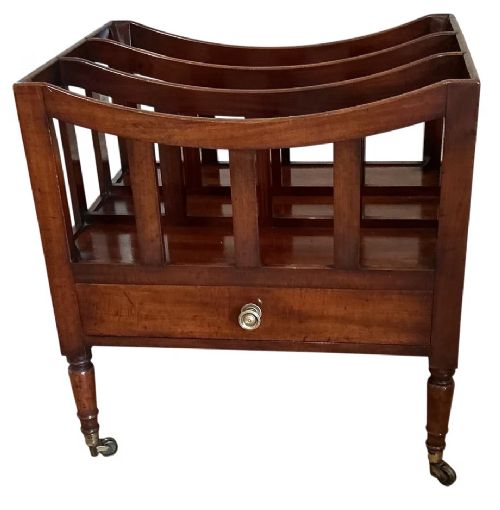
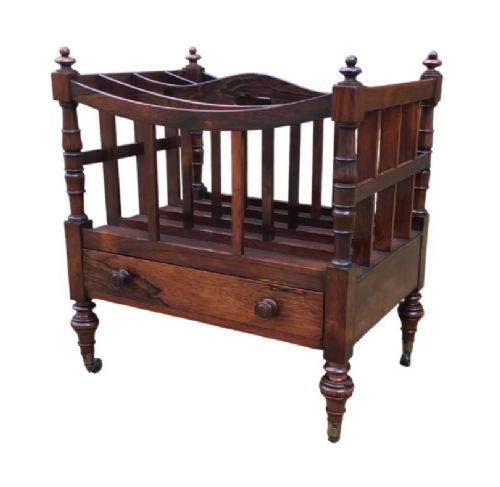
A nineteenth century canterbury is a distinct form of furniture designed to hold sheet music, folios, and newspapers within compartmentalised racks above a low drawer or base. You will most frequently encounter mahogany and rosewood examples dating from the Regency and Victorian eras, often featuring distinctive slatted divisions and turned supports.
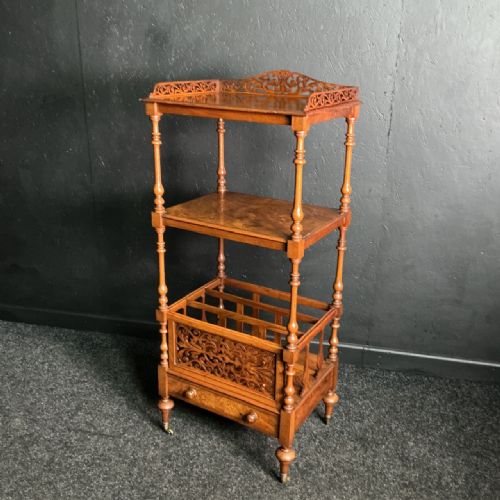
The selections range from boat-shaped Regency designs to elaborate William IV and Victorian pieces, sometimes incorporating X-frames or combined music stands and whatnots. These versatile pieces reflect the domestic musical habits of the period while serving as compact storage units in modern settings.
How they were made
Cabinetmakers constructed these pieces primarily using dense timbers such as mahogany, rosewood, and walnut, frequently incorporating burr walnut veneers for decorative contrast. Finer examples utilise turned wooden spindles or brass mounts to form the characteristic vertical dividers of the rack.
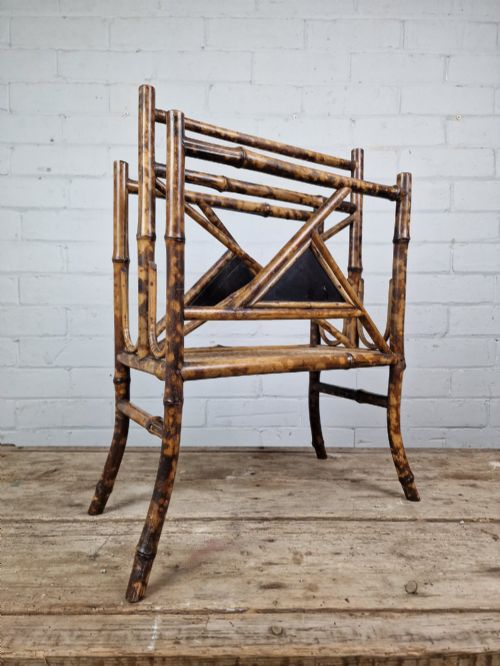
Joinery techniques combined sturdy frame construction for the lower base with securely fastened partitions above, occasionally mounted on small castors for ease of movement across floor coverings. Alternative materials such as bamboo appear in later Aesthetic Movement interpretations, demonstrating the adaptability of the form.
Nineteenth Century Canterbury Retail Price Guide 2026
Typical asking prices for nineteenth century canterbury among the pieces listed under this phrase on Sellingantiques today, from the lower quarter to the upper quarter. They describe what is for sale here now, not the wider market.
Materials documented across the listings include mahogany, rosewood, walnut, burr walnut, bamboo, and lacquer.
What varies in quality
The refinement of the timber selection and the crispness of any carved detailing dictate the distinction between standard production and top-tier workshop output. Richly figured grains in rosewood or mahogany, combined with well-proportioned turned supports and integrated drawer construction, elevate the standing of a piece.
Attribution to esteemed makers through construction methods or documented signatures adds significant character and depth to an item. Simpler utility versions remain functional and honest, whereas fully articulated pieces with elaborate division frames represent the height of period craftsmanship.
Edwards & Roberts·Gillows of Lancaster
The Nineteenth Century Canterbury Glossary
- Canterbury
- A low stand fitted with divisions for holding sheet music or books, typically featuring a small drawer below. The name originates from the Archbishop of Canterbury, who reportedly commissioned the first such piece for holding music scores.
- Regency
- A style period spanning the early nineteenth century defined by classical restraint, elegant proportions, and classical revival motifs. Furniture from this era often incorporates sophisticated brass inlay and curved structural lines.
- Whatnot
- A piece of open shelving furniture designed for displaying ornaments or holding books, sometimes combined directly with a canterbury base. These multi-tiered units became highly popular throughout the nineteenth century.
- Aesthetic Movement
- A late nineteenth century cultural and design phase that rejected heavy Victorian ornamentation in favour of simplicity, incorporating exotic materials like bamboo and Japanese-inspired lacquer work.
Nineteenth Century Canterbury: Frequently Asked Questions
What is a nineteenth century canterbury used for?
These pieces were originally designed to hold sheet music, folios, and periodicals close to a piano or in a withdrawing room.
Today, they serve equally well beside a modern sofa or armchair for storing magazines, newspapers, and books while adding period character to a room.
How do I identify a Regency canterbury?
Regency examples typically exhibit lighter timbers, boat-shaped outlines, and classical brass details that reflect the early nineteenth century aesthetic.
They often rely on clean geometric lines and elegant turned legs rather than the heavier carvings found on later Victorian pieces.
Are these pieces sturdy enough for daily use?
Cabinetmakers built them using durable hardwoods like mahogany and rosewood, ensuring robust structural integrity for everyday domestic environments.
Care should be taken not to overload the divided compartments with excessive weight to preserve the original joinery of the vertical slats.
What is the difference between a music canterbury and a standard rack?
A music canterbury often incorporates an X-frame or specific upright divisions tailored to support large, unbound sheets of musical scores.
Many versions also include a shallow drawer positioned beneath the main rack for holding smaller accessories, tuning keys, or loose papers.