


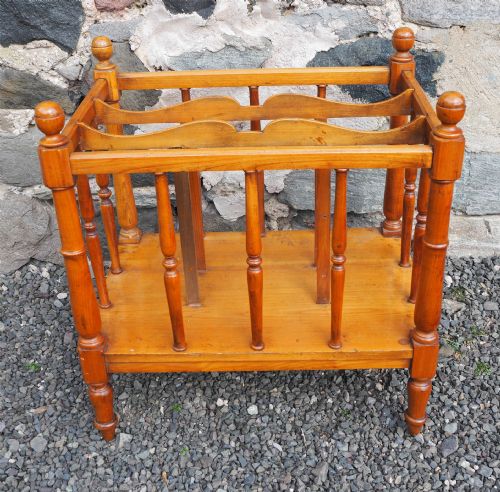


Brown Wooden Canterbury
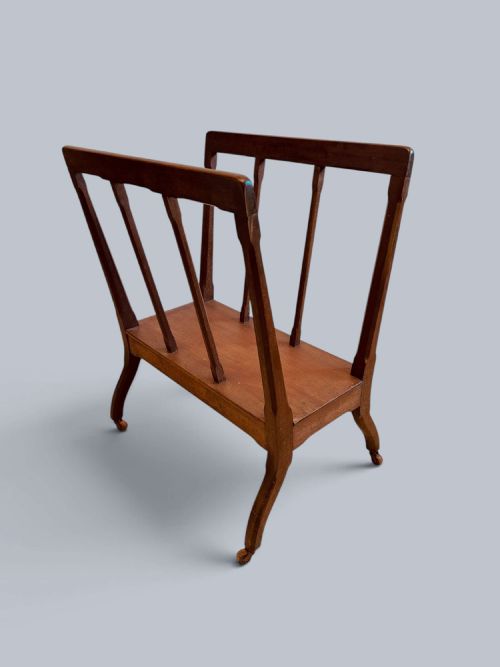
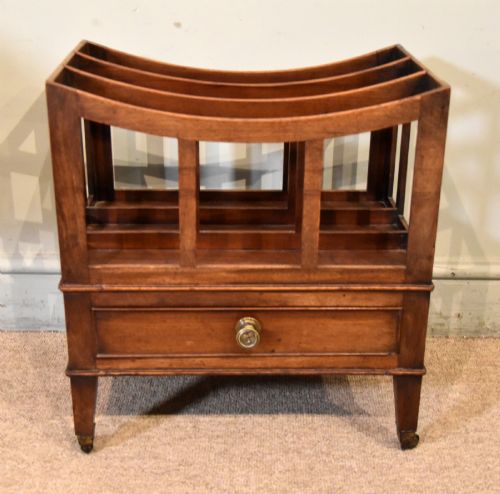
A brown wooden canterbury is a low compartmentalised stand built for sheet music and periodicals, bringing elegant Victorian practicality straight to a sitting room.

Brown Wooden Canterbury
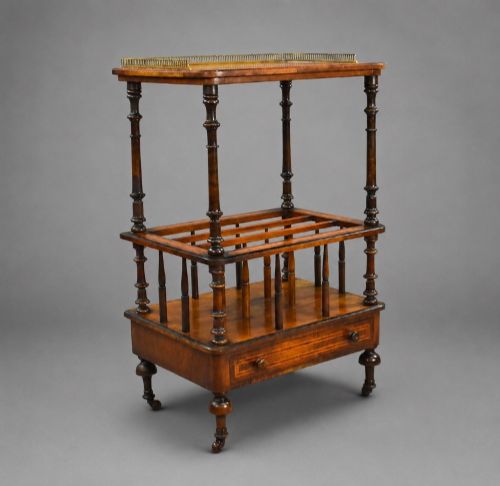
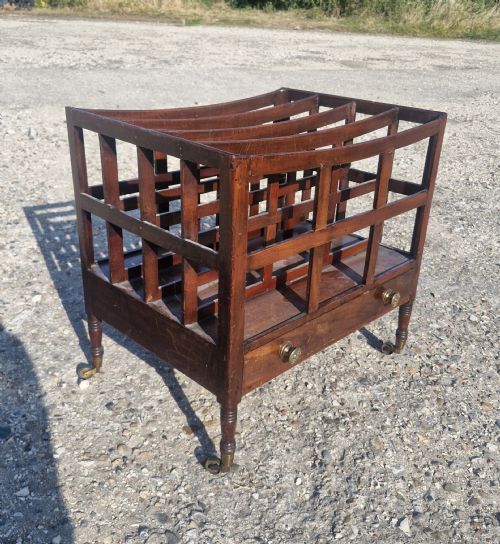
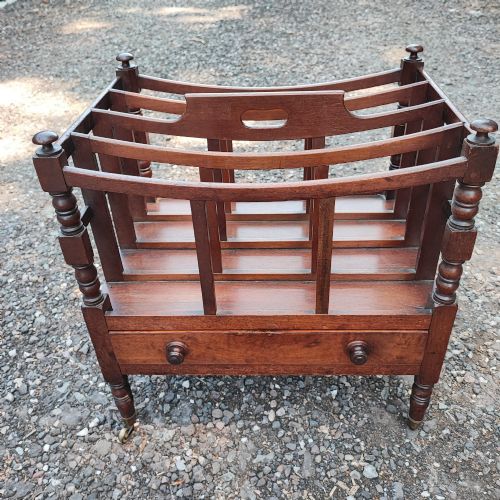
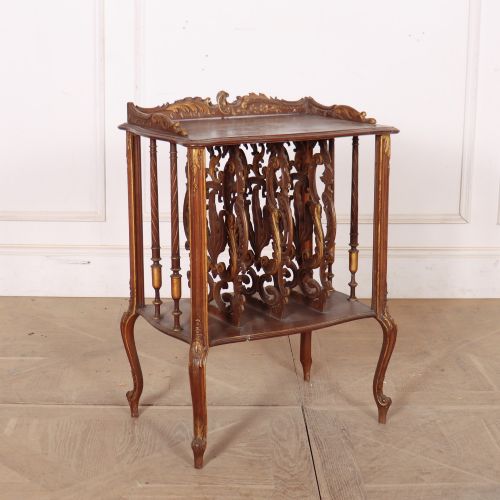
A brown wooden canterbury is a dedicated storage piece originating in the nineteenth century, designed to keep folios, sheet music and magazines upright and accessible beside a piano or seating area. Pieces appearing here span the nineteenth century, including specific Victorian examples alongside Regency and Regency Revival iterations.
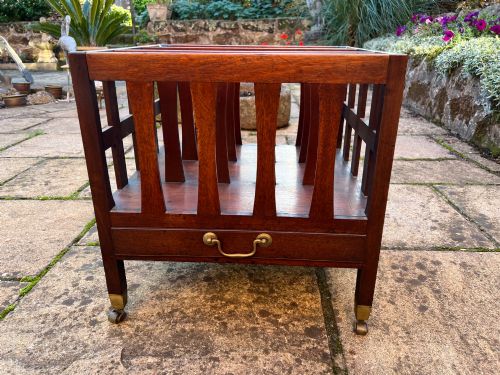
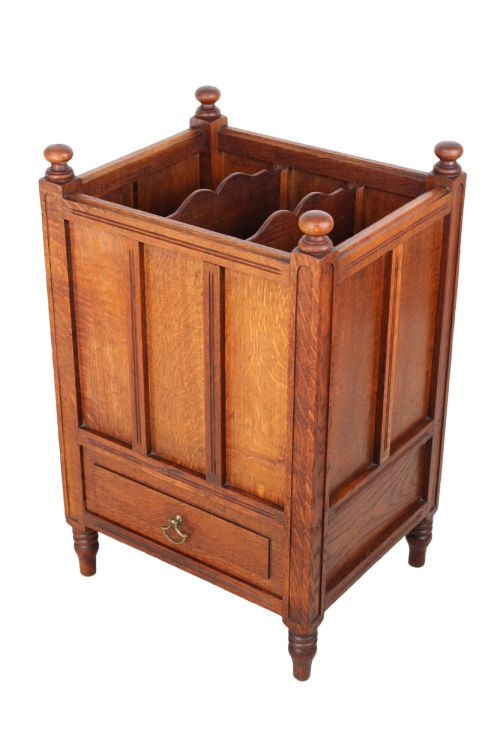
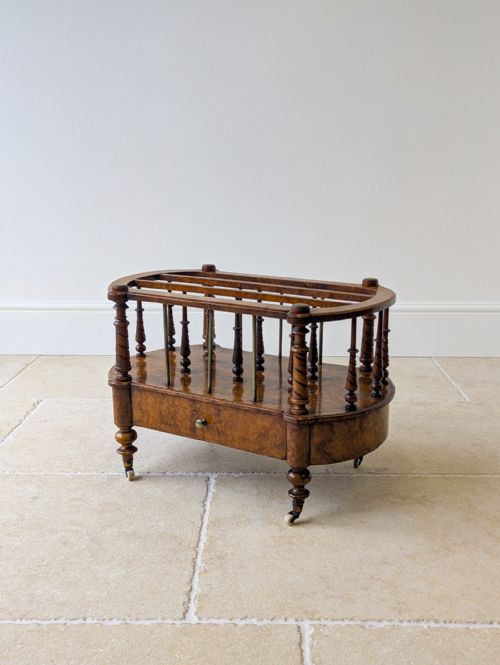
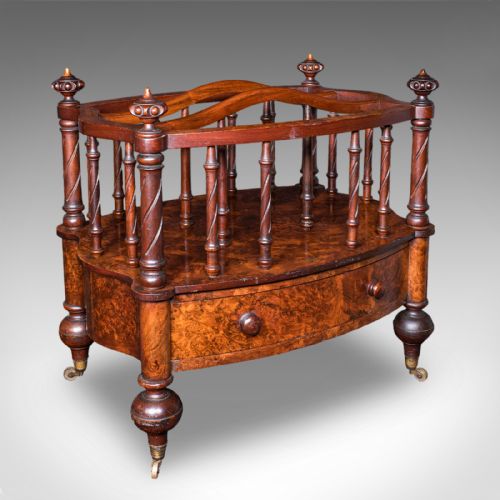
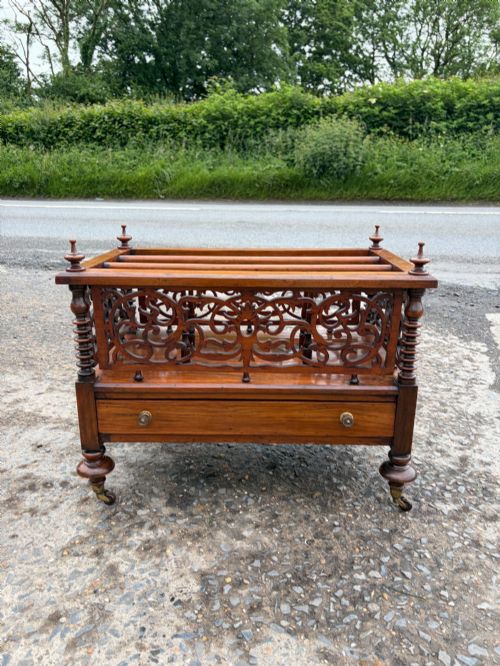
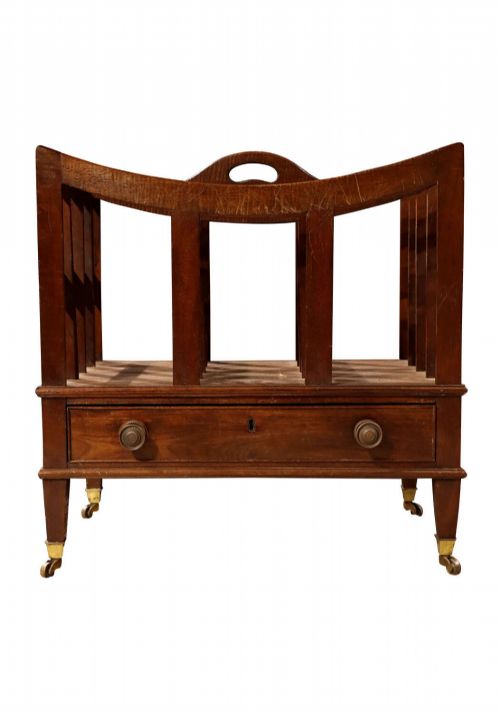
The primary forms found on this page include traditional canterburys with slatted vertical divisions, combined canterbury whatnots featuring tiered shelving, and related magazine stands and racks. These variations range from boat-shaped designs to rectangular tiered stands incorporating lower drawer storage on castors.
Materials and construction
Cabinetmakers utilised rich timber stocks including mahogany, walnut and burr walnut, frequently employing flame mahogany veneer to create striking figured grain patterns across flat surfaces and drawer fronts. These woods were chosen for both their structural stability and their deep natural warmth.
Fine metalwork hardware such as brass castors and fittings appear alongside ceramic elements, supporting the mobility of these relatively compact pieces. Joinery techniques from the period ensured sturdy vertical partitions capable of bearing the weight of heavy paper volumes.
Brown Wooden Canterbury Retail Price Guide 2026
Typical asking prices for brown wooden canterbury among the pieces listed under this phrase on Sellingantiques today, from the lower quarter to the upper quarter. They describe what is for sale here now, not the wider market.
Current listings demonstrate a concentration of nineteenth century examples utilising walnut, mahogany and burr walnut with brass and ceramic details.
Judging quality in canterburys
Quality rests chiefly upon the selection of timber and the sophistication of the figuring, where highly figured burr walnut or carefully matched flame mahogany veneer separates standard utility items from finer parlour pieces. The crispness of the turning on the upright supports and the integration of functional lower drawers further elevate a piece.
Proportion and structural restraint define the upper tier of design, with well-balanced partitions and original brass hardware indicating careful initial manufacture. Lesser examples rely on plain timber stocks with simpler joinery and lack the refined detailing found on pieces produced during the height of the Victorian era.
The Brown Wooden Canterbury Glossary
- Canterbury
- A low stand with partitions for holding sheet music or books, typically fitted with carrying handles and small wheels. This form dates back to the late eighteenth century.
- Whatnot
- An open set of shelves for displaying ornaments or holding books, frequently combined with a canterbury base in nineteenth century furniture. It provides multi-level display space.
- Burr walnut
- Timber taken from a tree growth or wart, yielding highly decorative swirling grain patterns. Cabinetmakers prized this material for veneering prominent surfaces.
- Flame mahogany
- A veneer cut from the branch junction of a mahogany tree, displaying a distinctive flamelike pattern. It offers a dramatic visual effect on cabinet fronts.
- Regency revival
- A nineteenth or twentieth century style reproducing the neoclassical lines of the Regency period. Pieces in this style emulate earlier design principles.
Brown Wooden Canterbury: Frequently Asked Questions
What is a brown wooden canterbury used for?
A brown wooden canterbury is designed to hold sheet music, periodicals and magazines in upright vertical sections near a piano or seating area. Lower drawers often provided additional storage for smaller accessories.
Today, these stands function effectively in living spaces to organise current reading material while serving as decorative side tables.
How do I date a Victorian canterbury?
Dating relies on examining the timber species, construction methods and hardware styling characteristic of the nineteenth century. Burr walnut and specific turning styles point toward the middle and later decades of the era.
Changes in veneer thickness and the presence of original brass castors also help narrow down the period of manufacture.
How do I care for antique walnut furniture?
Antique walnut requires protection from direct sunlight and extreme humidity fluctuations to prevent veneer cracking or fading. Occasional gentle dusting with a soft cloth maintains the finish without stripping natural oils.
Avoiding harsh chemical polishes preserves the original patina developed over the centuries.