





Antique Walnut Magazine Stand
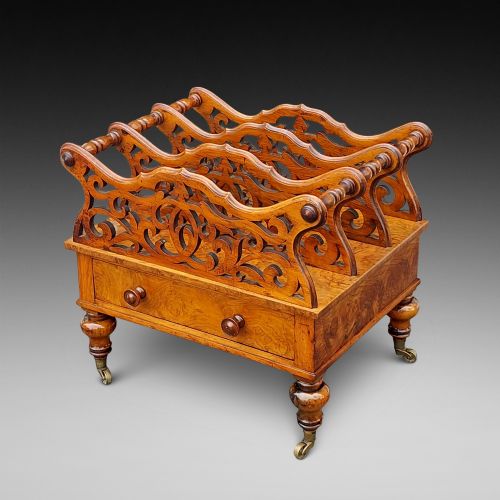
An antique walnut magazine stand brings warmth and division to papers, functioning most often as a Victorian canterbury or occasional table.
Antique Walnut Magazine Stand
When you search for an antique walnut magazine stand, you encounter pieces designed to hold periodicals, newspapers and sheet music within domestic interiors. These items primarily manifest as nineteenth-century canterburys, whatnots and music stands originating from the Victorian and Regency eras.
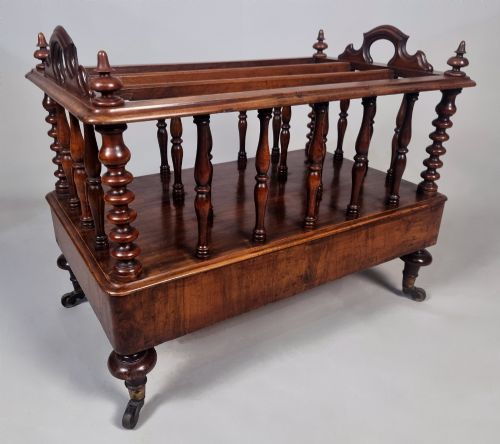
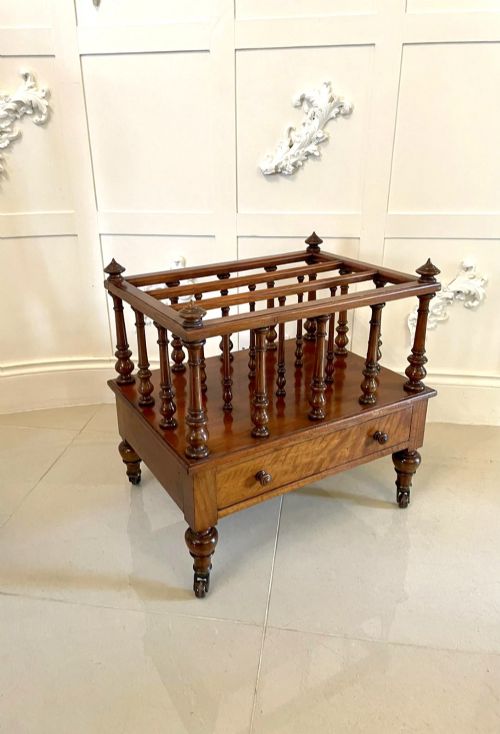
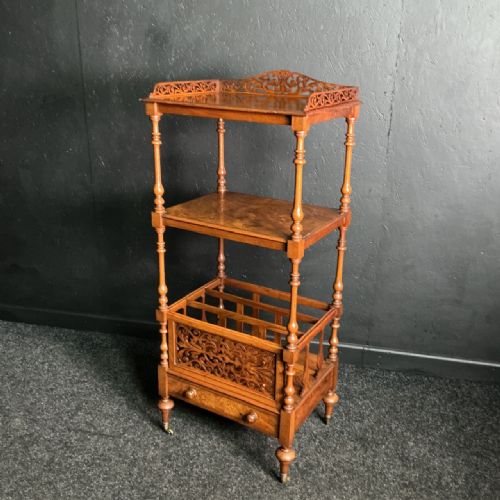
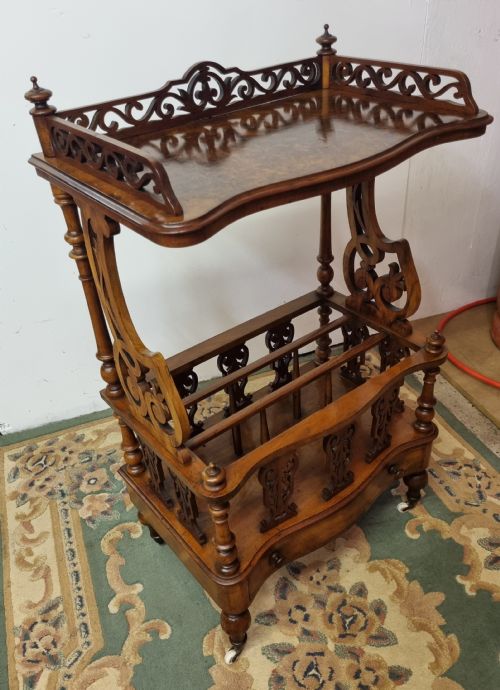
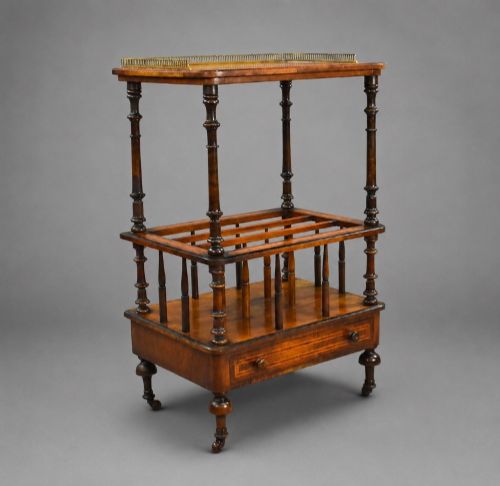
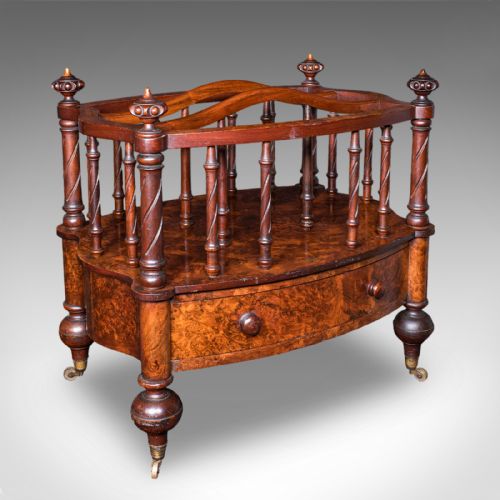
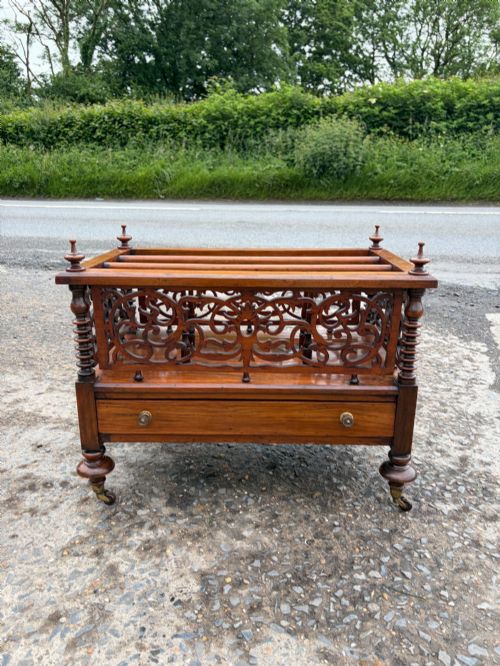
The dominant form on this page is the Victorian burr walnut canterbury, often combining divided vertical partitions for reading material with a low drawer or an integrated occasional table top. Makers of the period produced freestanding iterations intended for placement beside parlour seating or within libraries.
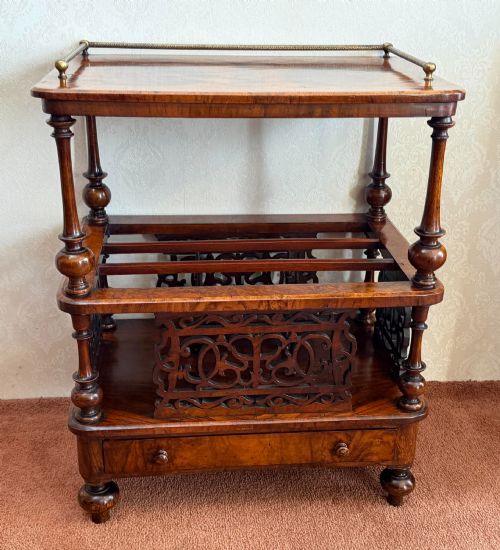
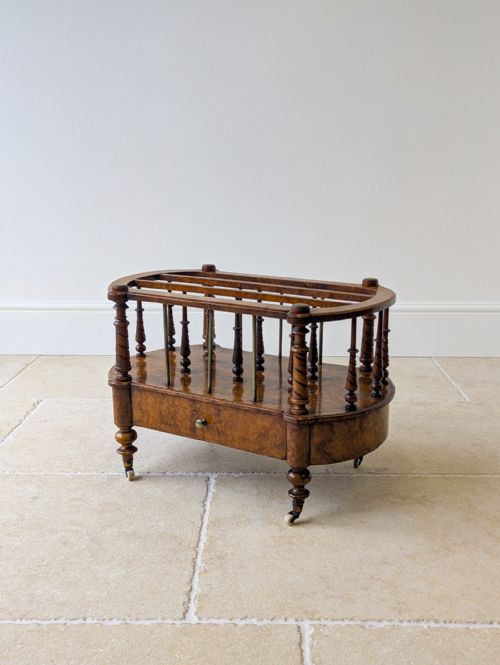
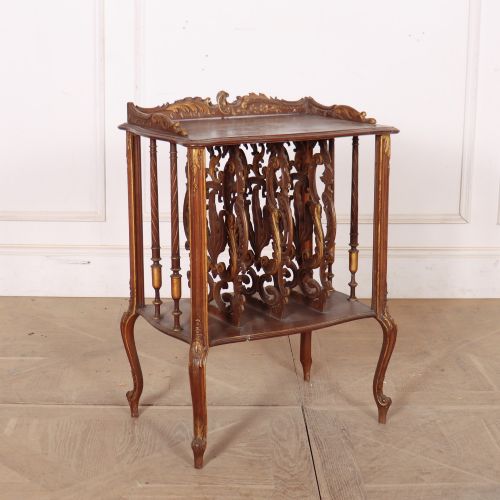
Beyond standard canterburys, the selection includes serpentine shapes, oval lamp tables and multi-tiered etageres incorporating wood inlay and pierced fretwork. These variations demonstrate how nineteenth-century cabinet makers adapted the form to serve simultaneously as display stands and tidies.
Materials and construction
Cabinet makers utilised solid walnut and figured burr walnut veneers over secondary timbers, exploiting the rich grain patterns for visual impact. Marquetry, boxwood stringing and ebony inlay frequently decorate the surfaces of these stands, adding linear contrast to the dark timber.
Structural elements often incorporate turned wooden supports, brass castors, and occasionally ceramic components or copper fittings. Pierced fretwork panels and carved detailing define the partitions and shelves, balancing open lightness with structural rigidity.
Antique Walnut Magazine Stand Retail Price Guide 2026
Typical asking prices for walnut magazine stand among the pieces listed under this phrase on Sellingantiques today, from the lower quarter to the upper quarter. They describe what is for sale here now, not the wider market.
A Black Forest stand brings a woodland menagerie straight to the papers, proving Victorians liked their current events served with carved wildlife.
Determining quality in walnut stands
Quality reveals itself through the choice of timber figure, particularly the depth and movement within the burr walnut veneer selected for the top and panels. Finer examples display meticulous marquetry and crisp inlay work rather than painted or superficial decoration.
The integration of secondary functions, such as smooth-running drawers, delicate fretwork divisions and sturdy turned uprights, separates standard utilitarian pieces from high-status furniture. Construction details like hand-cut dovetails in the drawer boxes indicate superior workshop standards.
Edwards & Roberts·Shoolbred
The Antique Walnut Magazine Stand Glossary
- Canterbury
- A low stand with divided partitions designed for holding sheet music, newspapers or magazines. Originating in the late eighteenth century, it frequently includes a small drawer below.
- Burr Walnut
- A specialised timber veneer harvested from the excrescences or burls of walnut trees. It yields complex, swirling grain patterns highly prized for Victorian decorative furniture.
- Whatnot
- An open set of tiered shelves used for displaying ornaments or holding books and papers. They often combine with canterburys to form multi-functional furniture.
- Marquetry
- The art of applying pieces of veneer to a structure to form decorative patterns and pictures. Makers used contrasting woods such as boxwood to create geometric or floral motifs.
- Fretwork
- Ornamental design created by cutting patterns through thin wood using a piercing saw. This technique provides lightness and decorative ventilation to partition panels.
Antique Walnut Magazine Stand: Frequently Asked Questions
What is a canterbury?
A canterbury is a low, compartmentalised stand originally built to store sheet music, folios and newspapers near a piano or seating area. Victorian cabinet makers frequently added drawers and table tops to these frames.
Over time, the terminology shifted to describe them as magazine or newspaper racks while retaining their distinctive vertical partitions and low castor-mounted legs.
How do I date a walnut stand?
Dating relies on identifying stylistic markers, timber types and construction methods associated with nineteenth-century periods. Pieces from the mid-Victorian era often feature rich burr walnut veneers paired with ebony stringing and turned uprights.
Earlier Regency items tend to exhibit leaner proportions, whilst late nineteenth-century examples may incorporate heavier carvings or French revival influences.
Were these stands used for magazines?
While modern usage leans towards magazines, nineteenth-century households primarily utilised them for daily newspapers, bound periodicals and musical scores. The upright partitions kept fragile paper goods organised and upright.
As domestic habits changed in the twentieth century, owners repurposed these versatile pieces to hold contemporary periodicals and journals.
What is the difference between a whatnot and a canterbury?
A canterbury centres on vertical slots specifically arranged for holding flat paper goods or folios, usually positioned at floor level. A whatnot consists primarily of multiple open shelves intended for display.
Many Victorian hybrid pieces combine both forms, placing paper storage beneath a tiered display stand or an occasional table top.