


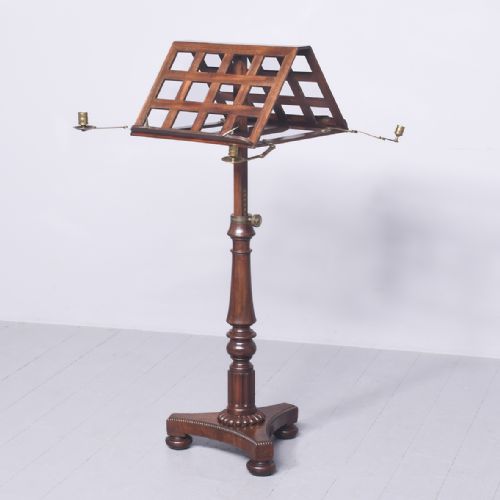


Antique Duet Stand
An antique duet stand is a sturdy, adjustable resting frame designed for two musicians to read sheet music simultaneously.
Antique Duet Stand
An antique duet stand provides a dual platform for holding heavy folios and scores during practice or performance. When searching for an antique duet stand, buyers encounter pieces engineered to support multiple players from a single central pillar.
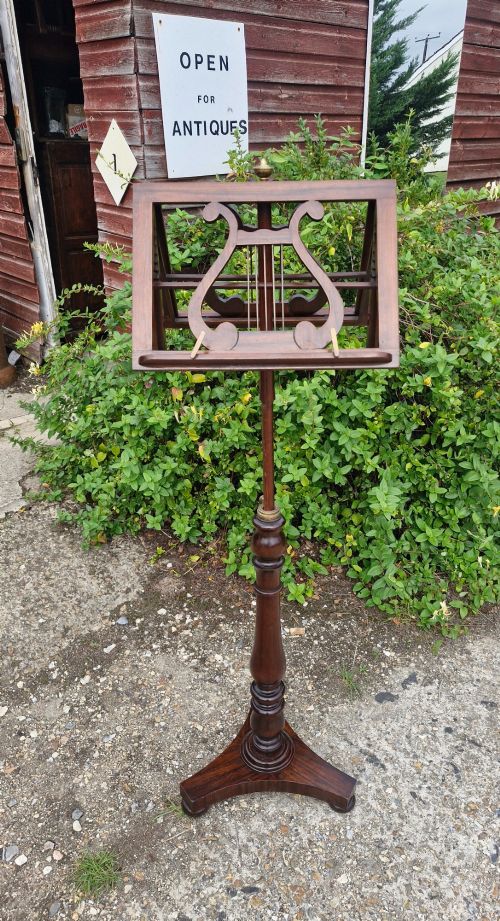
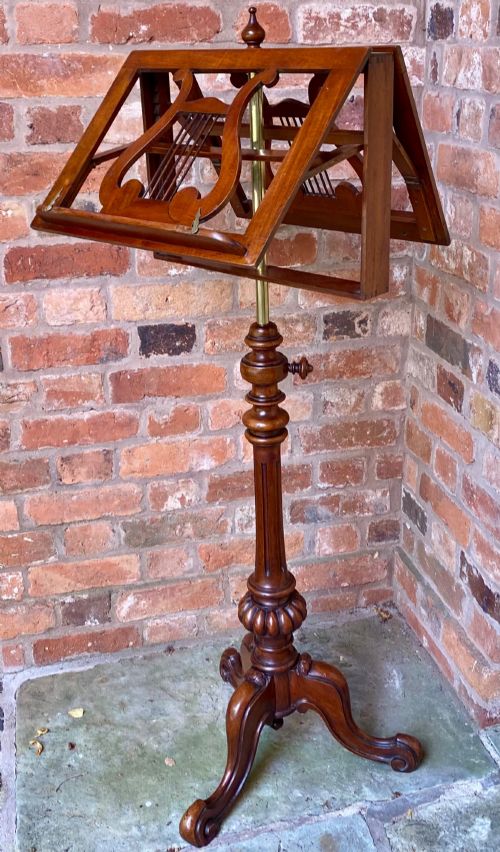
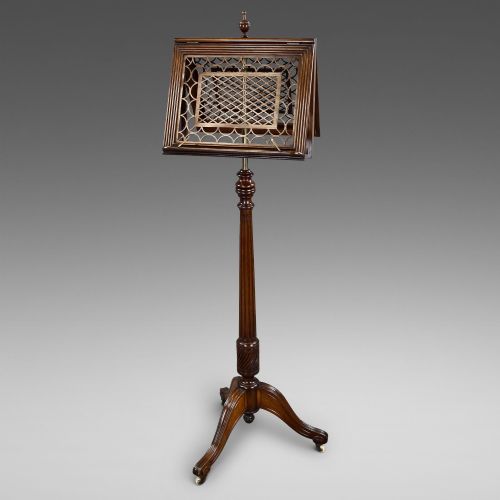
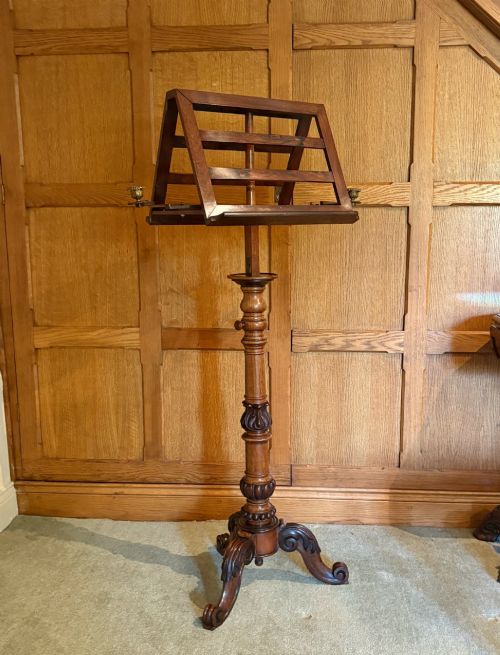
The examples recorded here span the Georgian, Regency, and Victorian eras, taking the form of tripod-based lecterns or combined reading tables. Mahogany and rosewood predominate amongst the woods, frequently augmented by brass fittings and satinwood inlay.
Most items on this page operate on adjustable shafts that alter the height and angle of the reading desks. These stands serve equally well today as bookholders or architectural display frames within a traditional study.
How they were made
Cabinetmakers constructed the main pillars and tripod bases from dense hardwoods like mahogany, walnut, and rosewood to ensure the weight of the twin desks stayed balanced. Brass was employed for the sliding mechanisms, screws, and adjustable knuckles that allowed the reading surfaces to tilt and rise.
Fretwork carving and inlaid veneers of satinwood or burr walnut were utilised on finer specimens to decorate the fixed or folding panels. Tripod legs often terminated in scroll feet or brass castors, connecting stability to portability for use in nineteenth-century drawing rooms.
Recorded materials span mahogany, burr walnut, rosewood, oak, and brass, crossing Georgian, Regency, and Victorian periods.
What varies in quality
The sophistication of the mechanical adjustment distinguishes standard production pieces from workshop highlights. Heavy brass ratchets, smooth screw actions, and tight joints show superior execution by makers who understood how to bear the torque of two heavy books.
Timber selection and decorative inlay further divide the range, from plain oak country pieces to highly figured burr walnut and rosewood models with intricate fretted music rests. The rigidity of the central column on its tripod base determines how steadily the desks hold their position under load.
Gillows·Swann and Millican
The Antique Duet Stand Glossary
- Duet stand
- A dual-sided music stand designed to hold scores for two players. These pieces feature adjustable desks mounted on a central pillar.
- Lyre
- An openwork brass or wooden motif shaped like a classical stringed instrument, frequently incorporated into the central support of the reading desk.
- Tripod base
- A three-legged support structure resting on feet or castors, commonly used to keep music stands stable on uneven floorboards.
- Folio
- A large-format book or binder for holding sheet music, often accommodated by the wider ledges found on these stands.
- Satinwood
- A pale, dense exotic wood utilised for contrasting stringing and geometric inlay across Regency and Victorian furniture surfaces.
Antique Duet Stand: Frequently Asked Questions
How do you adjust the height?
Most stands utilise a sliding brass collar or a threaded wooden screw mechanism concealed within the central pillar. Twisting or releasing this fitting allows the upper shaft to rise or fall before locking it into position.
Heavier Victorian and Regency models rely on precise metal ratchets to hold the reading desks at the desired reading angle without slipping under the weight of bound folios.
Were these made for two players?
Yes, these stands were specifically built with opposing or wide reading ledges to accommodate two musicians sharing a single score. They allowed performers to practice together in a drawing room without needing separate music furniture.
Many examples convert or fold down to function as a single reading table or book stand when only one surface is required.
How do I spot a Georgian piece?
Georgian and Regency stands typically display dense, unadorned mahogany timbers with clean architectural lines and simple brass adjustments. The tripod bases often feature spade feet or plain cabriole legs.
Later Victorian versions introduce heavier turned columns, burr walnut veneers, and more elaborate fretted music rests or inlaid satinwood decoration.
Where should I place it?
These stands suit libraries, studies, or living spaces where they can hold open art books, dictionaries, or sheet music. Their small tripod footprints mean they occupy minimal floor space while providing a striking focal point.
Keep them away from direct heat sources and strong sunlight to protect the polished mahogany or rosewood surfaces from drying out.