

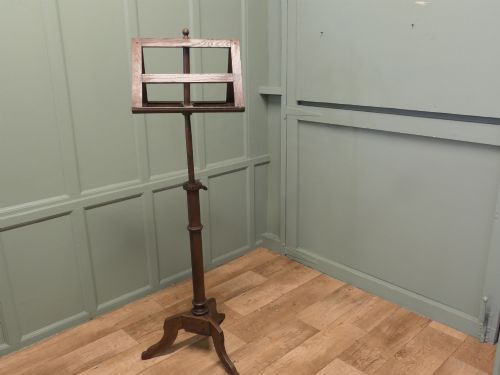
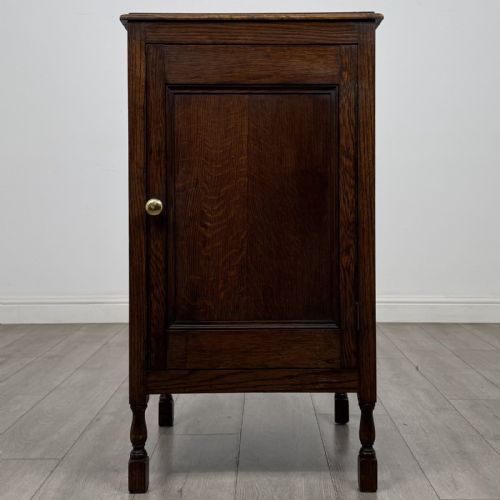
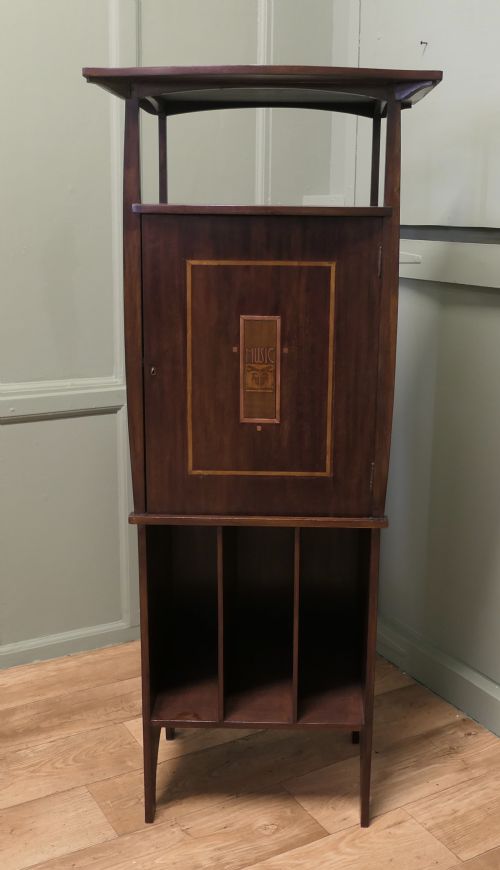
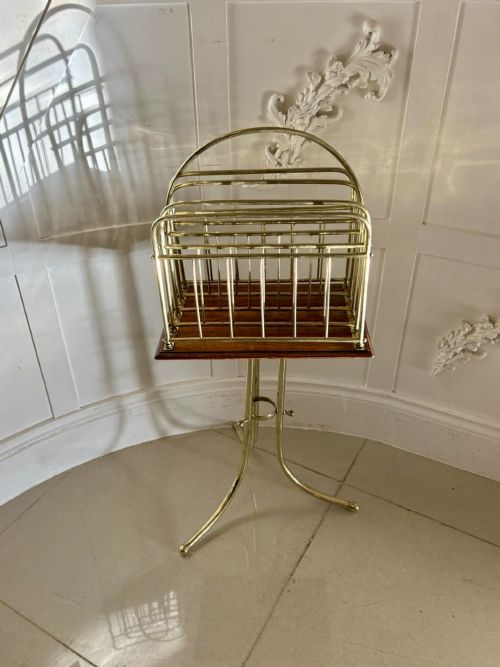


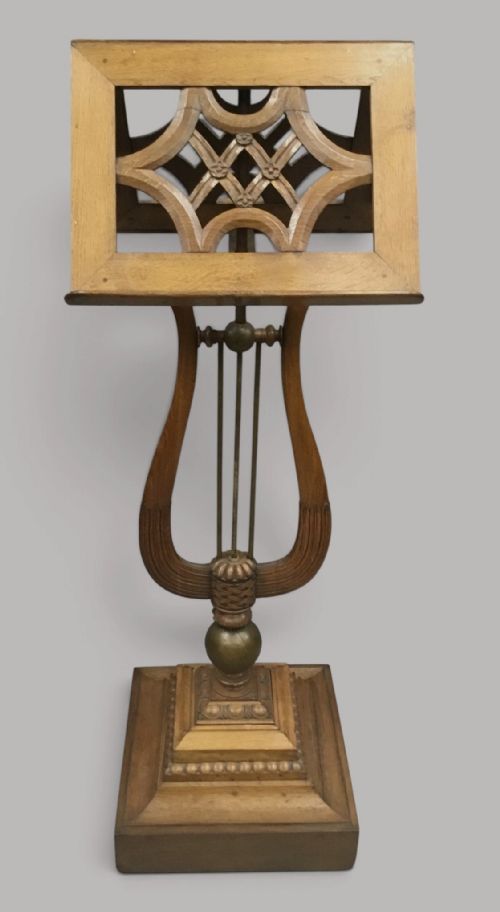


Oak Music Stand
An oak music stand holds scores and folios with steady gravity, built for parlour, church, or recital room from solid timber.
Oak Music Stand
The oak music stand category gathers upright lecterns, adjustable duet desks, and compartmentalised storage cabinets designed to hold sheet music and folios. Pieces span the Georgian period, the Victorian era, the Edwardian years, and the early twentieth century.
Most examples encountered here follow Arts and Crafts, Gothic Revival, or vernacular English styles. Makers adapted the form for domestic parlours, churches, and professional recital spaces using robust joinery.
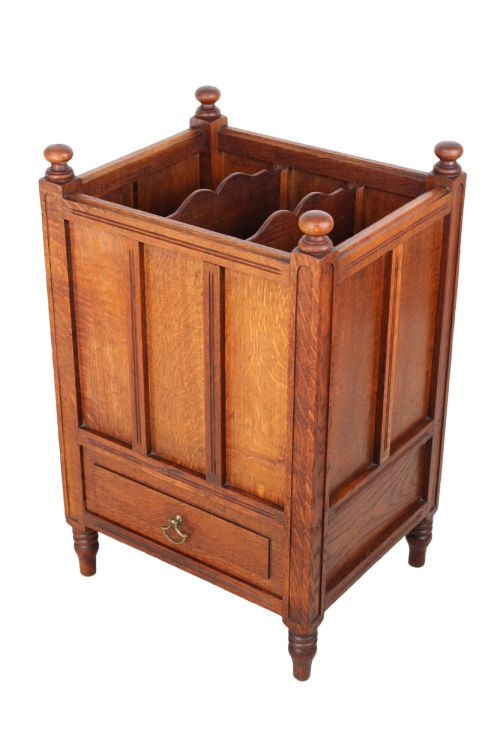
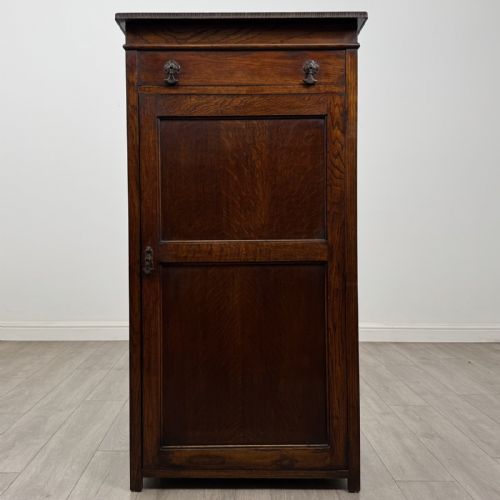
Forms range from pivoting book rests and revolving prayer lecterns to music filing cabinets and magazine racks fitted with shelves. Oak remains the primary timber across these utilitarian and decorative furnishings.
How they were made
Makers constructed these stands primarily from solid oak, sometimes combining pine, fruitwood, or mahogany for internal partitions and secondary parts. Metal components, particularly brass adjustments and hinges, enabled pivoting desks and sliding rests.
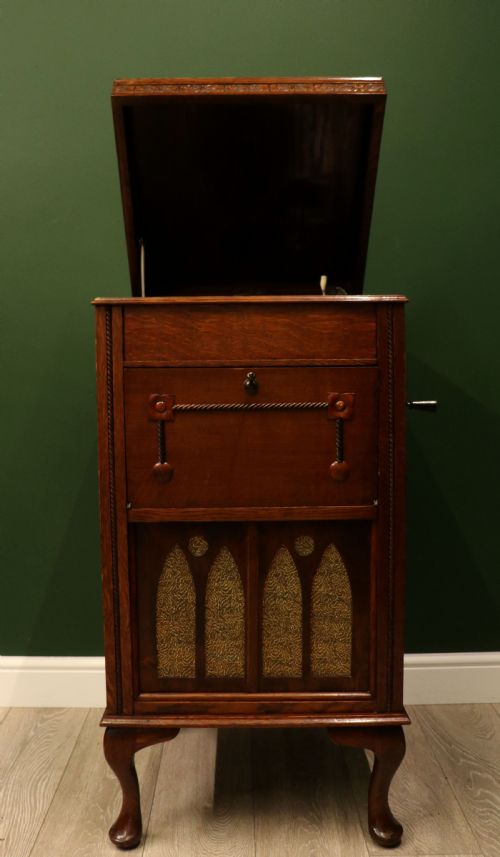
Carving, wood inlay, and turned spindles decorated the upright shafts and panelled doors of cabinets. Fabric linings occasionally appeared inside folio compartments and book rests to protect paper scores.
Oak Music Stand Retail Price Guide 2026
Typical asking prices for oak music stand among the pieces listed under this phrase on Sellingantiques today, from the lower quarter to the upper quarter. They describe what is for sale here now, not the wider market.
The archive records French and Scottish examples alongside English pieces, showing diverse regional interpretations of the oak music stand form.
What varies in quality
Quality rests on the integrity of the mechanical adjustments, such as brass ratchets and swivelling hinges that hold heavy folios at the correct angle. Simpler turned stands rely on solid framing and stable timber bases.
The sophistication of the joinery and carved ornamentation separates utilitarian school or church lecterns from refined parlour pieces. Finer cabinets feature integrated filing drawers, panelled doors, and precise wood inlay.
GM Elwood for JS Henry·U Phone of Leeds
The Oak Music Stand Glossary
- Canterbury
- A low stand with vertical partitions designed to hold sheet music, folios, or periodicals off the floor.
- Lectern
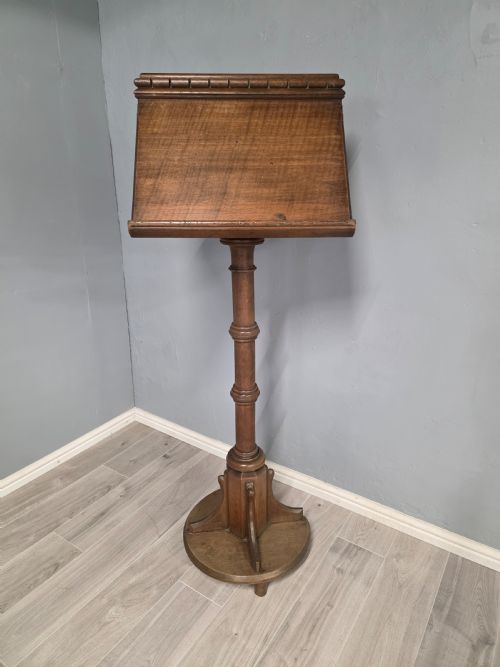
- A reading desk with a slanted top designed to support books or scores for a speaker or musician standing or sitting before it.
- Duet stand
- A music stand wide enough to accommodate two musicians reading from a shared open score simultaneously.
- Lutrin
- A descriptive term for a book rest or music stand, often applied to French pivoting or swivelling reading desks.
- Black Forest
- A style of deeply carved wooden ornamentation, often featuring naturalistic foliage or animals, popular during the Victorian period.
Oak Music Stand: Frequently Asked Questions
How do I adjust the music desk height?
Many period stands utilise brass sliding stems secured by thumbscrews or mechanical ratchets positioned behind the book rest. These allow the user to raise or lower the reading surface for sitting or standing performance.
Care should be taken when loosening older metal mechanisms to avoid scoring the wooden shaft. Gentle alignment ensures the desk remains level once secured.
Were these stands meant for church or home?
The category includes both ecclesiastical furnishings and domestic parlour pieces. Heavy oak lecterns with Gothic Revival or architectural carvings typically originated in churches or school chapels.
Smaller adjustable stands, music cabinets, and duet desks served domestic musicians in drawing rooms. Both environments demanded sturdy timber construction to support heavy bound volumes.
How do I distinguish Victorian from Edwardian stands?
Victorian stands frequently display heavier proportions, darker finishes, and dense ornamentation such as Gothic Revival tracery or Black Forest carving. These pieces often emphasise architectural gravity.
Edwardian and Arts and Crafts examples tend to show lighter construction, exposed pegged joints, and simpler geometric lines. Cabinet interiors also shifted toward practical filing systems during the early twentieth century.
Can these hold heavy modern music books?
Solid oak construction provides substantial structural support for large modern scores and heavy hardback volumes. The fixed ledges on the lower edge of the desk prevent books from sliding off.
However, delicate swivelling mechanisms on lighter reading tables should be checked for stability before loading heavy folios. Distributing weight evenly across duet stands protects the central pivot.