
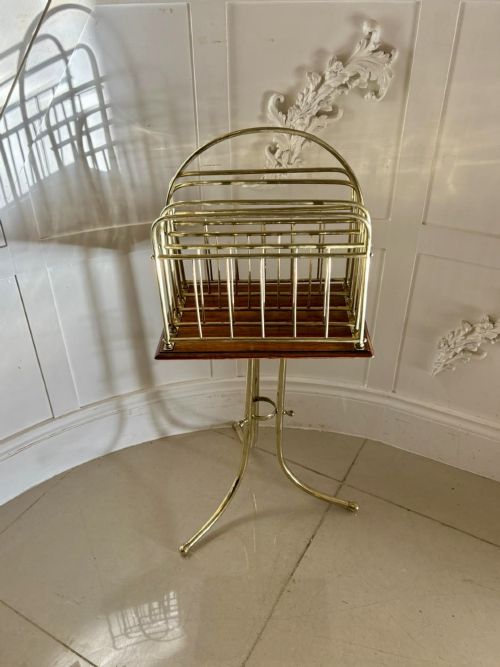
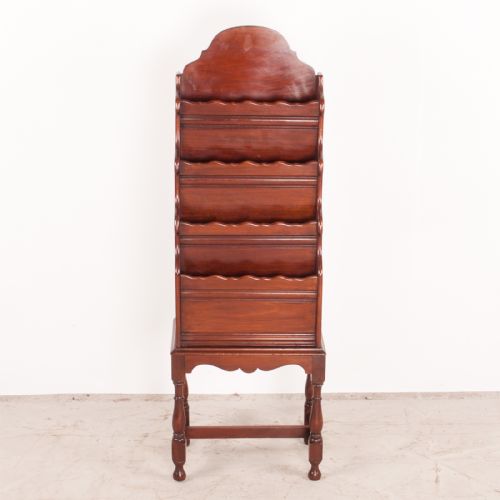


Freestanding Music Rack
A freestanding music rack brings period timber and brass into a room to hold folios and journals with genuine upright charm.
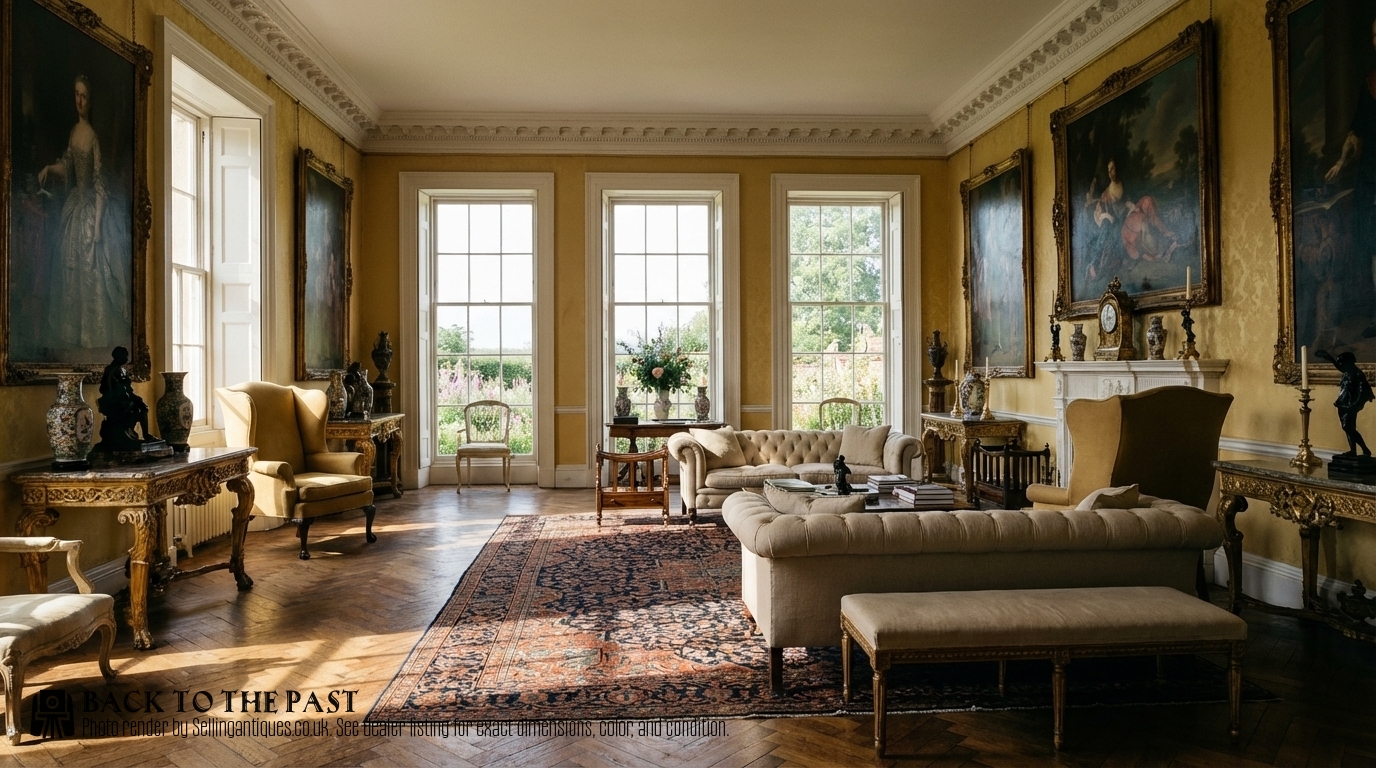
Freestanding Music Rack
A freestanding music rack is designed to hold sheet music, folios or periodicals close to an instrument or seating area without needing wall support. When you search for a freestanding music rack, you encounter sophisticated nineteenth-century designs alongside versatile Georgian and Edwardian iterations.
The most common forms on this page include the traditional Canterbury with slatted partitions and the lyre-shaped music stand. These pieces combine practical storage with decorative presence, often incorporating lower drawers or tiered shelving.
Origins span from the George III period through the Victorian era up to the nineteen-twenties, reflecting shifting domestic habits and musical pursuits. Walnut, mahogany and bamboo form the backbone of these offerings, showing diverse regional craftsmanship.
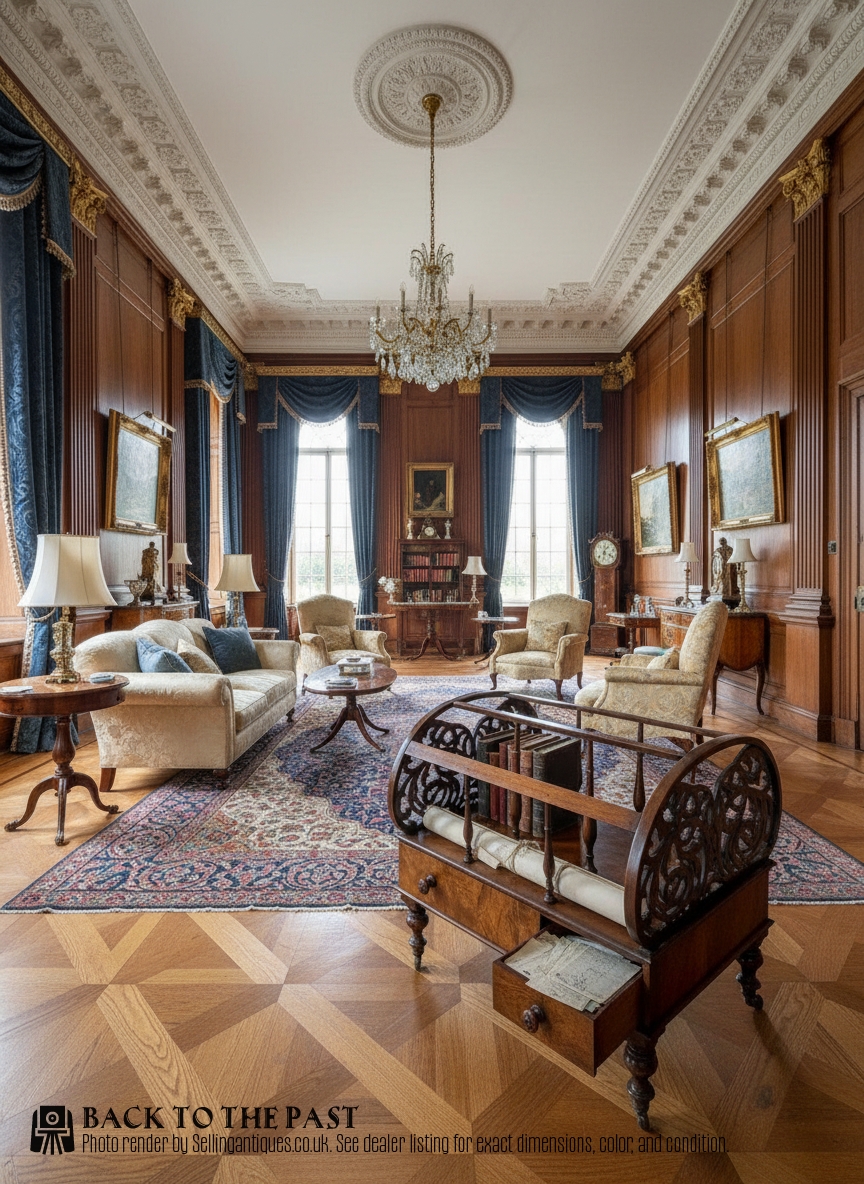
Materials and construction methods
Construction relies heavily on timbers such as mahogany, burr walnut and rosewood, frequently enhanced by fine satinwood inlay. Cabinetmakers utilised traditional joinery to build sturdy slatted partitions and integrated drawers.
Metals play a structural and decorative role, particularly brass in revolving stands and adjustable music racks. Alternative materials such as bamboo and rattan introduce lighter textures suited to late Victorian aesthetics.
Victorian bamboo racks bring an unexpected conservatory charm to sheet music storage.
Distinguishing quality across examples
Superior examples display exceptional figuring in the timber, particularly in burr walnut and mahogany surfaces. The crispness of satinwood inlay and the robustness of brass fittings separate finer cabinetwork from simpler utility items.
Proportion and structural integrity dictate the standing of a piece, with well-balanced tiers and smooth drawer action marking the higher tiers of production.
The Freestanding Music Rack Glossary
- Canterbury
- A low, freestanding stand with partitioned sections for holding music books or folios, often featuring a single drawer below. It originated in the late eighteenth century and remained popular throughout the Victorian period.
- Lyre-shaped
- A decorative motif and structural form resembling the ancient stringed instrument, frequently utilised in the frames of music stands and reading desks. This classical shape adds ornamental elegance to nineteenth-century pieces.
- Burr walnut
- Timber taken from the warted growths on walnut trees, showing highly figured and swirling grain patterns. Cabinetmakers prized this veneer for high-status Victorian furniture.
- Satinwood inlay
- Contrasting light-toned wood embedded into the surface of a darker timber to create decorative borders or motifs. It requires meticulous hand-cutting by skilled artisans.
- Revolving stand
- A rotating framework mounted on a central pillar, allowing easy access to stored publications from multiple angles. This mechanism appears in brass and wooden library or music accessories.
Freestanding Music Rack: Frequently Asked Questions
What is a freestanding music rack used for?
These pieces hold sheet music, folios, magazines and books within easy reach of a piano or seating area. They keep paper goods organised upright in domestic spaces.
Historically they served drawing rooms and music rooms where musicians needed quick access to scores during performance.
How do I date a freestanding music rack?
Dating relies on identifying timber choices, construction techniques and stylistic markers associated with specific eras. George III and Regency pieces favour mahogany with clean lines.
Victorian examples often introduce burr walnut, elaborate inlay or bamboo, while nineteen-twenties items show simpler revival traits.
Where should I place it in a room?
Position your rack beside a piano, writing desk or reading chair where its profile can be appreciated from all sides. Because these pieces are freestanding, they do not require wall attachment.
Ensure they sit away from direct heat sources to protect historic veneers and polished wood surfaces.