

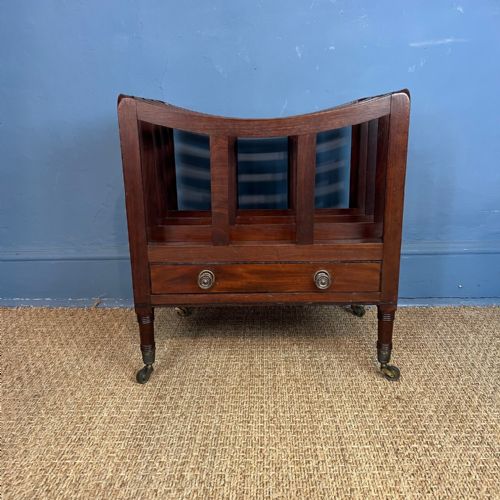
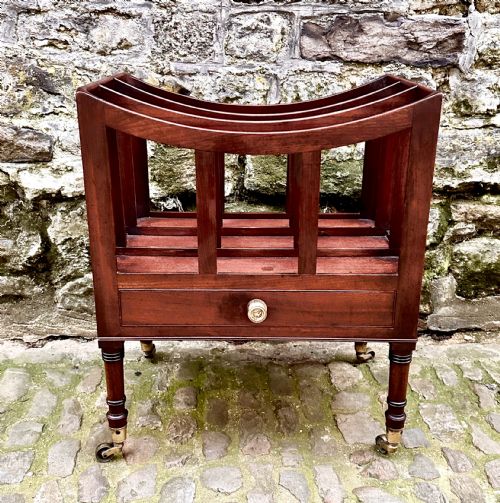
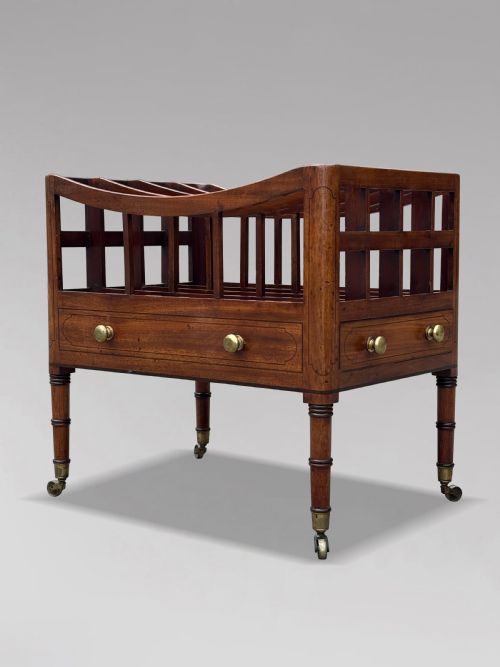


George III Canterbury
These George III canterbury pieces are elegant freestanding stands designed to hold folios and sheets, bringing refined organisation to any room.
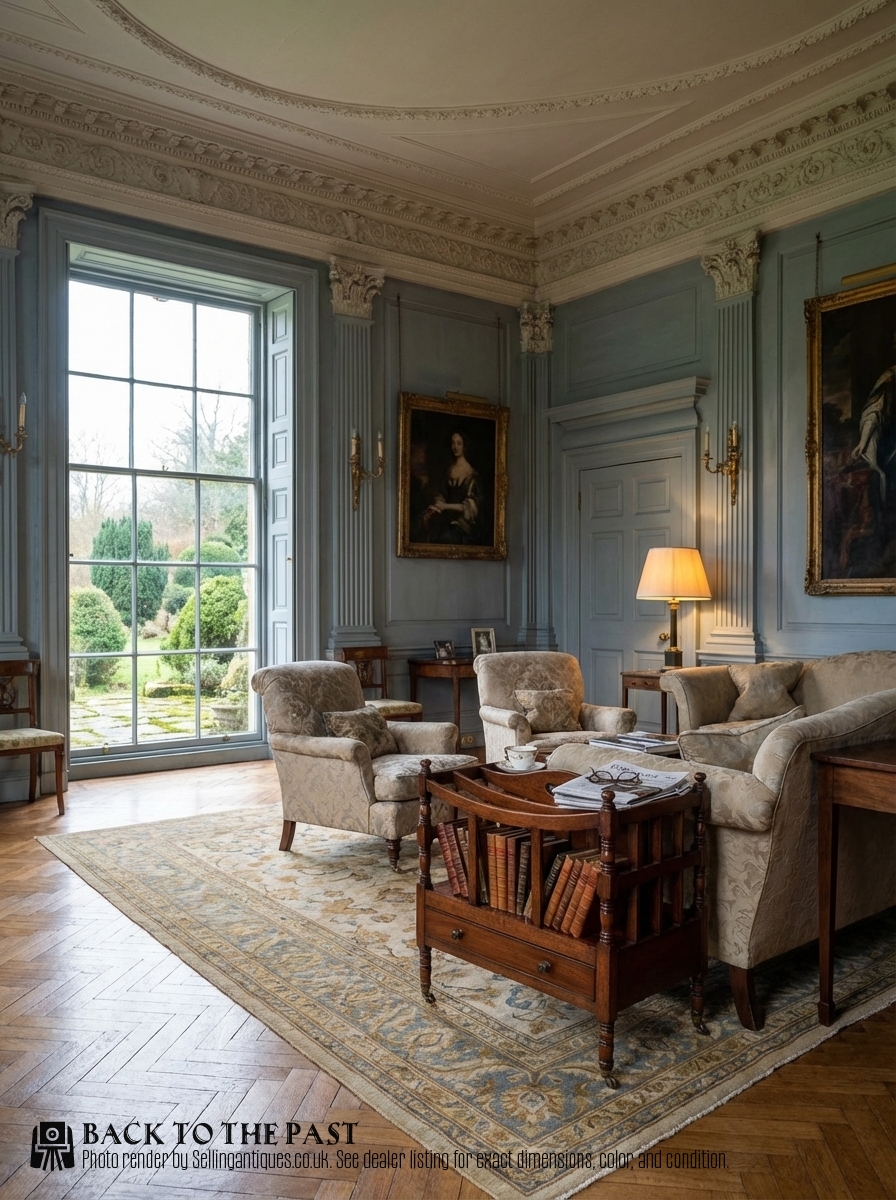
George III Canterbury
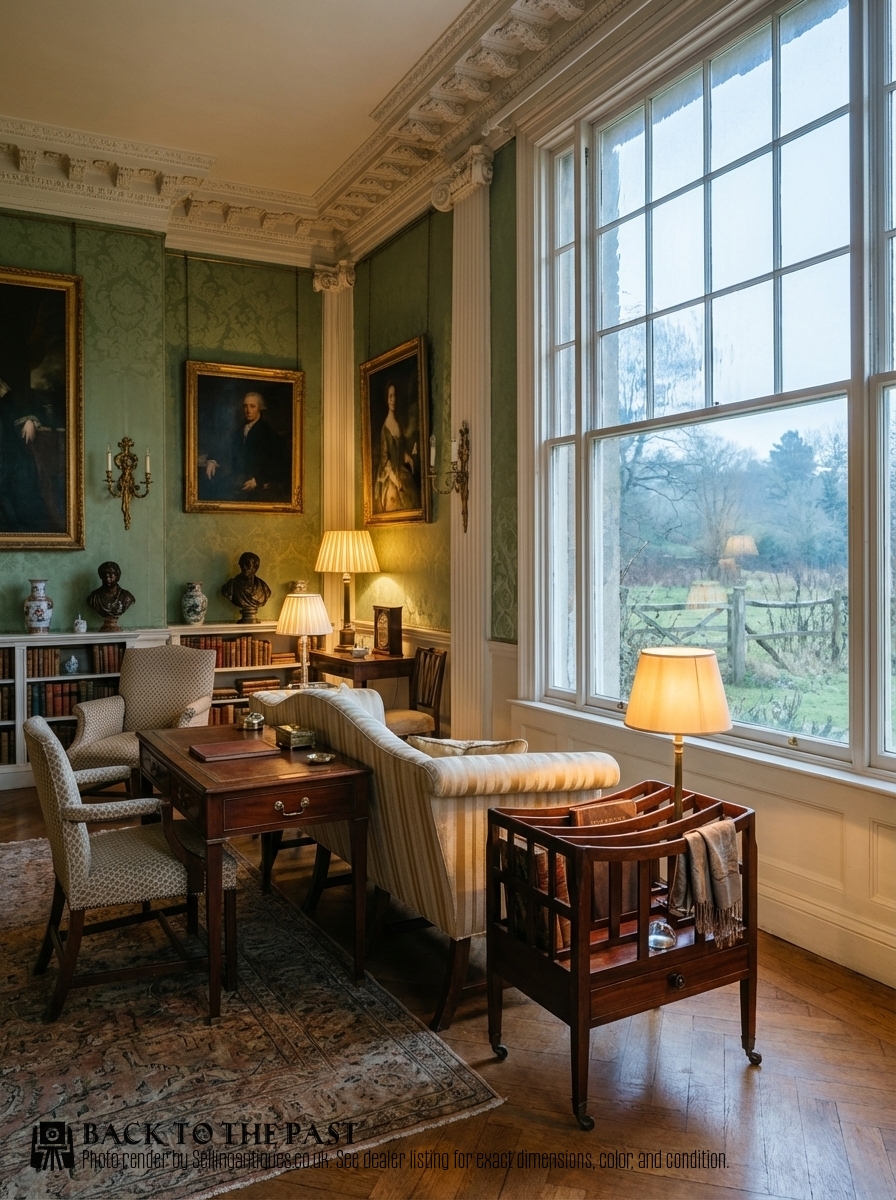
When you search for a george iii canterbury, you encounter practical furniture designed to hold sheet music, folios or periodicals close to hand. These pieces typically feature slatted or partitioned divisions above a low frame, occasionally incorporating a single drawer at the base.
The versions most commonly met on this page are constructed from mahogany and rosewood, spanning the late eighteenth century into the early nineteenth century. Examples range from compact four division music canterburys to oversized or narrow scale freestanding formats.
Distinctions in quality
The finest examples display crisp joinery in the slatted divisions and well proportioned scale, whereas lesser pieces can feel heavy or utilitarian in their framing. Timber selection significantly elevates a piece, particularly where rich Cuban mahogany or figured rosewood shows deep natural patina.
Original brass castors and intact divider spindles separate superior pieces from those with later replacements or simplified turnings. Refined proportions, such as unusually narrow or small scale formats, indicate superior workshop design.
George III Canterbury Retail Price Guide 2026
Typical asking prices for george iii canterbury among the pieces listed under this phrase on Sellingantiques today, from the lower quarter to the upper quarter. They describe what is for sale here now, not the wider market.
Legend connects the name to a cleric who ordered the first stand for his scores.
The George III Canterbury Glossary
- Canterbury
- A low stand with partitions for holding music sheets, books or periodicals. It typically sits on castors for easy placement beside a chair or desk.
- Division
- One of the upright compartments forming the upper rack of the stand. These sections keep folios or papers upright and separated.
- Freestanding
- Designed to be viewed from all sides rather than placed flush against a wall. Such pieces stand finished on every exterior surface.
- Cuban mahogany
- A dense, dark timber prized for cabinetwork during the eighteenth century. It yields a rich grain and deep natural patina over time.
George III Canterbury: Frequently Asked Questions
What is a george iii canterbury used for?
These stands served primarily to hold sheet music, books and writing folios near a desk or instrument.
Today they function effectively as magazine racks or side tables in a living space.
How do I spot a music canterbury?
Music canterburys often feature specific compartment dimensions suited to bound volumes and score sheets.
They appear alongside general magazine racks in the listings from this period.
Are all these stands made of mahogany?
Mahogany forms the vast majority of the timber seen in these listings, spanning standard and Cuban varieties.
Alternative woods such as rosewood and yew appear occasionally among the recorded pieces.
Do these pieces include drawers?
Several examples incorporate a single low drawer positioned beneath the slatted compartment dividers.
This drawer provided extra storage for small writing or musical accessories.