

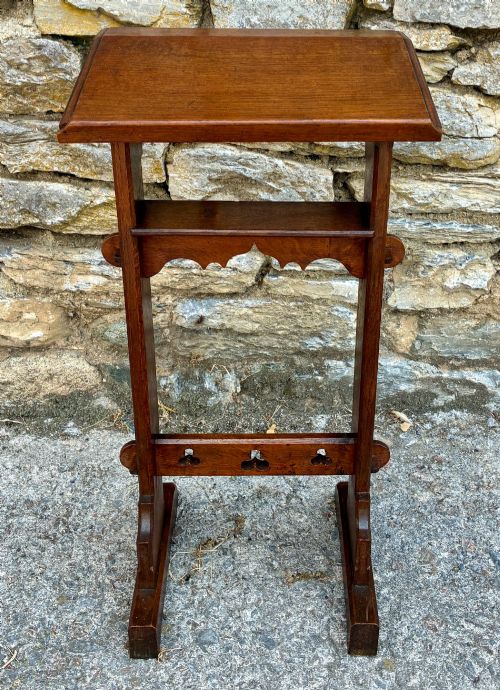

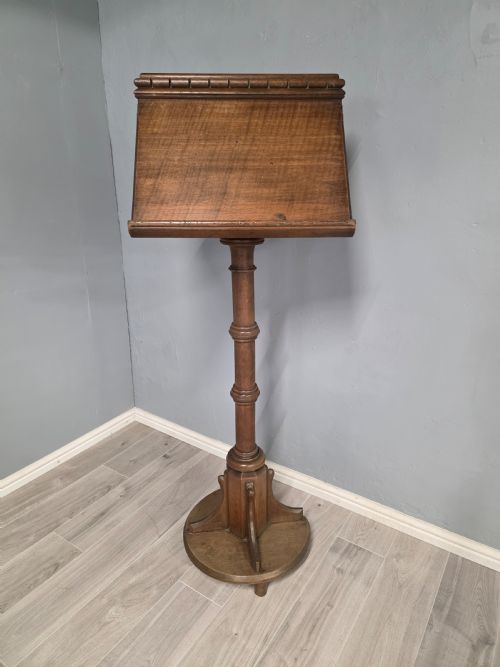
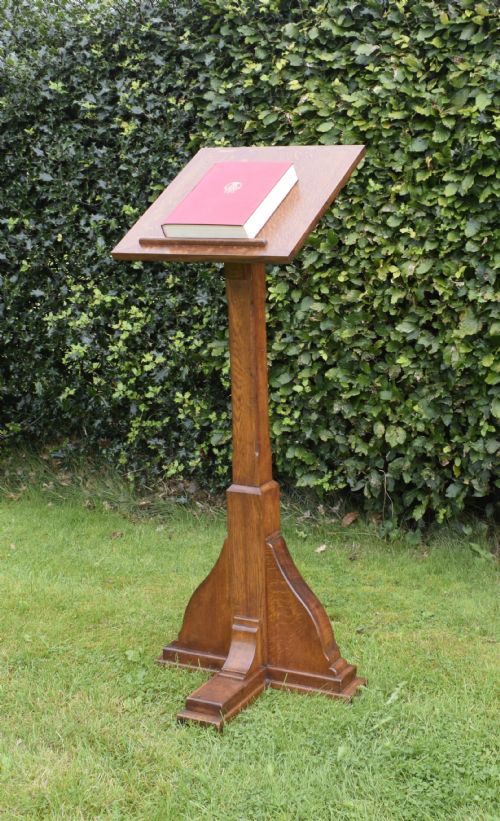


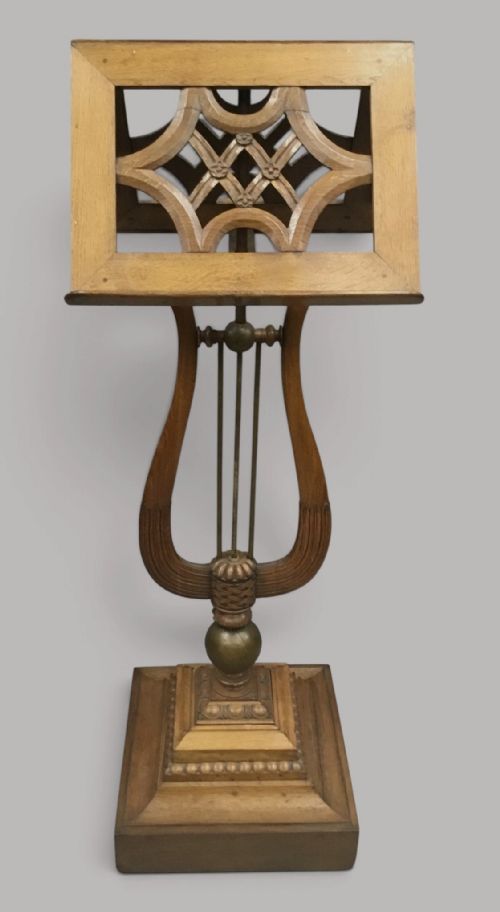


Gothic Oak Lectern
These gothic oak lectern pieces bring ecclesiastical presence into domestic or public spaces, offering solid craftsmanship and enduring utility.
Gothic Oak Lectern
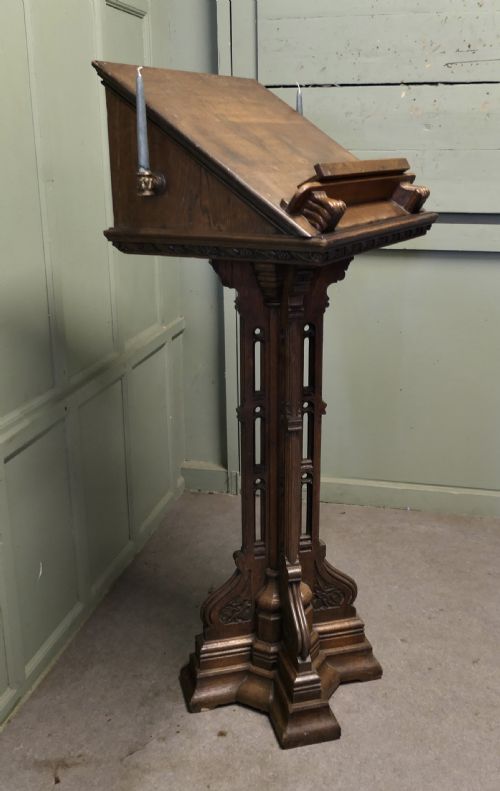
A gothic oak lectern provides a sturdy slanted surface designed to hold books, menus, or papers during reading or service. You will frequently encounter examples spanning the nineteenth century through the early twentieth century, rooted in the Gothic Revival and Arts and Crafts traditions.
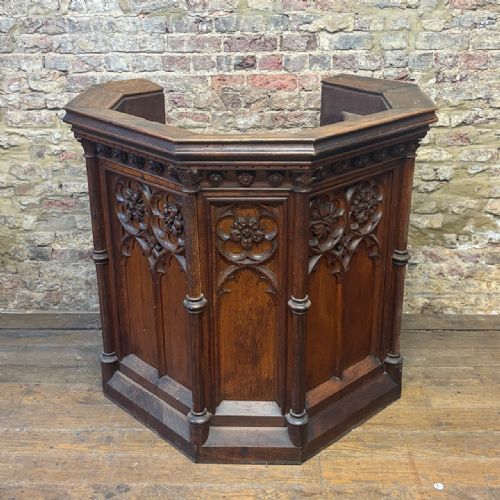
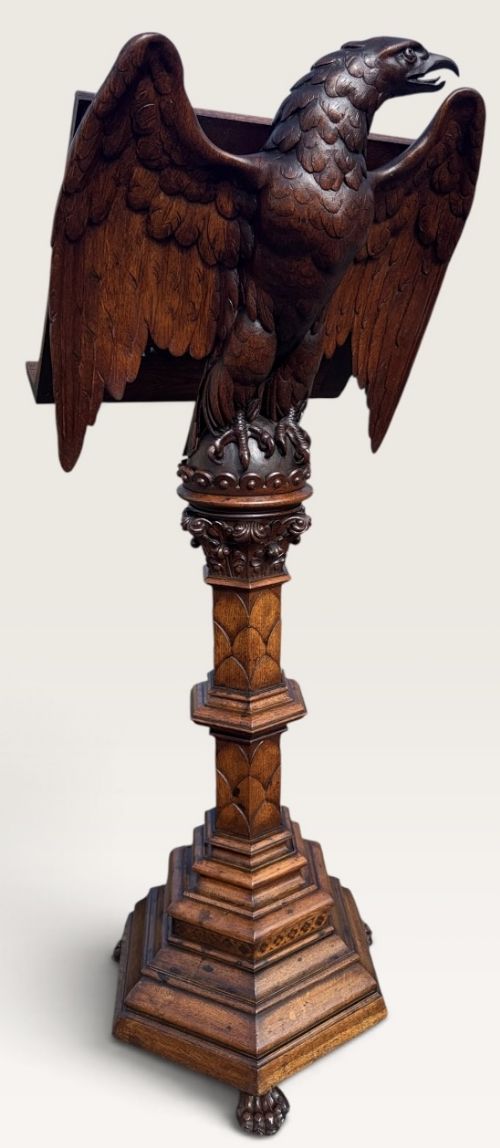
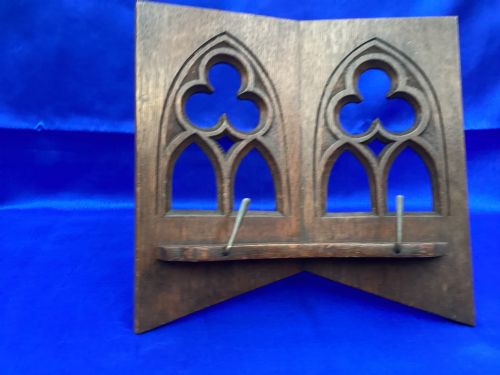
The selection on this page ranges from tall church pulpits and eagle stands to smaller table reading desks and prayer desks. Many pieces retain direct ecclesiastical origins, whilst others reflect domestic adaptations such as reception stations or hall tables.
How they were made
Makers relied primarily on solid oak, occasionally combining pine for secondary framing and brass for hinges, mounts, or reading ledges. Timber was heavily carved by hand with tracery, panels, and occasionally figural elements like winged cherubs or eagles.
Construction methods prioritised weight and stability to support heavy folio volumes, utilising traditional joinery that anchors pedestals and revolving tiers securely.
Gothic Oak Lectern Retail Price Guide 2026
Typical asking prices for gothic oak lectern among the pieces listed under this phrase on Sellingantiques today, from the lower quarter to the upper quarter. They describe what is for sale here now, not the wider market.
Listings span from the early nineteenth century through the 1920s, predominantly showcasing oak alongside occasional brass and pine components.
What varies in quality
Depth and crispness of the hand-carving separate standard utility pieces from exceptional works featuring detailed tracery or figural sculpture. The proportion of the stand, stability of the base, and integrity of the timber influence the overall standard.
Presence of secondary materials like brass fittings and the cleverness of mechanisms, such as revolving book platforms or duet stands, mark the distinction between simpler desks and high ecclesiastical commissions.
The Gothic Oak Lectern Glossary
- Gothic Revival
- An architectural and decorative style popular during the nineteenth century that revived medieval forms, pointed arches, and heavy ornamentation. It defines the aesthetic of most pieces here.
- Ecclesiastical
- Relating to the Christian Church or its clergy, describing furniture originally commissioned for religious services and pulpits.
- Tracery
- Openwork ornamentation in stone or wood, typically consisting of intersecting ribwork, commonly seen carved into the panels of these stands.
- Duet stand
- A music or reading stand designed to accommodate two people reading simultaneously from shared or facing scores.
Gothic Oak Lectern: Frequently Asked Questions
How were lecterns used originally?
These pieces served in churches and chapels to support heavy prayer books, Bibles, and sermon notes for clergy during services. Their elevated, slanted surfaces allowed readers to project their voices while following text.
Over time, many of these ecclesiastical stands found new purposes in domestic halls, libraries, and studies as book or menu displays.
Can I use one as a standing desk?
Many tall pedestal lecterns and reading stands provide a suitable height for holding papers or tablets while standing. Their slanted surfaces accommodate modern reading habits quite naturally.
Heavier church pulpits and fixed prayer desks remain less adaptable due to their stationary design and integrated seating or kneeling elements.
How do I distinguish Victorian from Edwardian pieces?
Victorian examples often display heavier, more elaborate Gothic Revival carving, sometimes incorporating dramatic figural elements like eagles or winged cherubs. They reflect a grander, highly ornamented ecclesiastical aesthetic.
Edwardian and later pieces frequently show the simpler, cleaner influence of the Arts and Crafts movement, prioritising visible grain and straightforward construction over dense ornamentation.
Are all these pieces made entirely of oak?
Oak forms the primary structural and decorative material across nearly every piece in this category, valued for its durability and grain. You will occasionally find secondary timbers like pine used in concealed framing elements.
Brass frequently appears as a complementary material for book ledges, hinges, and adjustable desk mechanisms.