


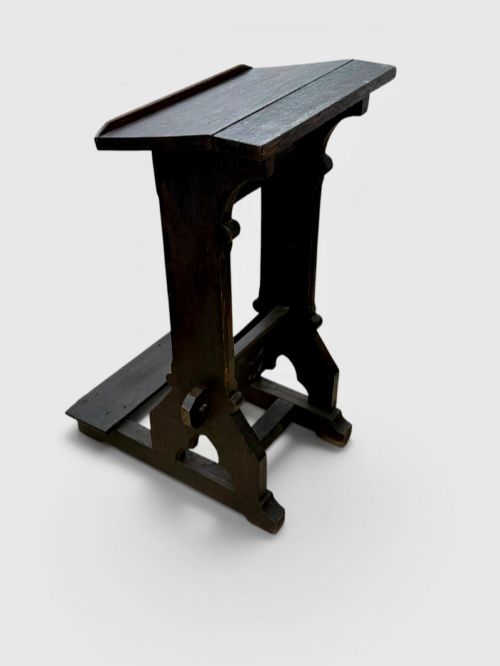
Antique Standing Desk
When you search for an antique standing desk, you are looking for elevated writing surfaces used for drafting, clerking, and reception work.
What an antique standing desk is
When you search for an antique standing desk, you encounter forms designed for upright work, including clerks desks, tally desks, draftsman tables, and reception greeting stations. These pieces serve practical workspace functions in standing positions, originating from estate houses, hotels, and offices.
The pieces available include examples from the Georgian, Regency, and Victorian periods, alongside later Victorian country and Arts and Crafts pieces. Woods such as oak, mahogany, elm, and pine dominate the construction, often paired with brass and leather details.
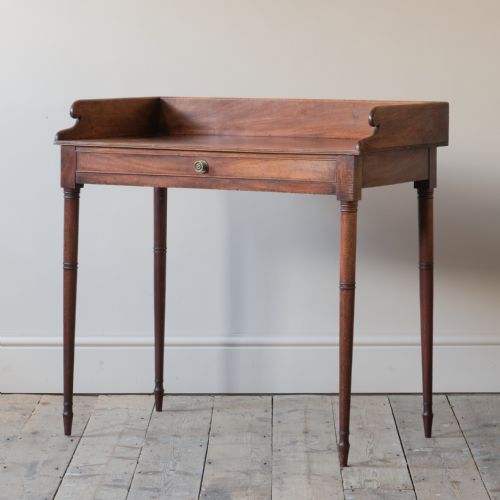
Clerks desks and reception stations represent common formats on this page, often combining sloped writing tops with compartment storage below. Simpler pine and oak models contrast with more finished mahogany and ebonized examples.

How they were made
Makers utilised solid timbers like oak, mahogany, elm, and pine, frequently selecting dense hardwoods for writing surfaces and robust framing. Brass fittings provide structural support and hardware, while leather inserts occasionally face the writing slopes.
Joinery techniques reflect traditional workshop practices of the eighteenth and nineteenth centuries, joining solid planks for desk boxes and standing frames. Surfaces show plain finishes, ebonised treatments, or natural grain patination depending on the regional or institutional destination of the piece.
Retail Price Guide 2026
Typical UK retail prices for standing desk, calculated from the Sellingantiques database of over a million retail prices indexed since 2003. This retail price guide relies exclusively on Sellingantiques data; no external sources or auction records are used, so the figures do not describe the wider market.
Some reception stations still carry the wiring for an integrated light to illuminate the late-night guestbook.
What varies in quality
The distinction between utilitarian workshop pieces and finer estate furniture rests in timber selection and secondary additions. An eighteenth-century oak desk on a later stand demonstrates the adaptation of functional furniture over time.
Design complexity separates basic pine clerks desks from detailed George III mahogany tally desks or Arts and Crafts reception stations with integrated lighting. The integrity of the original standing height and structural framing governs the character of each piece.
Maple and Co
The Antique Standing Desk Glossary
- Clerks desk
- A high writing surface designed for a person to stand while working, typically featuring a sloping top. These desks often include interior compartments for ledgers and writing implements.
- Tally desk
- A specialised standing desk used for recording counts and inventories in commercial environments. They are constructed in timbers such as mahogany and oak.
- Draftsman table
- An adjustable or flat standing table utilised by illustrators and architects for large format drawings. Regency examples demonstrate specific period turning and framing.
- Reception greeting station
- A standing height counter or desk utilised in hospitality and commercial settings. Examples appear in French oak and Arts and Crafts styles.
- Ebonised
- Wood treated with a chemical process or finish to imitate ebony. This dark finish appears on nineteenth-century pine surfaces.
Frequently Asked Questions
What is an antique standing desk used for?
These desks provided an elevated workspace for writing, clerking, drafting, and greeting visitors in offices, estates, and commercial establishments. Workers stood to manage ledgers and documents throughout the working day.
Today, they serve similar functional roles in home studies or modern workspaces, offering a standing platform for writing or displaying items.
How do I identify a Georgian standing desk?
Georgian pieces display the characteristic proportions and timber choices of the eighteenth century, frequently utilising solid mahogany or oak. Details follow the restrained decorative conventions of the period.
Construction methods involve traditional joinery without modern fasteners, and the framing reflects the architectural styles associated with the reigns of the Georgian monarchs.
Were standing desks used in homes?
While many standing desks originated in commercial offices, banks, and institutions, estate houses utilised them for household accounts and estate management. Tally desks and clerks desks functioned wherever tall working surfaces were required.
Country houses and domestic libraries housed specialised writing furniture tailored to the specific tasks of land stewards and clerks.
What woods were used for standing desks?
Carpenters and cabinetmakers utilised native and imported hardwoods and softwoods depending on the destination of the piece. Oak and mahogany appear frequently in fine estate and commercial furniture.
Pine, elm, and ebonised softwoods served utilitarian roles in practical workspaces, hotels, and schools, providing durable surfaces for daily commercial use.