


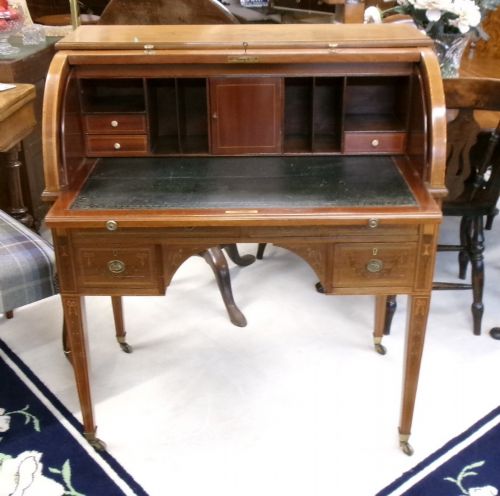

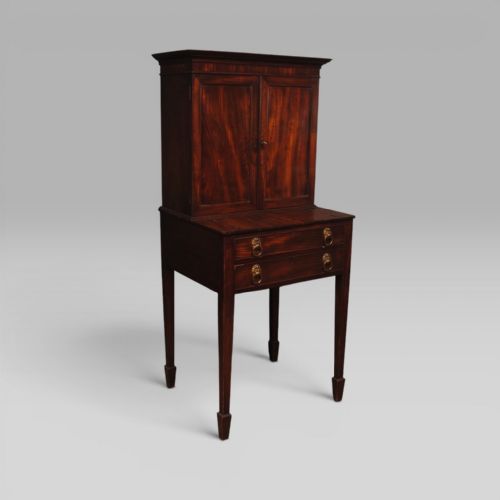


Antique Bureau on Stand
An antique bureau on stand brings compact writing space and fine cabinet work into a room.
What an antique bureau on stand is
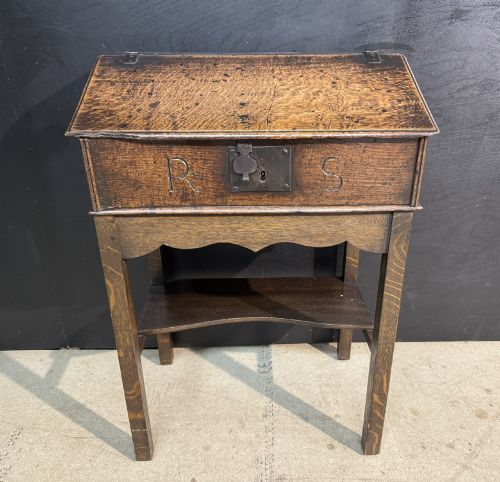
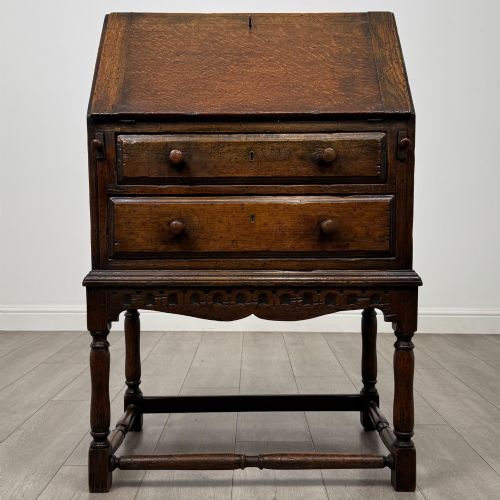
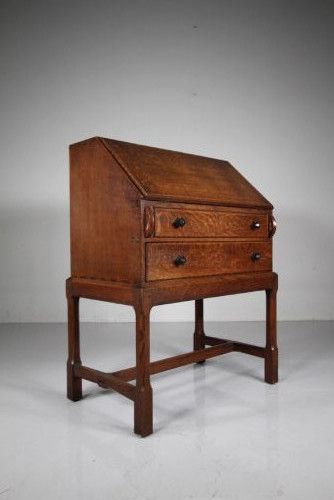
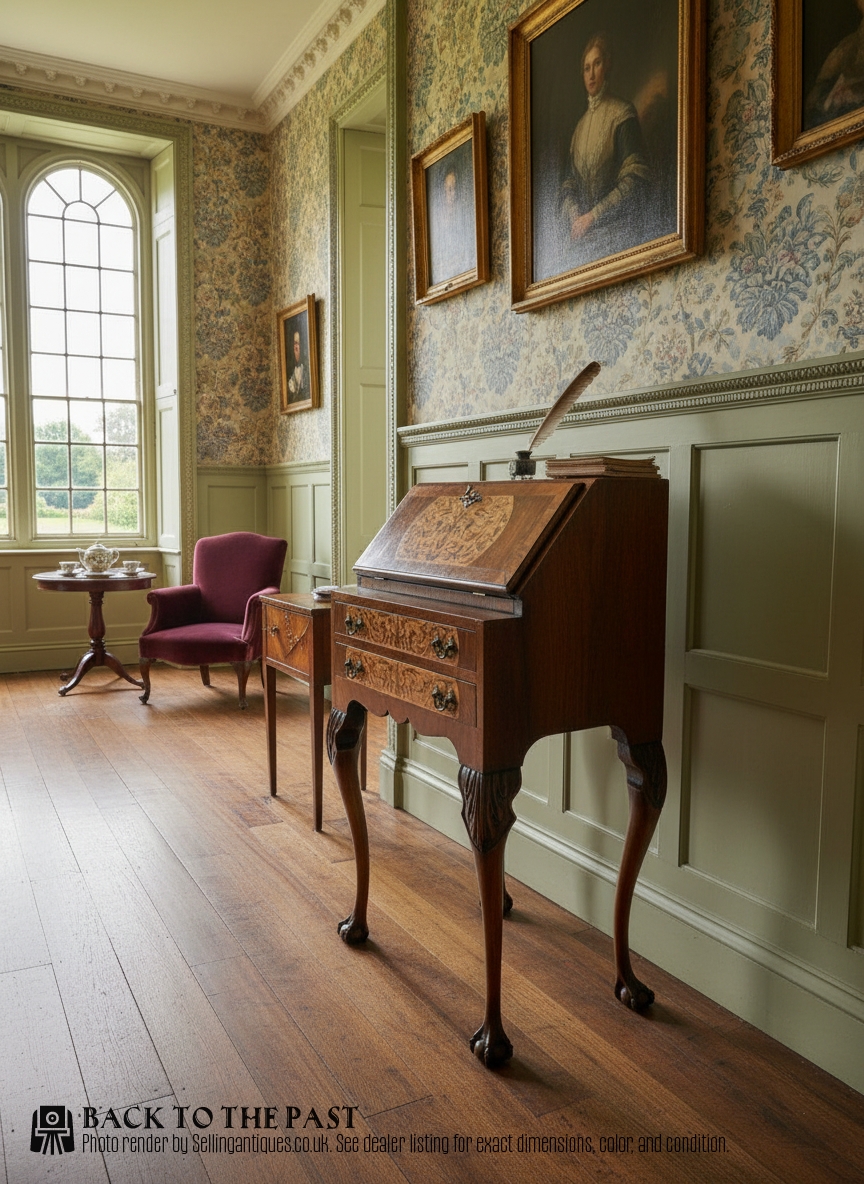
An antique bureau on stand combines a sloping writing flap with a raised support base, offering a neat surface for correspondence without the bulk of a full-height fall-front cabinet. The form appears across the seventeenth, eighteenth, and early twentieth centuries in various regional interpretations.
Buyers on this page most frequently encounter walnut, elm, and yew examples spanning the Georgian era and later revivals. These pieces often feature fitted internal compartments concealed beneath the fall front.
The distinct elevation provided by the stand creates a lighter profile than standard desk furniture, making these items suited to smaller rooms.
How they were made
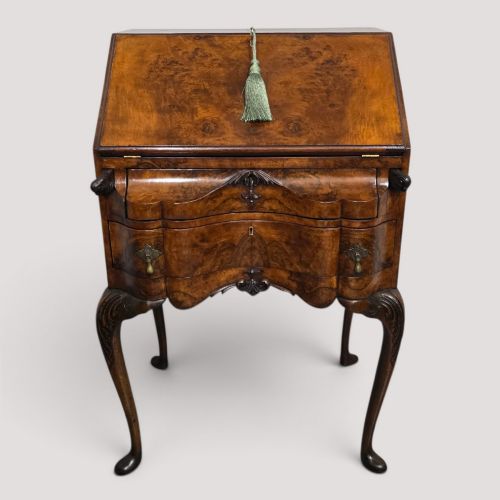
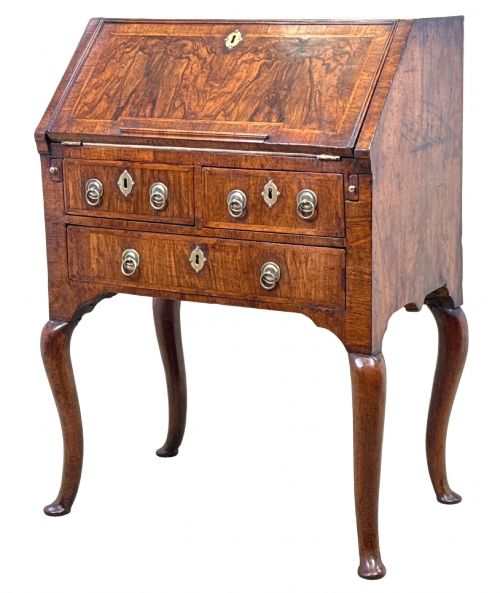
Cabinet makers utilised native and imported timbers, applying figured veneers such as oyster walnut and burr walnut across structural carcases of elm or oak. Brass handles, escutcheons, and hinges secure the fall fronts and drawers.
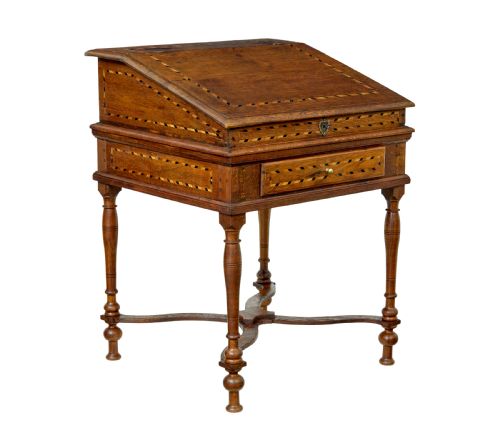
Surface decoration includes marquetry inlay and lacquered finishes, while earlier examples rely on the natural grain patterns of timber arranged in geometric formations.
Retail Price Guide 2026
Typical UK retail prices for bureau on stand, calculated from the Sellingantiques database of over a million retail prices indexed since 2003. This retail price guide relies exclusively on Sellingantiques data; no external sources or auction records are used, so the figures do not describe the wider market.
Travelling bureaux were built to accompany owners on journeys, ensuring their stationery stayed tidy even on bumpy carriage rides.
What varies in quality
The sophistication of the timber selection dictates the visual merit of the piece, particularly where matched veneers or intricate marquetry patterns cover the exterior surfaces. Finer examples show careful continuity of grain across moving parts and drawer fronts.
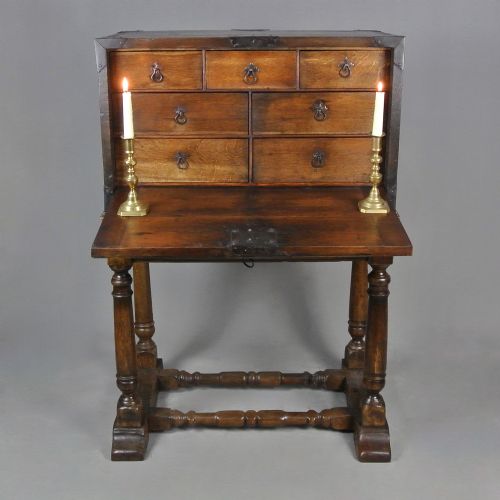
The design of the supporting stand, from cabriole legs to turned supports with stretchers, influences the structural harmony and period character of the entire desk.
Heals of London
The Antique Bureau on Stand Glossary
- Bureau
- A writing desk featuring a sloping lid that opens to reveal a fitted interior of small drawers and pigeonholes. This form provides a secure space for writing and document storage.
- Stand
- The elevated base with legs that supports the upper cabinet or desk body. This structural element lifts the writing surface off the floor.
- Oyster walnut veneer
- Circular or oval cross-sections of walnut branches laid down in mosaic patterns. This technique creates a distinctive repeating eye-like motif across the surface.
- Escritoire
- A writing cabinet designed with a fall-front flap and internal compartments. The term often applies to seventeenth-century variations of desk furniture.
- Marquetry
- Decorative woodwork using thin slices of wood veneer to form pictorial or geometric designs. Craftsmen assemble these pieces to create ornamental patterns on furniture surfaces.
Frequently Asked Questions
How do I date an antique bureau on stand?
Dating relies on examining the timber species, construction methods, and decorative styles present in the piece. Seventeenth-century examples often display oyster veneer and geometric mouldings, while Georgian pieces show refined proportions in walnut or mahogany.
Revival pieces from the twentieth century frequently replicate earlier Queen Anne or William and Mary designs using older construction techniques combined with twentieth-century secondary woods.
Where were bureaux on stand used?
These desks served as private writing furniture in principal rooms, bedchambers, and libraries of domestic homes. Their elevated stands made them convenient for writing while seated.
Travelling versions also existed for use during transit, offering secure document storage in portable formats.
How do I care for walnut veneer?
Walnut veneer requires stable indoor humidity and protection from direct sunlight to prevent fading and timber shrinkage. Regular dusting with a dry cloth maintains the polished surface.
Avoid placing wet items or harsh chemical cleaners directly on the wood to preserve the historic finish and veneer adhesion.