
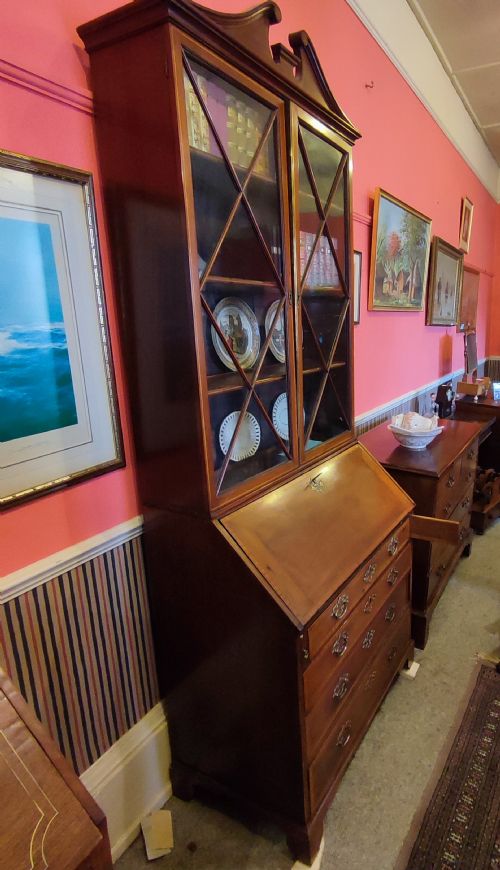


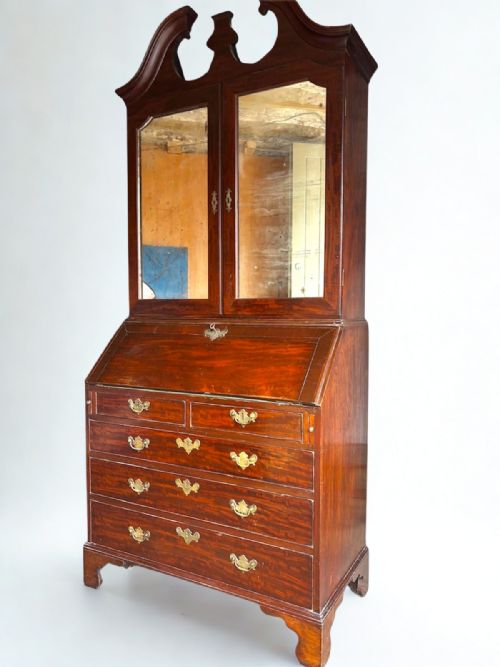


Swan Neck Pediment Bureau
A swan neck pediment bureau brings architectural dignity to writing furniture, combining a sloped desk with enclosed shelving beneath a curved broken arch.
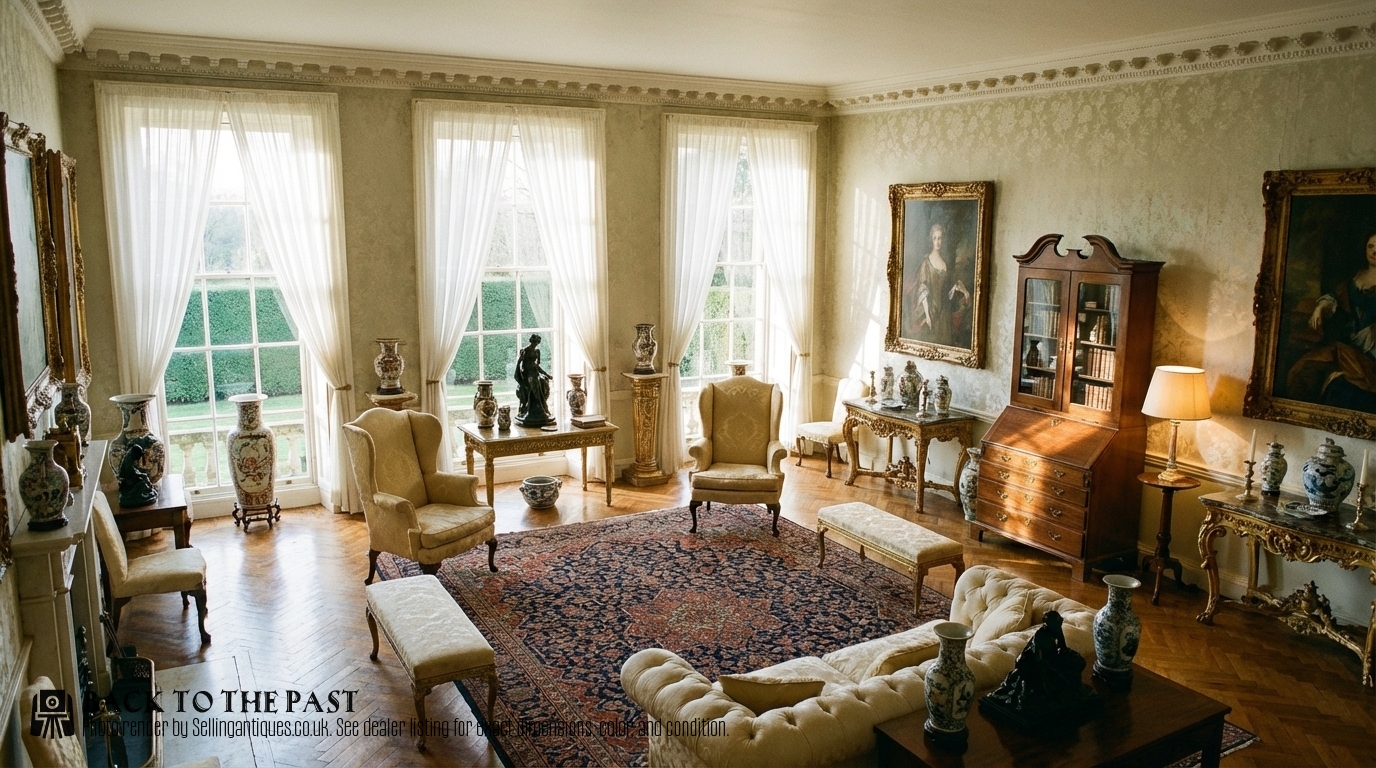
Swan Neck Pediment Bureau
A swan neck pediment bureau unites a practical writing surface with upper bookcase storage, crowned by distinctive scrolled pediments. Buyers seeking this form encounter grand pieces primarily originating from the Georgian and 18th century periods.
The primary configurations seen on this page span bureau bookcases, secretaire bookcases, and specialised cabinets. These writing pieces serve both display and administrative functions within traditional room schemes.
Examples stretch chronologically from Georgian origins through Victorian revivals and Edwardian interpretations. Mahogany dominates the surviving pieces, frequently paired with inlaid detailing and glazed doors.

Materials and construction
Cabinet makers utilised dense timber stocks, predominantly mahogany alongside walnut, rosewood, and satinwood for contrasting crossbanding. Structural integrity relied on solid framing for the fall-front writing desks and upper bookcase sections.
Brass hardware secures the doors and drop-front mechanisms, whilst glass panels protect the upper shelving. Interior compartments incorporate secret drawers and pigeonholes assembled with traditional joinery techniques.
Decorative enhancements include intricate wood inlay and mirror panels set within the doors. The characteristic swan neck pediment requires precise woodworking to shape the opposing scrolls above the cornice.
Swan Neck Pediment Bureau Retail Price Guide 2026
Typical asking prices for swan neck pediment bureau among the pieces listed under this phrase on Sellingantiques today, from the lower quarter to the upper quarter. They describe what is for sale here now, not the wider market.
Listings feature mahogany predominantly, alongside rosewood, satinwood, and oak across Georgian and later revival periods.
Assessment of quality
The grade of timber selection dictates visual depth, where finely figured mahogany grain elevates an ordinary carcass into a distinguished item. Original brasses and uncompromised glass panels preserve the integrity of the piece.
Proportion and execution of the pediment determine the architectural success of the upper structure. Finer examples display meticulous attention to interior pigeonholes and secondary timbers used in drawer construction.
The crispness of inlay work and the smoothness of the fall-front hinge mechanism separate standard workshop output from exceptional cabinet work.
Edwards and Roberts
The Swan Neck Pediment Bureau Glossary
- Swan neck pediment
- A decorative broken pediment featuring opposing ogee curves resembling a swan's neck, frequently terminating in a central plinth or finial.
- Fall-front bureau
- A writing desk featuring a hinged flap that pulls down to create a horizontal writing surface, concealing inner compartments.
- Secretaire bookcase
- A tall cabinet incorporating a dedicated writing drawer or pull-down desk section beneath upper bookshelves.
- Crossbanding
- A decorative border of veneer laid perpendicularly to the main grain of the furniture surface to create a framed effect.
- Pigeonhole
- A small vertical compartment within a desk interior used for sorting letters and documents.
Swan Neck Pediment Bureau: Frequently Asked Questions
How do I date a bureau bookcase?
Dating relies on assessing the secondary timbers, construction methods, and stylistic cues present in the cornices and feet. Earlier 18th century examples often show hand-cut dovetails and solid board backs.
Later revival pieces from the Victorian and Edwardian eras incorporate machine-sawn elements and standardised hardware while copying earlier Georgian proportions.
What is a secretaire bookcase?
A secretaire bookcase differs from a standard bureau by housing the writing surface within a pull-out drawer rather than a sloping fall-front. This maintains the exterior appearance of a chest or cabinet.
Drop the front drawer to reveal a fitted interior with pigeonholes and small drawers for correspondence.
How were swan neck pediments constructed?
The pediment is formed from shaped wooden mouldings fixed above the cornice, curving upward to meet a central plinth. This architectural feature draws the eye upward and adds height to the cabinet.
Master cabinet makers carved these scrolls with balanced proportions to complement the lower case.
Where should I place a large bureau bookcase?
These tall cabinets require substantial wall space and stable environmental conditions away from direct heat sources. Positioning them in studies or libraries allows the upper glazed doors to display book collections effectively.
Ensure adequate floor clearance for the fall-front flap or pull-out desk drawer to open fully.