
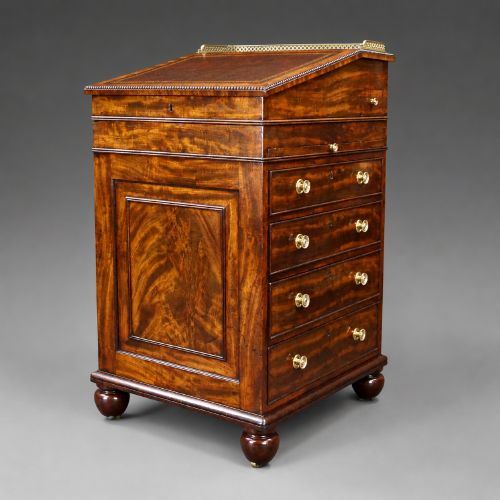
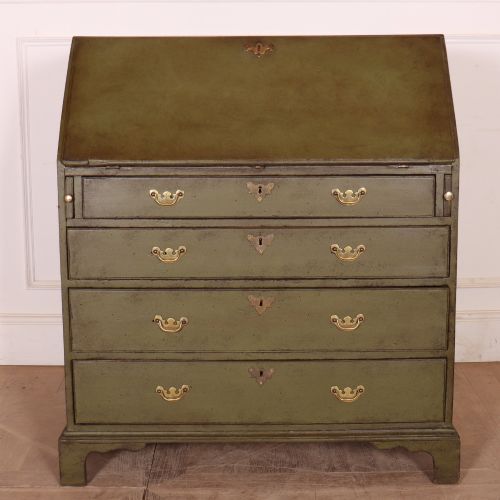
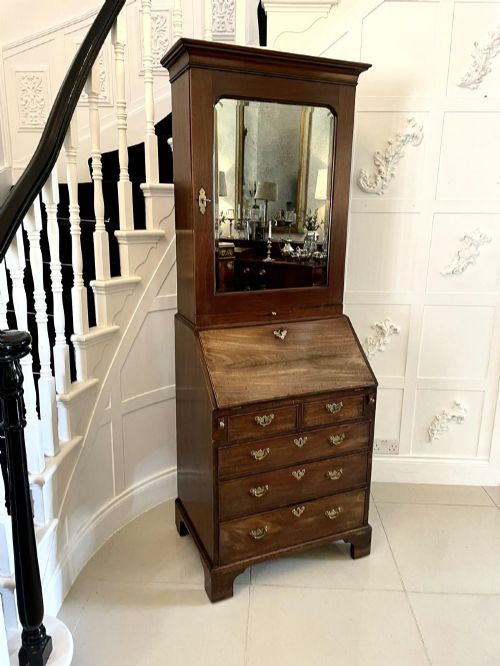


Slant Front Writing Desk
A slant front writing desk is a hinged cabinet opening to reveal a fitted interior, offering a private place to write correspondence.
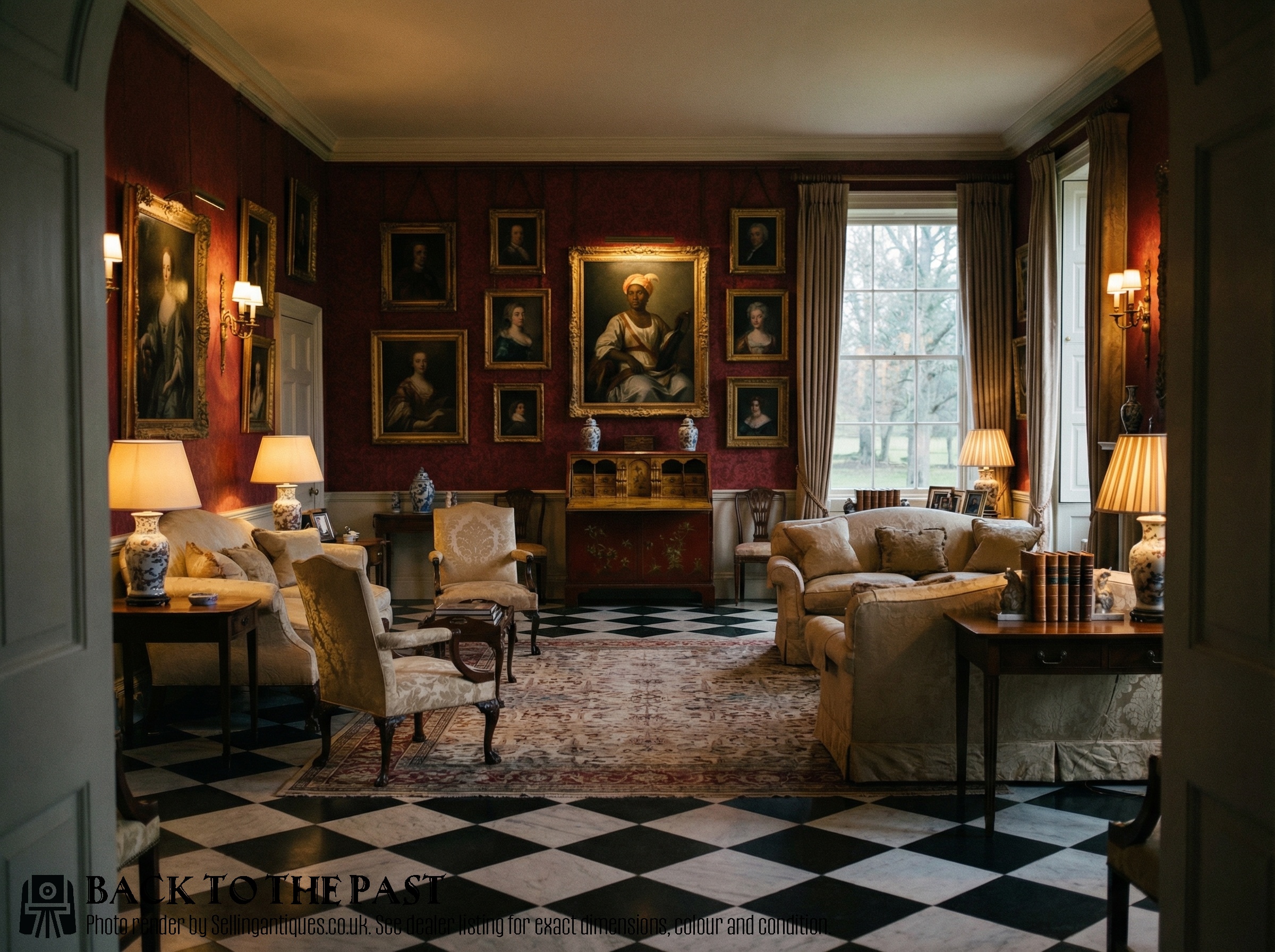
Slant Front Writing Desk
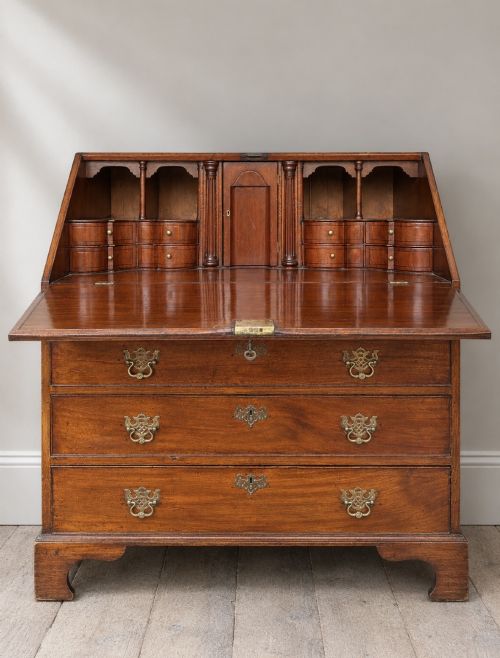
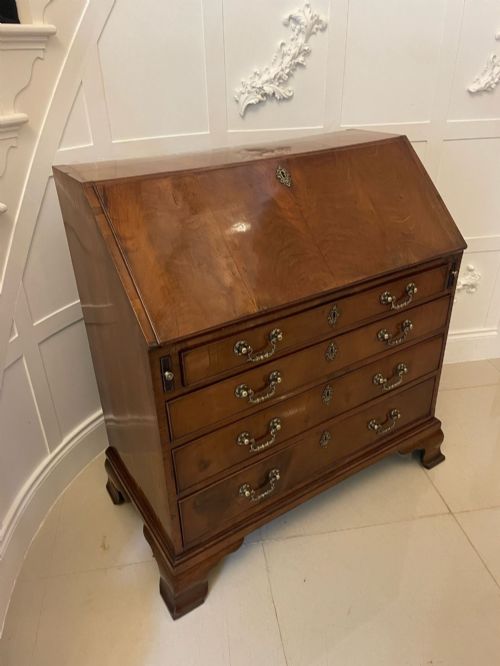
A slant front writing desk combines a hinged writing flap with a set of drawers or a stand, appearing in various forms from the seventeenth century through to the twentieth century. These pieces serve as practical workspaces that conceal compartments, pigeonholes, and small drawers behind the sloping lid.
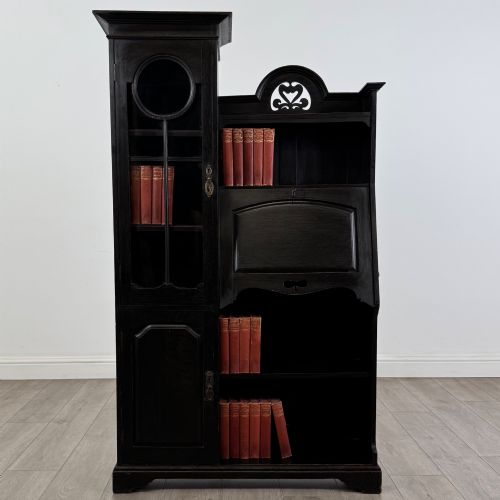
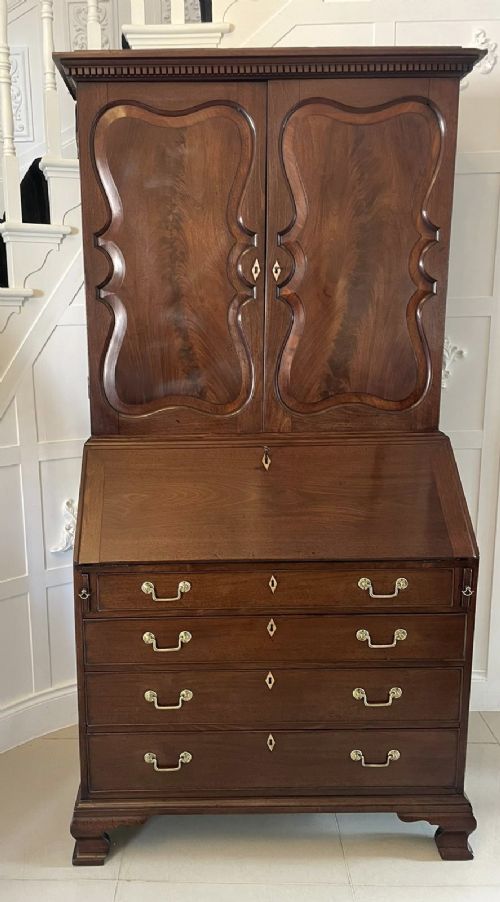
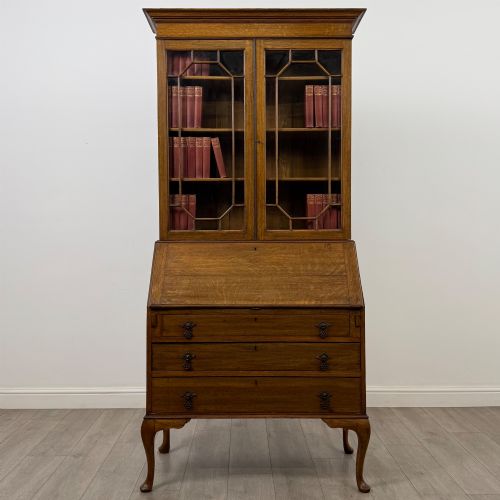
The most common examples encountered on this page date from the Georgian and Edwardian periods, constructed in timbers such as mahogany and oak. Buyers frequently meet bureau bookcases, where a glazed or panelled upper cabinet sits atop the writing section, alongside compact table-top versions.
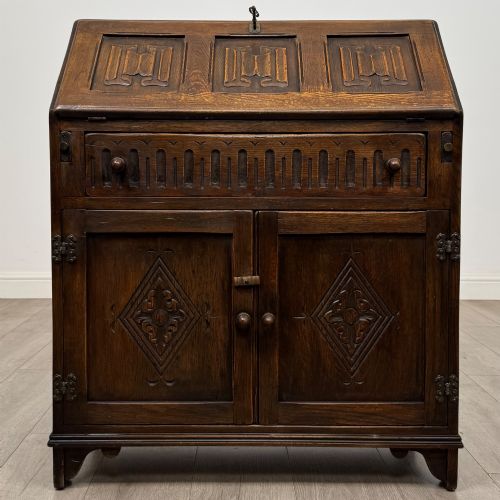
Regional and stylistic variations span from Queen Anne burr walnut to Arts and Crafts oak bureaux, reflecting the aesthetic shifts of each era. Cabinetmakers adapted the form for domestic use, producing both large two-part case pieces and small desks supported on bracket feet or stands.
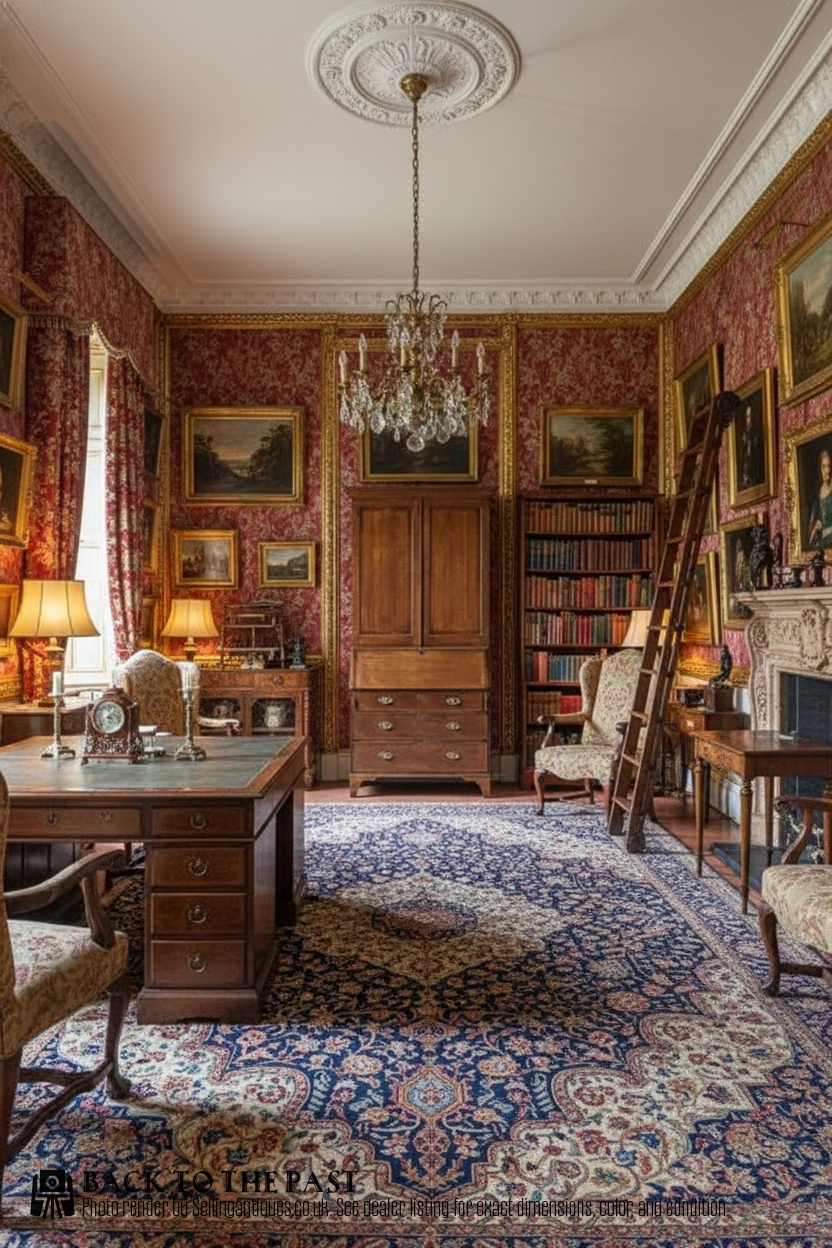
Materials and construction
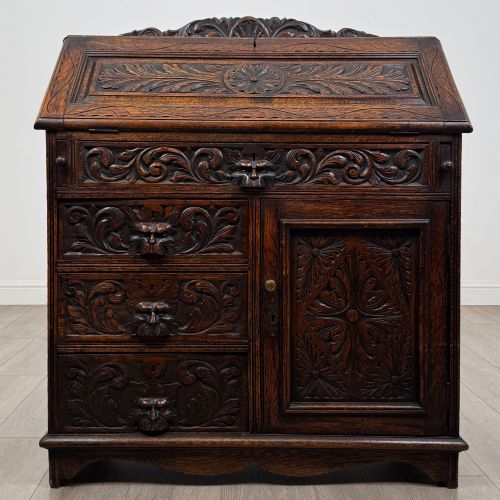
Makers utilised solid woods and veneers, selecting mahogany, oak, and walnut as primary structural materials for the carcase and drawers. Walnut examples often incorporate burr walnut veneers with herringbone inlay, while oak pieces frequently display carved linenfold panels or regional geometric details.
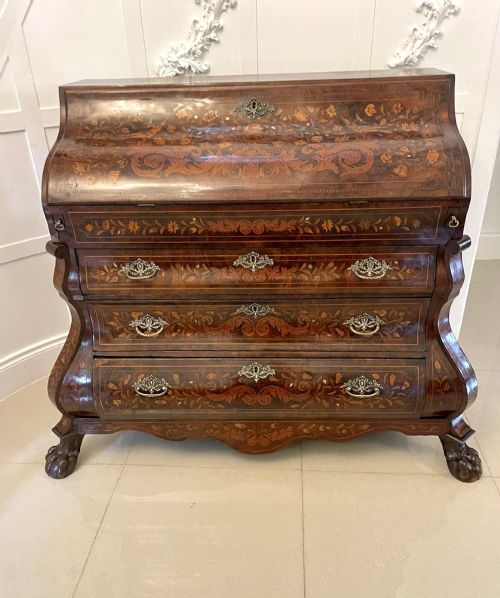
Surface decoration involved floral marquetry, parquetry, and brass hardware such as drop handles and escutcheons. Interior compartments required precise joinery, assembling small drawers, pigeonholes, and stepped tiers inside the writing cavity.
Secondary elements include leather writing surfaces inset into the hinged flap and bracket or cabriole feet supporting the base. Glazed doors on bureau bookcases utilised timber framing to hold individual panes of glass above the desk section.
Slant Front Writing Desk Retail Price Guide 2026
Typical asking prices for slant front writing desk among the pieces listed under this phrase on Sellingantiques today, from the lower quarter to the upper quarter. They describe what is for sale here now, not the wider market.
One very early oak bureau bookcase has been adapted to house a television.
Qualities of construction and finish
The selection of figured timbers defines the visual merit of a piece, distinguishing plain surfaces from those utilising highly decorative flame mahogany or burr walnut veneers. Figured grain patterns matched symmetrically across drawer fronts and the slant lid indicate careful material planning by the maker.
Interior architecture varies from simple partitioned spaces to elaborate stepped layouts with secret compartments and inlaid prospect doors. The complexity and joinery of these internal fittings separate standard production items from finer cabinetwork.
The integrity of the structural carcass, including dovetailed drawer construction and the preservation of original brass handles or feet, governs the standing of an example. Fine proportional balance between the sloping fall-front and the lower drawers determines the overall aesthetic success.
Heals of London·Gillows
The Slant Front Writing Desk Glossary
- Bureau
- A desk featuring a sloping lid that opens to form a writing surface. This term often refers specifically to slant front writing desks.
- Bureau bookcase
- A writing desk combined with an upper shelving or cabinet section enclosed by doors. These tall case pieces integrate storage for books above the workspace.
- Marquetry
- Decorative inlay work using various coloured woods to form floral or geometric patterns. Craftsmen applied these veneers to the exterior surfaces of the desk.
- Bombe
- A swelling, convex contour on the front and sides of a cabinet or desk. This curved profile is frequently seen on continental walnut and marquetry pieces.
- Bracket foot
- A simple foot shape supporting the corners of a case piece, mitred at the corner. These supports elevate the desk off the floor.
Slant Front Writing Desk: Frequently Asked Questions
What is a slant front writing desk?
A slant front writing desk is a cabinet with an angled hinged lid that drops down to create a flat writing surface. Inside, it contains small drawers and pigeonholes for letters and stationery.
Beneath the writing flap, these pieces typically provide several full-width drawers for storage. The form evolved from simple oak boxes on stands into sophisticated case furniture.
How do I date a bureau?
Dating relies on examining the timber species, construction methods, and hardware style. Earlier pieces from the seventeenth and early eighteenth centuries often utilise oak or walnut with geometric mouldings or herringbone inlay.
Later Georgian examples frequently feature mahogany with fine dovetailing and bracket feet. Edwardian and 1920s revivals display machine-sawn timbers and different internal secondary woods.
Where were these desks placed?
These desks served as private writing stations in domestic studies, libraries, and bedrooms. Their enclosed design allowed owners to lock away correspondence and account books when not in use.
Compact table-top versions sat upon existing tables or chests of drawers. Larger free-standing examples stood against walls in reception rooms.