

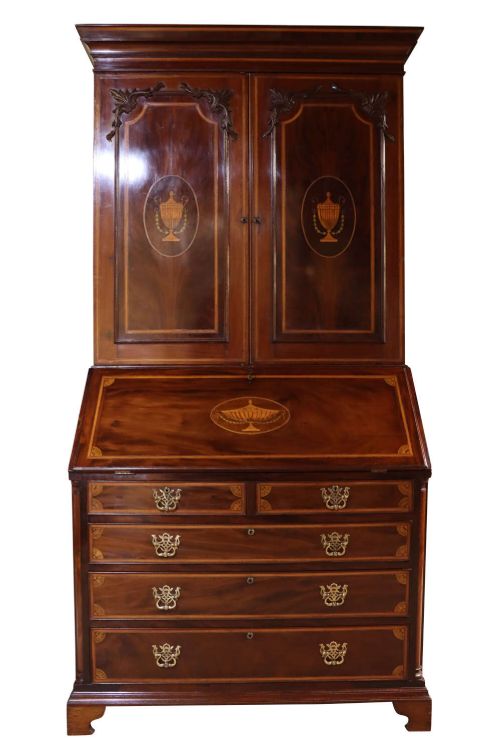
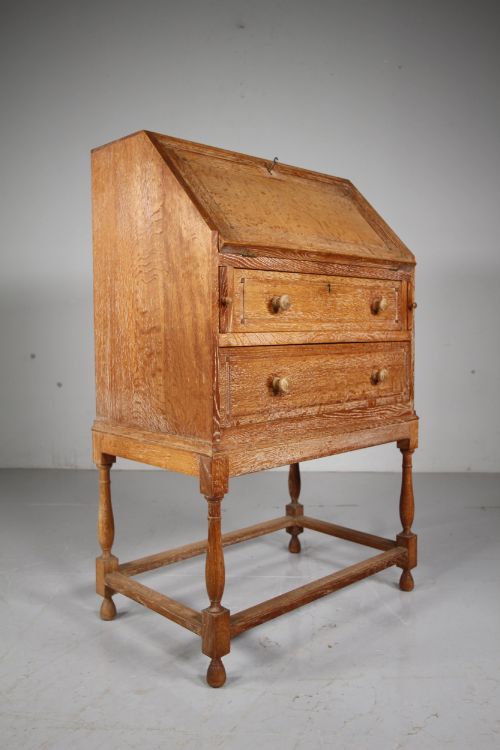
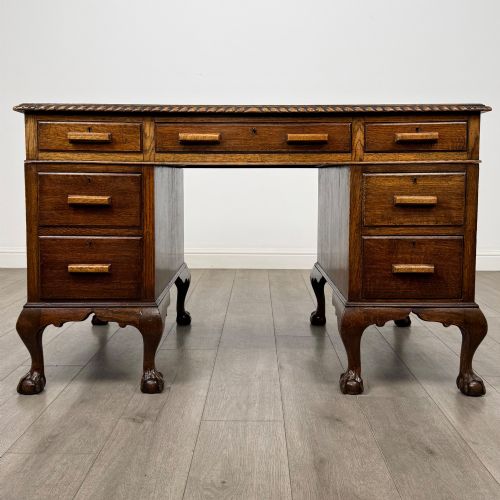
Traditional Writing Bureau
A traditional writing bureau brings centuries of cabinet-making craftsmanship and practical workspace into a room.
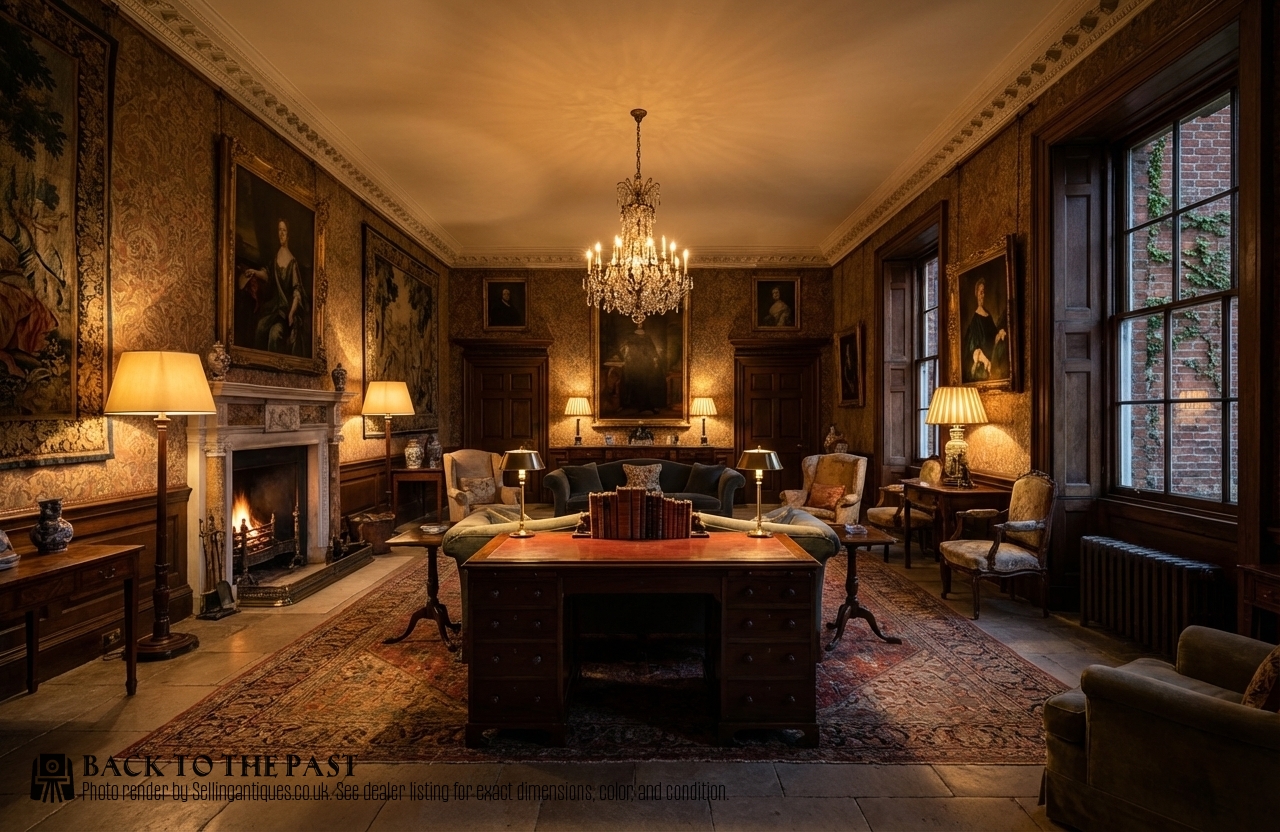
Traditional Writing Bureau
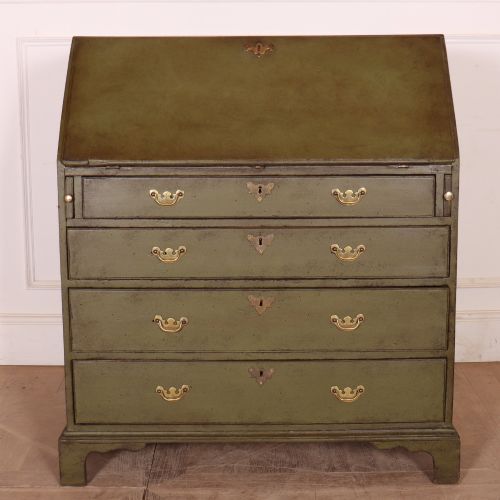
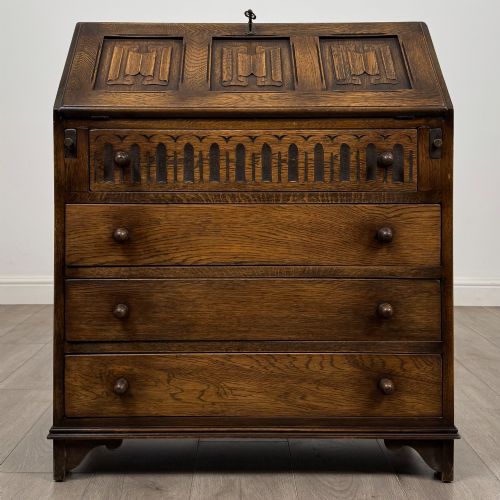
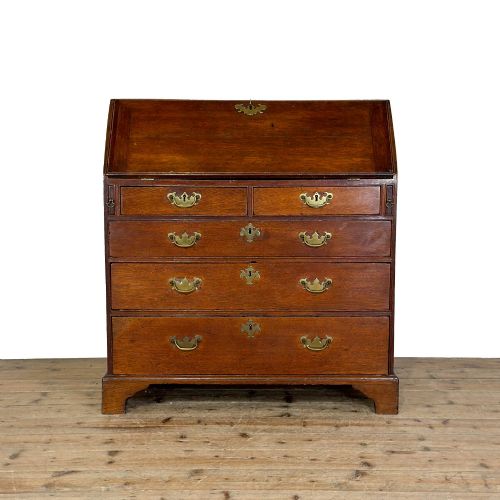
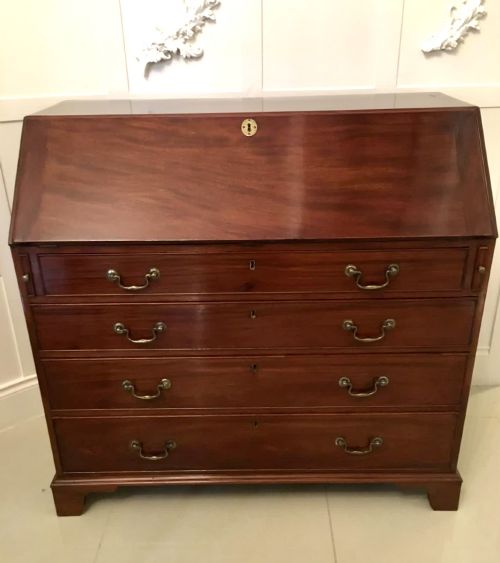
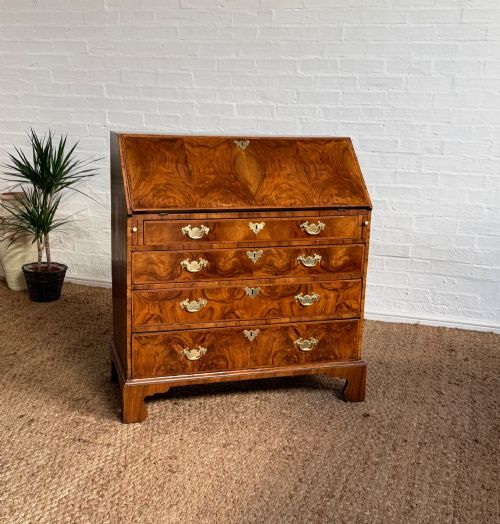
A traditional writing bureau combines a sloping fall-front flap that opens to reveal internal compartments with drawer storage below, forming a dedicated workspace. Buyers searching for a traditional writing bureau frequently encounter pieces rendered in oak, mahogany, and walnut across various regional and revival styles.
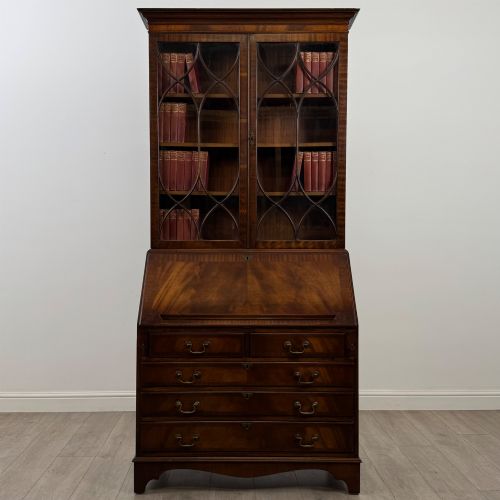
The selection ranges from early eighteenth-century oak examples to Edwardian and later twentieth-century iterations, including bureau bookcases and pedestal desks. Oak and mahogany versions dominate the offerings, spanning Georgian periods through to the 1930s.
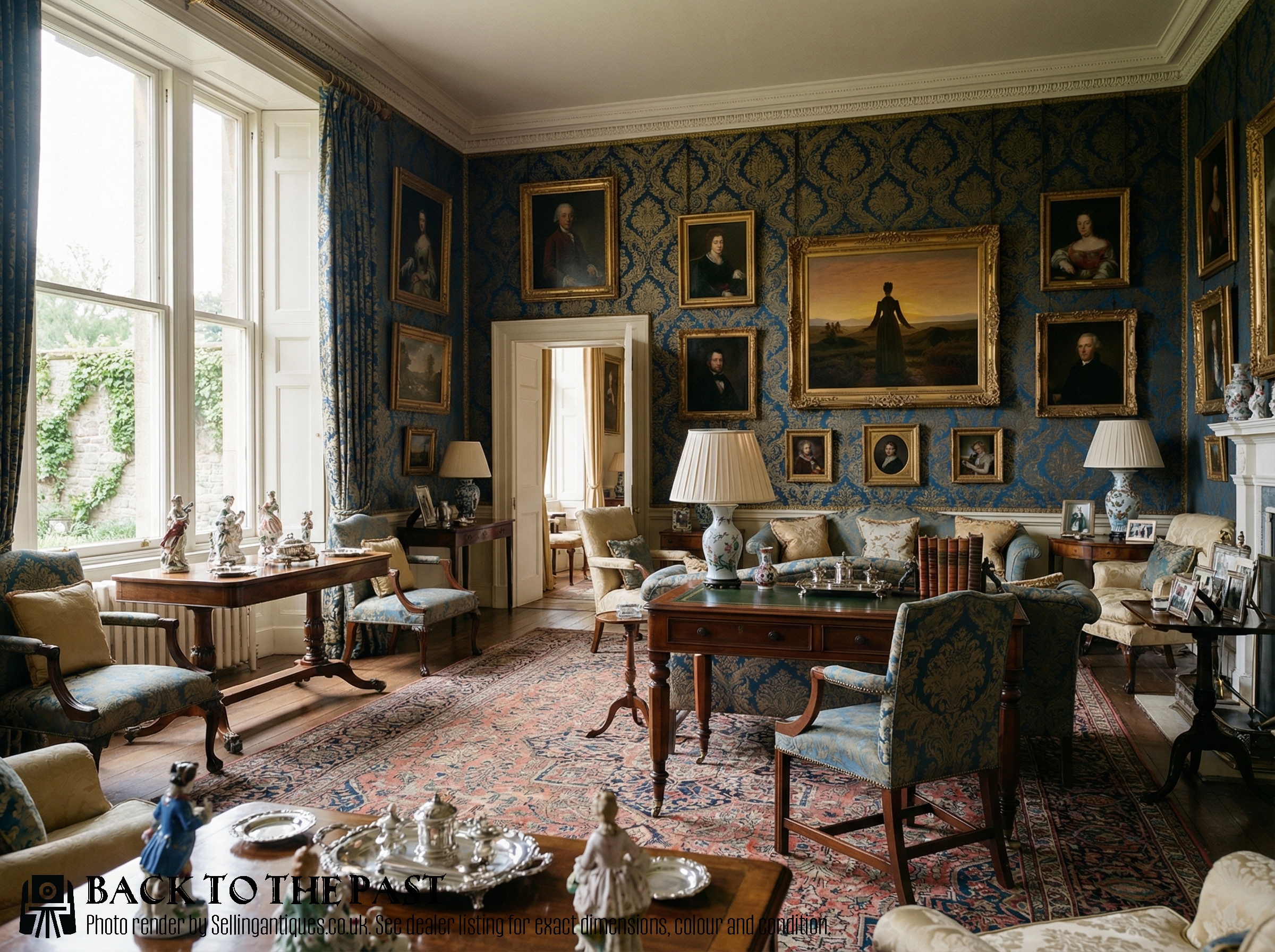
Materials and construction methods
Cabinet-makers utilised solid timbers such as oak, mahogany, and walnut, often applying burr walnut or satinwood veneers for decorative effect on drawer fronts and writing slopes. Brass hardware such as handles and escutcheons complemented the timber construction.
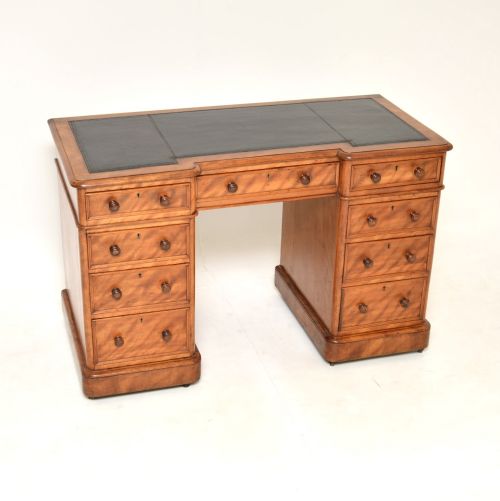
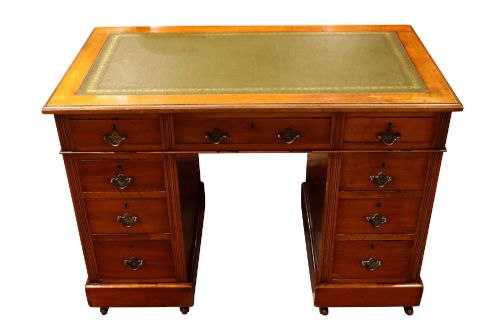
Writing surfaces were frequently inset with leather, sometimes tooled, providing a durable and smooth plane for correspondence. Structural joinery involved dovetail joints for drawer construction and sturdy framing to support the hinged fall-front writing surfaces.
Traditional Writing Bureau Retail Price Guide 2026
Typical asking prices for traditional writing bureau among the pieces listed under this phrase on Sellingantiques today, from the lower quarter to the upper quarter. They describe what is for sale here now, not the wider market.
The listings feature oak, mahogany, walnut, burr walnut, and satinwood, spanning the Georgian, Victorian, and Edwardian periods.
Distinctions in craftsmanship
The refinement of timber selection and figuring marks the distinction between standard examples and finer pieces, with choice burr walnut and figured mahogany commanding attention. Subtleties in carved ornamentation, such as linenfold details or period-specific stylistic motifs, elevate the execution of the piece.
The integrity of the internal pigeonholes, small drawers, and the mechanism supporting the fall-front flap indicate the care taken by the original maker. Presence of original hardware and labelled maker signatures further distinguish superior examples from ordinary production.
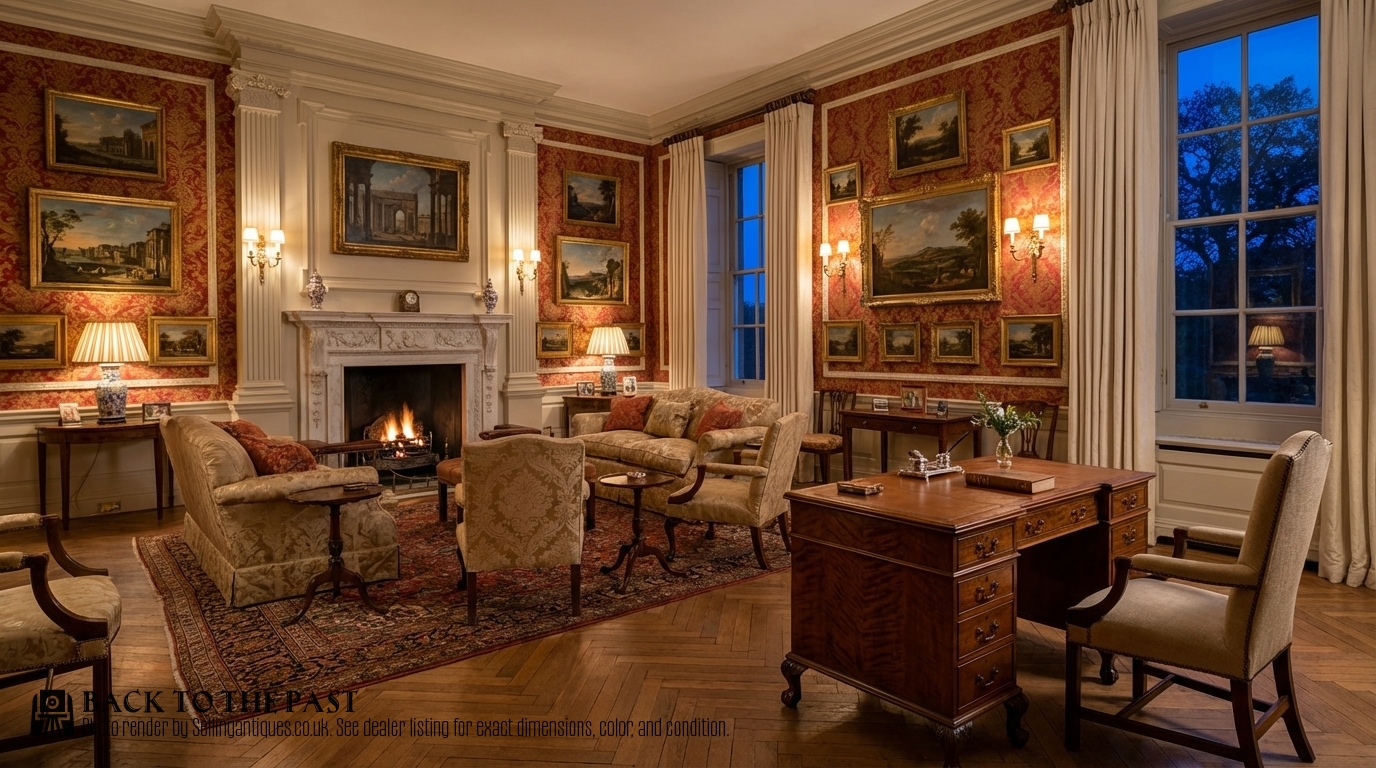
Heals of London·Wylie & Lochhead Glasgow
The Traditional Writing Bureau Glossary
- Fall-front
- A hinged writing flap that drops forward to create a horizontal desk surface. It conceals internal stationery compartments when closed.
- Bureau bookcase
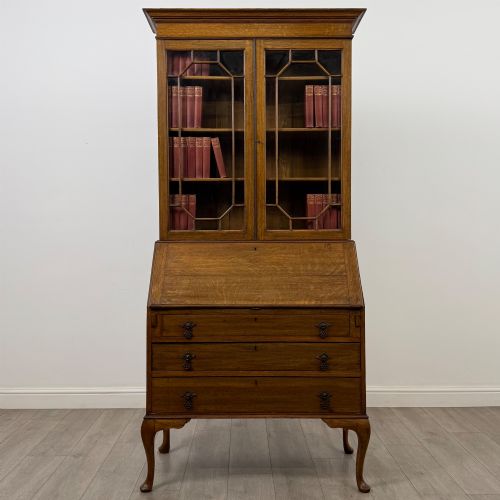
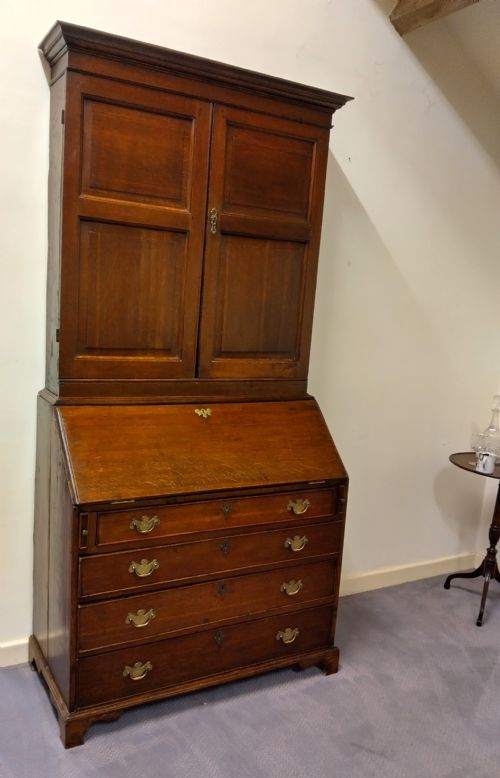
- A tall cabinet combining a writing bureau base with upper shelving enclosed by doors. These pieces provide dual functions for storage and display.
- Pedestal desk
- A freestanding desk with two supporting banks of drawers beneath the work surface. Many examples feature inset leather writing panels.
- Kneehole desk
- A compact desk featuring a recessed space for the user's legs, flanked by pedestals of drawers. They often incorporate central cupboard storage beneath the writing surface.
- Tambour
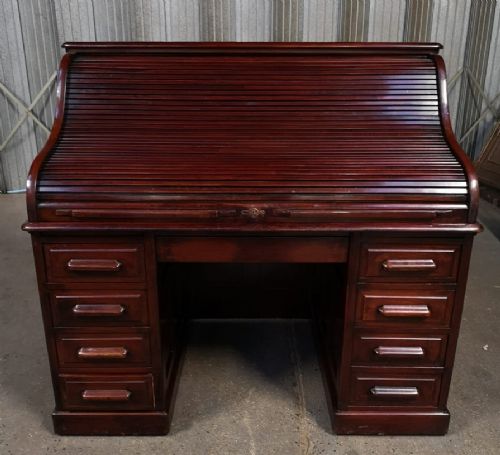
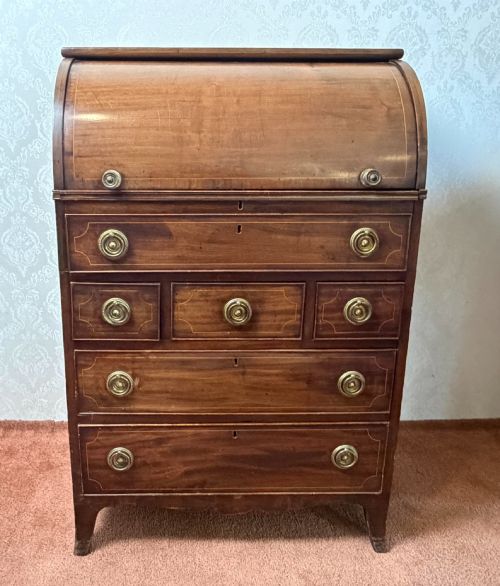
- A sliding door or shutter constructed from narrow vertical strips of wood glued to a fabric backing. It allows access to desk compartments in restricted spaces.
Traditional Writing Bureau: Frequently Asked Questions
What is a traditional writing bureau?
A traditional writing bureau is a piece of furniture featuring a sloping fall-front flap that opens to reveal a writing surface and small internal compartments. Beneath this writing area, multiple drawers provide storage for household or office items.
These pieces developed over centuries, evolving from simple oak receptacles into sophisticated mahogany and walnut forms during the Georgian and Victorian periods. They served as private spaces for correspondence and record keeping before the widespread use of standalone desks.
How do I date a wooden bureau?
Dating a bureau involves examining the timber species, construction techniques, and stylistic revival influences present in the piece. Early eighteenth-century examples typically utilise solid oak with simple panel construction, while Georgian pieces frequently employ figured mahogany with fine dovetailing.
Later Edwardian and 1930s variations often draw upon earlier styles such as Jacobean Revival or Queen Anne Revival. Hardware, such as brass handles and hinges, also offers clues to the manufacturing period.
Where were these desks used?
These desks were primarily utilised in domestic settings such as studies, drawing rooms, and bedrooms for private correspondence and managing household accounts. Their compact footprint made them suitable for spaces where a large freestanding table was impractical.
In professional environments, variations like banker's desks and pedestal desks provided functional workspaces for merchants and clerks. The enclosed nature of the bureau allowed owners to secure their correspondence simply by closing the fall-front flap.
How do I care for a leather writing surface?
Maintaining an inset leather writing surface requires gentle cleaning with a slightly damp cloth, avoiding harsh chemical cleaners that can dry the material. Applying occasional leather balms helps preserve the suppleness and colour of the hide.
Protecting the surface from direct sunlight prevents fading and cracking over time. Care should also be taken to use blotting paper or pads when writing to avoid impressing sharp pen strokes into the leather.