

Edwardian Kneehole Desk
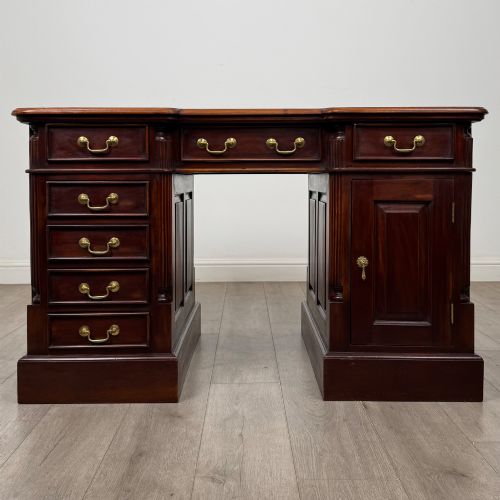
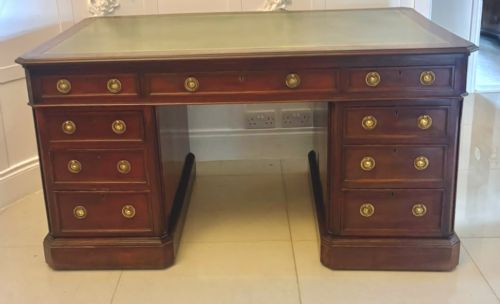
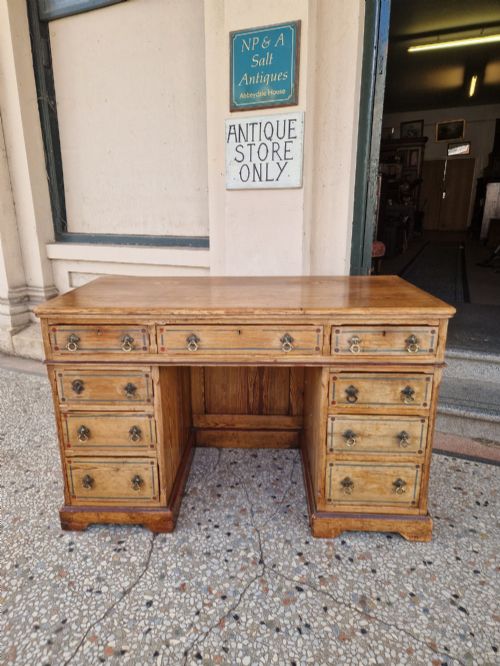
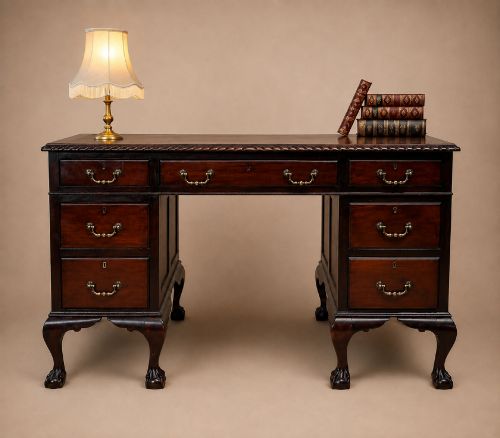
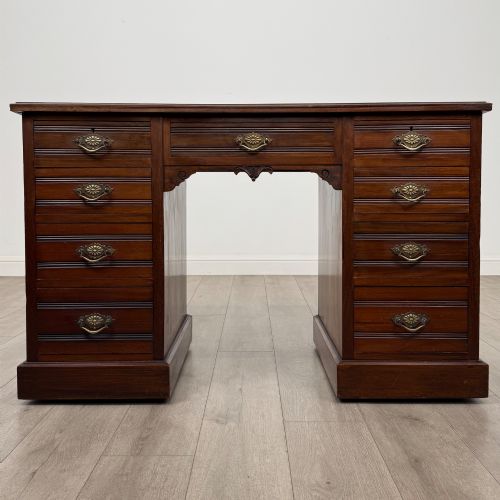
An edwardian kneehole desk offers a central recess flanked by pedestals of drawers, combining compact proportions with ample surface space for writing.
Edwardian Kneehole Desk
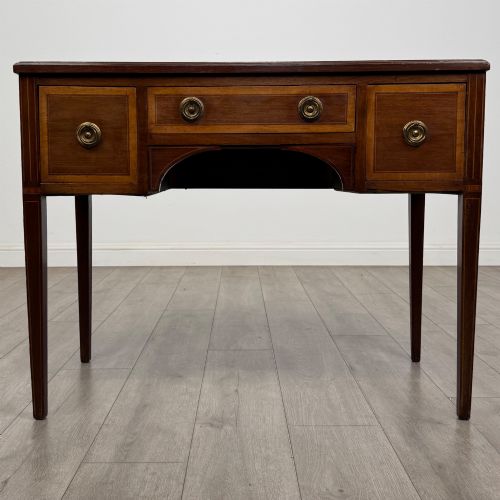
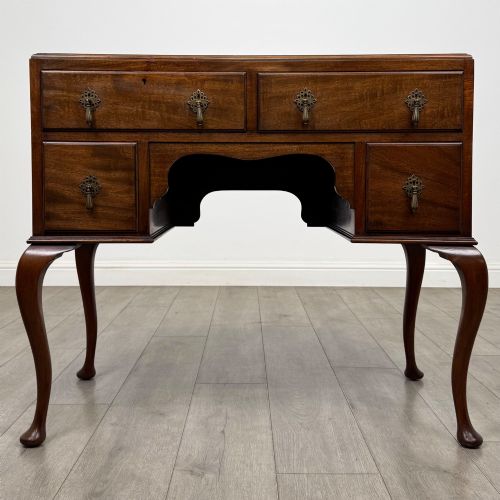
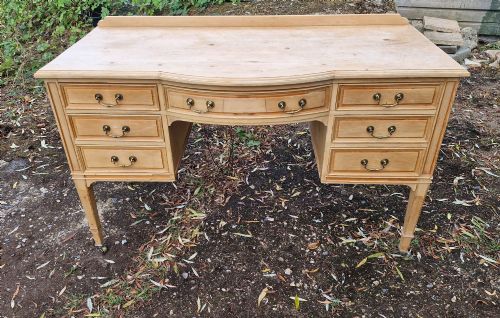
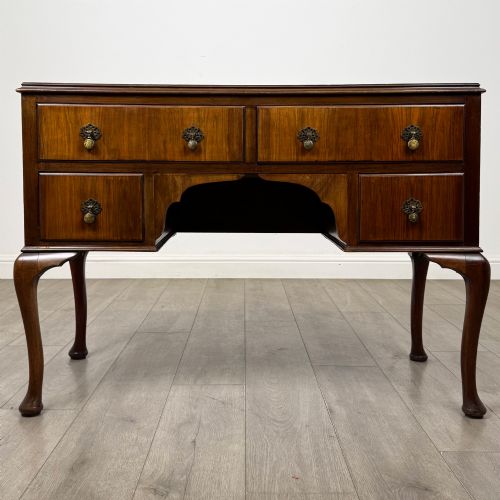
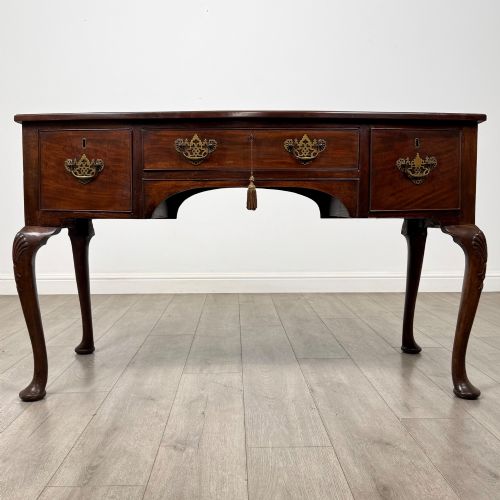
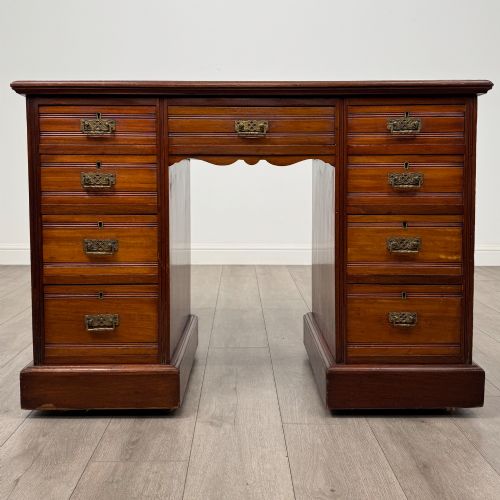
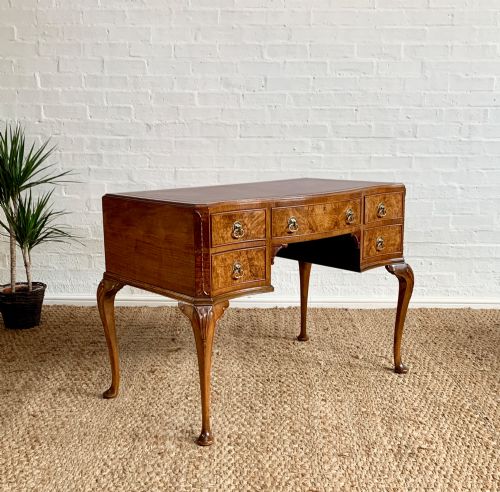
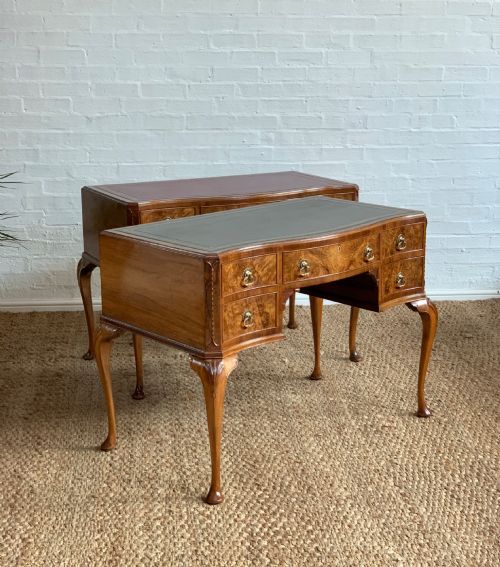
The edwardian kneehole desk sits at the intersection of late nineteenth-century scale and twentieth-century utility, taking the form of a central recess flanked by banks of drawers beneath a primary writing surface. Buyers seeking this phrase encounter pedestal configurations with varying numbers of drawers, alongside occasional kidney-shaped variants and kneehole dressing tables adapted for study.
Most examples originate from the Edwardian period itself, though survivals extend into the early decades of the twentieth century with revivals spanning Georgian and Queen Anne styles. These pieces provide a dedicated workspace while maintaining domestic proportions suitable for residential studies and libraries.
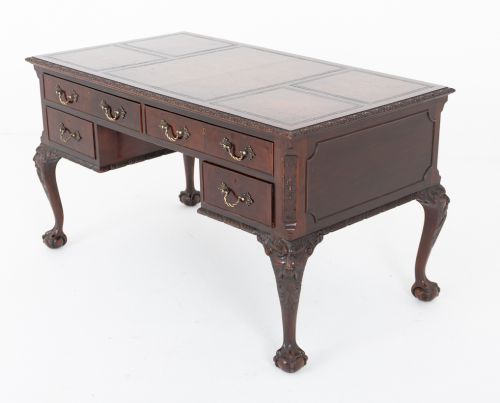
Makers utilised traditional pedestal layouts, sometimes incorporating fitted stationery compartments and leather writing inserts. The form accommodates diverse interior schemes through restrained ornamentation and proportioned dimensions.
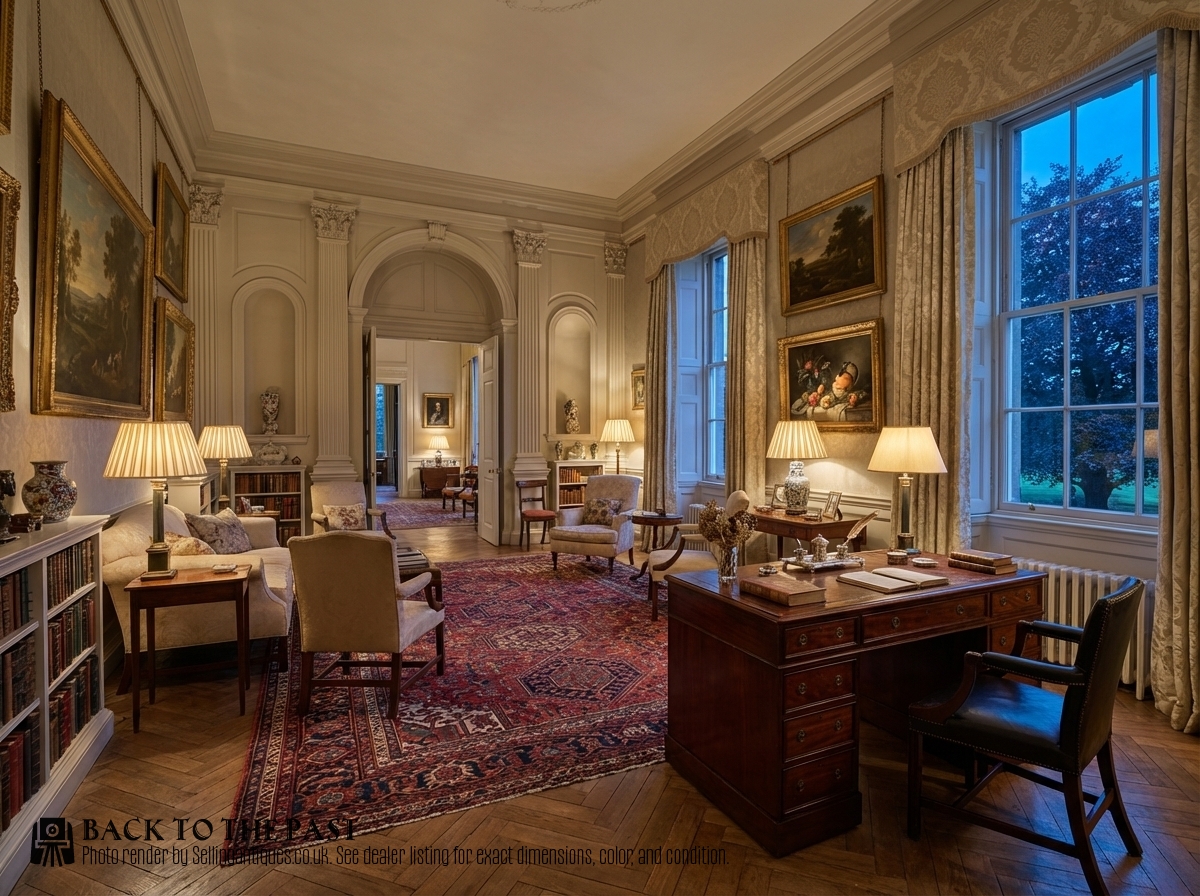
Materials and construction
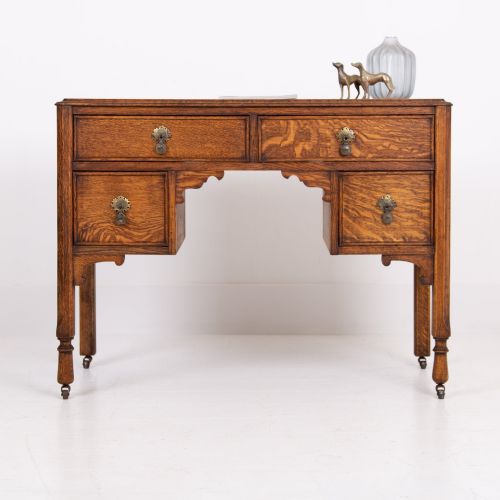
Timbers such as mahogany, walnut, burr walnut, and oak form the primary structural foundations of these desks, frequently enhanced by decorative veneers and satinwood inlay. Cabinet makers employed solid cuts for frames and drawer linings while applying figured grains to primary display surfaces.
Leather inserts appear frequently on the writing surfaces, tooled with gilt borders to frame the central workspace. Brass handles, escutcheons, and drawer pulls provide functional hardware that complements the timber tones.
Joinery techniques followed established workshop traditions, ensuring stability across pedestals, plinths, and writing slabs. Secondary timbers like pine support internal drawer construction and unseen structural framing.
Edwardian Kneehole Desk Retail Price Guide 2026
Typical asking prices for edwardian kneehole desk among the pieces listed under this phrase on Sellingantiques today, from the lower quarter to the upper quarter. They describe what is for sale here now, not the wider market.
Listings demonstrate constructions in mahogany, oak, and walnut, spanning Edwardian, Victorian, and revival styles.
Distinctions in quality
Quality rests upon the selection of timber veneers and the precision of cabinet joinery, where burr walnut or figured mahogany displays deliberate grain matching across drawer fronts. Superior examples exhibit refined carving, crisp string inlay, and substantial brass hardware rather than stamped metal.
Interior construction reveals the standard of manufacture through hand-cut dovetailing on drawer boxes and the choice of secondary woods. Superior pieces maintain smooth drawer operation and integrated internal fittings such as stationery compartments.
Proportion and decorative restraint separate standard utility pieces from workshop commissions bearing maker attribution. The integration of design revivals, from Georgian to Arts and Crafts, demonstrates deliberate stylistic execution.
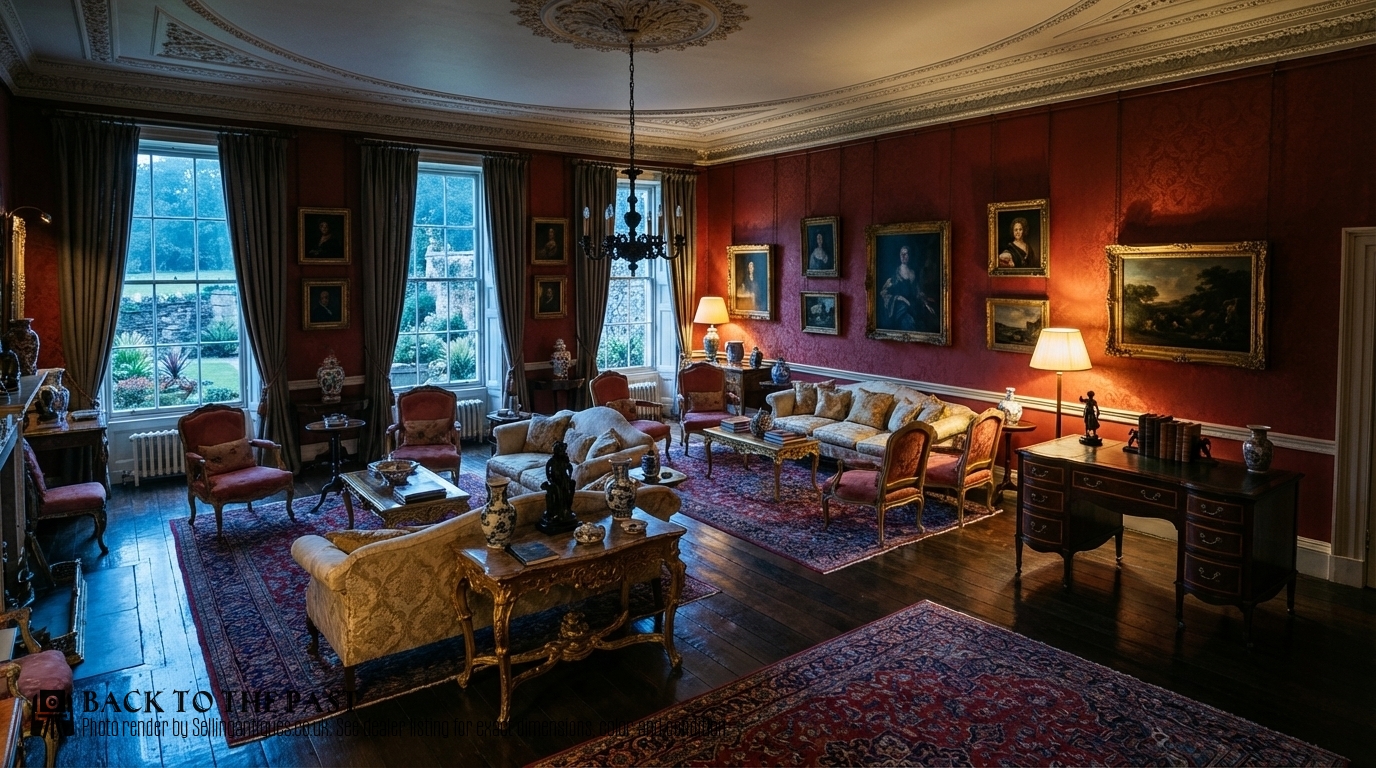
Trollope & Sons·Wylie & Lochhead Glasgow·Maples of London·Gill & Reigate·Shapland and Petter
The Edwardian Kneehole Desk Glossary
- Kneehole
- A recessed space beneath the central writing surface of a desk, designed to accommodate the user's legs. This configuration allows for pedestals of drawers on either side.
- Pedestal
- A structural support column containing multiple drawers, positioned beneath the main writing surface. Desks typically feature two such pedestals flanking the central kneehole.
- Burr Walnut
- Timber harvested from the warted growths of walnut trees, yielding complex swirling grain patterns. Cabinet makers utilised these veneers on primary display surfaces for decorative impact.
- Inlay
- A technique where contrasting woods or materials are set flush into the surface of a primary timber. Edwardian examples frequently incorporate satinwood stringing.
- Writing Slide
- A pull-out shelf positioned above the drawers, providing supplementary surface area for papers without expanding the primary footprint of the desk.
Edwardian Kneehole Desk: Frequently Asked Questions
What is a kneehole desk?
A kneehole desk is a freestanding form featuring a central recess for seating, enclosed by two pedestals containing banks of drawers. This layout provides storage while keeping the desk proportions manageable for smaller rooms.
Craftsmen built these pieces to function as writing tables and administrative desks in domestic settings. The design balances surface workspace with organised drawer storage.
How do I identify an Edwardian desk?
Edwardian desks often display lighter timbers, subtle inlay work, and stylistic influences drawn from Georgian and Queen Anne revivals. The construction reflects early twentieth-century manufacturing standards combined with traditional cabinet joinery.
Examinations of secondary woods and hardware help confirm the period of manufacture. These pieces date from the reign of Edward VII and the surrounding transitional years.
Where should I place my desk?
Freestanding pedestal desks feature finished backs, allowing them to sit centrally within a room rather than pressed against a wall. This positioning showcases the timber grain and panel construction from all angles.
Placement should consider natural light sources falling across the leather writing surface to reduce glare. Adequate clearance around the kneehole ensures comfortable daily use.
How do I care for timber surfaces?
Timber and leather surfaces require protection from direct sunlight and excessive heat fluctuations to prevent veneer cracking or leather drying. Regular dusting with a soft cloth maintains the finish without stripping natural oils.
Conditioning the leather writing surface periodically preserves the gilt tooling and suppleness of the hide. Avoid harsh chemical cleaners on polished mahogany and walnut.