





Chippendale Revival Desk
A chippendale revival desk brings eighteenth-century elegance into a modern study, combining sturdy mahogany with intricate carved details.
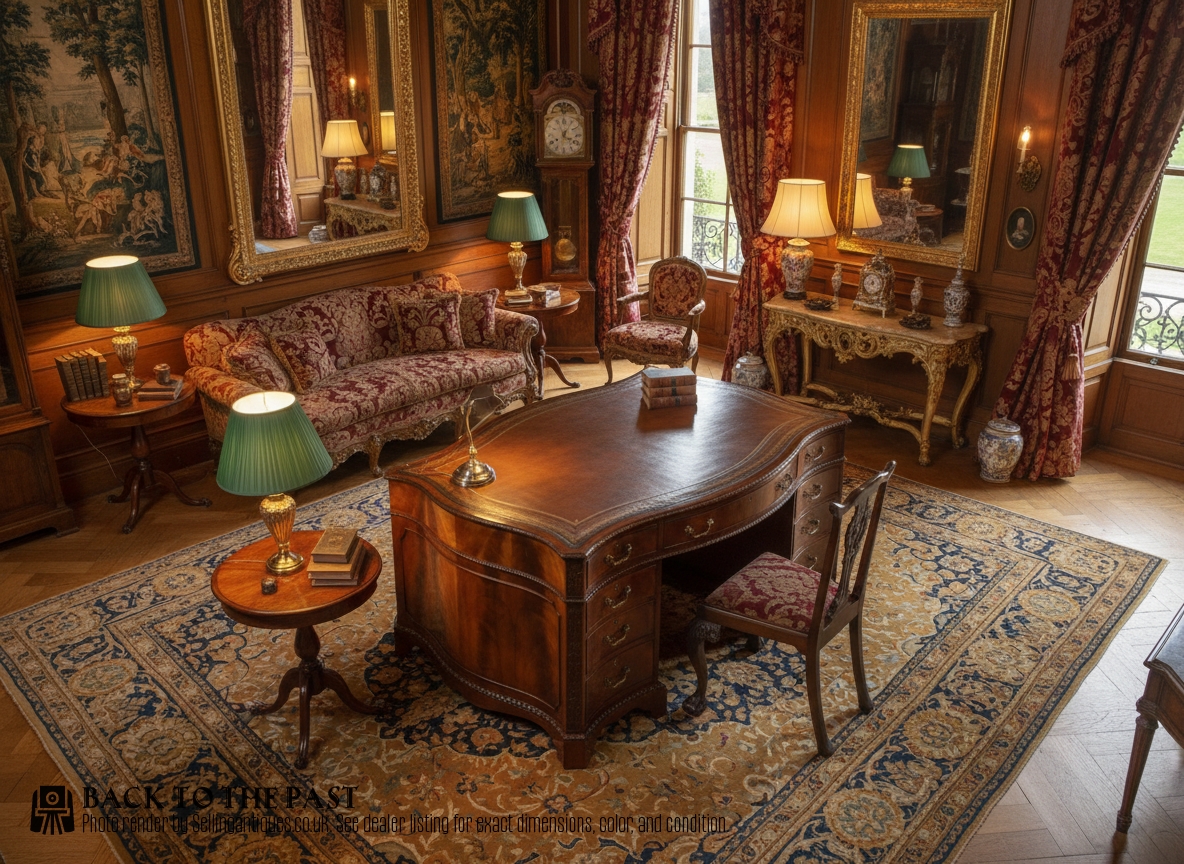
Chippendale Revival Desk
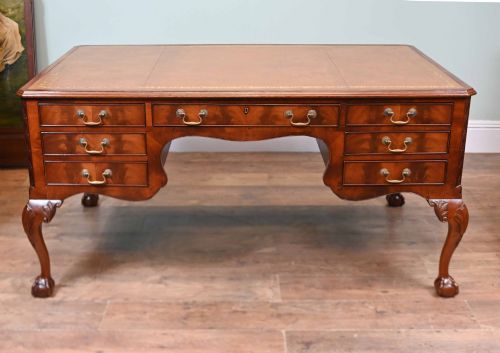
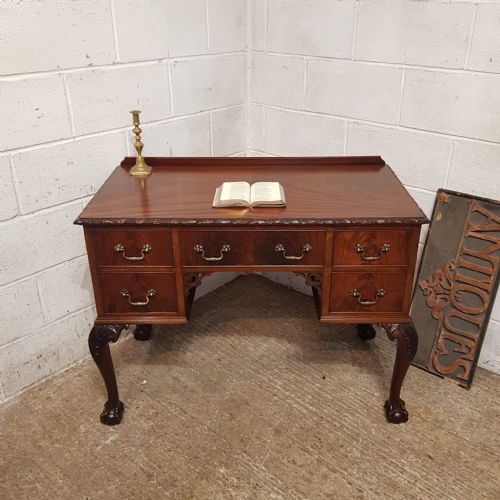
A chippendale revival desk offers a practical workspace shaped by historic design, drawing on eighteenth-century precedents reinterpreted during the Victorian and Edwardian eras. These pieces typically take the form of writing tables, kneehole desks, or large partners desks designed for domestic studies.
The versions most common on this page date from the late nineteenth and early twentieth centuries, reflecting a period of intense interest in revivalist cabinet making. Makers looked back to earlier proportions while adapting internal layouts for contemporary writing needs.
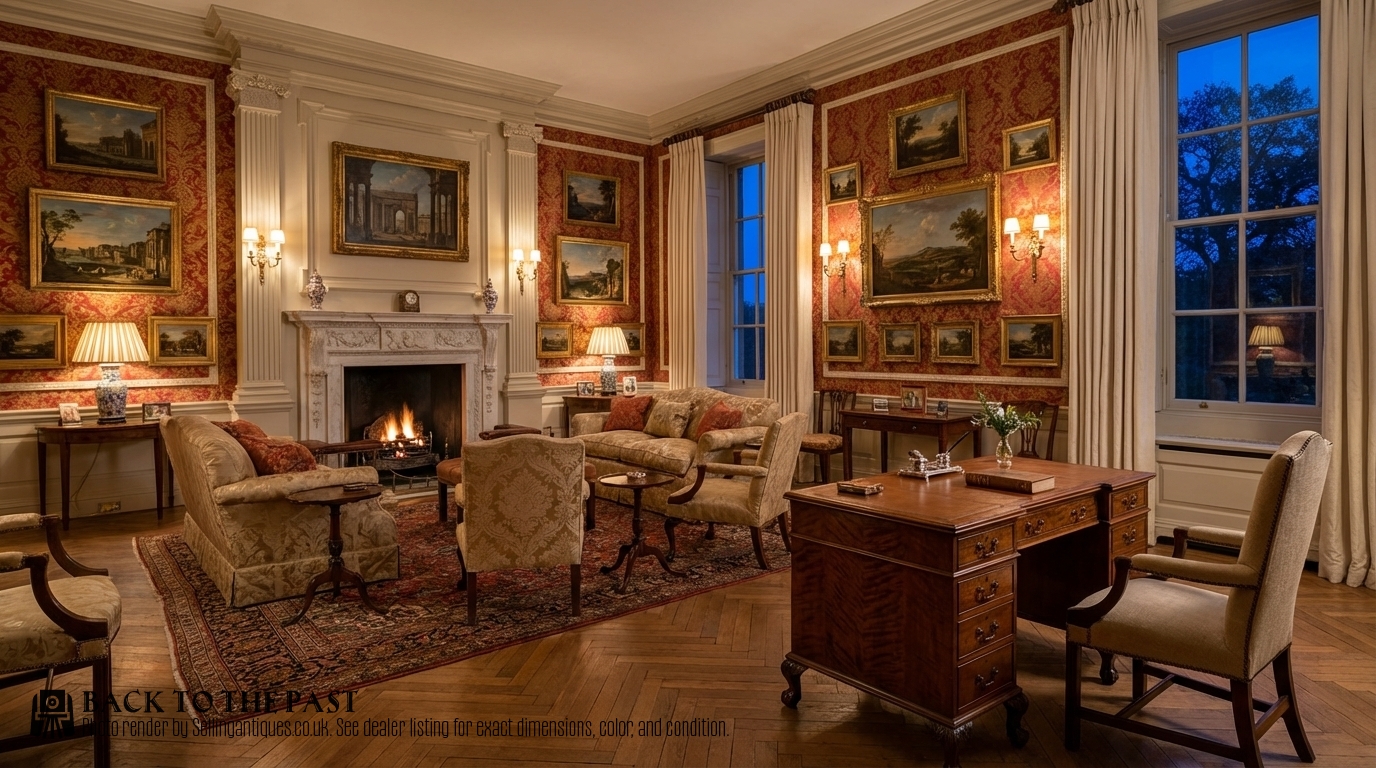
How They Were Made
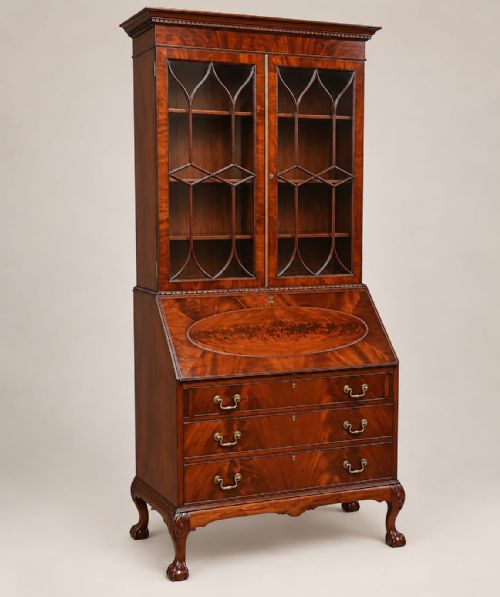
Cabinet makers relied primarily on solid mahogany and figured mahogany veneers applied to structural carcasses, shaping the timber with hand tools to achieve serpentine fronts and carved cabriole legs. Brass hardware, including handles and escutcheons, secures drawers and adds functional contrast to the dark wood.
Writing surfaces frequently incorporate inset panels of leather, sometimes tooled with gilt borders, providing a durable and smooth plane for daily correspondence.
Chippendale Revival Desk Retail Price Guide 2026
Typical asking prices for chippendale revival desk among the pieces listed under this phrase on Sellingantiques today, from the lower quarter to the upper quarter. They describe what is for sale here now, not the wider market.
Some partners desks hold enough secret drawers to misplace your own stationery.
What Varies in Quality
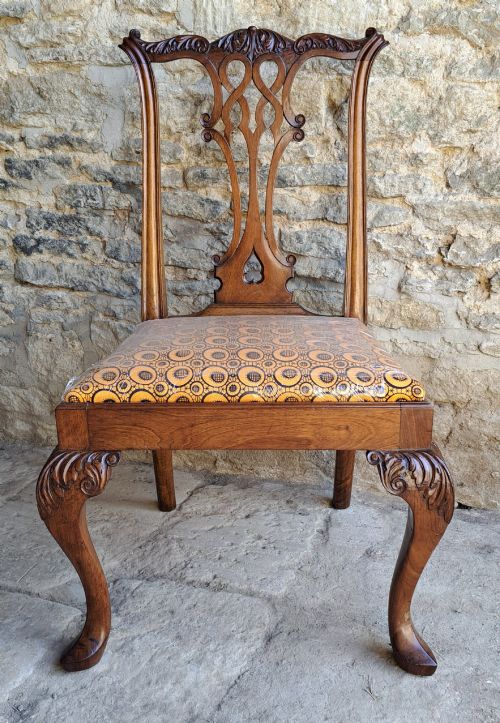
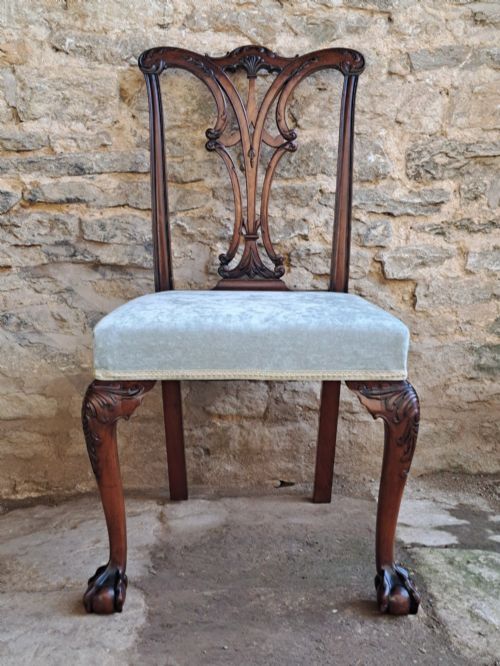
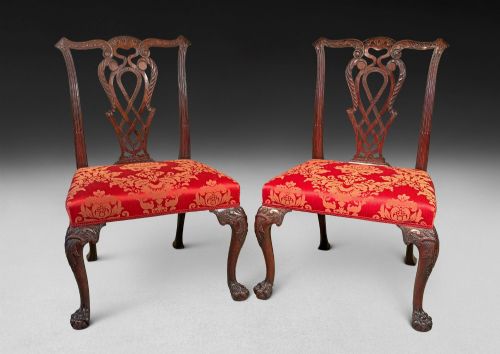
Quality rests upon the depth and crispness of the carved ornamentation, such as acanthus leaves or ball and claw feet, where skilled hand execution outshines shallow machine work. The choice of timber also dictates standing, with dense figured mahogany and substantial brass fittings marking out superior examples.
Structural integrity reveals itself in the drawer construction, utilising tight dovetailing and smooth internal runs that demonstrate patient assembly by experienced workshops.

Gillows·Edwards and Roberts
The Chippendale Revival Desk Glossary
- Partners desk
- A large freestanding desk designed with drawers and cupboards on both sides so two people could work opposite one another. This form often appears in mahogany during the revival periods.
- Kneehole desk
- A compact writing desk featuring a central recessed space for the legs flanked by columns of small drawers. It provides ample storage whilst occupying a modest footprint.
- Serpentine
- A curved desk front that sweeps outward at the centre and inward at the sides, or vice versa. This shaping requires expert timber selection and precise carpentry.
- Cabriole leg
- A furniture leg that curves outward at the knee and tapers inward toward the foot, often finishing in a claw and ball motif. It forms a defining feature of the revival style.
- Escutcheon
- A protective brass plate surrounding a keyhole on a desk drawer or cabinet door. It serves both a functional purpose and a decorative role.
Chippendale Revival Desk: Frequently Asked Questions
How do I date a revival desk?
Dating relies on examining the secondary timbers, construction methods, and stylistic cues present in the piece. Late nineteenth-century examples often display heavy Victorian carving, whereas Edwardian pieces tend to show lighter proportions.
Makers' marks or brass stamps can also provide direct evidence of the workshop and year of production.
What timber was used for these desks?
Mahogany remains the dominant wood found across these listings, appearing as both solid timber and figured veneer. Walnut also occurs occasionally in specific pedestal variations.
Secondary woods inside the drawers often include oak or pine, depending on the workshop origin and period.
How should I care for the leather top?
The leather writing surface benefits from occasional cleaning with a damp cloth followed by a neutral leather cream to prevent drying. Avoid placing hot cups or sharp objects directly on the hide to preserve the surface.
Keeping the desk away from direct sunlight protects both the leather inlay and the polished mahogany finish from fading.