




Aesthetic Movement Desk
When you search for an aesthetic movement desk, you enter a world of disciplined reform where historic ornament meets rich timber.
Aesthetic Movement Desk
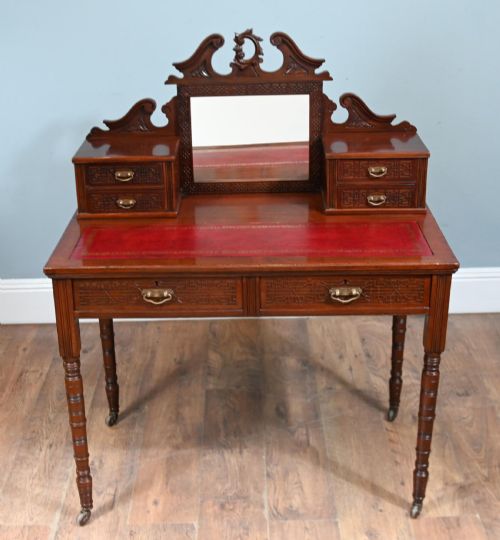
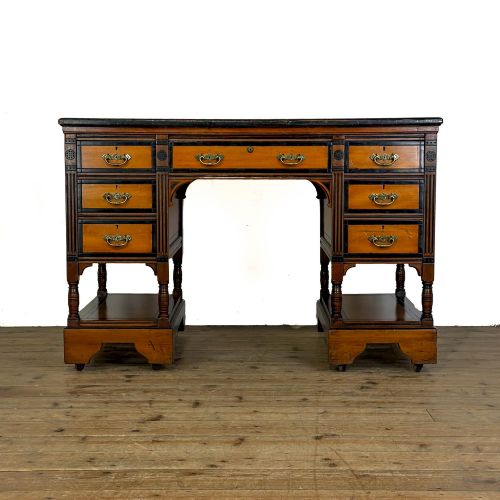
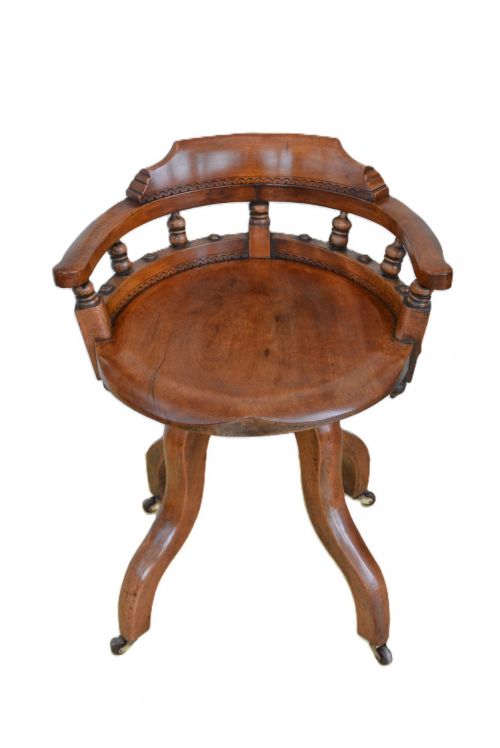
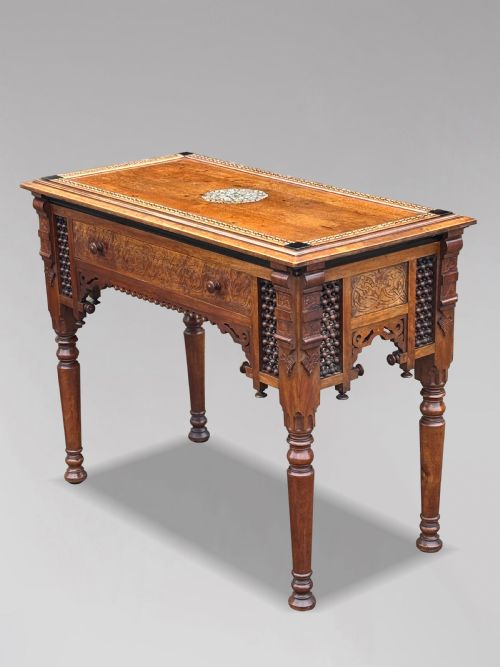
An aesthetic movement desk represents a departure from heavy Victorian historicism towards lighter, more considered forms influenced by Japanese and Anglo-Japanese design principles. Pieces in this category include double-sided partners desks, kneehole variants, Davenport writing desks, and simpler writing tables.
The versions most commonly met on this page date from the Victorian era, particularly around eighteen-eighty, and utilise timbers such as walnut, ash, mahogany, and ebonised wood.
Makers and retailers of the period, from large London houses to individual designers, adapted these writing surfaces for libraries, studies, and morning rooms with a distinct focus on linear geometry and subtle inlay.
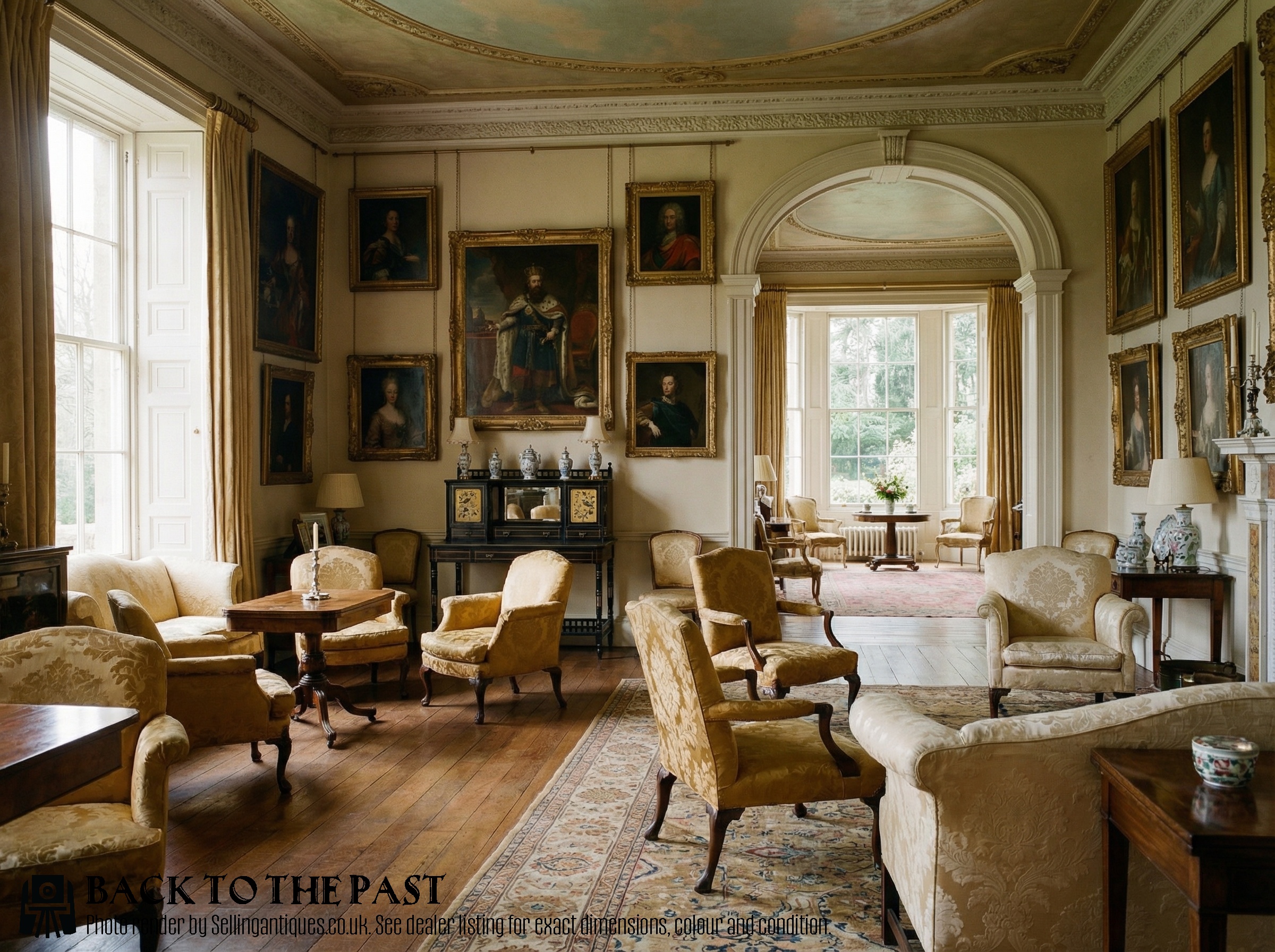
Materials and Construction
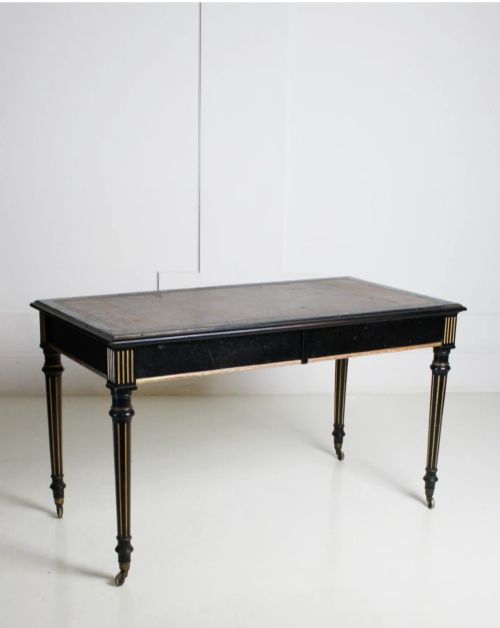
Construction relies heavily on dense hardwoods such as mahogany and walnut, alongside ash and pitch pine, frequently finished with ebonising to evoke the deep, dark surfaces favoured by progressive designers.
Decoration is integrated through contrasting veneers, parcel gilding, brass hardware, and occasional Moorish or ceramic inlays rather than applied excessive carving.
Leather inserts frequently line the writing surfaces, bound by blind tooling, while structural integrity is maintained through robust pedestal or kneehole joinery.
Aesthetic Movement Desk Retail Price Guide 2026
Typical asking prices for aesthetic movement desk among the pieces listed under this phrase on Sellingantiques today, from the lower quarter to the upper quarter. They describe what is for sale here now, not the wider market.
The listings on this site combine walnut, mahogany, ash, and ebonised wood across Victorian and Arts and Crafts periods.
Assessing Quality and Execution
Quality in these desks is determined by the ambition of the design and the integrity of the timber selection, moving from straightforward utilitarian examples to exhibition pieces conceived by prominent architects and makers.
The refinement of the ebonising, the crispness of parcel gilding, and the precision of inlaid brass or lighter wood motifs separate standard production items from masterworks.
Provenance and documented attribution to significant retail houses or designers elevate the standing of a desk, reflecting the collaborative nature of late-nineteenth-century studio production.
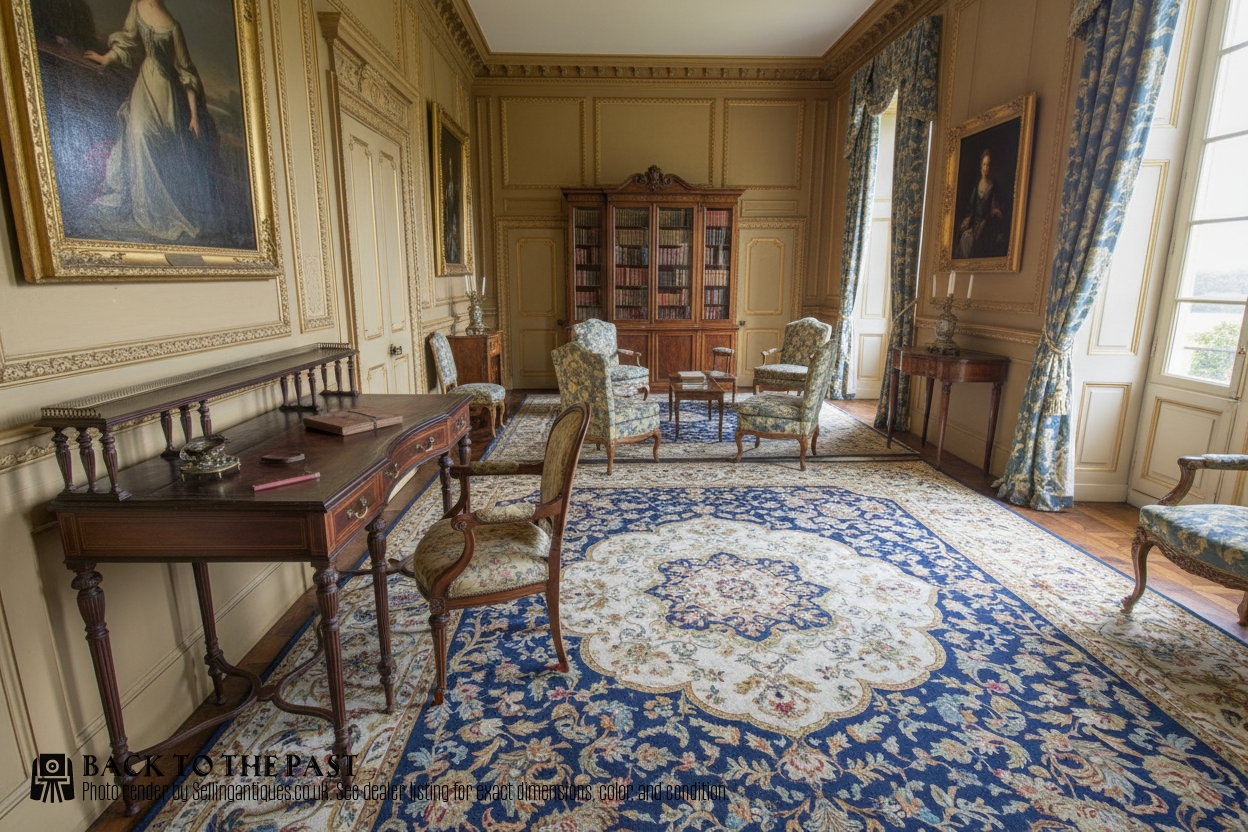
W.A.S. Benson·Blyth and Son·Collier and Plucknett·George Faulkner Armitage·Marsh Jones and Cribb·Howard and Sons·Edward William Godwin·Charles Bevan·Collinson and Lock·Gregory and Co·Edwards and Roberts·Liberty and Co·Maple and Co·Christopher Dresser·Bell and Coupland
The Aesthetic Movement Desk Glossary
- Ebonised
- Wood treated with a chemical stain or finish to imitate ebony. This dark, light-absorbing surface was a hallmark of progressive nineteenth-century furniture design.
- Kneehole
- A desk configuration featuring a central recess for the user's legs, flanked by pedestals of drawers. It offers a compact footprint without sacrificing storage.
- Partners Desk
- A large double-sided desk designed for two people to work opposite one another. These substantial pieces often feature cupboards and drawers on both faces.
- Davenport
- A small, compact writing desk with a sloping lid hinged at the top, resting over a pedestal of side drawers. It gained popularity during the nineteenth century for use in smaller reception spaces.
- Parcel Gilt
- Partially gilded ornament applied to specific carved or raised details. It adds subtle highlights against ebonised or dark wood surfaces.
Aesthetic Movement Desk: Frequently Asked Questions
What defines an aesthetic movement desk?
These desks are characterised by a rejection of heavy revivalist styles in favour of clean structural lines, dark ebonised finishes, and subtle Orientalist or Anglo-Japanese influences.
They often incorporate contrasting light wood inlays, brass mounts, and integrated leather writing surfaces that reflect the artistic reform movements of the late nineteenth century.
How do I place one in a modern room?
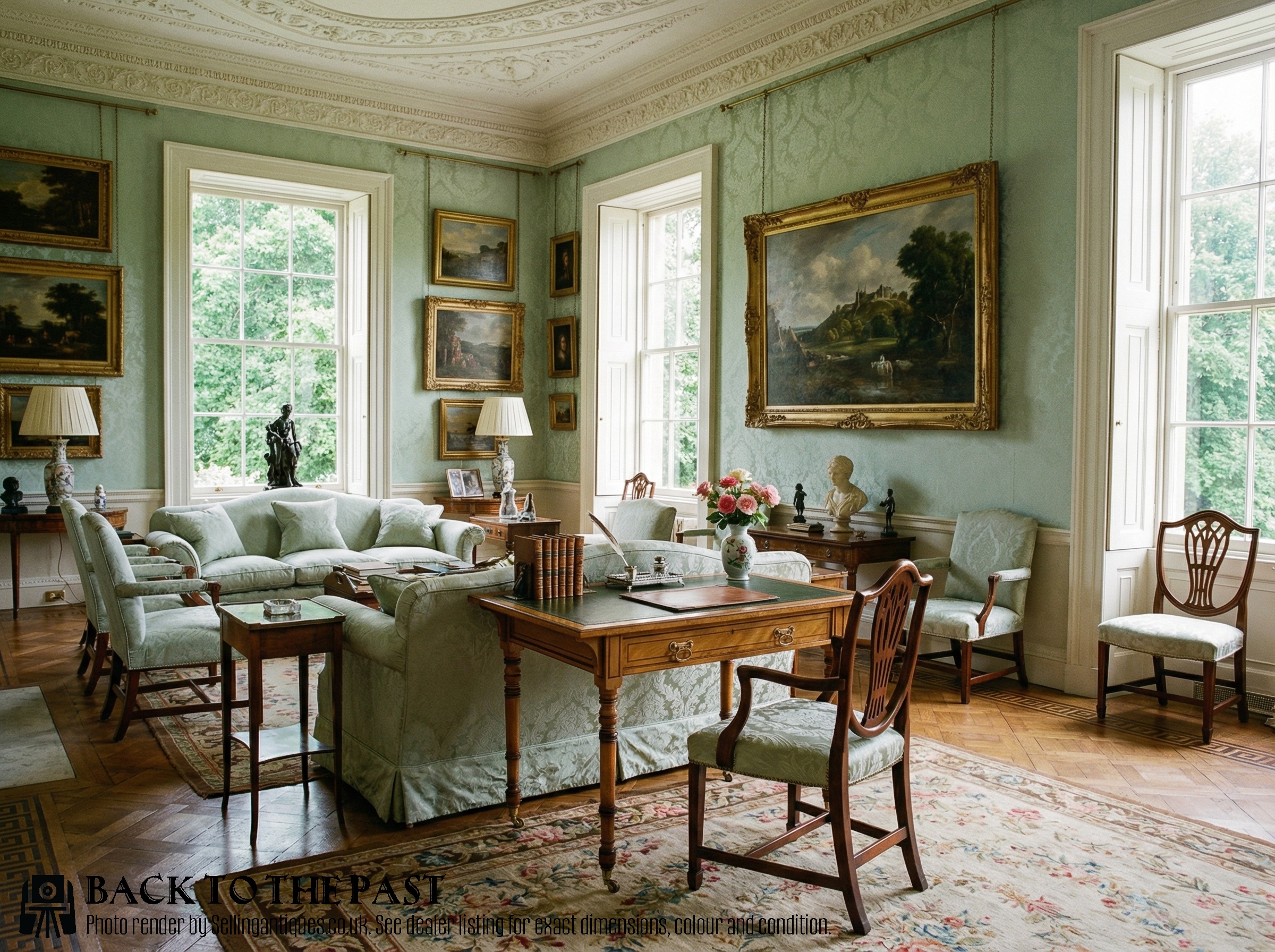
An ebonised or walnut desk acts as a strong focal point against neutral walls, pairing well with contemporary minimalist art or traditional textiles alike.
Because many examples are finished on all sides, such as partners desks or freestanding writing tables, they can sit centrally within a room rather than pushed directly against a wall.
How do I distinguish between periods?
Pieces generally span the Victorian era, specifically clustered around eighteen-eighty, displaying transitional elements from Gothic Revival to pure Aestheticism.
Earlier items often rely on heavier structural mass, while later nineteenth-century examples embrace lighter proportions and more explicit Japanese decorative motifs.
Were these desks used for writing?
They served as dedicated writing and correspondence surfaces for libraries, morning rooms, and private studies before the widespread adoption of modern office furniture.
Many incorporate specialised stationery compartments, inkwell stands, and pigeonholes tailored to handwritten letters and ledger management.