

Victorian Bureau Desk
A victorian bureau desk combines functional writing compartments with period cabinetmaking, offering both concealed storage and a traditional workspace for a study.
Victorian Bureau Desk
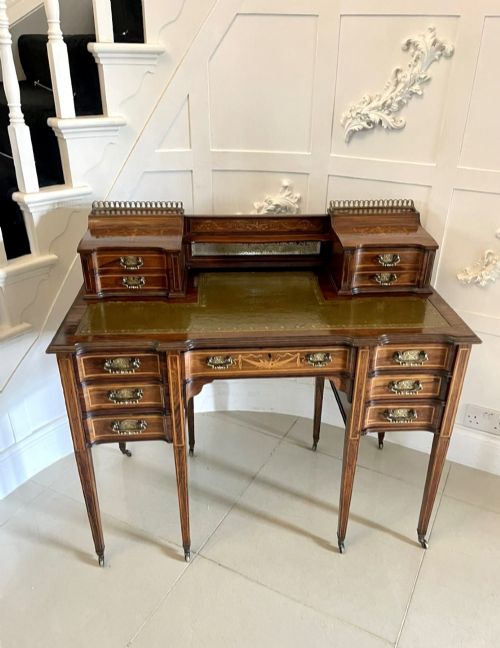
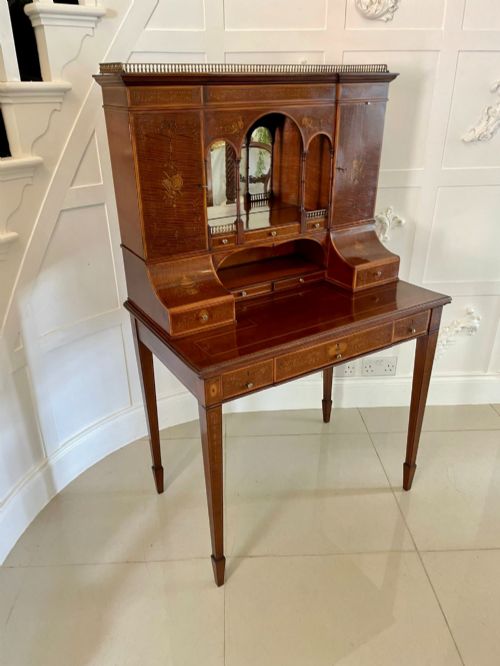
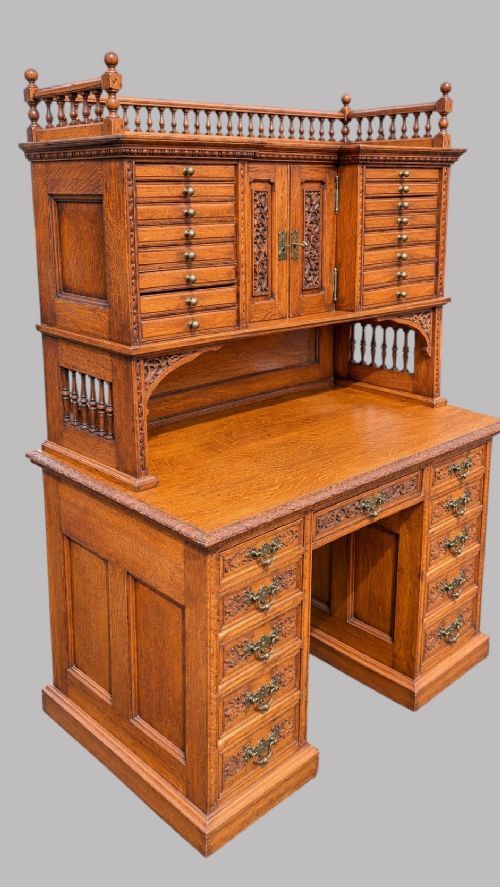
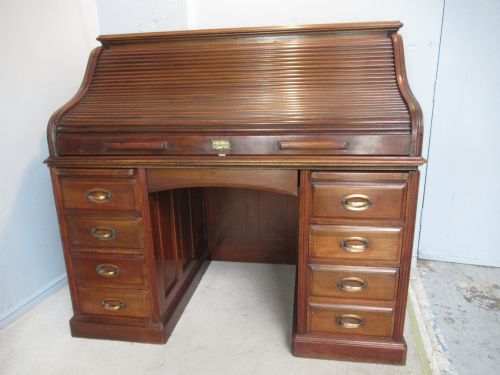
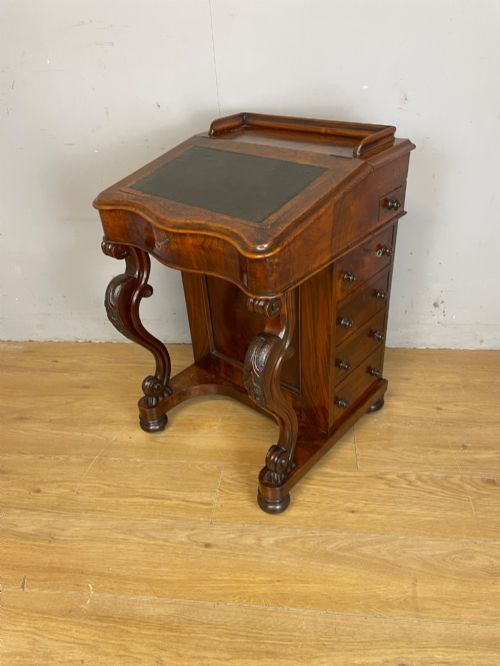
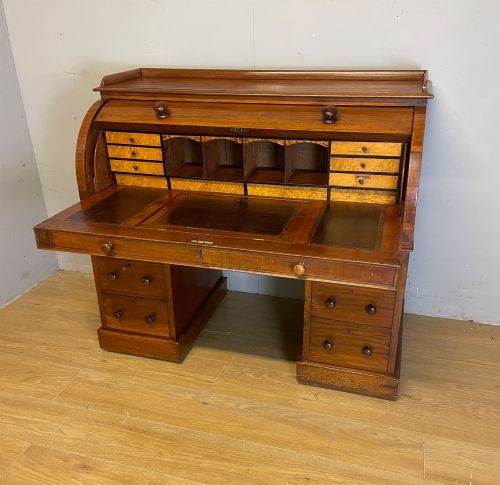
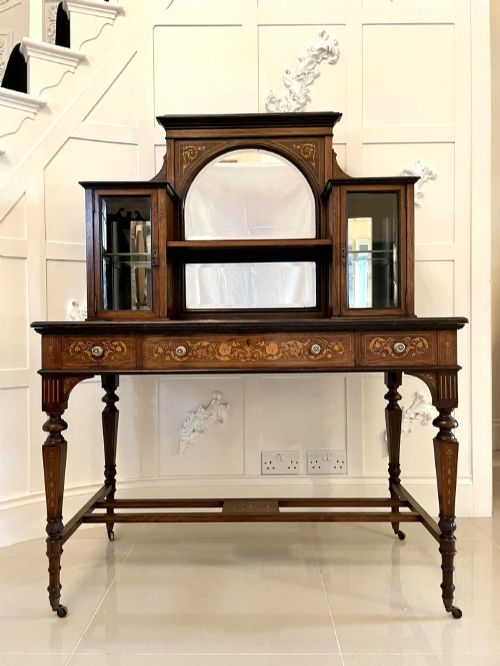
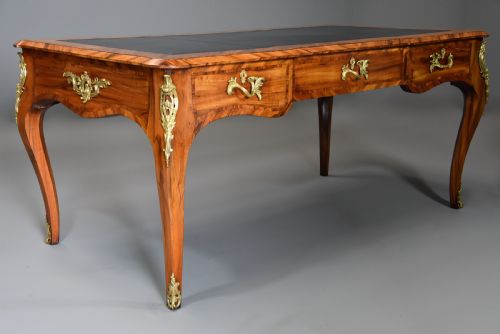
A victorian bureau desk encompasses various nineteenth-century writing furniture, ranging from compact ladies' writing desks to large partner's tables and cylinder desks.
The selections on this page span the Victorian era alongside related nineteenth-century revival styles such as Louis XV and Sheraton, reflecting both English and continental origins.
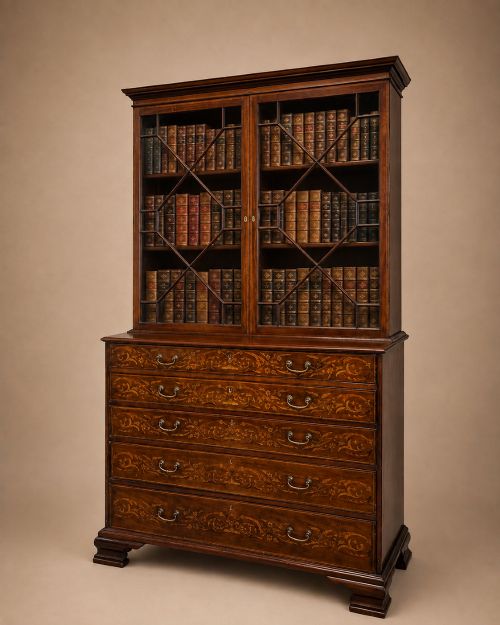
Buyers frequently encounter drop-front bureaux, pedestal writing tables, and secretaire bookcases designed for domestic or professional administrative use.
Materials and Construction
Cabinetmakers utilised dense timbers like mahogany, walnut, and oak as structural foundations, often applying burr walnut, kingwood, or rosewood veneers to primary surfaces.
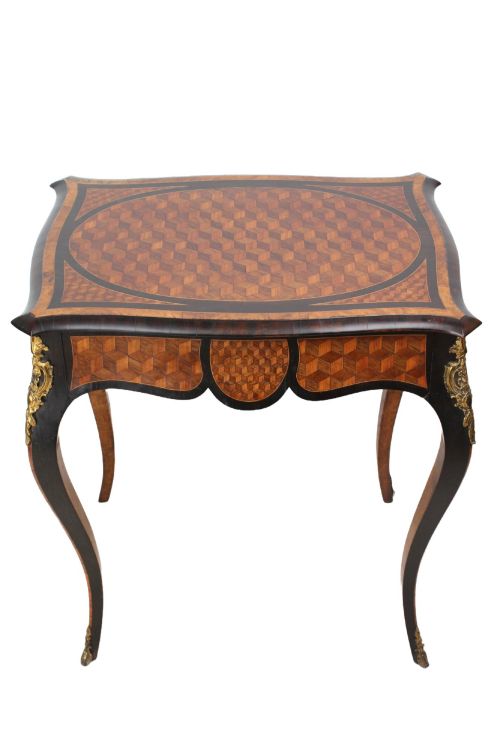
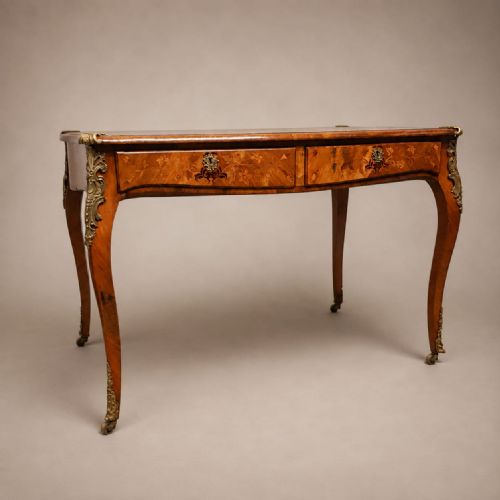
Decorative details include brass hardware, leather writing inserts, parquetry inlay, and cast ormolu mounts, particularly on pieces influenced by French revival aesthetics.
Victorian Bureau Desk Retail Price Guide 2026
Typical asking prices for victorian bureau desk among the pieces listed under this phrase on Sellingantiques today, from the lower quarter to the upper quarter. They describe what is for sale here now, not the wider market.
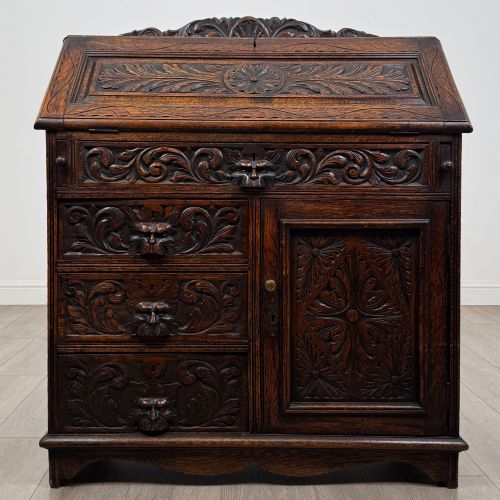
Certain oak pieces display carved green man masks peering out from amid foliate scrollwork.
Evaluating Execution
The standard of a piece depends on the precision of its joinery, the thickness and grain matching of applied veneers, and the integrity of internal pigeonholes and small drawers.
Makers identified with workshops like Maple and Co., Gillows, or Durand demonstrate superior cabinetmaking through refined carving, original fittings, and balanced proportions.
Maple and Co.·JAS Shoolbred·Gillows·Durand
The Victorian Bureau Desk Glossary
- Bureau
- A writing desk featuring a sloping drop-front that conceals a compartment of small drawers and pigeonholes.
- Cylinder desk
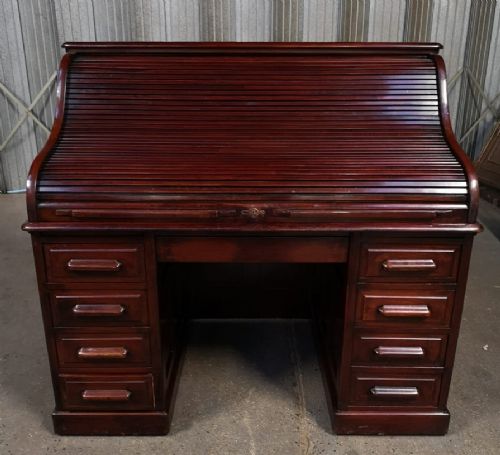
- A writing table with a rolling curved shutter that encloses the writing surface when pulled down.
- Secretaire
- A cabinet or chest incorporating a disguised pull-down writing drawer that reveals fitted compartments.
- Ormolu
- Gilt bronze mounts cast and chased for decorative application on furniture corners and friezes.
- Parquetry
- Geometric wood inlay patterns arranged to create decorative mosaic surfaces on tabletops and drawer fronts.
Victorian Bureau Desk: Frequently Asked Questions
How do I use a cylinder desk?
The curved wooden shutter rolls backward into the body of the desk to expose the leather writing surface and internal compartments. Pulling the shutter forward secures the workspace and hides correspondence.
Internal drawers and pigeonholes remain accessible once the cylinder is retracted, allowing organised storage for stationery and documents.
What is a bureau de dame?
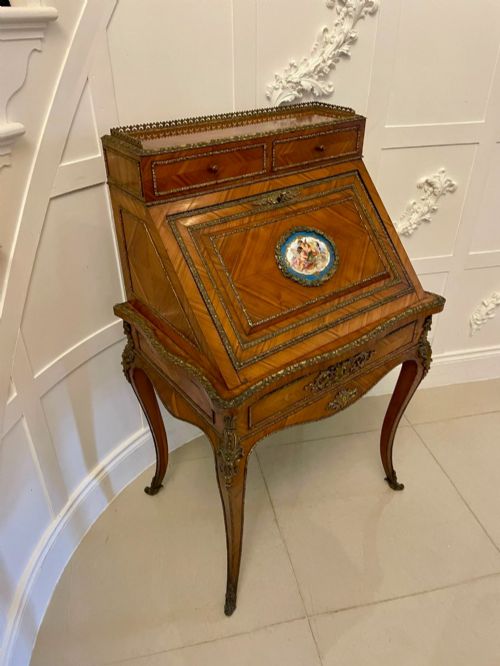
A bureau de dame is a feminine writing desk typically produced during the nineteenth century in various revival styles. These pieces are characterised by their smaller proportions and delicate ornamentation.
They often incorporate mirrors, marquetry, and elevated superstructures designed for light personal correspondence rather than heavy administrative work.
How do I distinguish a partner's desk?
A partner's desk provides dual-sided working arrangements with drawers and cupboards accessible from both front and back. These larger tables allowed two individuals to work opposite one another.
They frequently feature inset leather tops and substantial pedestal bases constructed from mahogany or kingwood.
Where were secretaire bookcases placed?
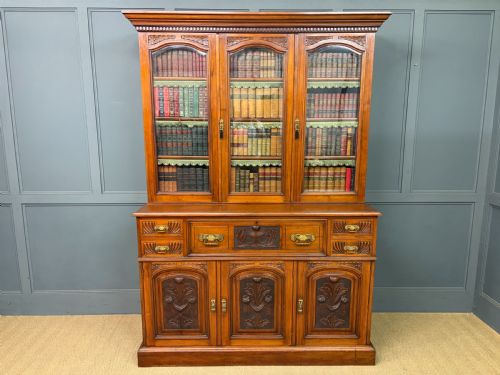
Secretaire bookcases stood primarily in libraries, studies, and formal drawing rooms as dual-purpose furniture. The upper section housed books behind glass or wooden doors, while the lower section provided a fold-down writing surface.
This arrangement maximised floor space by combining a bookcase and a desk into a single vertical cabinet.