

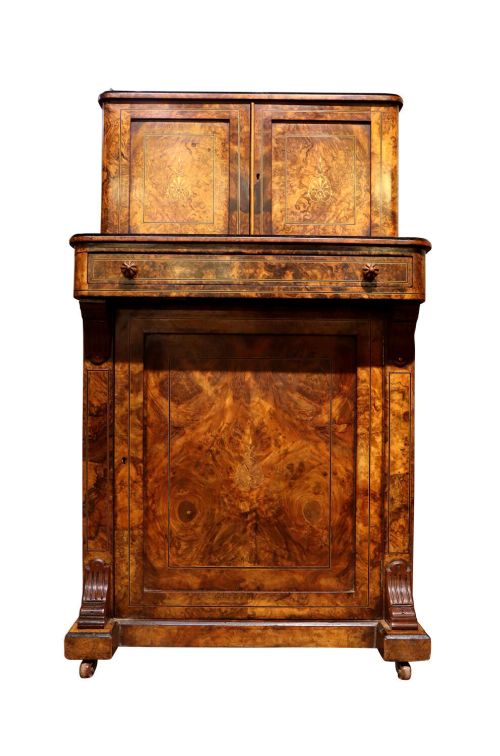
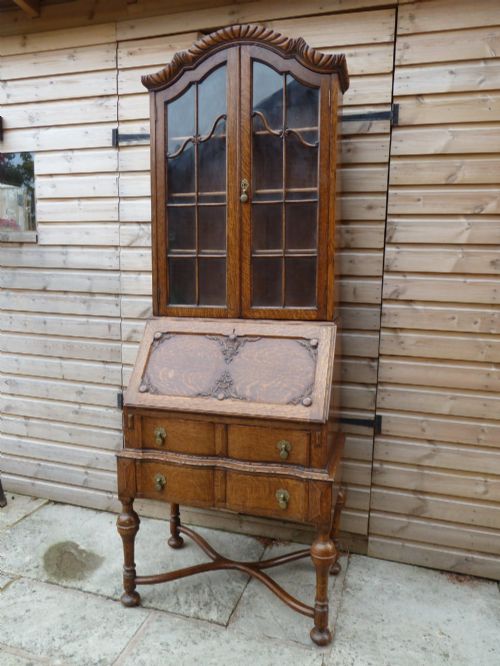
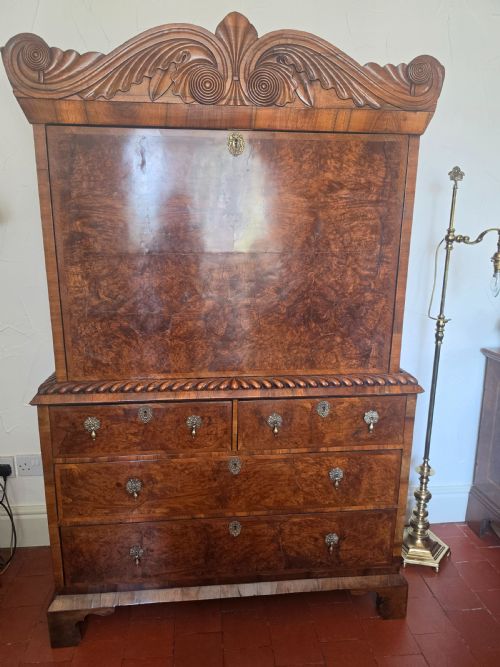
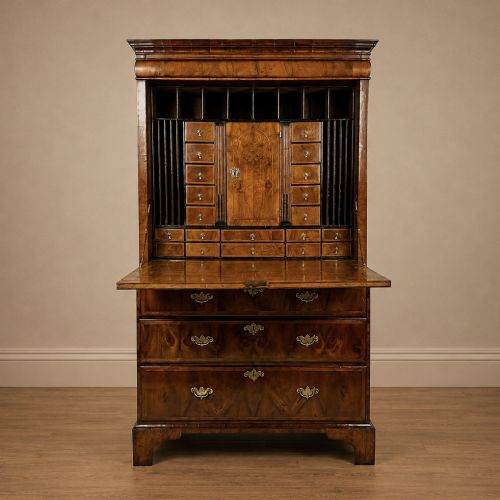

Antique Escritoire Cabinet
An antique escritoire cabinet is a drop-front writing chest designed for correspondence, bringing centuries of walnut, mahogany and marquetry into a room.
Antique Escritoire Cabinet
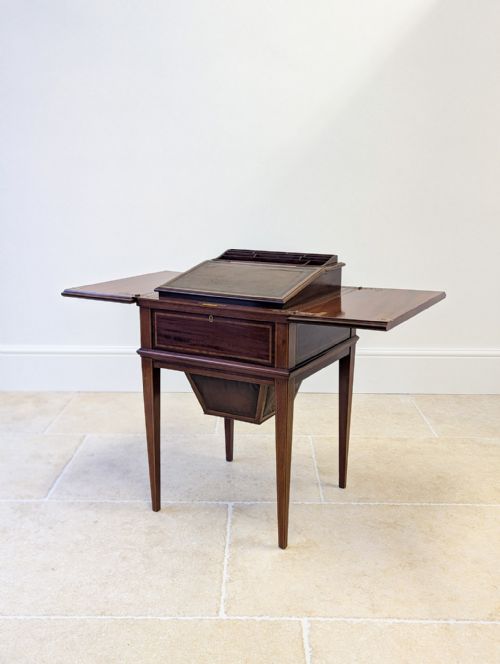
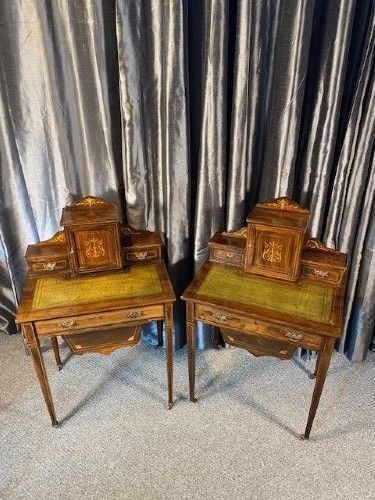
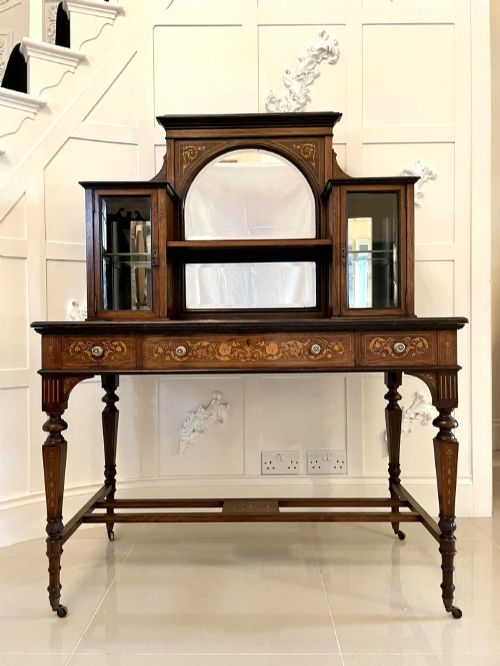
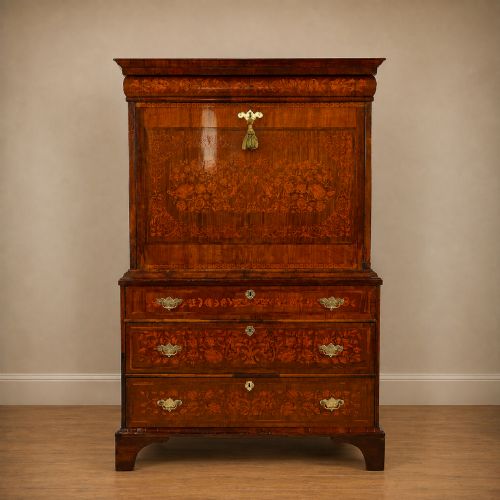
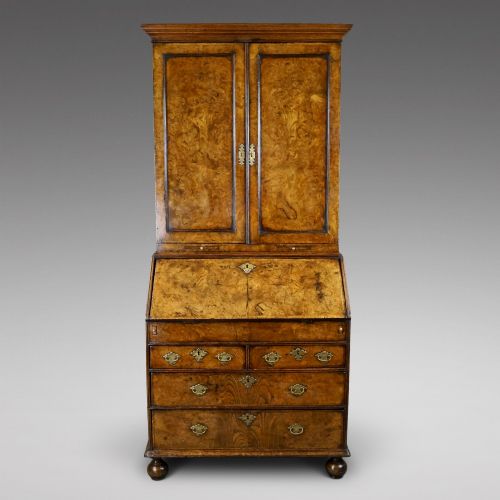
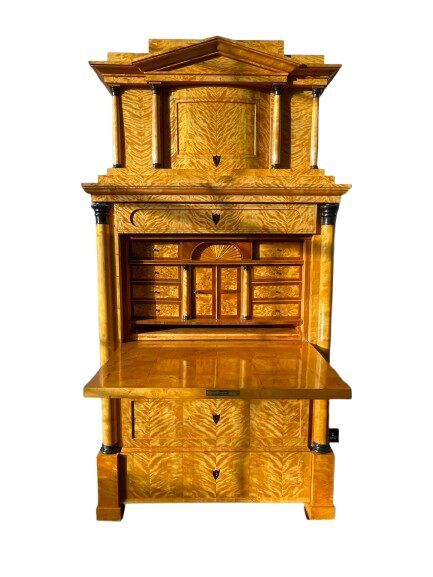
An antique escritoire cabinet combines a chest of drawers with a vertical fall-front writing surface, concealing fitted compartments within. The versions met most frequently on this page span from the 17th century through the Victorian era, originating from English and French workshops.
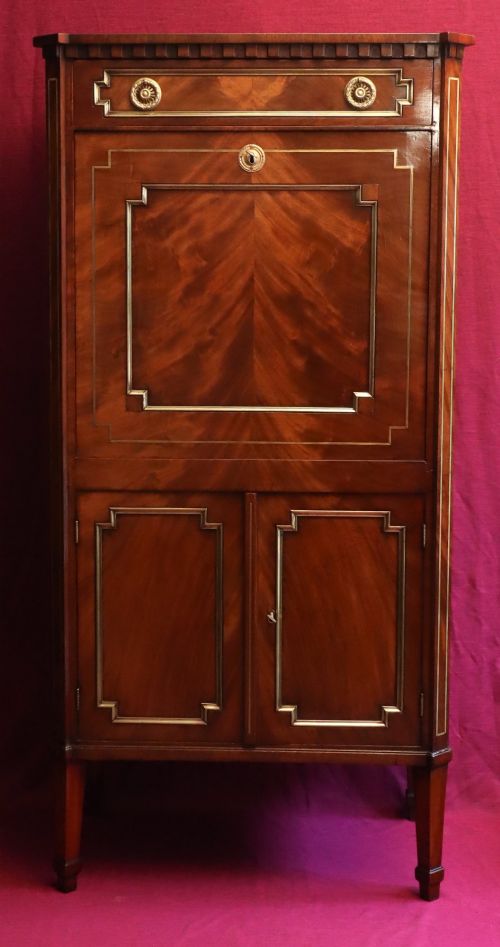
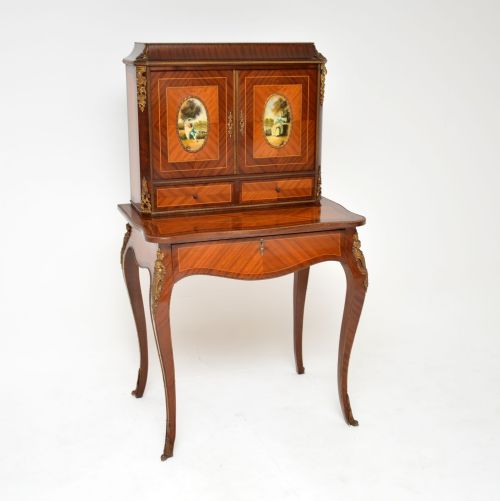
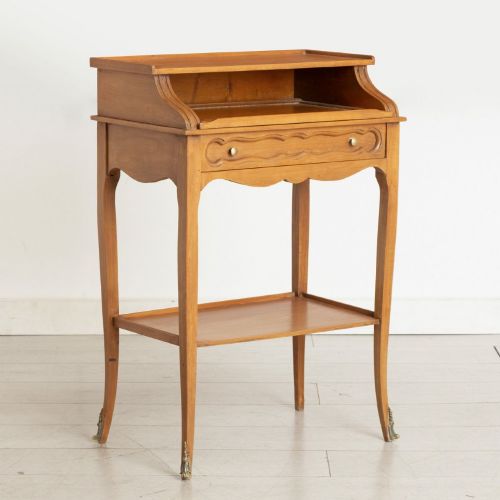
Forms range from compact bureau bookcases and bureau de dame tables to imposing Biedermeier secretaires and marble-topped French cabinets. Walnut and mahogany predominate, often enhanced by marquetry, brass inlay or ormolu mounts.
Materials and construction
Cabinets rely on solid timber carcases faced with figured veneers, utilising walnut, flame mahogany, rosewood and burr elm. Artisans applied intricate floral marquetry, satinwood stringing and brass inlay to surfaces before French polishing.
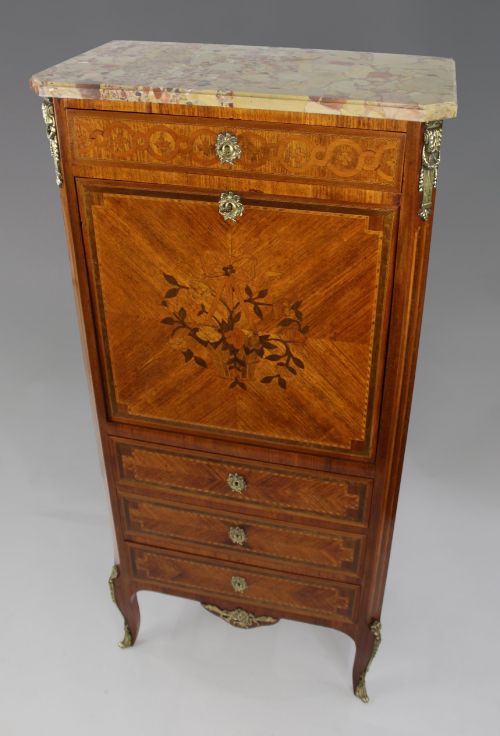
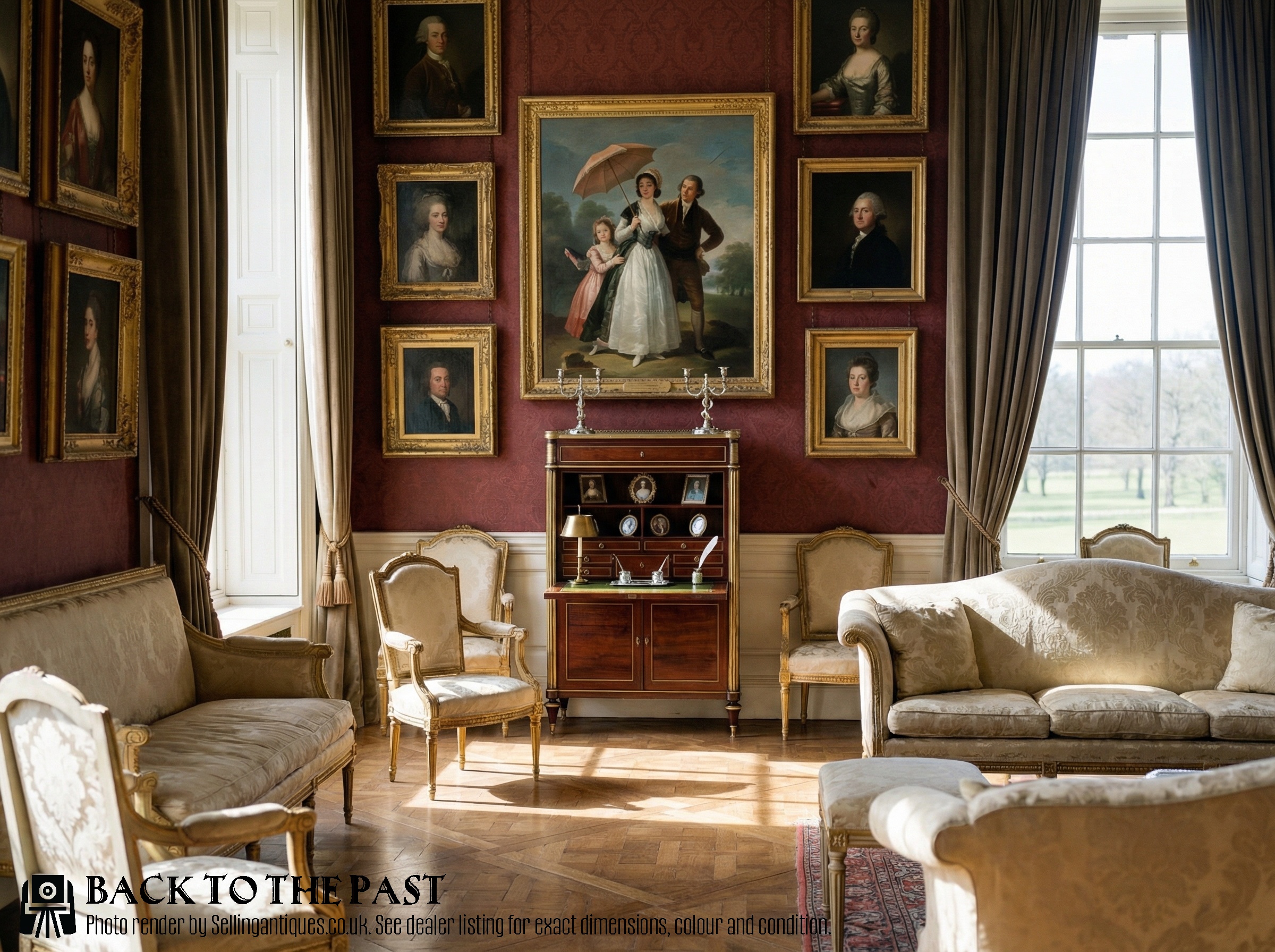
French examples frequently incorporate original marble tops and gilt ormolu mounts, whilst drop-front mechanisms depend on brass hinges and internal struts to support the writing load.
Antique Escritoire Cabinet Retail Price Guide 2026
Typical asking prices for escritoire cabinet among the pieces listed under this phrase on Sellingantiques today, from the lower quarter to the upper quarter. They describe what is for sale here now, not the wider market.
Periods represented span from the 17th century through William & Mary, Georgian, Victorian, Edwardian and Biedermeier styles.
Distinctions in quality
Quality rests on the choice of timber veneer and the precision of its grain matching across the fall front and drawer fronts. Figured walnut, burr elm and flame mahogany distinguish superior examples from plain equivalents.
The sophistication of the internal fitments, including secret drawers, pigeonholes and small locking compartments, separates standard utility pieces from high-status commissions.
Morris & Co·George W Jack
The Antique Escritoire Cabinet Glossary
- Escritoire
- A writing cabinet featuring a fall-front flap that opens to reveal internal drawers and pigeonholes. It serves the same function as a bureau.
- Secretaire à abattant
- A tall upright cabinet with a drop-front writing desk panel, typically associated with 19th-century French design and marble tops.
- Marquetry
- The art of forming decorative patterns by fitting together small pieces of wood veneer, often incorporating floral or geometric motifs.
- Ormolu
- Gilded bronze ornamentation applied to the mounts, feet and corners of French cabinets.
- Bonheur du jour
- A light lady's writing desk with a small superstructure of shelves and drawers above the main work surface.
Antique Escritoire Cabinet: Frequently Asked Questions
What is the difference between an escritoire and a bureau?
An escritoire generally refers to an upright cabinet with a vertical drop-front panel that conceals writing compartments. A bureau more often describes a sloping lid desk set upon a chest of drawers.
Both forms belong to the same family of writing furniture, though antique escritoires tend to emphasise architectural cabinetwork and formal display.
How do I use an antique escritoire cabinet today?
These cabinets function effectively as compact home workstations, allowing a laptop or writing materials to be concealed behind the fall front when not in use. The internal drawers provide storage for stationery and small items.
Placing the cabinet against a sturdy interior wall protects the timber and veneers from excessive temperature shifts and direct sunlight.
How do I date an antique walnut escritoire?
Early examples from the William and Mary or Queen Anne periods often feature oyster walnut veneers, herringbone banding and specific drawer construction methods with oak linings. Later 19th-century pieces incorporate different secondary woods and machine-cut elements.
Examining the backboards, lock mechanisms and handles provides further clues to the manufacturing decade.
What are Vernis Martin panels on French cabinets?
Vernis Martin is a decorative lacquer technique developed in 18th-century France to imitate Japanese and Chinese lacquerware. It appears on select cabinets alongside ormolu mounts and marble tops.
The glossy finish layers colours and gold dust to create translucent pictorial scenes on the cabinet doors.