
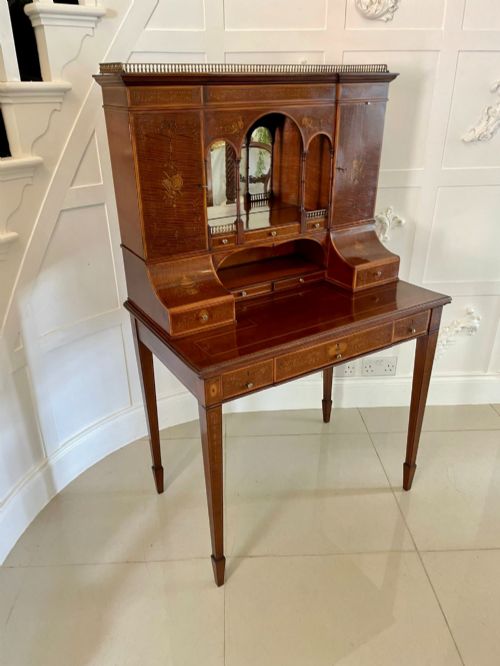


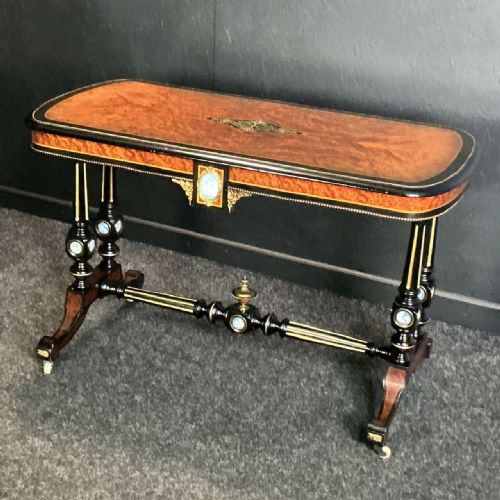
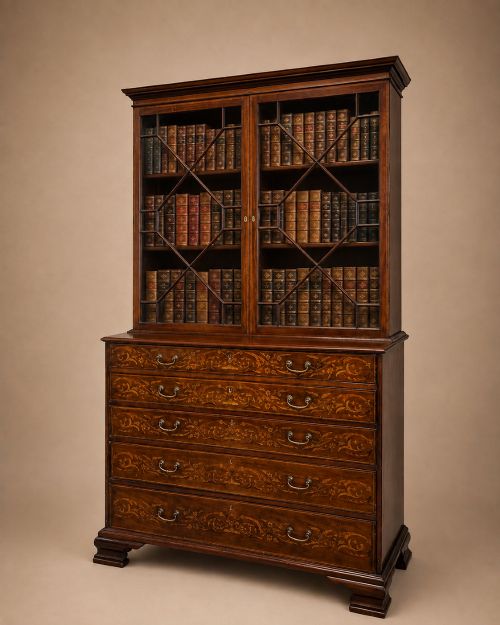
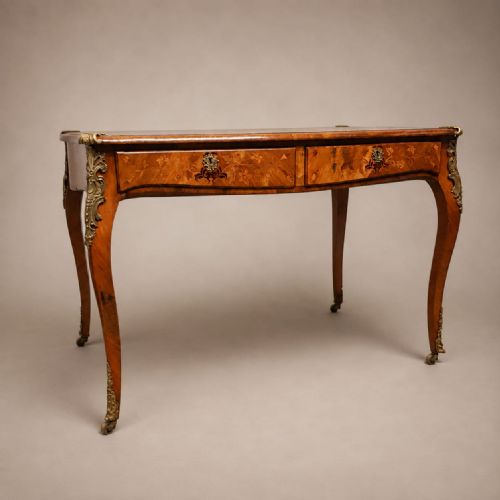
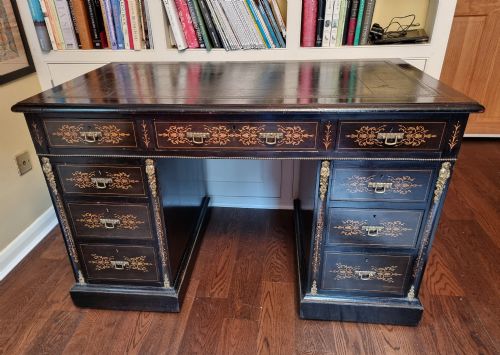
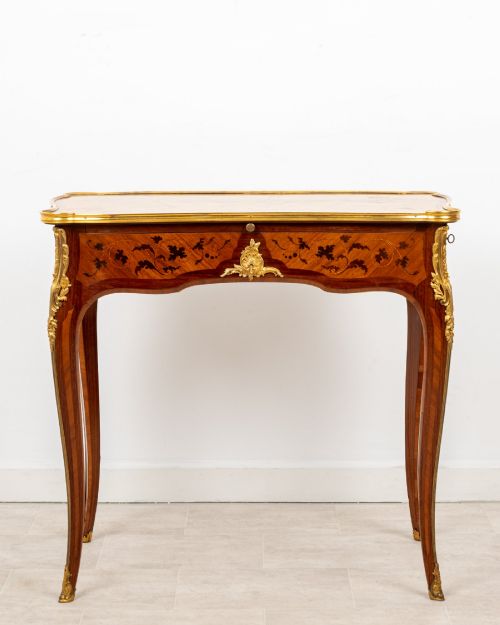
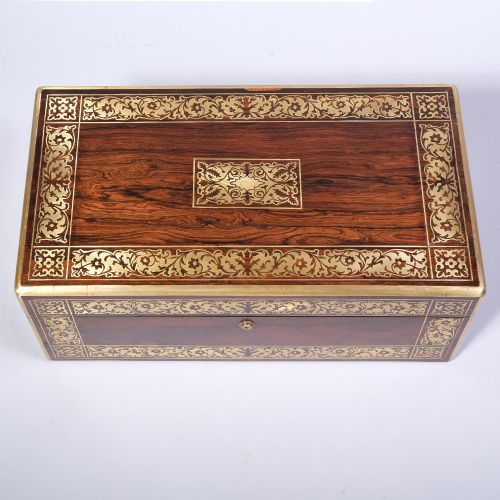
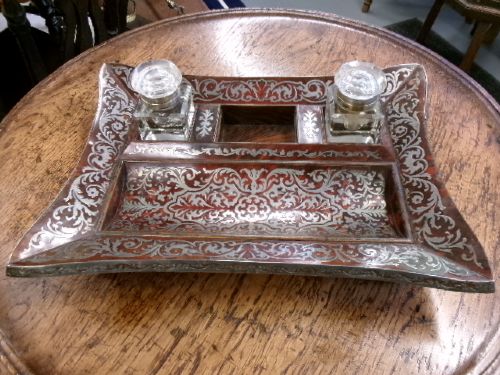
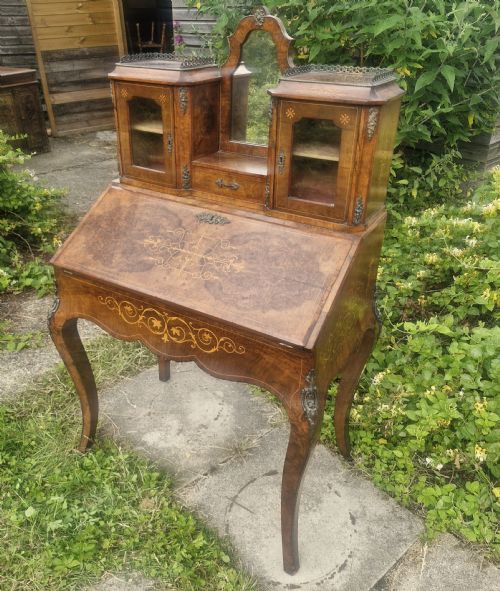
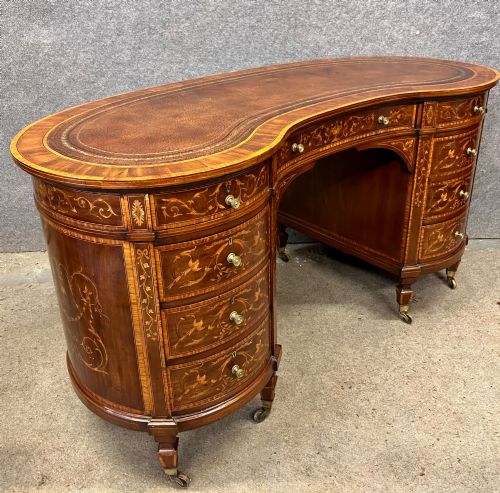
Victorian Marquetry Desk
A victorian marquetry desk brings together intricate timber inlay and domestic utility, offering a refined workspace shaped by nineteenth-century cabinet-makers.
Understanding the Victorian Marquetry Desk
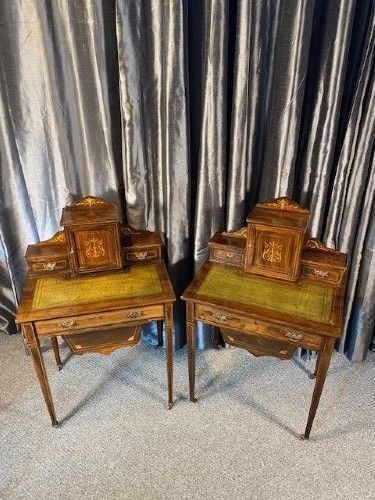
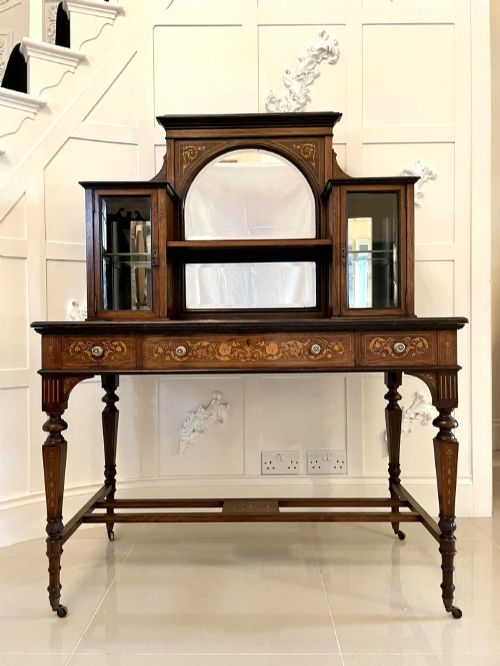
A victorian marquetry desk typically manifests as a writing desk, a bonheur du jour, a bureau, or a library table, dating from the mid-nineteenth century to eighteen-ninety. These pieces emerge in styles including Rococo Revival and Victorian French Revival, reflecting the period's taste for continental influence.
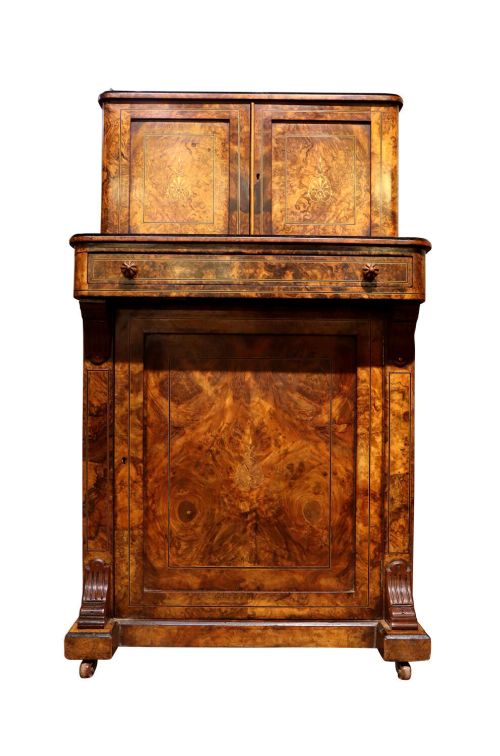
The buyer meets variations ranging from compact ladies' writing desks and burr-walnut bureaus de dame to larger library tables and Carlton House desks. Walnut, burr walnut, rosewood, and mahogany form the primary carcasses for these surfaces.
The incorporation of marquetry inlay defines the aesthetic, often paired with contrasting satinwood or ebonised wood details. Many examples integrate fitted writing slopes, leather inserts, and internal compartments suited to correspondence.
Materials and Construction
Cabinet-makers constructed these desks using solid timbers and supportive secondary woods, applying face veneers of burr walnut, rosewood, mahogany, or satinwood. Marquetry decoration relies on hand-cut veneers of various timbers fitted together to form pictorial or floral motifs.
Makers integrated brass hardware, glass panels, and tooled leather writing surfaces into the wooden frameworks. Ebonised wood and banding in contrasting timbers provided crisp framing for the central marquetry panels.
Advanced forms incorporated complex internal mechanics, such as cylinder tops and fitted pigeonholes, requiring precise joinery and careful fitting of drawers and compartments.
Retail Price Guide 2026
Typical UK retail prices for victorian marquetry desk, calculated from the Sellingantiques database of over a million retail prices indexed since 2003. This retail price guide relies exclusively on Sellingantiques data; no external sources or auction records are used, so the figures do not describe the wider market.
Some Victorian writers concealed their secrets beneath intricate floral marquetry and cylindrical piano-top music box mechanisms.
Distinctions in Quality
The standard of timber selection and veneer matching dictates much of the visual impact, particularly in the choice of highly figured burr walnut, rosewood, or satinwood. Superior pieces display intricate, tightly fitted marquetry with varied tonal woods rather than simple stamped or superficial decoration.
The precision of the cabinet-making reveals itself in the smoothness of drawer operations, the neatness of brass fittings, and the integrity of internal writing surfaces. Exhibition-quality pieces often bear the marks of notable makers, denoting superior workshop execution.
Jas Shoolbred·Morison of Edinburgh·Maple and Co·Edwards and Roberts
The Victorian Marquetry Desk Glossary
- Marquetry
- Decorative veneer work where pieces of various coloured woods are fitted together to form geometric or pictorial designs. This technique decorates the primary writing surfaces and upstands of the desk.
- Bonheur du jour
- A small, light ladies' writing desk featuring a raised cabinet or tiered shelving section above the main writing surface. These pieces often incorporate marquetry inlay across the fall-front or drawer fronts.
- Burr walnut
- Timber taken from the gnarled growths of a walnut tree, prized for its swirling, highly figured grain pattern. It serves as a favored veneer on mid-nineteenth-century desks.
- Ebonised wood
- Timber treated with a dark stain or finish to imitate ebony. Cabinet-makers used this material to create strong contrasts against lighter marquetry inlay and walnut carcasses.
- Carlton House desk
- A form of writing desk featuring a curved superstructure of small drawers and compartments around three sides of the writing area. Examples from this tradition utilise mahogany, satinwood, and detailed marquetry.
Frequently Asked Questions
What defines a bonheur du jour?
A bonheur du jour is a small, ornate ladies' writing desk featuring a small cabinet or shelving superstructure on top of the writing surface. These pieces were designed for light correspondence and display.
They frequently employ burr walnut or rosewood veneers decorated with detailed floral or geometric marquetry inlay.
How do I care for inlaid walnut?
Inlaid walnut surfaces require stable indoor humidity and protection from direct sunlight to prevent the timber from drying or the veneer from lifting. Gentle dusting with a soft cloth preserves the polish without harming the delicate marquetry.
Avoid using silicone-based polishes or excessive moisture on antique wood and leather writing inserts.
What is a bureau de dame?
A bureau de dame is a feminine form of writing desk, often featuring a sloping fall-front that opens to reveal internal compartments and drawers. These compact desks date from the Victorian era and suit smaller domestic spaces.
They are commonly constructed from burr walnut or rosewood with elaborate marquetry panels.
How can I identify nineteenth-century work?
Nineteenth-century construction methods display hand-cut dovetails in the drawer construction and traditional timber framing beneath the veneers. The presence of specific historical revival styles, such as Rococo Revival, helps anchor the piece to the period.
Makers' stamps, exhibition labels, or characteristic brass hardware also provide clues to the origin and date.