
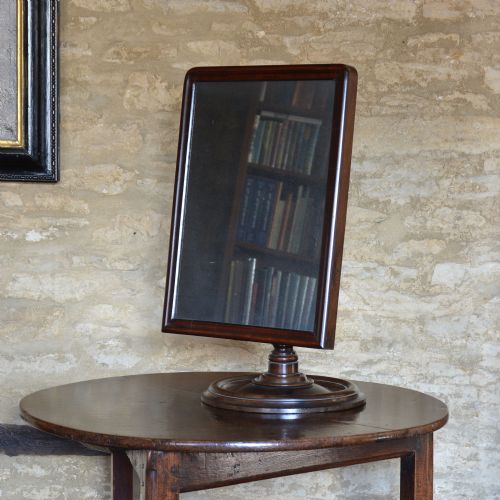
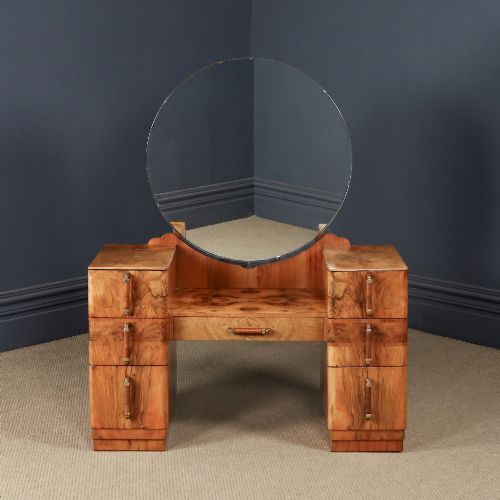
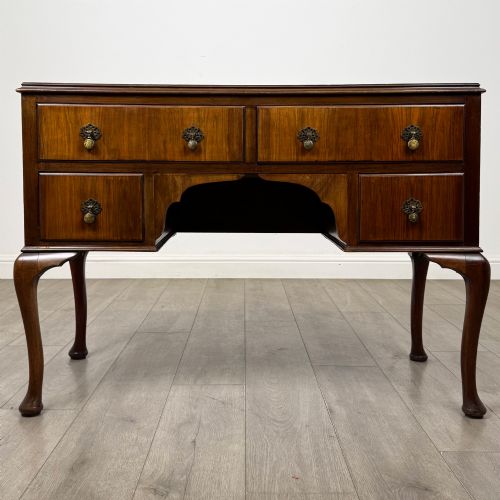
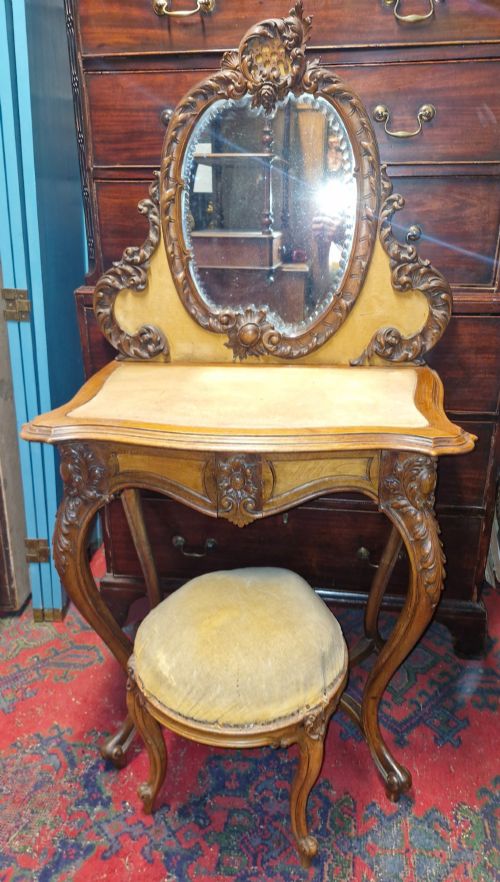

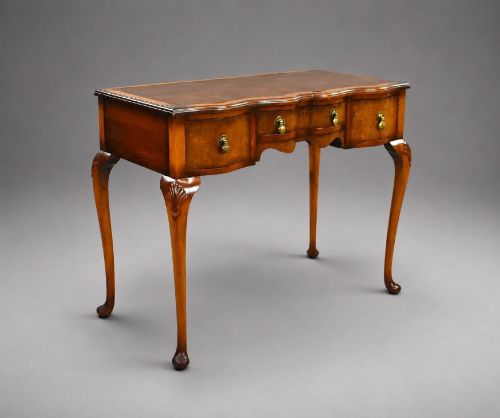
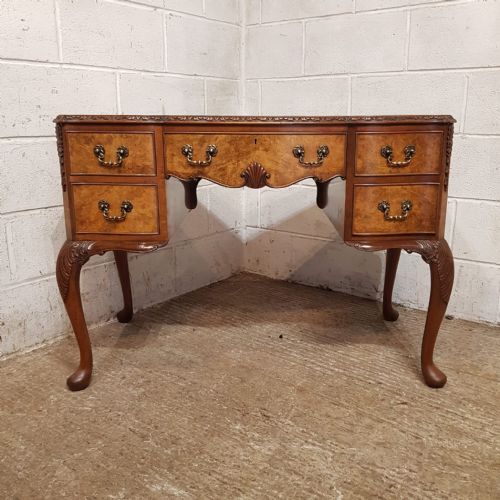
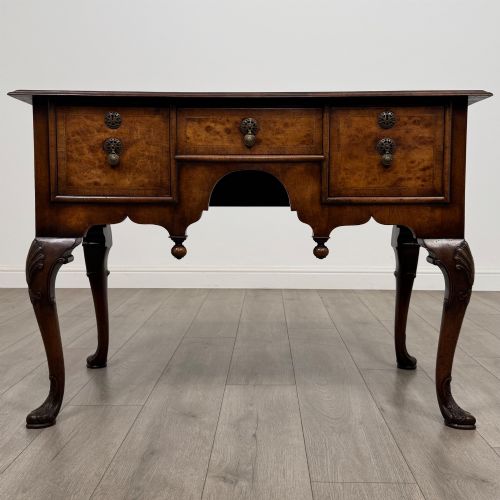
Walnut Vanity Desk
A walnut vanity desk brings warmth and history to a dressing space, offering rich wood figures and practical surface areas.
Understanding the walnut vanity desk
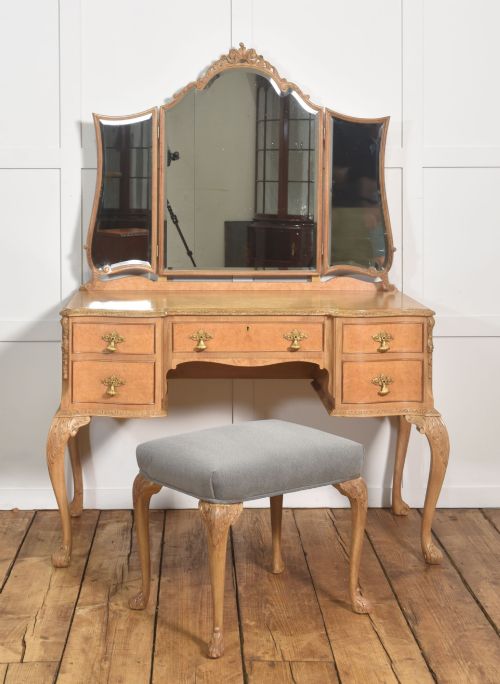
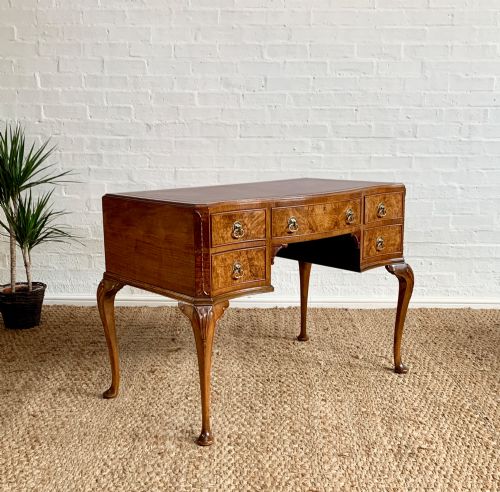
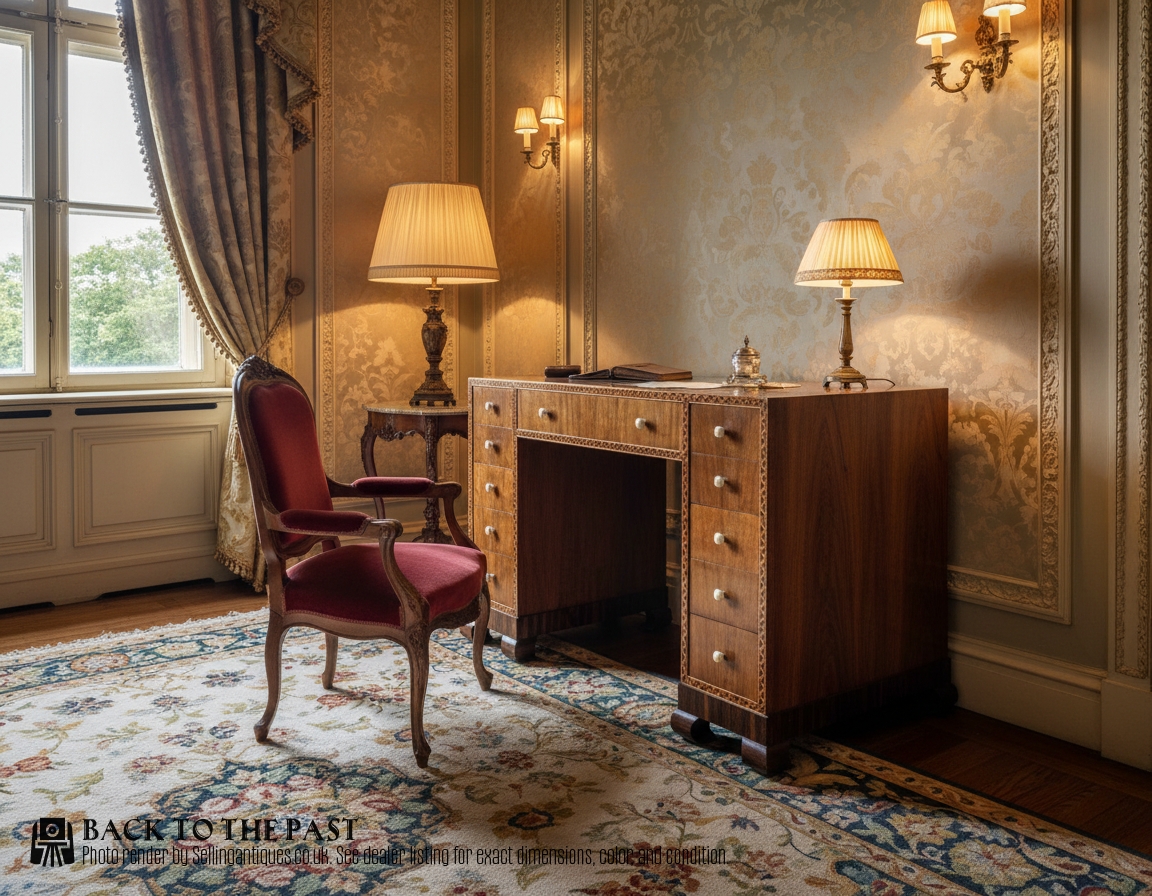
A walnut vanity desk combines the utility of a writing surface and a dressing table into a single piece of antique furniture. These dual-purpose items appear in several distinct periods, most frequently reflecting Victorian and later revival tastes.
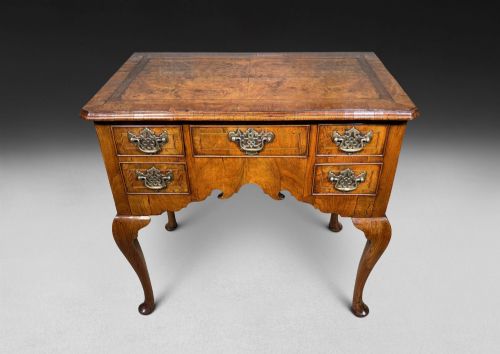
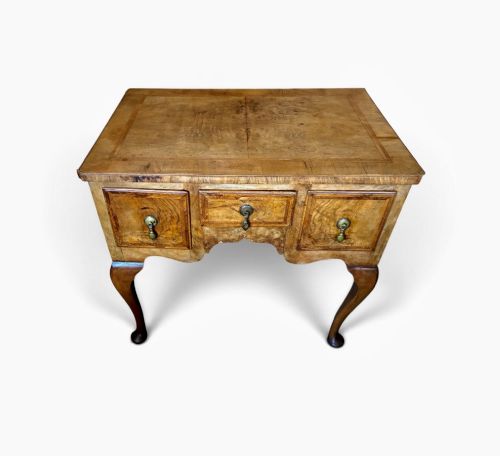
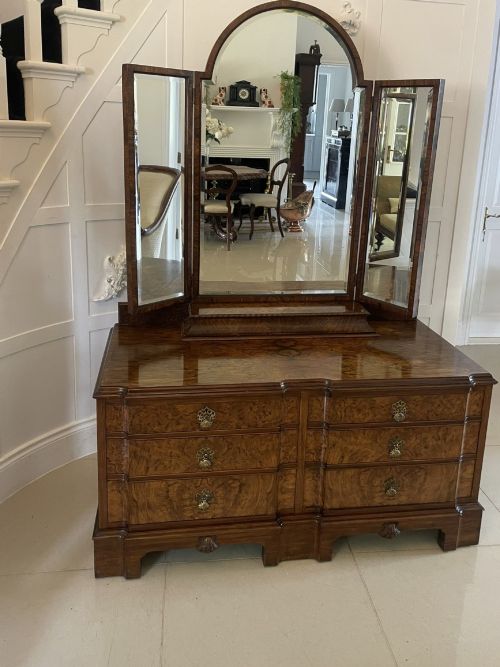
The selection ranges from early eighteenth century kneehole desks to nineteenth century Victorian burr walnut examples and twentieth century art deco forms. Each piece serves as a functional workspace or grooming station while displaying the deep grain of walnut timber.
Makers adapted the form across decades, resulting in pieces that range from French Louis XV style poudreuses with mirror glass to simpler golden walnut dressing tables. Buyers encounter diverse proportions and internal compartments depending on the specific decade of manufacture.
Materials and construction methods
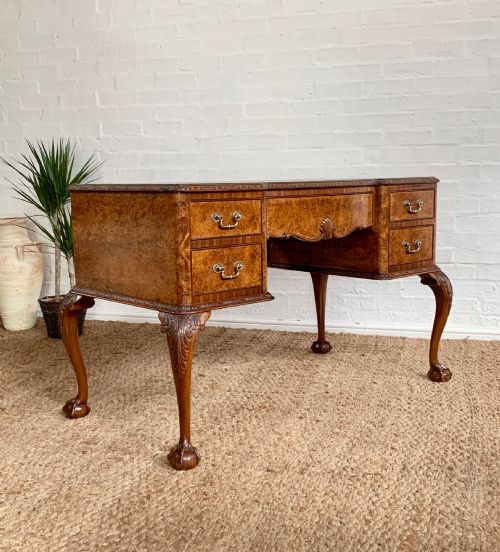
Craftsmen utilised solid walnut and burr walnut veneers over secondary timbers to achieve striking decorative patterns on the main surfaces. The natural figuring of the wood provides the primary visual interest without relying on excessive carving.
Retail Price Guide 2026
Typical UK retail prices for walnut vanity desk, calculated from the Sellingantiques database of over a million retail prices indexed since 2003. This retail price guide relies exclusively on Sellingantiques data; no external sources or auction records are used, so the figures do not describe the wider market.
Listings span from the 18th Century through the Victorian era to the 1930s, utilising brass, leather, and ormolu alongside walnut.
Judging quality and character
Superior examples demonstrate careful matching of burr walnut veneers across drawer fronts and top surfaces, creating a symmetrical flow of grain. The choice of secondary woods and the precision of dovetail joints indicate the skill of the original cabinetmaker.
Hardware and secondary materials also set pieces apart, from finely chased ormolu mounts to well-tooled leather inserts. The integration of functional elements like mirrors and small drawers reveals the forethought put into the desk's daily use.
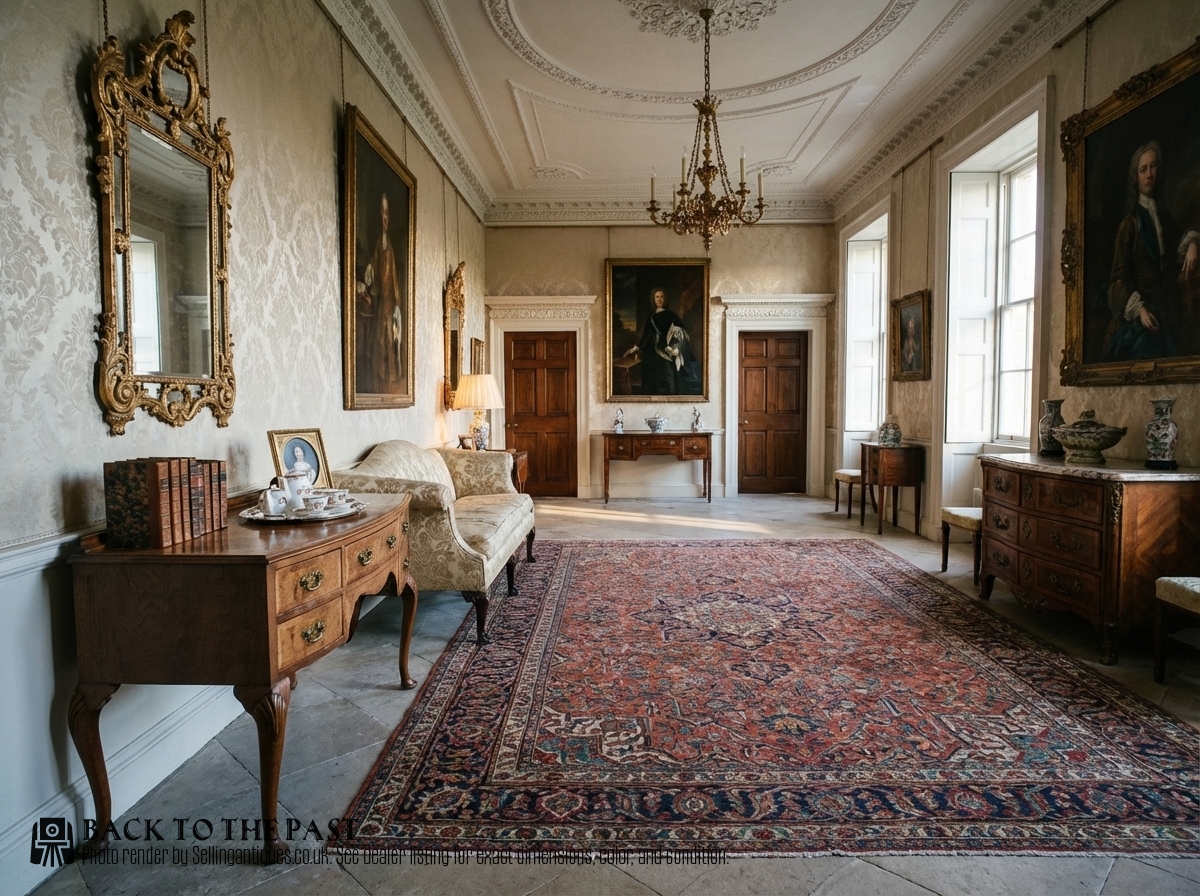
Maple's of London
The Walnut Vanity Desk Glossary
- Burr walnut
- A veneer sliced from the gnarled growths of a walnut tree, prized for its swirling, organic grain patterns. It forms the decorative centerpiece on many Victorian and revival desks.
- Ormolu
- Gilt bronze mounted onto furniture as decorative hardware or feet. This French technique adds metallic contrast to the warm brown tones of walnut timber.
- Poudreuse
- A French dressing table equipped with folding lids and an internal mirror for grooming. These pieces often conceal compartments for cosmetics and personal items.
- Kneehole desk
- A compact desk featuring a central recess for the legs, flanked by pedestals of small drawers. Eighteenth century examples in walnut represent early iterations of this form.
- Dressing table
- A low table equipped with drawers and often a mirror, designed for grooming and personal care. Antique versions frequently double as writing surfaces.
Frequently Asked Questions
How do I identify the period?
Identifying the period involves looking at the overarching style, construction techniques, and secondary materials used in the piece. Victorian examples often display rich burr walnut veneers, while eighteenth century pieces present simpler kneehole configurations.
Stylistic markers like French Louis XV revival curves or art deco geometric lines further narrow down the decade of manufacture.
Where were they used?
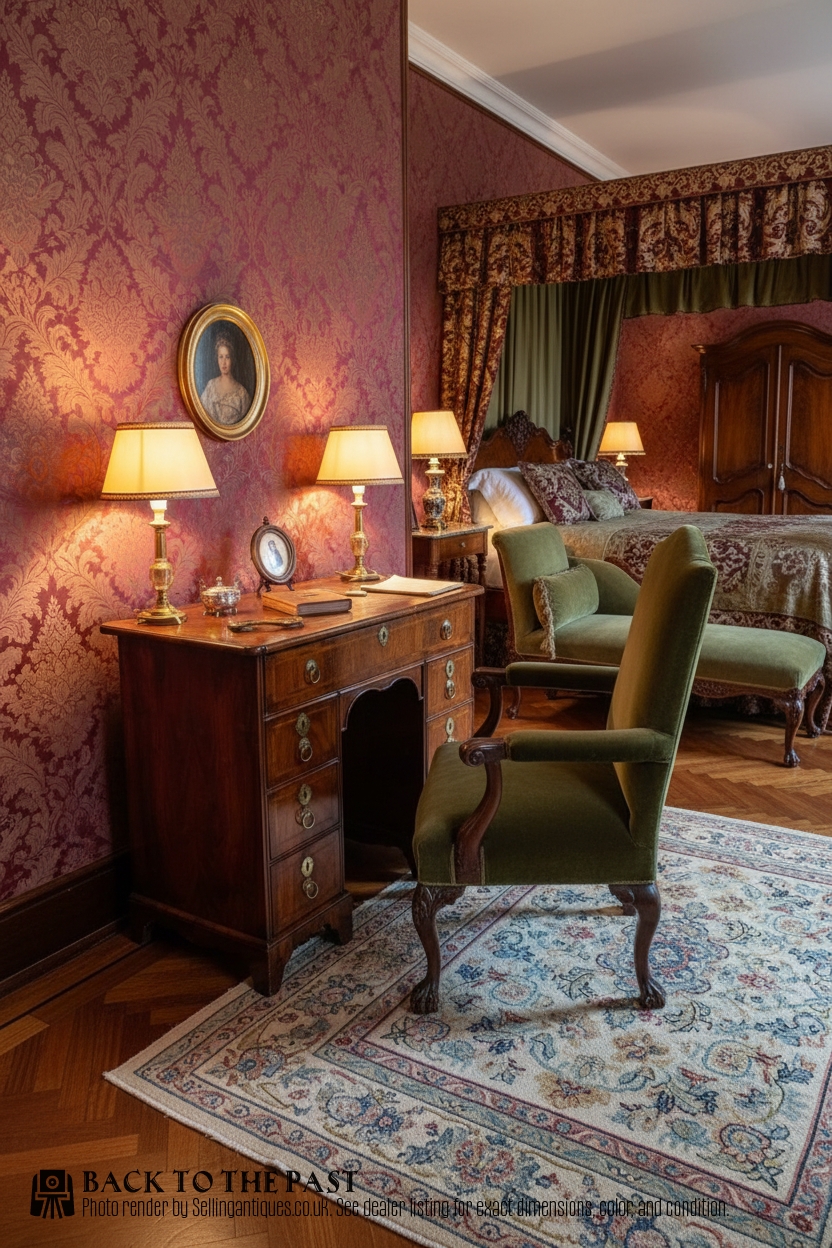
These desks originally functioned in private bedrooms, boudoirs, or dressing rooms as personal grooming and correspondence stations. Their dual nature allowed owners to write letters and attend to their appearance at the same piece of furniture.
Today, they transition easily into modern bedrooms or home studies as characterful workspace alternatives.
What materials are typical?
Walnut and burr walnut dominate the exterior surfaces, celebrated for their deep colour and intricate grain patterns. Secondary materials include brass for hardware, ormolu mounts for decoration, and glass for mirrors.
Some variants also incorporate leather inset panels on the top surface to provide a durable writing plane.