

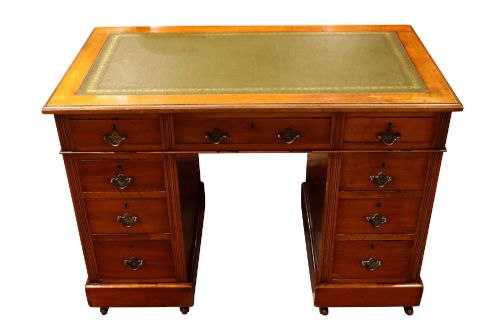
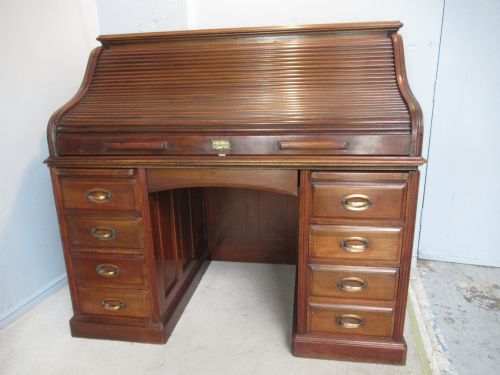
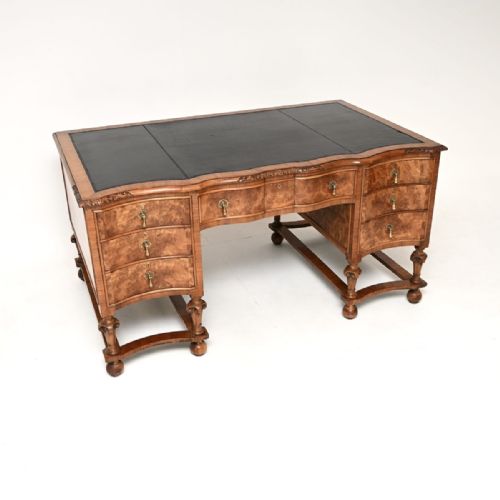
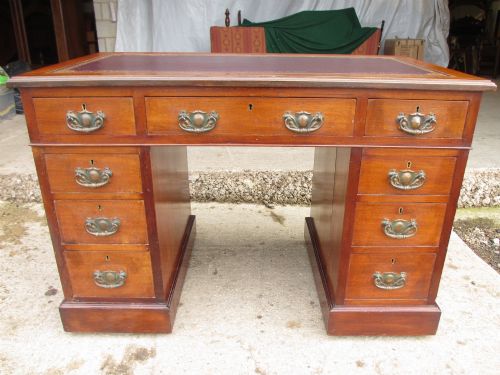
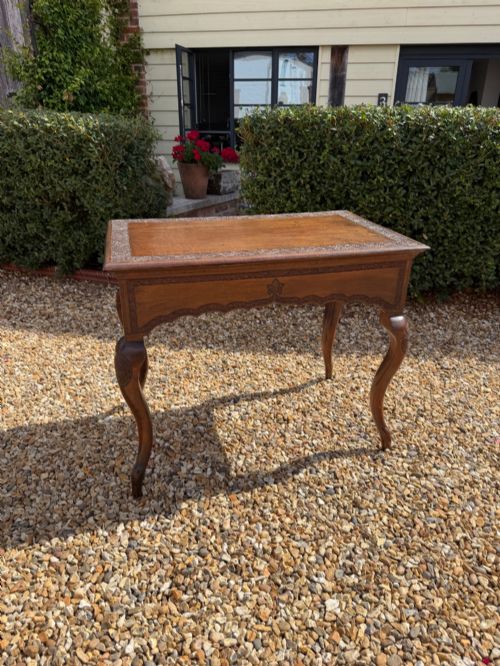
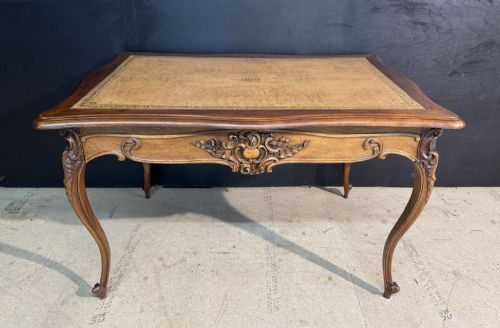
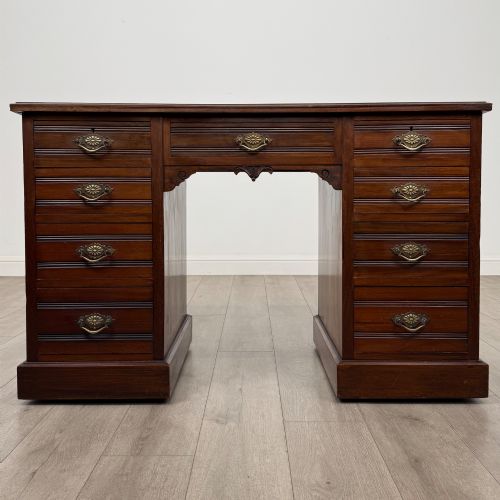
Carved Walnut Writing Desk
These carved walnut writing desk examples offer solid timber and traditional craftsmanship for any study or library.
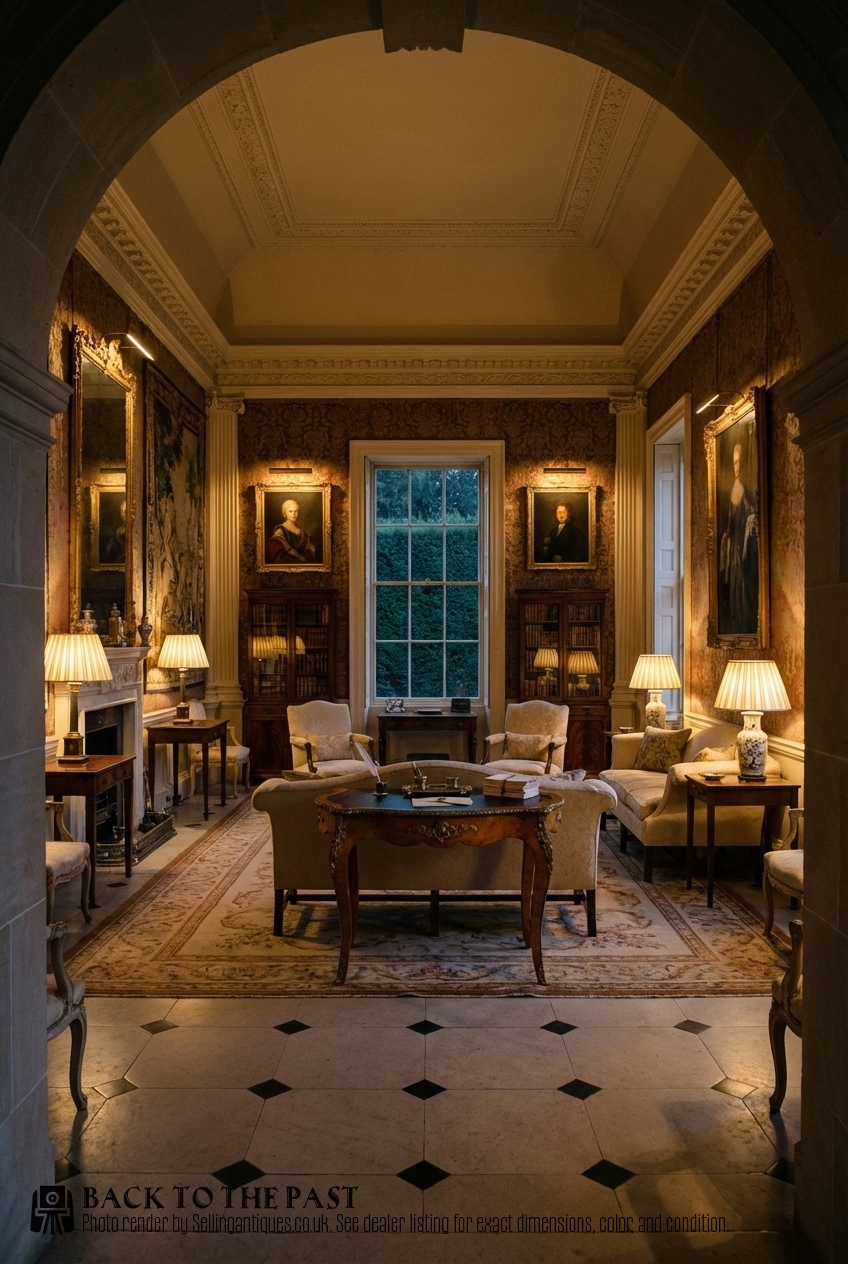
What these desks are
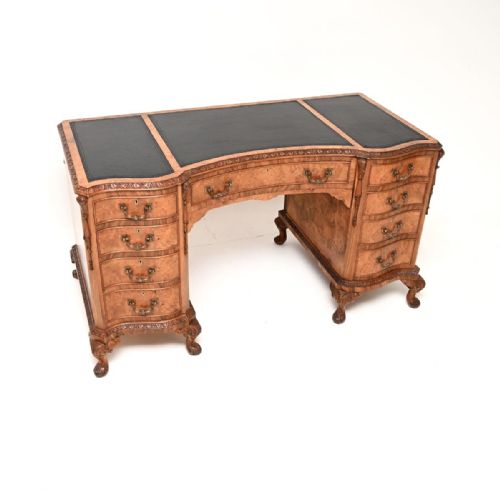
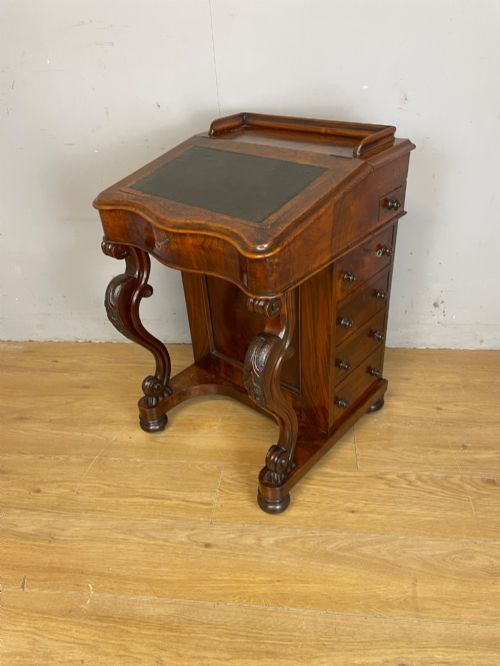
A carved walnut writing desk represents a functional workspace built from sturdy timber, often featuring detailed carving across the frame. These pieces emerge primarily from the nineteenth and early twentieth centuries, spanning the Victorian era and the interwar period.
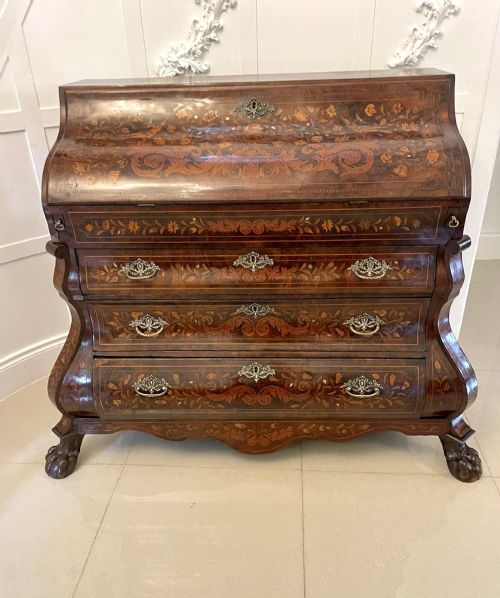
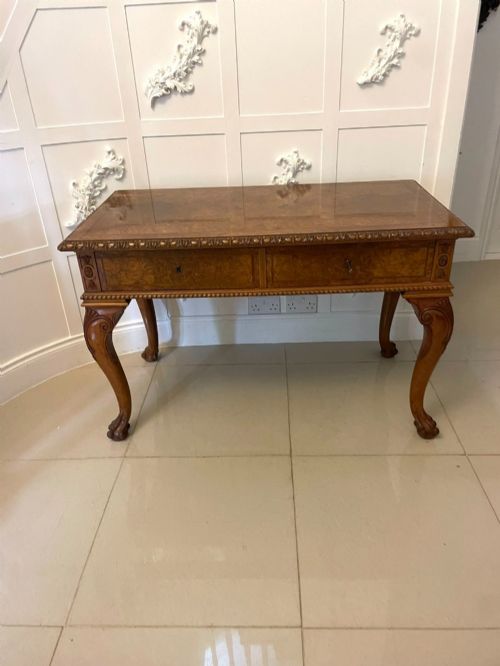
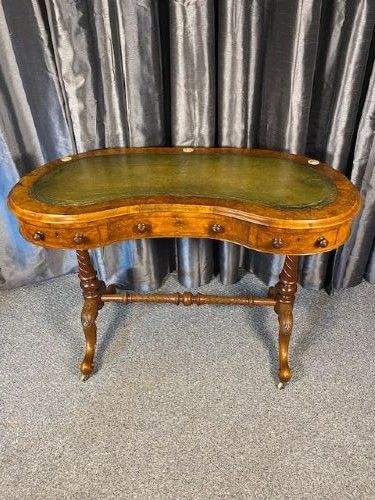
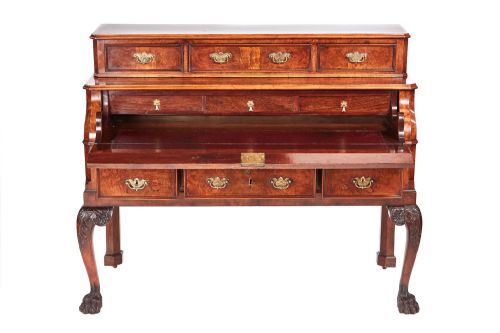
The selection here encompasses various forms, including pedestal desks, writing tables, and side tables. Makers utilised rich grain patterns and applied decorative techniques such as boxwood inlay and ormolu mounts.
Victorian examples dominate the selection, alongside revival styles like Queen Anne and French Rococo. Buyers frequently encounter pieces incorporating leather writing surfaces and brass hardware.
How they were made
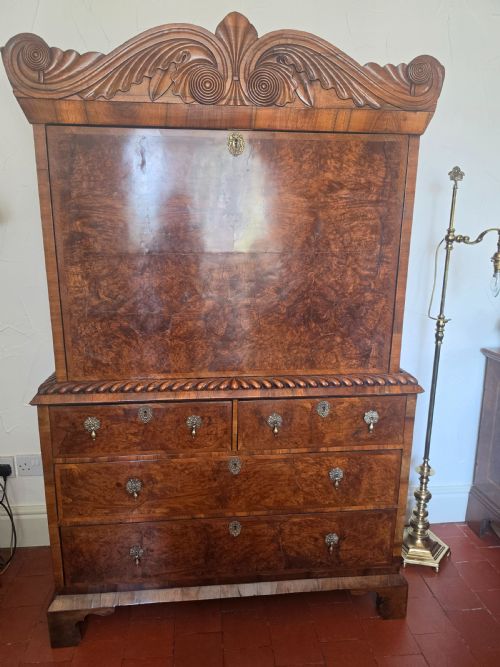
Makers constructed these desks using solid walnut and burr walnut veneer applied over secondary woods like pine. Craftsmen carved the timber by hand to create scroll leaf motifs and structural details.
Surfaces frequently integrate inset leather writing panels, sometimes surrounded by boxwood inlay. Metal components such as brass handles and ormolu mounts complete the assembly.
Joinery techniques typical of the period ensure stability, while secondary woods line the interiors of drawers.
Retail Price Guide 2026
Typical UK retail prices for carved walnut writing desk, calculated from the Sellingantiques database of over a million retail prices indexed since 2003. This retail price guide relies exclusively on Sellingantiques data; no external sources or auction records are used, so the figures do not describe the wider market.
Listings feature walnut, burr walnut, and pine across nineteenth-century and early twentieth-century periods.
What varies in quality
The visual impact of a carved walnut writing desk often depends on the grain selection of the burr walnut veneer. Richly figured timber and precise boxwood inlay separate finer examples from plain constructions.
Carving depth and crispness indicate the level of hand labour involved in production. Well-defined scroll leaf details and well-cast ormolu mounts reflect higher standards of workshop execution.
The integration of secondary materials, such as quality leather inserts and solid brass hardware, distinguishes standard production from superior pieces.
Wylie & Lochhead Glasgow
The Carved Walnut Writing Desk Glossary
- Burr walnut
- A prized timber veneer showing swirling growth patterns from the tree's root or burl. This material provides a highly decorative surface for desk tops and drawer fronts.
- Ormolu
- Gilded bronze used for decorative mounts and accents. It appears on revival pieces to highlight structural contours.
- Pedestal desk
- A form featuring two supporting banks of drawers beneath the work surface. This layout offers substantial storage for papers and stationery.
- Boxwood inlay
- Contrasting light wood inserted into darker walnut to form geometric or floral patterns. It serves as a border detail on writing tables.
Frequently Asked Questions
What periods do these desks cover?
The pieces span the nineteenth century up to the early twentieth century. Victorian examples and later revival pieces are common.
Craftsmen produced these desks across various decades, incorporating styles from French Rococo to Flemish Renaissance Revival.
What materials are used in construction?
Construction relies heavily on walnut and burr walnut veneer over pine. Secondary elements include leather inserts and brass hardware.
Boxwood inlay and ormolu mounts appear on specific revival models to enhance the visual decoration.
How do writing tables differ from pedestal desks?
Writing tables generally feature a simpler framework with legs supporting a top, sometimes housing single drawers. Pedestal desks incorporate substantial drawer stacks beneath the surface.
Both forms utilise carved walnut timber and leather writing surfaces.
Are these desks suitable for daily work?
These desks provide functional surfaces for writing and computer use while offering traditional character. Their solid wood construction supports everyday tasks.
Leather tops offer durable writing areas that tolerate regular use when properly maintained.