




Antique Computer Desk
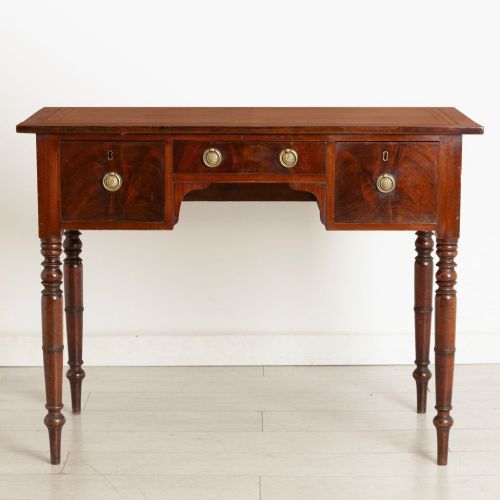
These antique computer desk pieces are solid timber pedestals and writing tables adapted for modern technology, offering historic character alongside everyday utility.
Understanding the antique computer desk
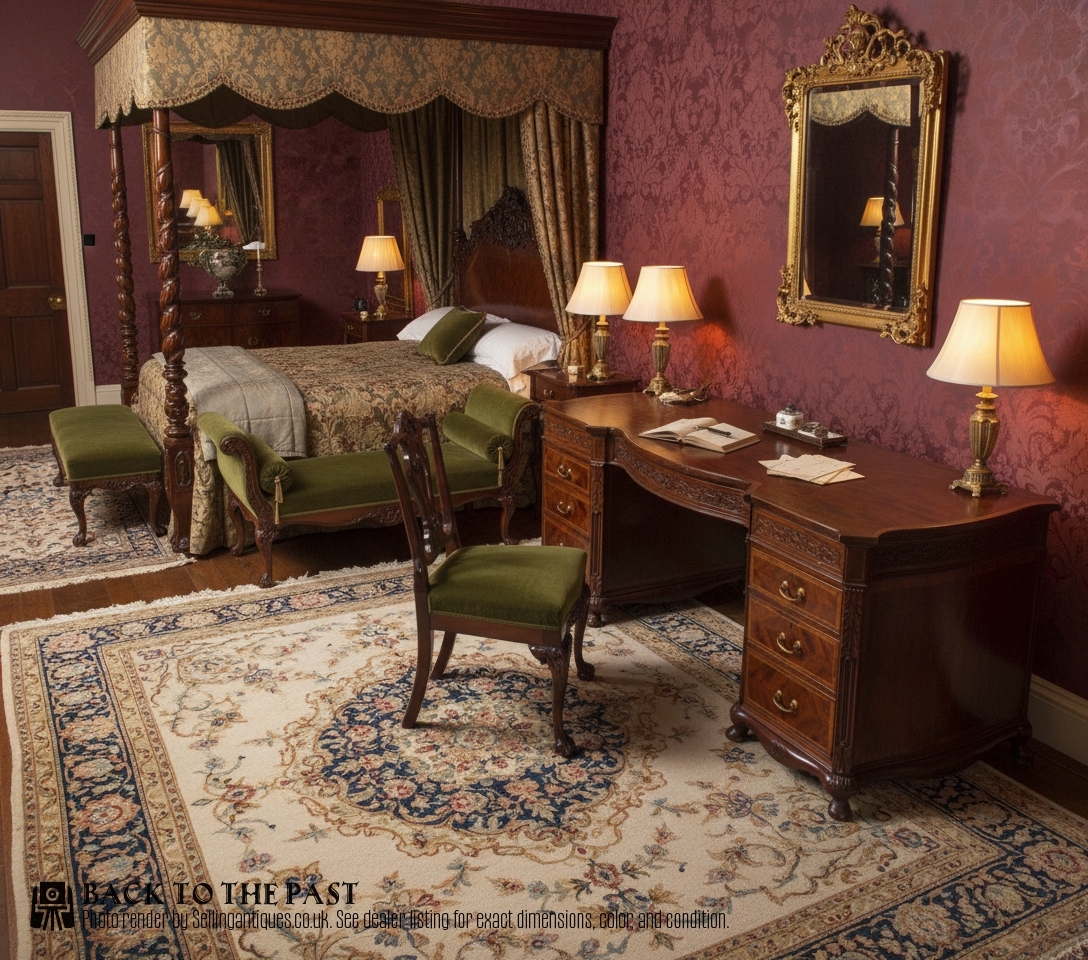
An antique computer desk brings nineteenth-century craftsmanship into a modern study, combining deep timber pedestals with practical work surfaces. The selection relies heavily on nineteenth-century pieces, including Victorian examples alongside later Queen Anne style and Chippendale revival designs.
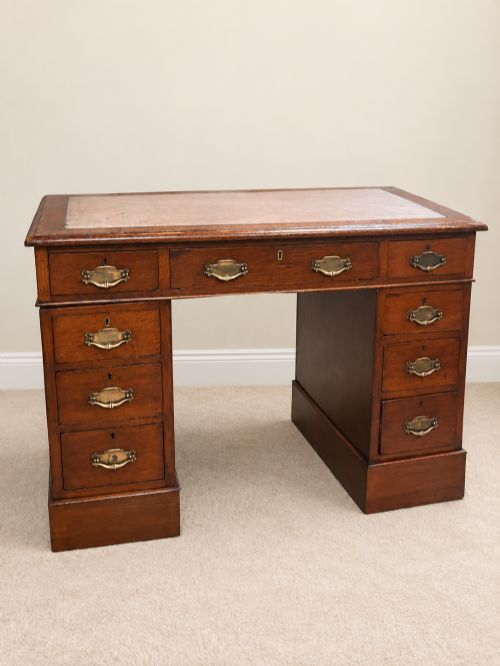
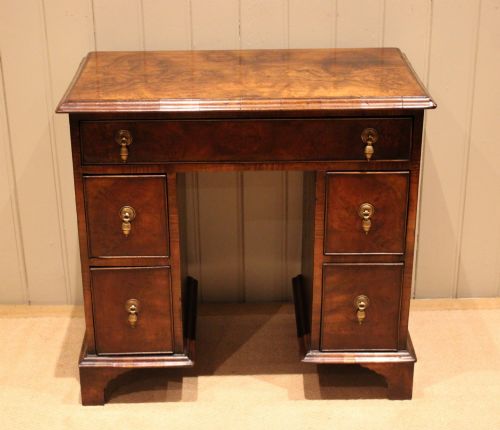
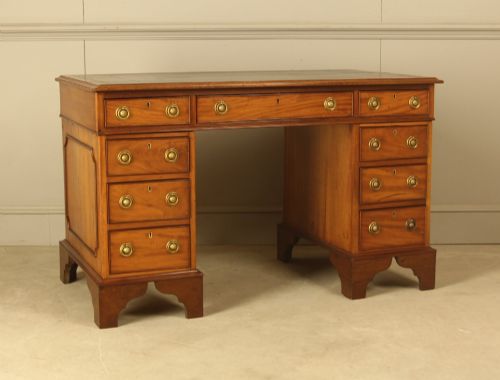
Buyers frequently encounter pedestal configurations alongside twin pedestal and kneehole layouts designed for writing and administration. These forms adapt easily to modern equipment while retaining their original nineteenth-century proportions and brass hardware.
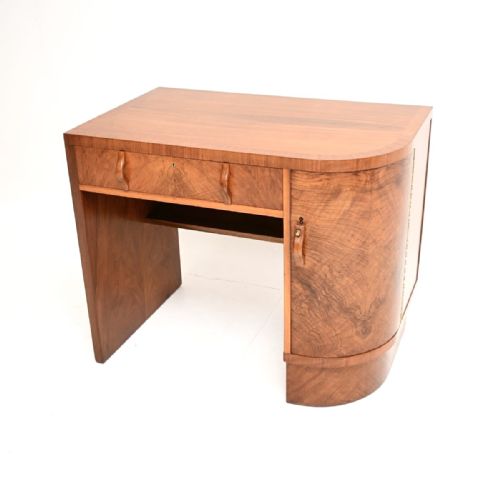
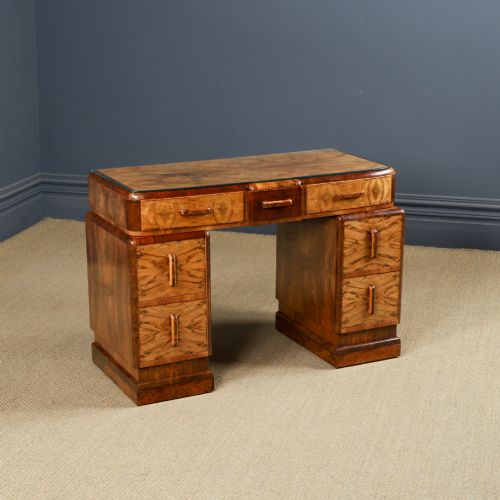
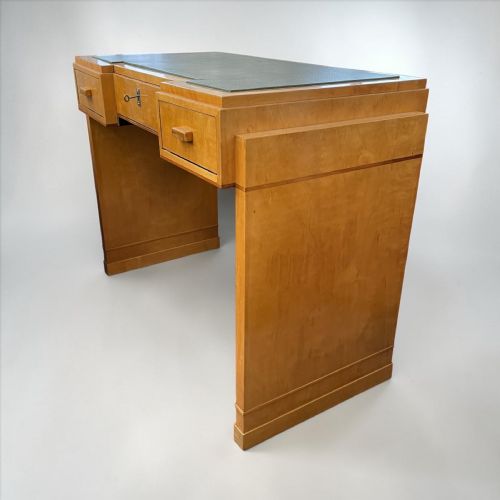
The archive shows that makers historically adapted forms like aesthetic movement and art deco tables for technological use, blending rosewood, mahogany, and walnut. Such pieces demonstrate that historic furniture has long accommodated changing domestic machinery.
Materials and construction
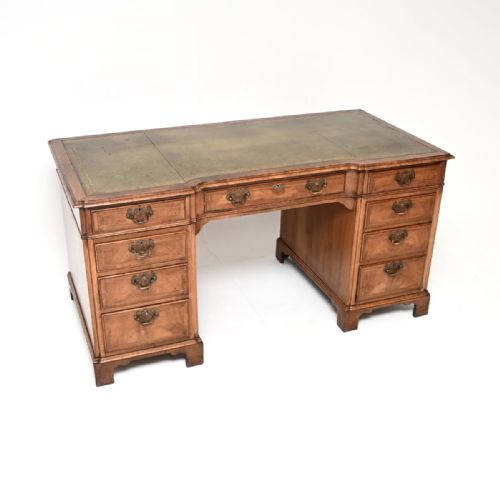
Cabinetmakers constructed these pieces primarily in mahogany, walnut, and oak, often incorporating rosewood veneers and solid timber framing. Surfaces frequently feature inset leather panels edged in gold tooling.
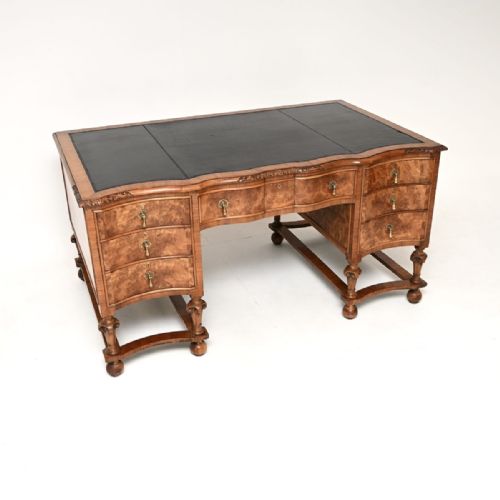
Hardware consists mainly of brass handles, escutcheons, and drawer pulls secured to sturdy timber drawers. Structural joinery relies on traditional techniques that support heavy pedestal bases and serpentine fronts.
Retail Price Guide 2026
Typical UK retail prices for computer desk, calculated from the Sellingantiques database of over a million retail prices indexed since 2003. This retail price guide relies exclusively on Sellingantiques data; no external sources or auction records are used, so the figures do not describe the wider market.
The listings span Victorian, nineteen hundred, and eighteen eighty periods, utilising mahogany, walnut, oak, rosewood, brass, and leather.
Assessing quality
Quality rests on timber selection, grain figure, and the crispness of carved details found on revival styles. Walnut and mahogany surfaces with rich patination outrank plainer alternatives.
Construction integrity shows in the smooth operation of pedestals and the secure fitting of inset leather writing surfaces. Finer examples maintain original brass fittings and harmonious proportions across all three structural sections.
The Antique Computer Desk Glossary
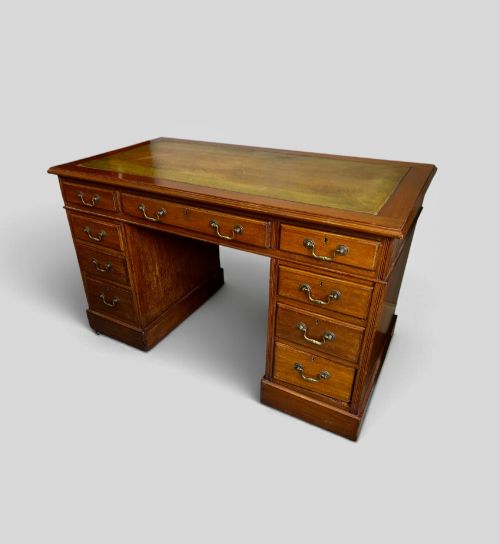
- Pedestal desk
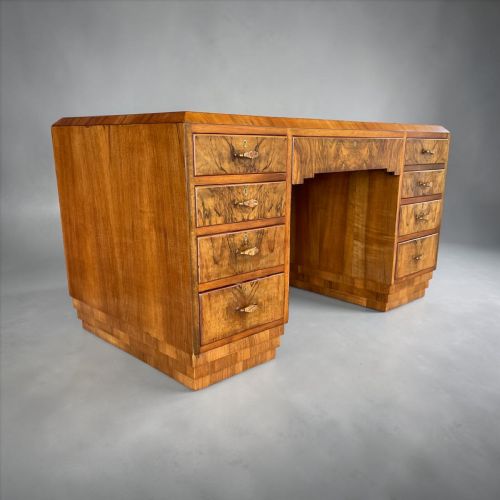
- A heavy table supported by two banks of drawers forming pedestals beneath the work surface. This layout provides generous storage alongside a central kneehole.
- Serpentine front
- A furniture front curved in a wave shape, convex at the centre and concave at the sides. This treatment requires skilled carpentry to shape timber accurately.
- Aesthetic movement
- A late nineteenth-century design style that emphasised visual beauty over moral narrative. Pieces from this period often incorporate ebonised details and simpler geometric lines.
- Kneehole desk
- A desk featuring a central recess for the user's legs, flanked by cupboards or stacks of small drawers. It forms a compact alternative to the larger twin pedestal format.
Frequently Asked Questions
Can I fit modern equipment on these desks?
Most pedestal formats provide sufficient surface area and drawer space to accommodate screens, keyboards, and peripherals comfortably. Their sturdy timber construction easily supports modern office hardware.
Buyers should measure kneehole clearances and surface depths carefully before purchase. Many historic writing tables offer generous dimensions that suit contemporary study needs.
How do I care for leather writing surfaces?
Leather tops require occasional gentle cleaning with a soft, dry cloth to remove dust. Avoid harsh chemical cleaners that can damage the historic hide and gold tooling.
Applying specialised leather balms periodically helps maintain flexibility and prevents drying. Keeping the surface protected from direct sunlight preserves the original colour.
What periods do these desks cover?
The available pieces span the Victorian era, the year nineteen hundred, and the eighteen eighties. Archive pieces also include art deco and aesthetic movement examples.
Revival styles such as Queen Anne and Chippendale frequently influence the decorative vocabulary of these eras. Each period brings distinct timber choices and carving characteristics.
Are these desks difficult to move?
Pedestal desks often separate into three components, consisting of two drawer pedestals and a top section. This modular construction simplifies transport and placement in upstairs rooms.
Solid timber construction means individual sections remain heavy and require careful handling. Enlisting professional art handlers ensures safe transit for heavy walnut and mahogany pieces.