


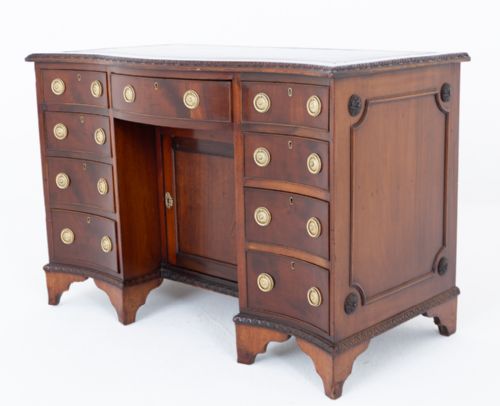


Chippendale Pedestal Desk
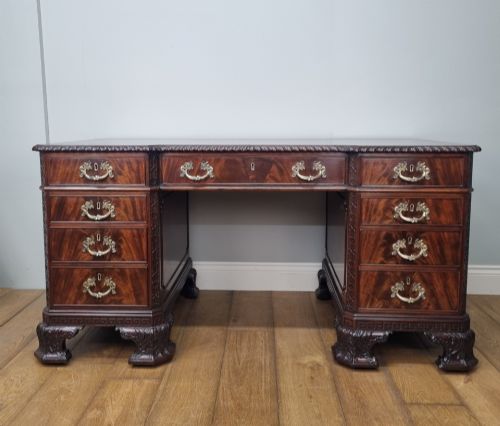
These substantial pieces are a chippendale pedestal desk, uniting large-scale workspace with architectural drawers and cabinets.
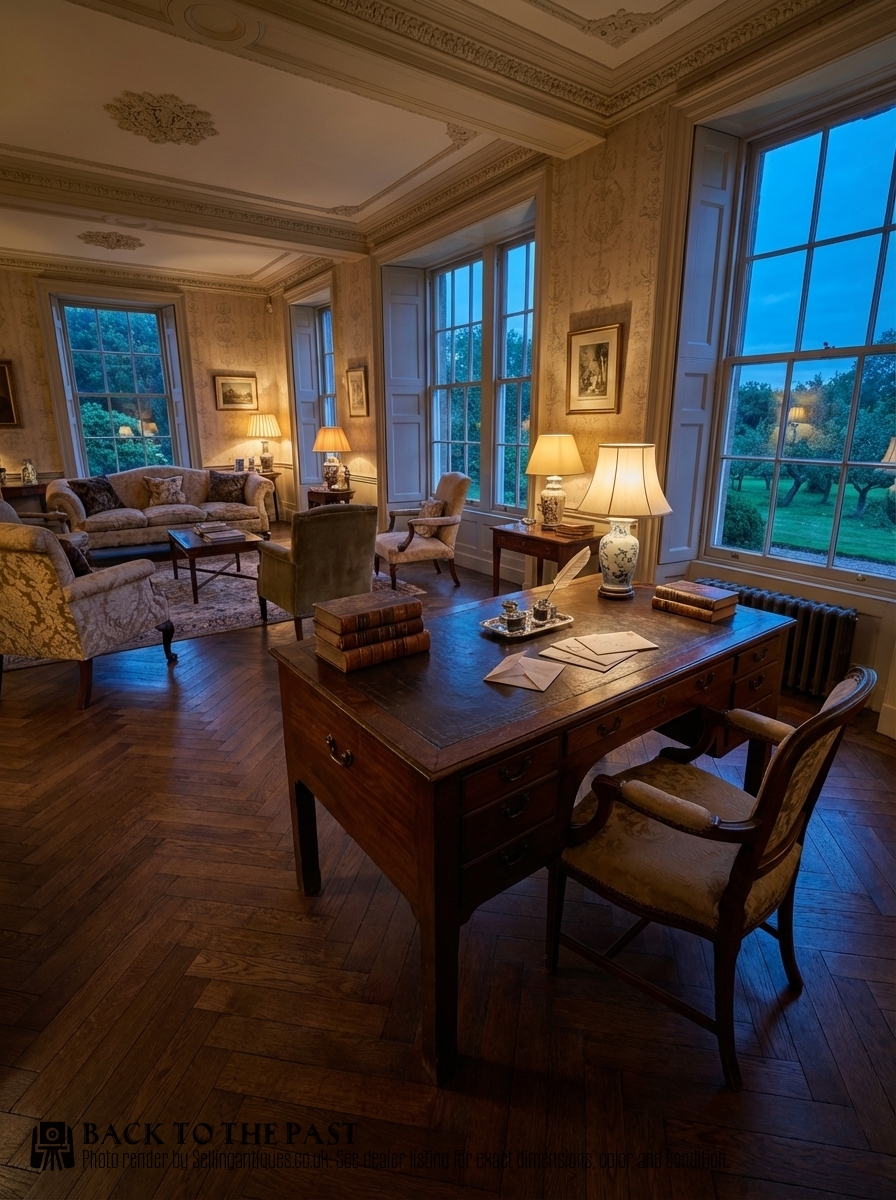
Chippendale Pedestal Desk
When you search for a chippendale pedestal desk, you encounter substantial working furniture built around two banks of drawers supporting a writing surface. The form originates in the eighteenth century during the Georgian and George III periods, though revival pieces from the Edwardian era and the late nineteenth century appear frequently.
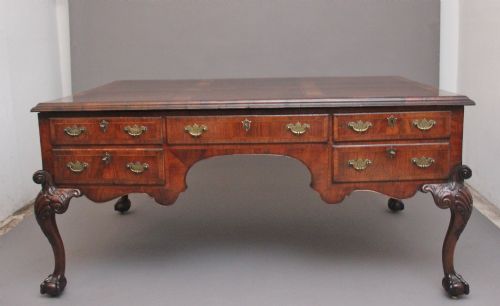
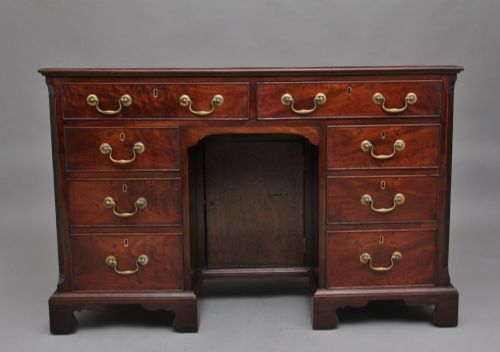
Surviving examples span classic pedestal configurations, partners desks finished on both sides, and serpentine kneehole formats. Mahogany forms the primary structure across these types, accompanied by occasional walnut and oak variants.
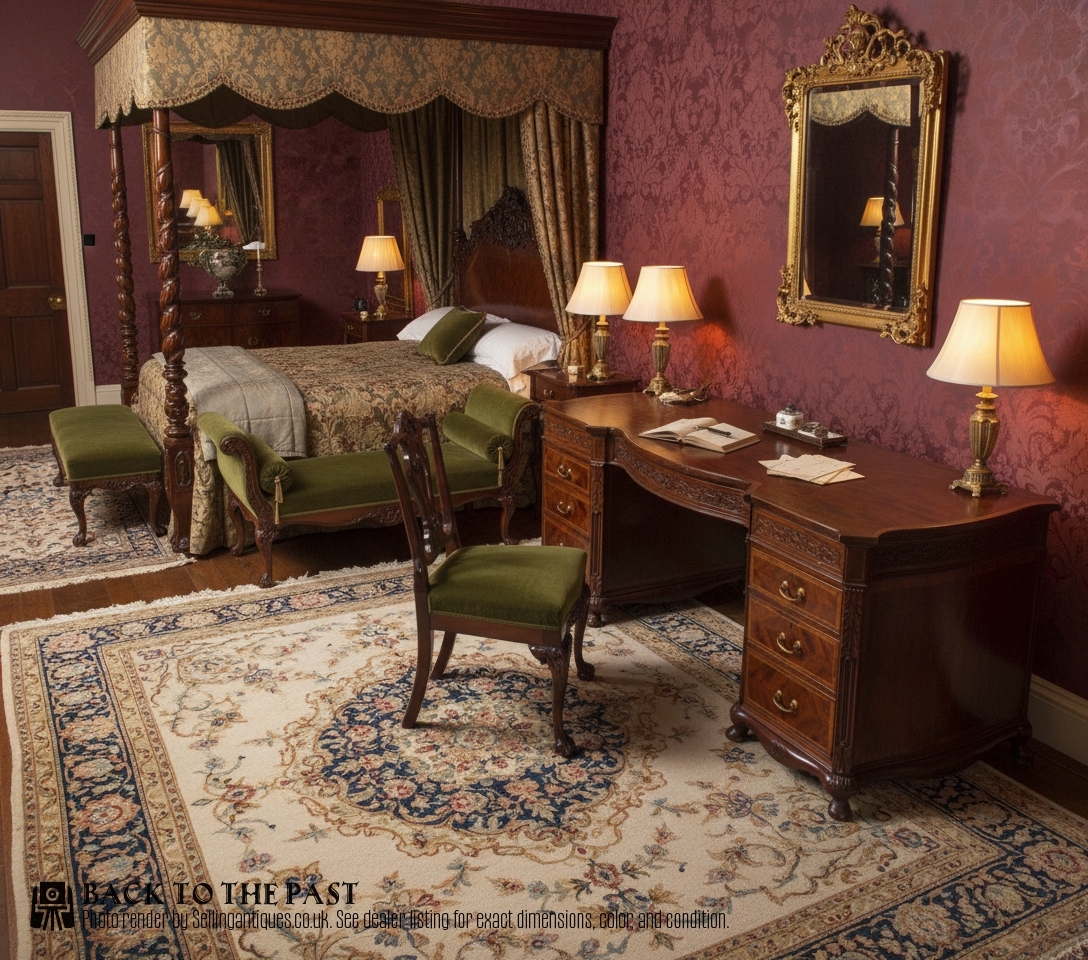
Construction and materials
Cabinetmakers constructed these desks primarily from solid mahogany and Cuban mahogany, often incorporating figured mahogany veneers on drawer fronts and writing surfaces inset with leather. Brass hardware, including drop handles and escutcheons, completes the structural assembly.
Joinery techniques ranged from straightforward drawer box construction to intricate serpentine shaping and carved detailing in the manner of Thomas Chippendale, incorporating Gothic or Chinese revival motifs.
Chippendale Pedestal Desk Retail Price Guide 2026
Typical asking prices for chippendale pedestal desk among the pieces listed under this phrase on Sellingantiques today, from the lower quarter to the upper quarter. They describe what is for sale here now, not the wider market.
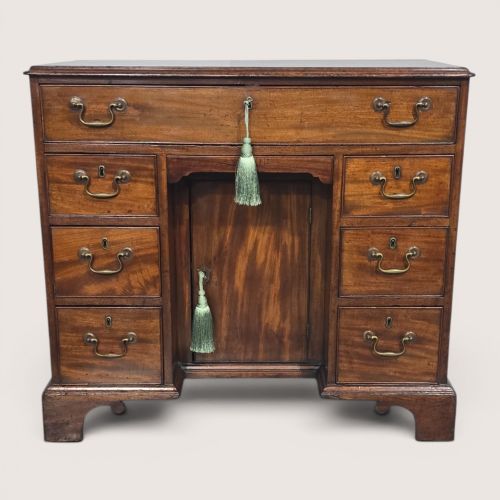
Some kneehole desks hide a secret central drawer that stays firmly locked until you discover the hidden internal release.
Variations in quality
Quality rests upon the selection of timber, visible in the grain pattern of figured mahogany, and the crispness of carved mouldings along the desk edges and plinths. Superior pieces exhibit precise dovetailing within the drawer boxes and retain matching brass hardware.
The architectural proportion of the twin pedestals relative to the top separates standard revival pieces from finer Georgian period desks and named workshop productions.
Gillows·Edwards and Roberts
The Chippendale Pedestal Desk Glossary
- Pedestal desk
- A freestanding writing table supported by two separate pedestals containing banks of drawers. These units provide extensive storage while maintaining a formal presence in a library or study.
- Partners desk
- A large scale pedestal desk designed for two people to sit opposite one another. These variants feature drawers and cupboards accessible from both sides.
- Kneehole desk
- A compact writing table featuring a central recess for the legs, flanked by narrow drawer stacks. They often incorporate a small concealed cupboard behind the central kneehole arch.
- Serpentine
- A front contour characterised by a convex central section flanked by concave curves. This shaping requires skilled woodworking to execute across drawer fronts and desk carcasses.
- Chippendale revival
- Furniture manufactured during the late nineteenth and early twentieth centuries in the eighteenth century taste. These revival pieces draw inspiration from Thomas Chippendale designs.
Chippendale Pedestal Desk: Frequently Asked Questions
How do I identify a Georgian desk?
Georgian period pieces display period timber characteristics and eighteenth century construction methods, such as hand-cut dovetails and mature mahogany grain.
Later revival desks from the Edwardian period or the twentieth century often use machine-prepared secondary woods while imitating the earlier George III aesthetic.
What is a partners desk?
A partners desk is built to accommodate two individuals working opposite each other, featuring double-sided drawer banks and cupboards.
These large formats suit central placement in a room rather than positioning against a wall.
Where do leather inserts come from?
Writing surfaces on these desks frequently incorporate inset leather panels framed by gilt tooling. Many Edwardian and later revival examples replaced or added these leather surfaces during manufacture.
Eighteenth century versions similarly integrated leather or cloth writing pads to provide a smooth surface for quill and ink.
How do I care for mahogany?
Maintain mahogany furniture by avoiding direct sunlight and excessive heat fluctuations that dry out the timber and veneer. Regular dusting and occasional application of appropriate furniture wax preserve the finish.