
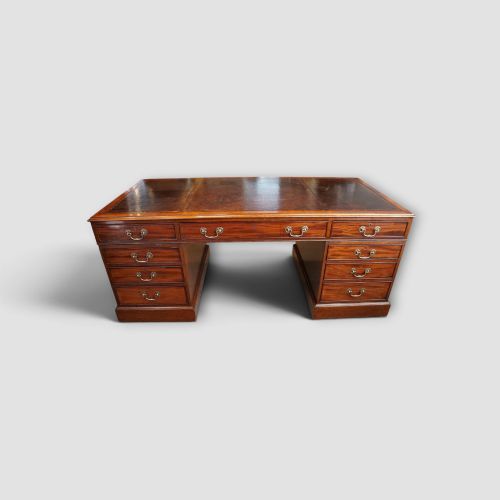
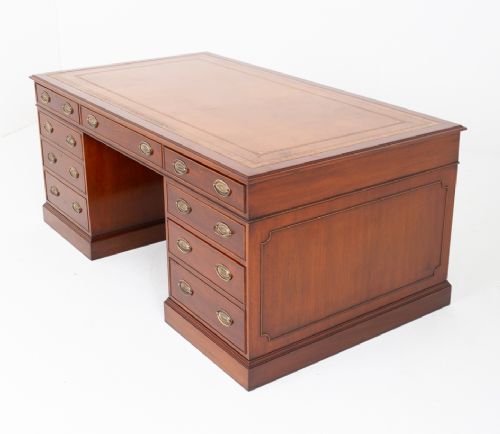
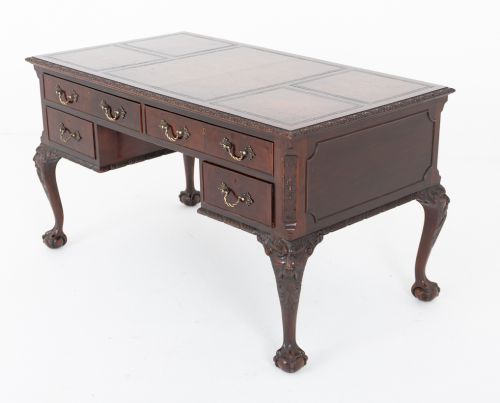
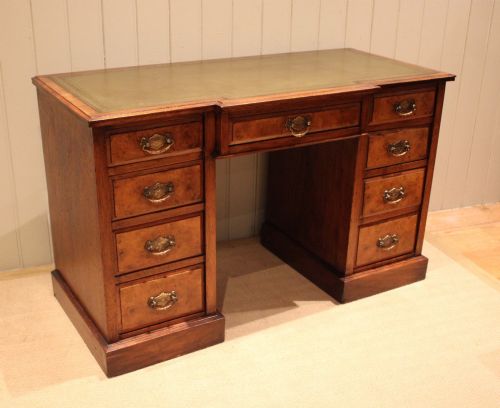
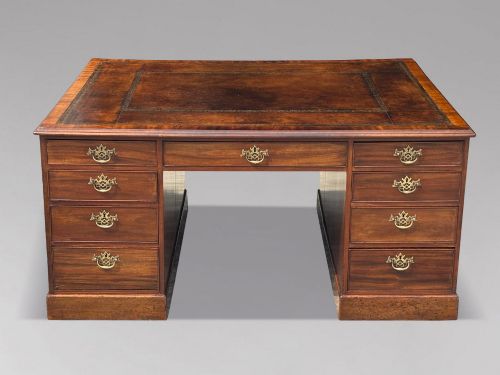


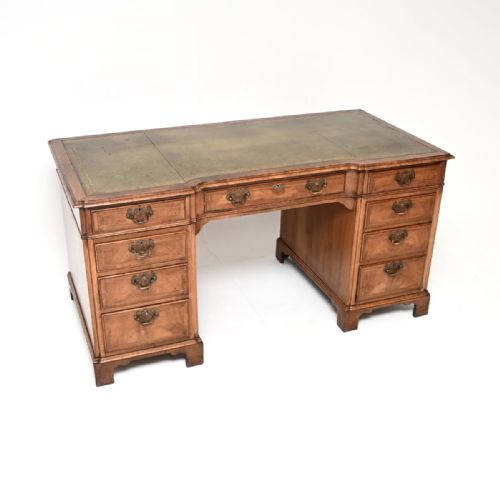
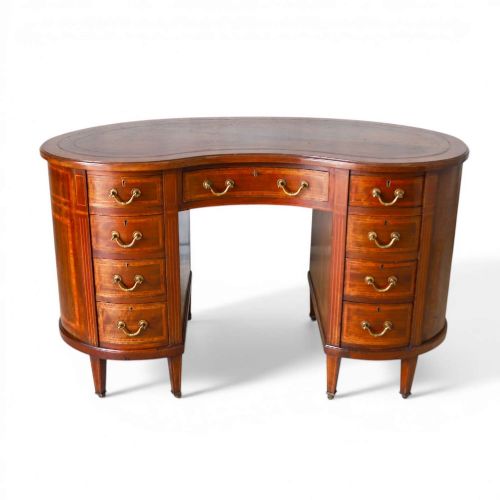
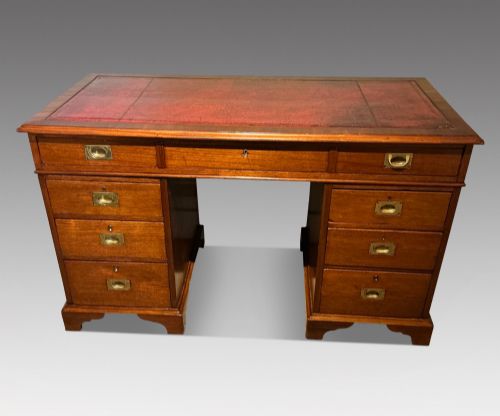


Georgian Partners Desk
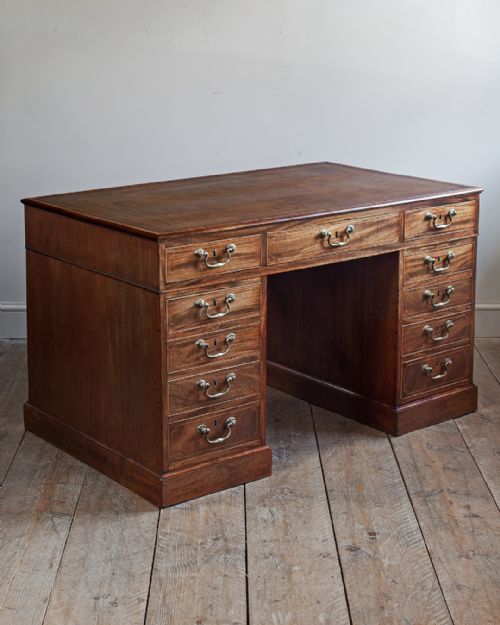
A georgian partners desk brings generous workspace and double-sided access to a room, built to be shared by two people.
Georgian Partners Desk
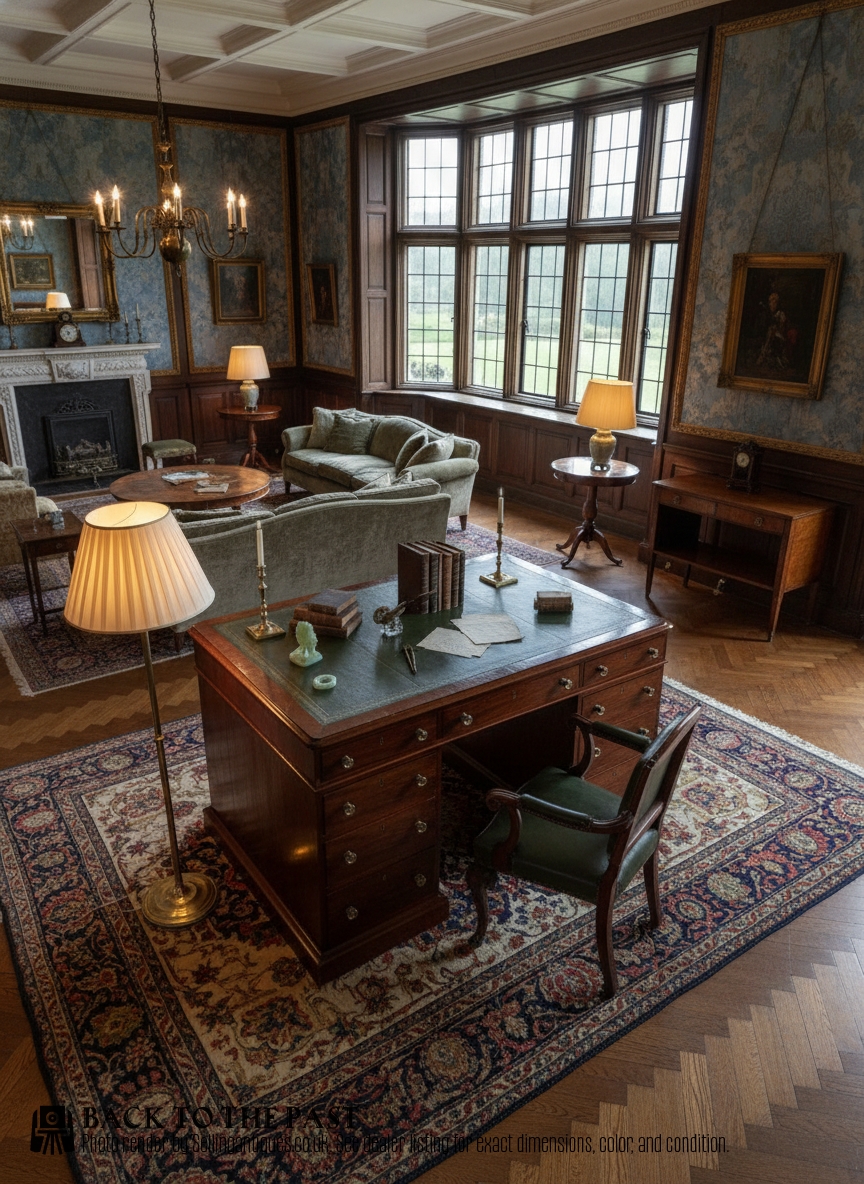
A georgian partners desk is a substantial freestanding piece designed with drawers and cupboards on both sides so two individuals can work opposite each other. The pieces gathered here range from authentic 18th-century examples to later revival models built in the 19th and early 20th centuries.
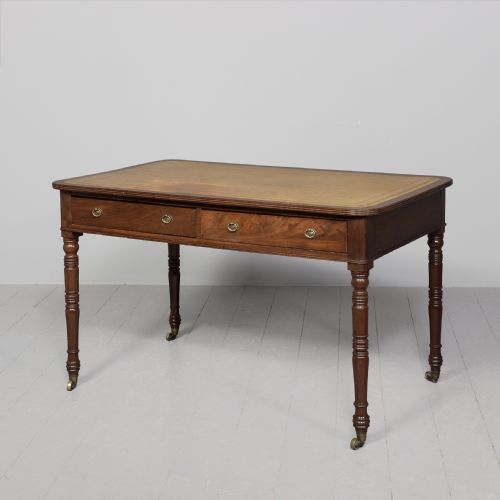
Most entries follow a twin-pedestal format, featuring banks of drawers beneath a large top, frequently accompanied by a wide kneehole. Variations include library tables and library desks styled with similar freestanding proportions.

Materials and construction
Makers relied heavily on solid timber and veneers, with mahogany forming the primary structure across the majority of pieces, alongside walnut, burr walnut, rosewood, and satinwood. Desk tops were regularly inset with tooled leather surfaces to provide a durable writing plane.
Brass hardware such as handles, drawer pulls, and escutcheons punctuate the dark timber surfaces. Construction techniques range from period cabinet making to later revival joinery incorporating carved details and serpentine shapes.
Georgian Partners Desk Retail Price Guide 2026
Typical asking prices for georgian partners desk among the pieces listed under this phrase on Sellingantiques today, from the lower quarter to the upper quarter. They describe what is for sale here now, not the wider market.
Listings feature mahogany, walnut, burr walnut, rosewood, and satinwood alongside brass and leather components.
Distinctions in quality
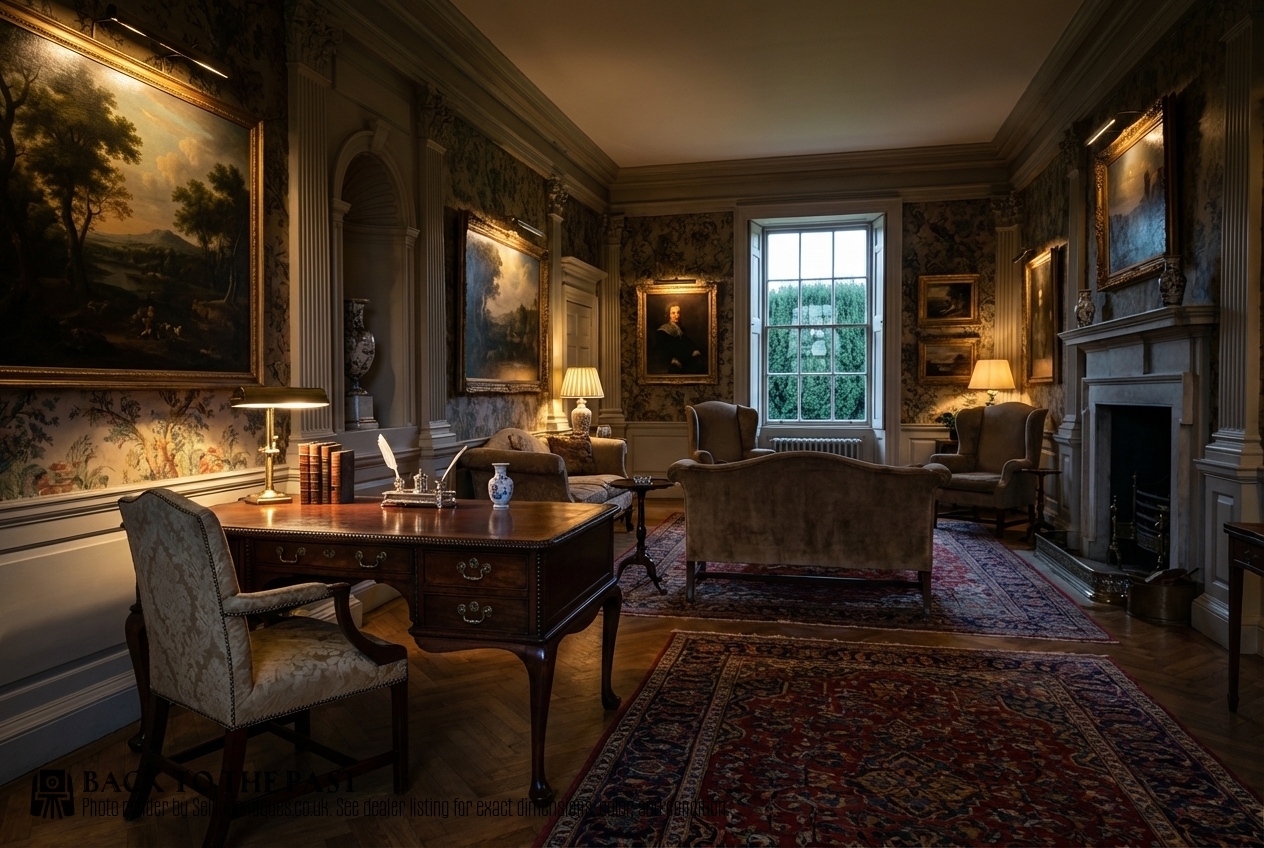
Quality rests in the selection of the timber grain, such as figured mahogany or curl mahogany, and the crispness of any applied carving. Pieces demonstrating superior cabinet work show precise drawer linings, well-matched veneers, and balanced proportions across both working faces.
The integration of secondary woods, the execution of the tooled leather insert, and the weight and finish of the brass fittings further separate standard workshop production from exceptional examples.
W. Priest·Gillows
The Georgian Partners Desk Glossary
- Partners desk
- A double-sided freestanding desk with opposing banks of drawers or cupboards allowing two people to work face to face.
- Pedestal desk
- A desk comprising a top supported by two independent columns or pedestals containing drawers.
- Kneehole
- The central recessed space beneath a desk top that accommodates the user's legs.
- Tooled leather
- Leather inset into a desk surface decorated with gold leaf or blind-stooled impressions around the border.
- Serpentine shape
- A desk front or top curved in a wave-like convex and concave pattern.
- Escutcheon
- A protective plate surrounding a keyhole, commonly cast in brass.
Georgian Partners Desk: Frequently Asked Questions
What is a georgian partners desk?
A georgian partners desk is a large, double-sided writing table designed with drawers and storage on both faces, allowing two people to sit opposite each other.
These pieces were originally commissioned for offices, libraries, and large studies where business or correspondence was conducted reciprocally.
How do you use a partners desk today?
These desks function effectively as central room pieces rather than being pushed against a wall, as their finished backs and double-sided drawers demand a freestanding position.
They provide extensive surface area for computers, paperwork, and meetings while offering substantial storage within the pedestals.
How can you tell a period desk from a revival piece?
Distinguishing period pieces relies on examining timber ageing, construction methods inside the drawers, and secondary woods used in hidden areas.
Revival pieces from the Victorian and Edwardian eras often replicate earlier styles like Chippendale or George III designs using machinery-assisted joinery and different interior timbers.
What woods were used for these desks?
Mahogany is the dominant timber seen across these listings, ranging from plain grain to figured, curl, and pale varieties.
Other materials include walnut, burr walnut, rosewood, and satinwood, frequently paired with brass hardware and leather inserts.