
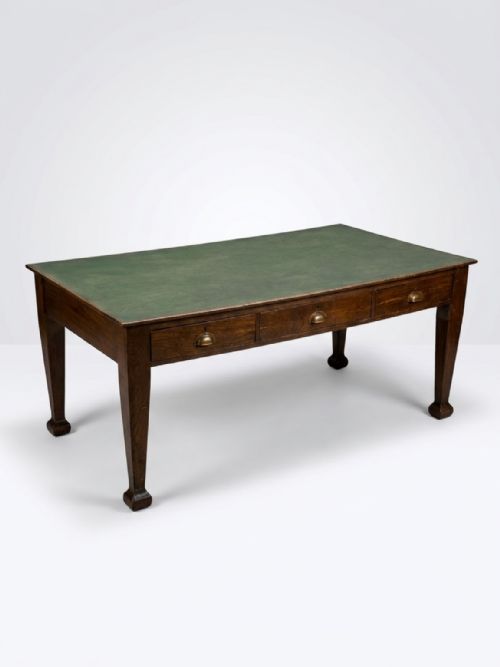
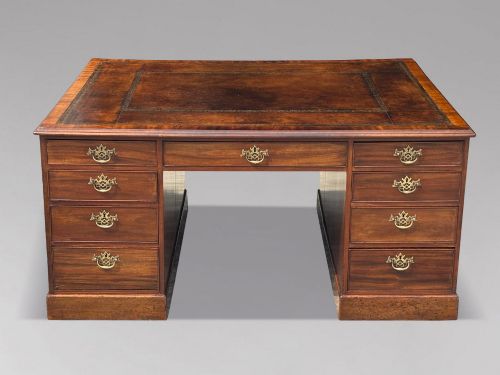

Large Library Desk
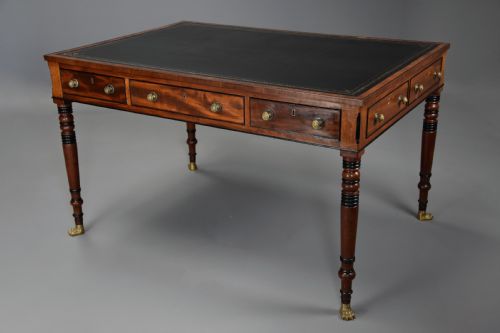
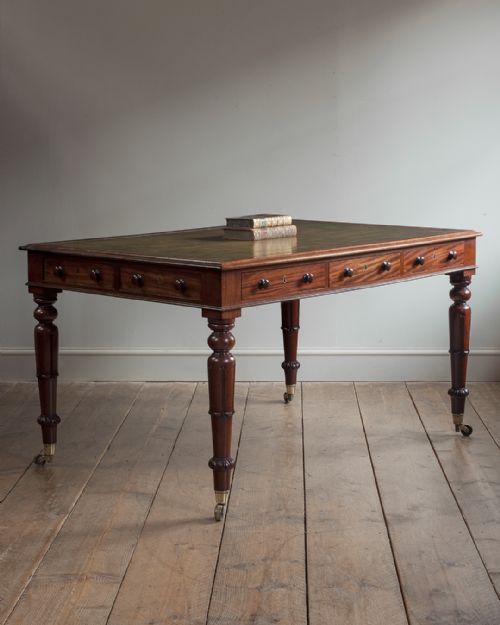
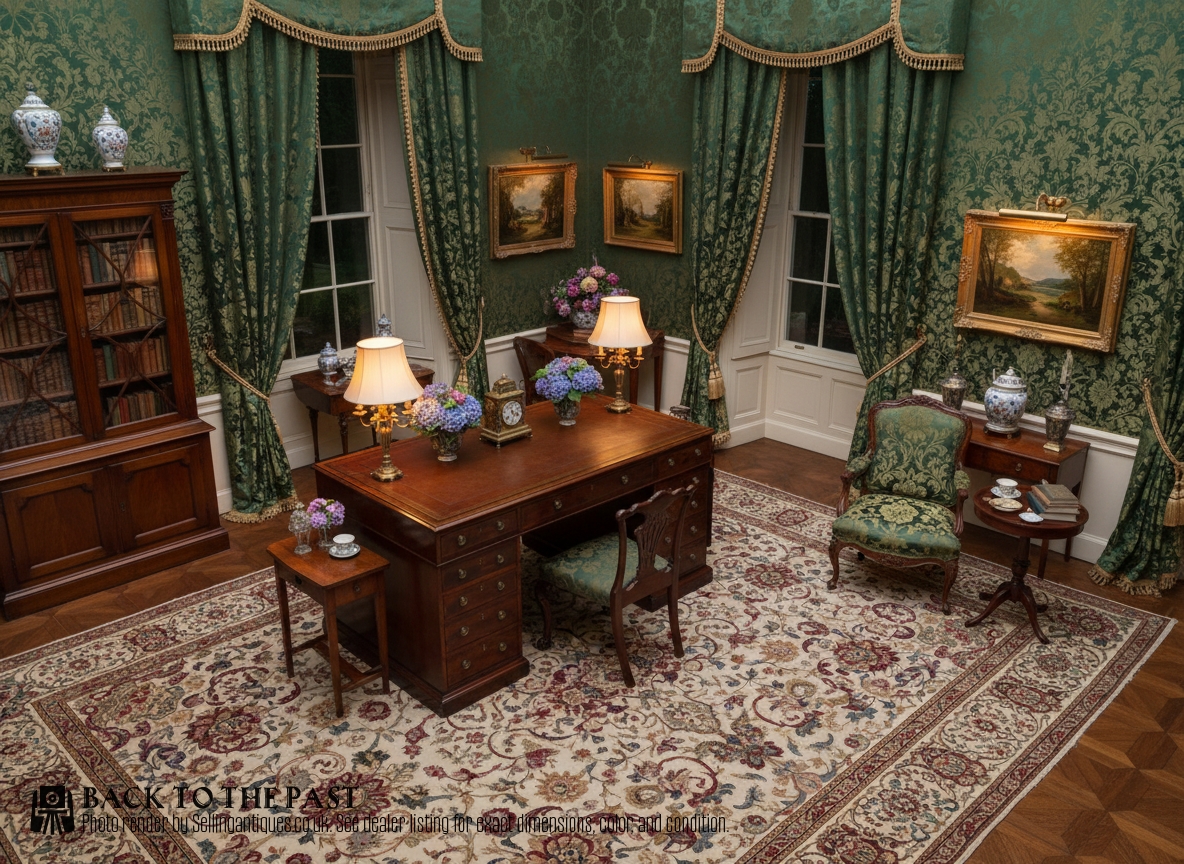
A large library desk anchors a serious room, offering ample workspace and double-sided access for shared study.
Identifying a large library desk
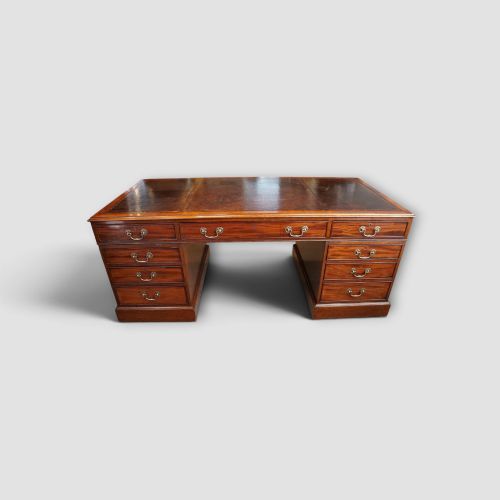
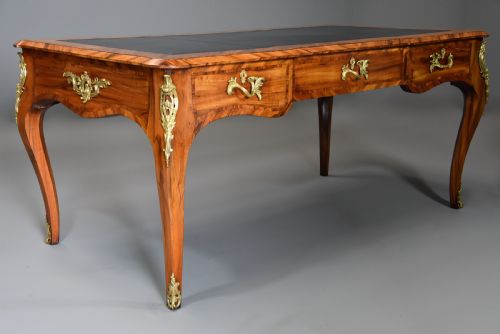
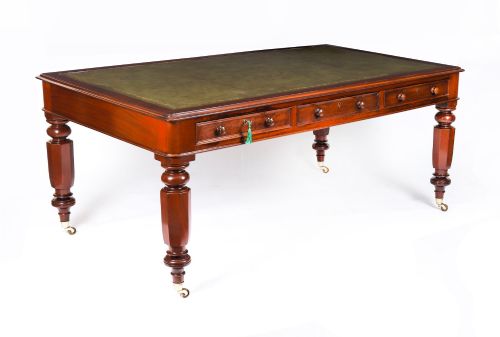
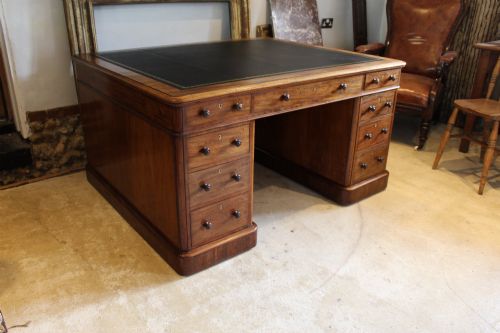
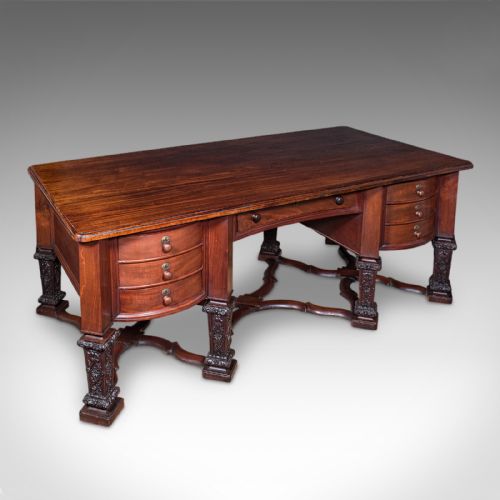
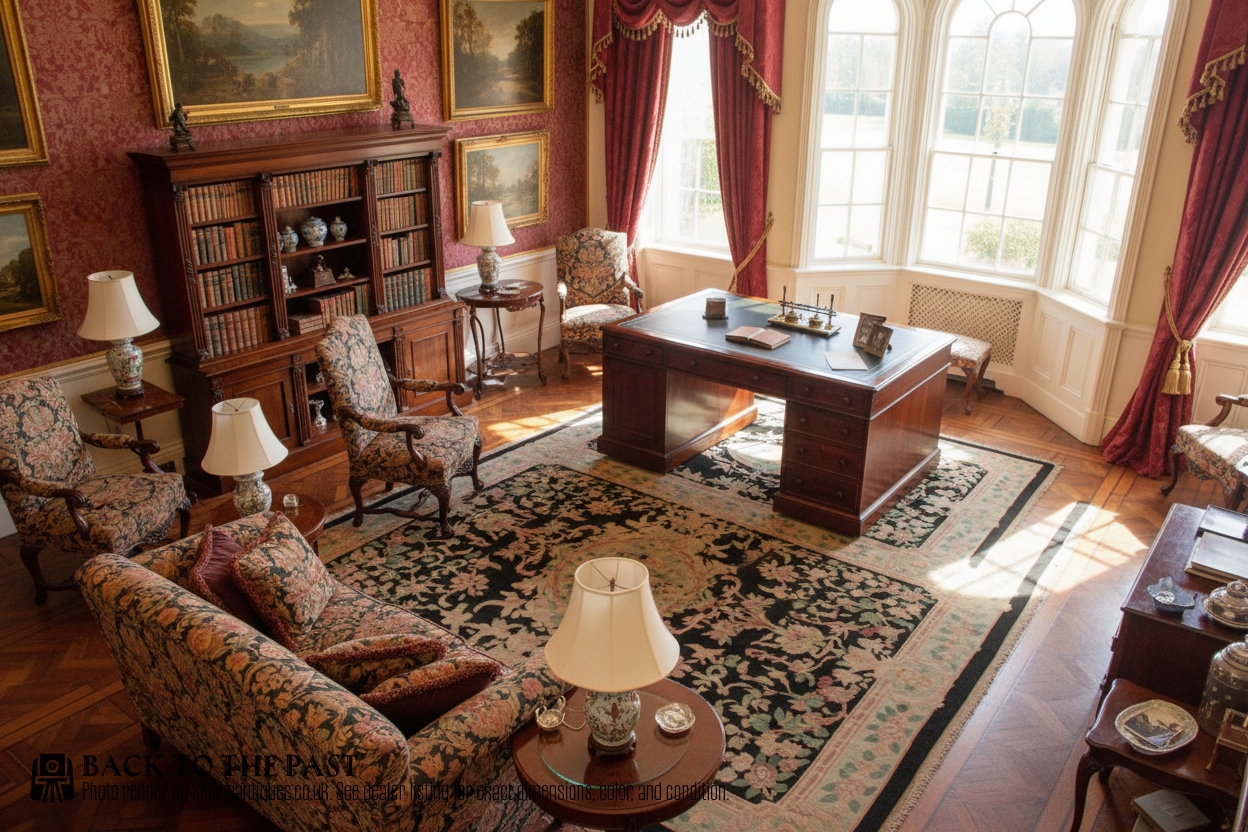
A large library desk functions as a substantial writing and working surface designed for heavy scholarly use or administrative tasks in period interiors. Most examples on this page date from the nineteenth century, including Victorian and Edwardian iterations alongside earlier Georgian forms.
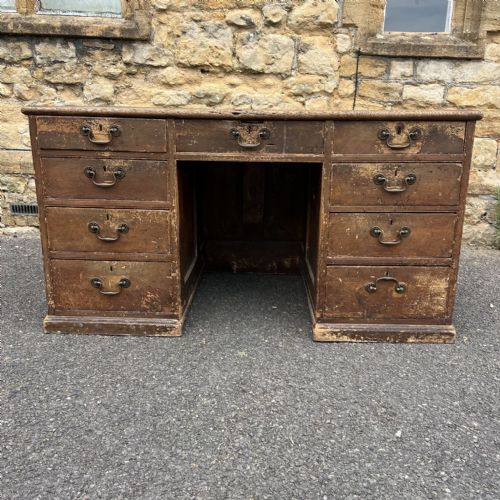
The dominant form is the partners desk, which provides drawers and cupboards on both sides so two people can work opposite each other. These pieces are typically constructed in mahogany, walnut, or oak, often incorporating inset leather writing surfaces.
Buyers also encounter writing tables and double-sided sorting desks originating from workshops such as Gillows of Lancaster. The scale of these items requires a dedicated room with generous proportions.
Construction and materials
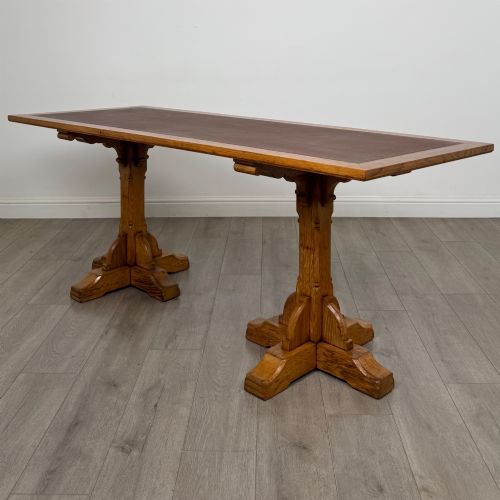
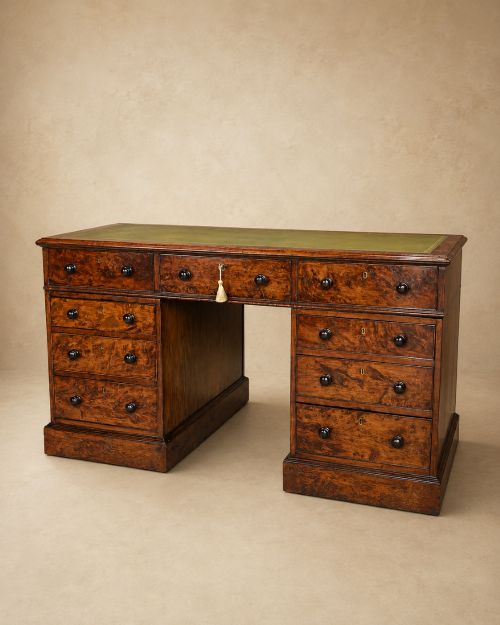
Cabinetmakers utilised dense timbers such as mahogany, walnut, and rosewood, frequently selecting figured veneers for drawer fronts and tabletops. Solid oak also appears in robust examples built for heavy institutional or domestic archives.
Working surfaces are commonly inset with tooled leather, bordered by gilt tooling or blind stamping. Supporting hardware includes cast brass handles, escutcheons, and occasionally brass castors on pillar ends to ease movement.
Retail Price Guide 2026
Typical UK retail prices for large library desk, calculated from the Sellingantiques database of over a million retail prices indexed since 2003. This retail price guide relies exclusively on Sellingantiques data; no external sources or auction records are used, so the figures do not describe the wider market.
Listings feature nineteenth-century furniture predominantly in mahogany and oak, with occasional examples in walnut and rosewood.
Distinguishing quality
Quality rests in the selection of timber and the depth of architectural detailing, such as fielded panels and finely carved mouldings. Pieces bearing attribution to established makers like Gillows or Maple and Co demonstrate superior joinery and thoughtful proportion.
The integrity of the double-sided arrangement, where drawer configurations match or complement each other on both faces, elevates a piece above standard single-sided writing tables. Original brass hardware and well-preserved leather tops further distinguish finer examples.

Gillows of Lancaster·Charles Andrea Nosotti·Maple and Co
The Large Library Desk Glossary
- Partners desk
- A large double-sided desk designed for two people to work face to face, featuring matching drawers or cupboards on both elevations.
- Kneehole
- The central space beneath a desk top left open for the user's legs, often flanked by pedestals of drawers.
- Bureau plat
- A flat-topped writing table, typically freestanding and finished on all sides.
- Escutcheon
- A protective plate surrounding a keyhole, usually fashioned from brass in these pieces.
- Pillar end
- A pedestal base supporting the ends of the desk top, sometimes fitted with drawers or a cupboard door.
Frequently Asked Questions
How do I care for a leather desk top?
Leather writing surfaces require gentle cleaning with a slightly damp cloth followed by specialised leather wax or balsam. Avoid harsh chemical cleaners and excessive moisture.
Regular conditioning helps prevent the leather from drying out and preserves the gold tooling around the borders.
Are all large library desks double-sided?
Not all library desks are double-sided, though many nineteenth-century examples are configured that way. Some pieces function as single-sided writing tables or library tables with drawers on one elevation only.
Checking the reverse side of a listing will confirm whether drawers or dummy drawer fronts are present.
What woods were used for these desks?
Mahogany is the predominant timber found in these listings, appearing in both figured and faded varieties. Walnut and oak also feature significantly in larger nineteenth-century examples.
Secondary woods like pine or oak were often used for drawer linings and internal framing.