
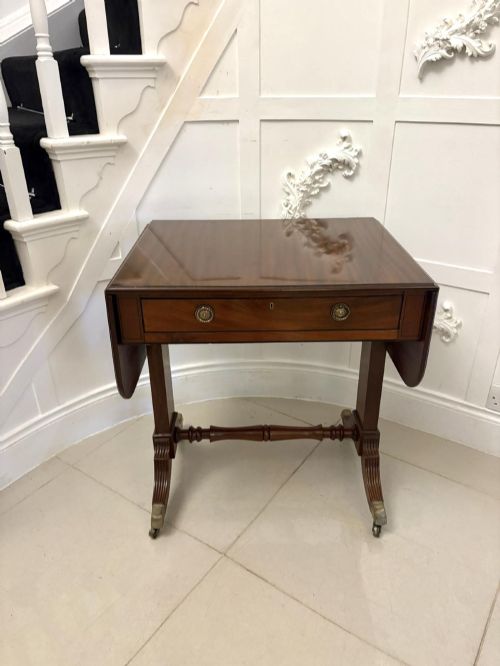
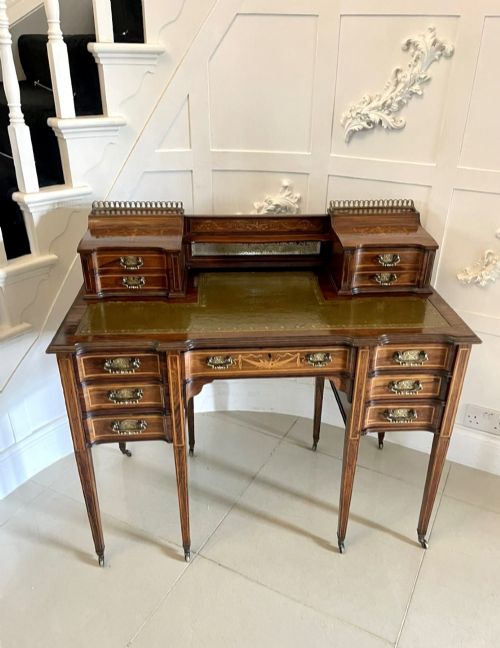
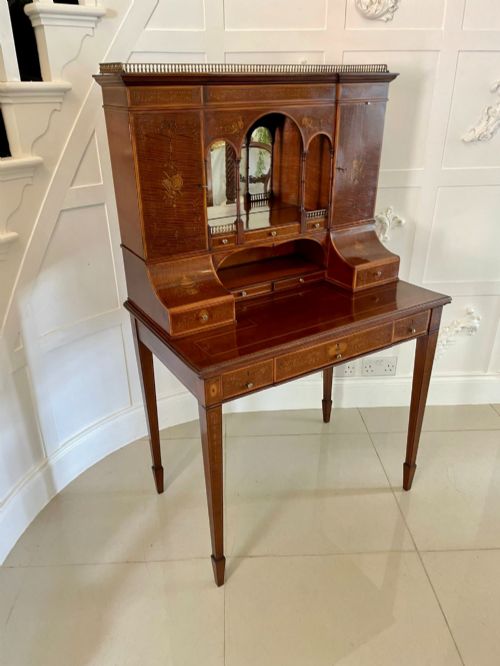
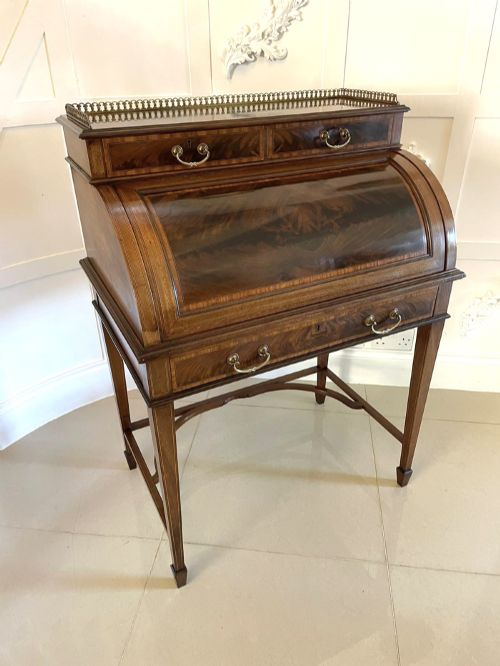


Freestanding Mahogany Desk
When you search for a freestanding mahogany desk, you seek a finished piece meant to face into the room rather than sit against a wall.
Freestanding Mahogany Desk
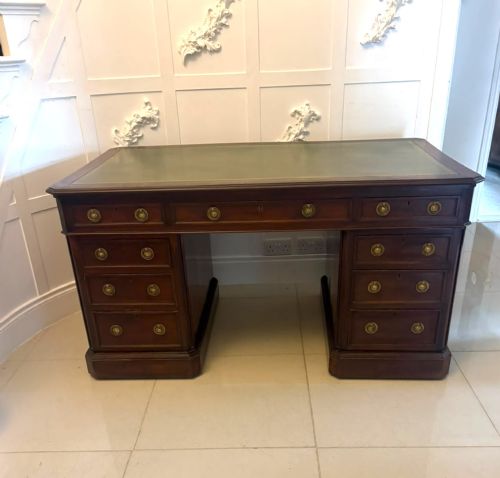
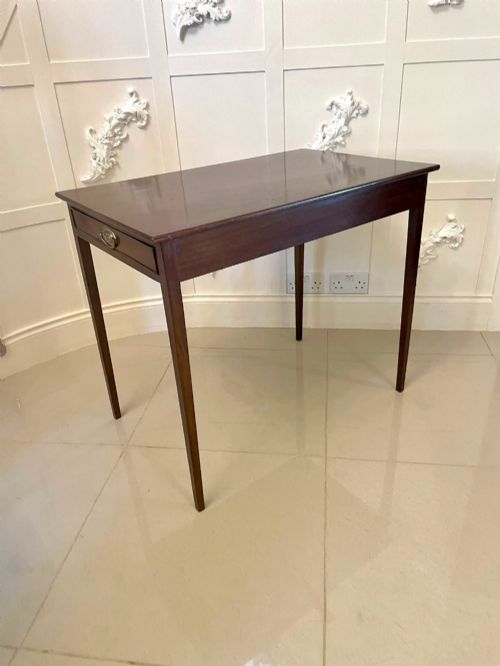
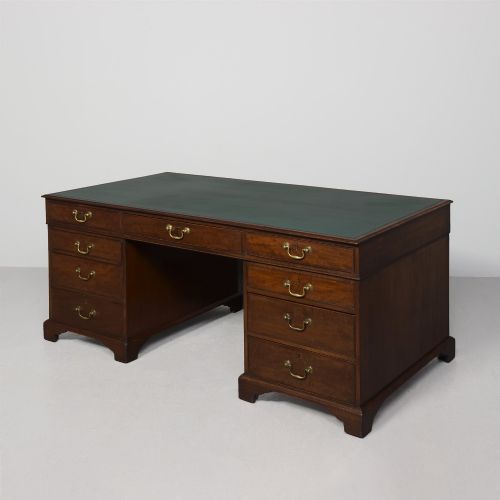
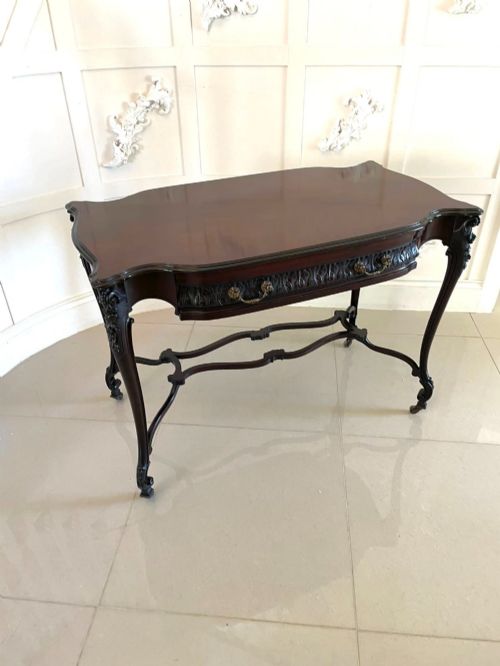
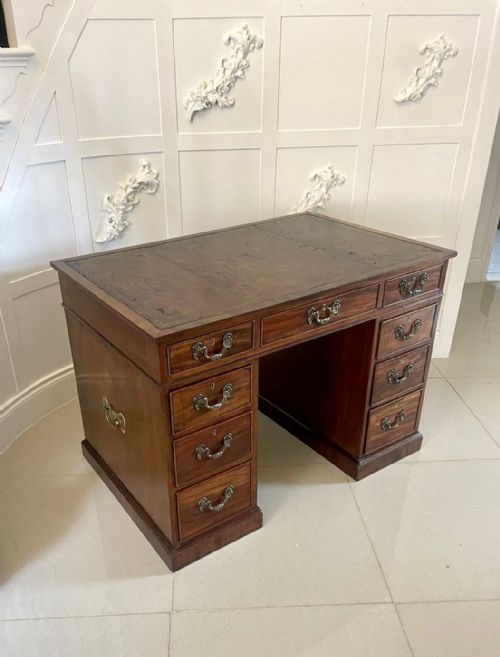
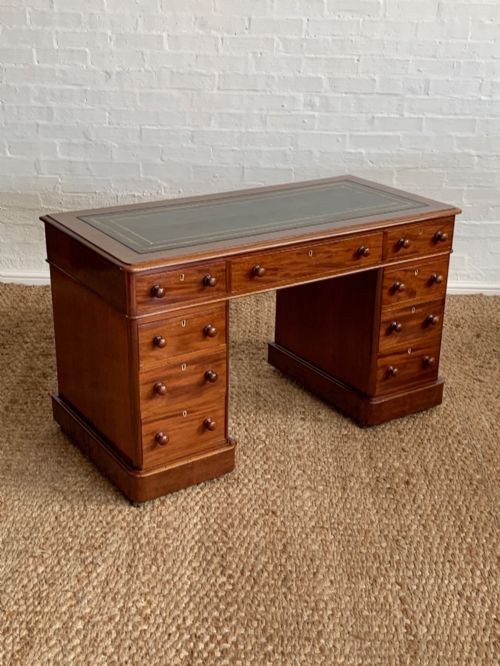
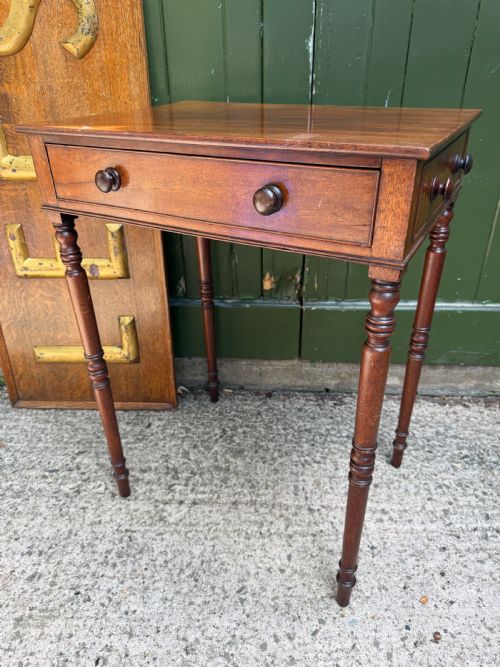
A freestanding mahogany desk is designed to look finished from all angles, allowing placement in the middle of a room rather than flat against a wall. The listings here span the Georgian, Regency, William IV, Victorian, and Edwardian periods, stretching from eighteen hundred into the early twentieth century. You will encounter partners desks, kneehole pedestals, cylinder desks, and sofa tables configured for writing and display.
Most examples you meet on this page date from the nineteenth century, reflecting the Victorian and late Georgian enthusiasm for substantial library and study furniture. These include pedestals fitted with drawers and writing slides alongside centre tables adapted for writing use. Mahogany remains the constant timber binding these varied forms together.
Materials and construction
Makers built these pieces primarily from solid and figured mahogany, sometimes incorporating secondary timbers like satinwood for contrast and inlay. Leather served as the traditional writing surface insert, frequently tooled in gilt, while brass provided structural hardware, handles, and castors. Ormolu mounts and mirror glass appear on specific stylistic revivals.
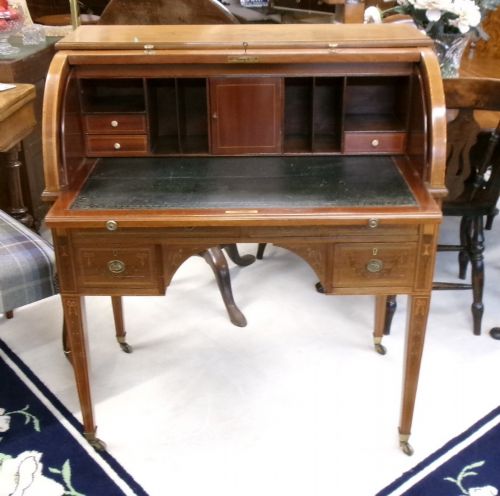
Cabinetmakers utilised dovetailed drawer construction and decorative carving to articulate the surfaces. Inlaid satinwood lines borders and panels on late nineteenth and early twentieth century pieces, while cylinder tops and drop fronts conceal fitted stationery compartments.
Listings feature mahogany desks spanning the Georgian, Regency, William IV, Victorian, and Edwardian periods, alongside styles such as Chippendale, Sheraton, and Louis XV.
Distinctions in quality
The degree of figuration in the mahogany grain separates standard output from superior examples, with highly figured timber commanding attention. Finer pieces display crisp, hand-carved ornamentation rather than soft, moulded details, alongside thoughtful proportions that maintain balance from every viewing angle.
Internal execution matters as much as exterior finish, evident in secondary timbers used for drawer linings and the survival of original brass hardware. Desks retaining fitted stationery drawers, functioning locks, and intact tooled leather writing surfaces represent the higher tier of surviving examples.
Maple & Co. London
The Freestanding Mahogany Desk Glossary
- Partners desk
- A large double-sided desk built with drawers and cupboards on both faces so two people could work opposite each other. This form typifies the substantial George III and Victorian library furniture.
- Sofa table
- An oblong occasional table with drop leaves on opposite short sides, traditionally placed in front of a sofa. Regency examples often incorporate pedestal ends and stretcher rails.
- Kneehole desk
- A pedestal desk featuring a central recess for the user's legs, flanked by stacks of drawers. Georgian and Victorian versions frequently include a long drawer above the knee space.
- Cylinder desk
- A writing desk enclosed by a quarter-circle rolling wooden cylinder that conceals pigeonholes and a pull-out writing slide. Edwardian and late Victorian makers revived this mechanism in mahogany and inlaid satinwood.
- Ormolu
- Gilded bronze mounts applied to furniture for decorative effect. This technique appears on nineteenth-century pieces influenced by French styles.
Freestanding Mahogany Desk: Frequently Asked Questions
What is a freestanding mahogany desk?
A freestanding mahogany desk is finished on the back as well as the front, meaning it can stand in the middle of a room. These pieces do not need to back against a wall.
They include pedestal desks, partners desks, and writing tables from periods spanning the Georgian era to the Edwardian period.
How do I tell a partners desk apart?
A partners desk has drawers and cupboards on both sides of the piece rather than a finished panel on the reverse. This allows two people to sit opposite each other and work.
They are typically larger than standard single-sided pedestal desks and date frequently to the George III and Victorian periods.
Where should I place it?
Because the back of the desk is finished like the front, it sits comfortably in the centre of a study or library. You can float the piece in open space rather than pushing it against a perimeter wall.
Ensure you measure the room to allow clearance for chairs to pull out cleanly behind the user.
How do I care for the leather top?
The leather insert on the writing surface benefits from gentle cleaning with a slightly damp cloth and occasional application of appropriate leather cream. Avoid harsh modern chemical cleaners that strip the original colour.
Keep the desk away from direct heat sources and strong sunlight to prevent the leather from drying and cracking over time.