

Leather Top Desk
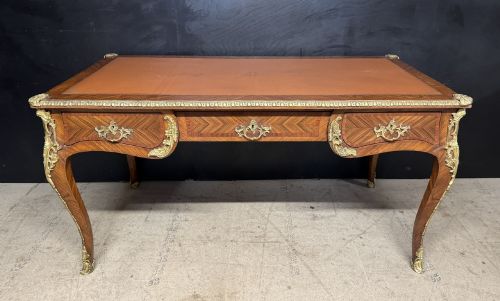
A leather top desk antique offers a fitted writing surface of hide set into timber frameworks spanning several centuries.
Leather Top Desk
A leather top desk antique encompasses writing furniture designed for study and administration, ranging from compact davenports and single-pedestal formats to large partners tables and pedestal desks. When searching this phrase, buyers encounter various configurations built for specific domestic or commercial writing tasks.
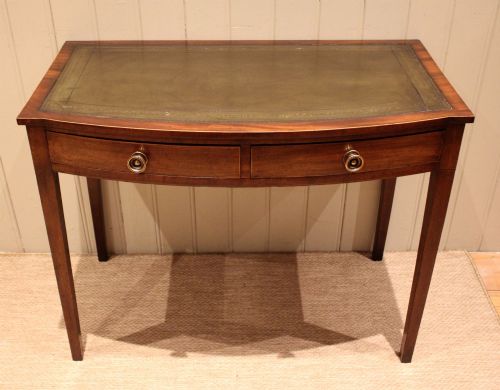
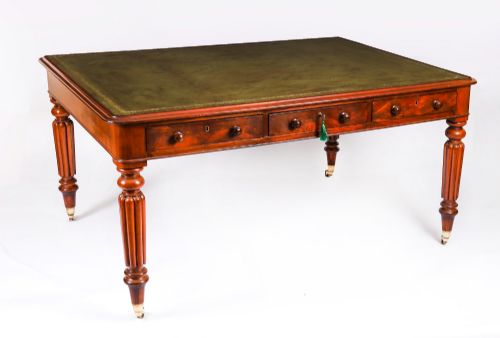
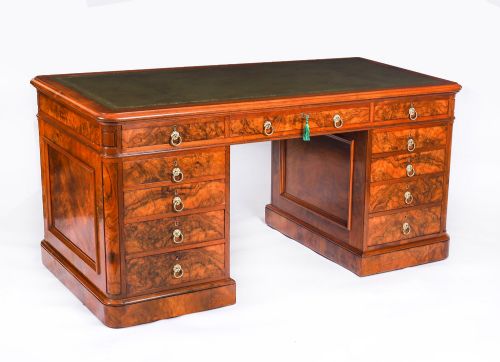
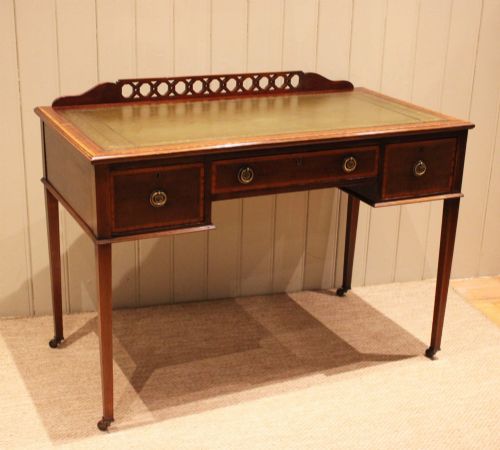
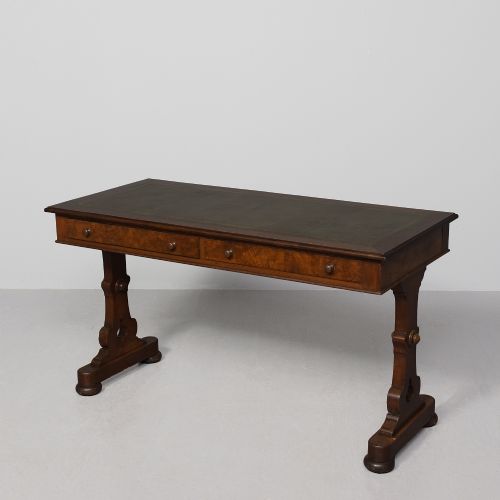
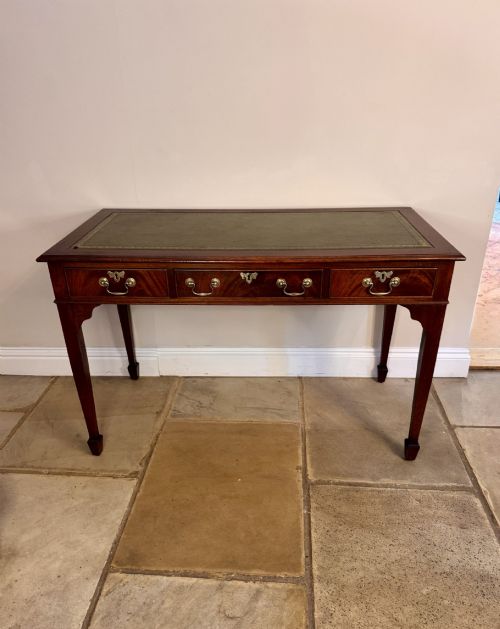
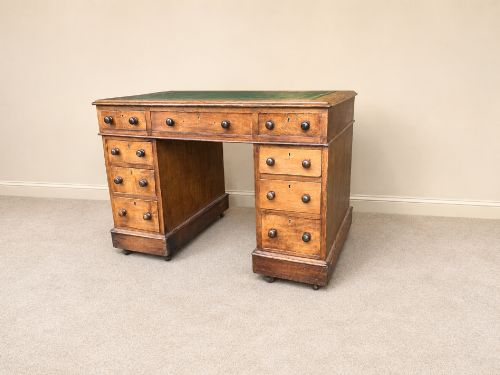
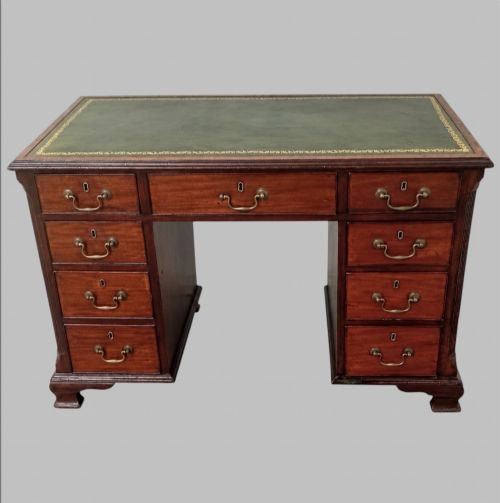
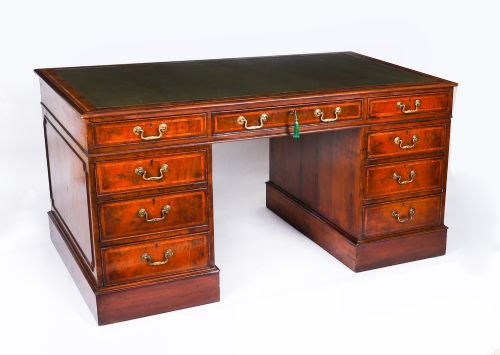
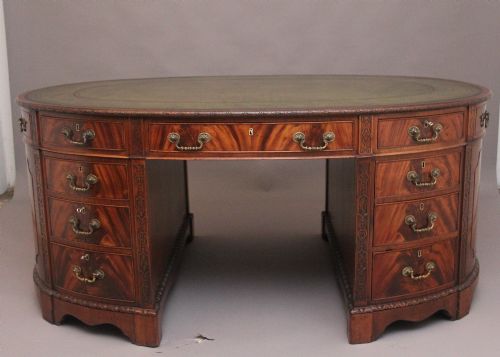
The pieces appearing on this page span the Victorian and Edwardian eras alongside Regency and Georgian revivals, constructed predominantly in mahogany, burr walnut, and oak. Twin pedestal forms and library tables dominate the selection, providing substantial work surfaces inset with tooled leather panels.
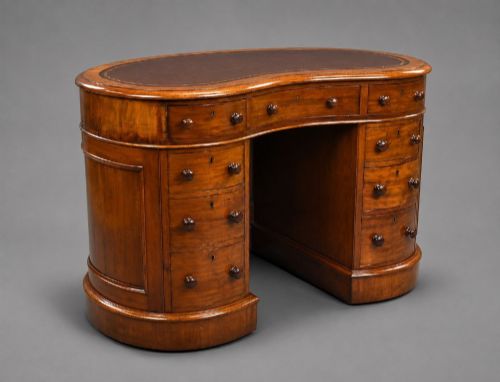
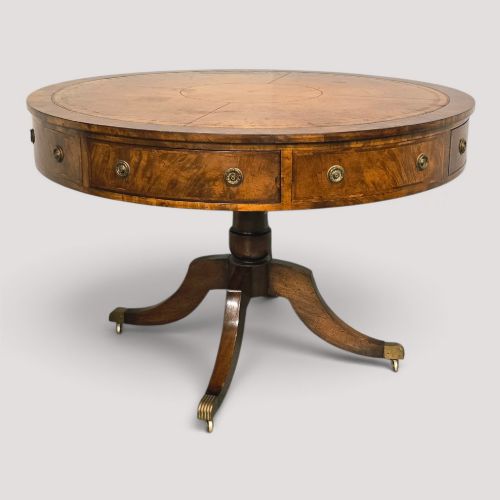
Specialised variations such as kidney-shaped desks, drum tables, and Carlton House writing desks also surface within the inventory. These regional and stylistic permutations reflect shifting domestic requirements for correspondence and record keeping over the nineteenth and early twentieth centuries.
Materials and Construction
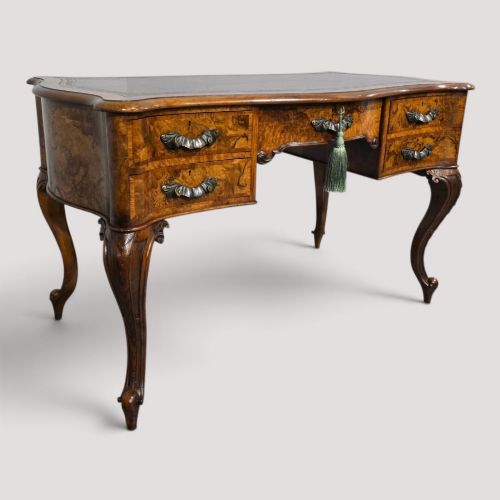
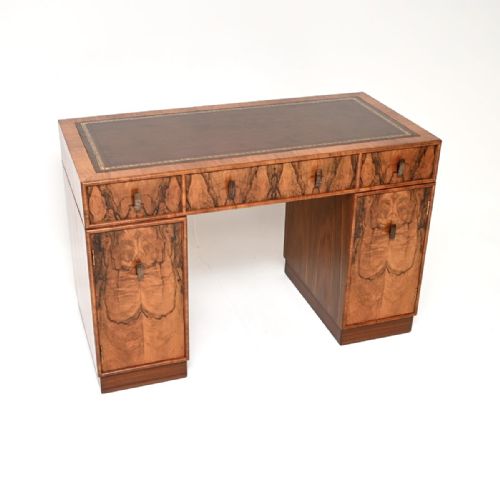
Cabinet makers utilised dense hardwoods including mahogany, walnut, and oak as the structural foundation for these pieces, often applying burr walnut veneers or satinwood crossbanding to visible surfaces. Brass handles, castors, and ormolu mounts provide functional and decorative hardware across various stylistic periods.
Writing surfaces were lined with leather, typically sheepskin or goatskin, which was then tooled with blind or gilt patterns around the perimeter. This soft hide insert provided a smooth, durable plane for ink writing while protecting the timber base underneath.
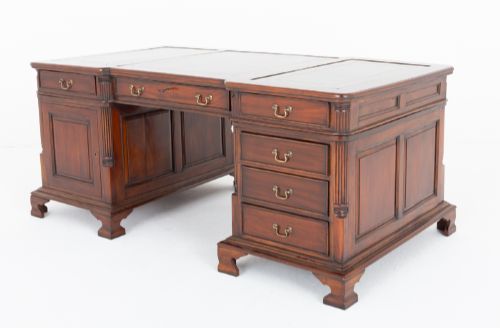
Joinery techniques relied on dovetailed drawer construction and robust framing to support heavy timber tops and pedestal carcases. Free-standing library desks and partners desks received finished panelling on all four sides to allow placement in the centre of a room.
Leather Top Desk Retail Price Guide 2026
Typical asking prices for leather top desk among the pieces listed under this phrase on Sellingantiques today, from the lower quarter to the upper quarter. They describe what is for sale here now, not the wider market.
The listings span the 18th, 19th, and early 20th centuries, covering Georgian, Regency, Victorian, and Edwardian periods with mahogany, oak, and walnut materials.
Evaluating Craftsmanship and Design
Superior examples separate themselves through the selection of highly figured timbers, such as richly grained burr walnut or well-matched mahogany veneers. The depth of the timber figuring and the precision of inlaid stringing or crossbanding indicate the level of care invested by the cabinet maker.
The execution of the leather writing surface and its surrounding gold tooling distinguishes finer workshops from standard production items. Crisp, clear tooling impressions on supple hide demonstrate superior craftsmanship compared to shallow or uneven pressing on lower grade leather.
Proportion and structural integrity define the upper tier of the range, where drawers operate smoothly within solid carcases and secondary timbers match the quality of primary show woods. Secondary elements like oak drawer linings and original brass hardware further elevate a piece.
Holland and Sons·Edwards and Roberts
The Leather Top Desk Glossary
- Partners Desk
- A large pedestal desk designed with drawers and cupboards on both sides so two people can work facing each other. These pieces were traditionally used in libraries and banking houses.
- Pedestal Desk
- A heavy writing desk consisting of a central top resting on two separate pedestals or banks of drawers. They often feature a central kneehole drawer.
- Drum Table
- A circular library table with a deep top containing drawers, supported on a central pillar and tripod base. The top surface is commonly inset with leather.
- Davenport Desk
- A compact Victorian writing desk featuring a sloping lid that lifts to reveal a small interior compartment, with drawers opening to the side. They often incorporate a small superstructure for stationery.
- Carlton House Desk
- A formal writing desk characterised by a concave superstructure of small drawers and pigeonholes curving around the back and sides of the leather-lined writing surface.
Leather Top Desk: Frequently Asked Questions
How do I care for the leather top?
Clean the leather gently with a slightly damp cloth and treat it periodically with a neutral leather cream to prevent drying and cracking. Avoid using harsh chemical cleaners or placing hot cups directly on the hide surface.
Keep the desk away from direct sunlight and strong heat sources to preserve the suppleness of the leather and prevent the surrounding timber from warping over time.
Can these desks be placed in the middle of a room?
Many partners desks and library tables are finished on all sides specifically for central placement. This allows access to drawers from multiple angles and displays the panelled rear of the carcase.
Pedestal desks intended for placement against a wall typically feature plain secondary timber on the reverse side, making island positioning less suitable.
How do I distinguish Victorian pieces from Edwardian ones?
Victorian desks tend to feature heavier proportions, darker mahogany or burr walnut timbers, and robust carving or mouldings. The construction often employs dense secondary woods and deep drawer linings.
Edwardian examples frequently display lighter satinwood or inlaid mahogany construction, reflecting a shift toward more delicate forms and restrained decorative motifs inspired by earlier Georgian styles.