

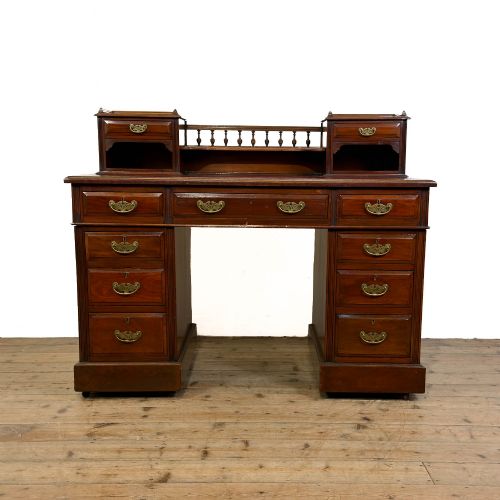
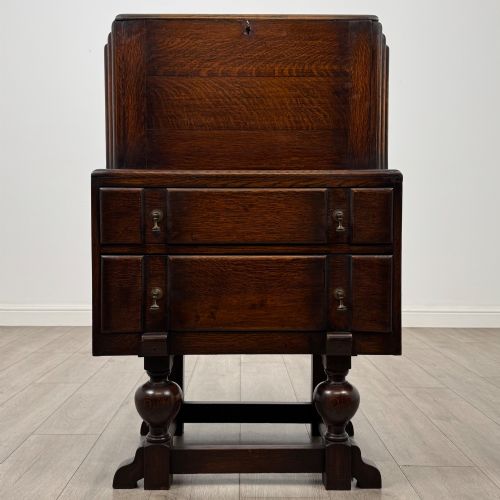
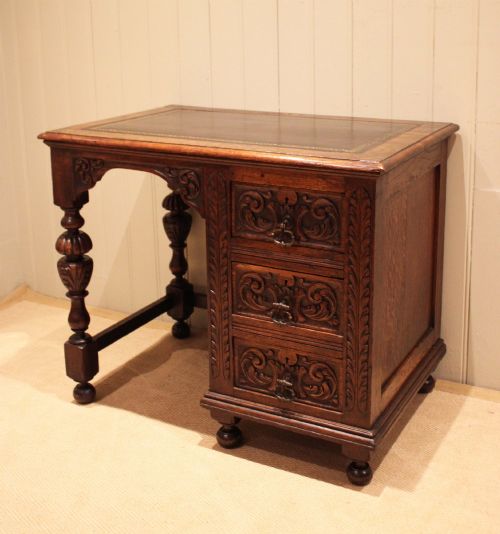
Brown Wood Office Desk
A brown wood office desk brings substance and utility to a room, offering rich timbers and solid construction shaped through centuries of workspace design.
Brown Wood Office Desk
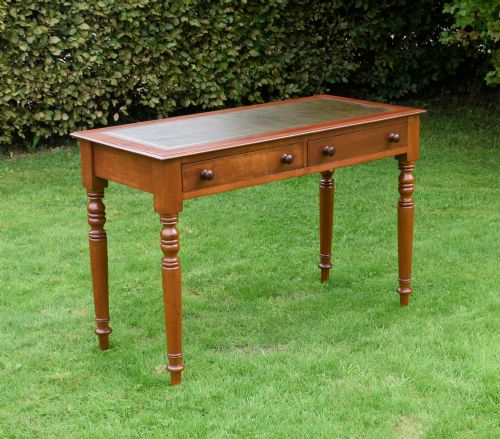
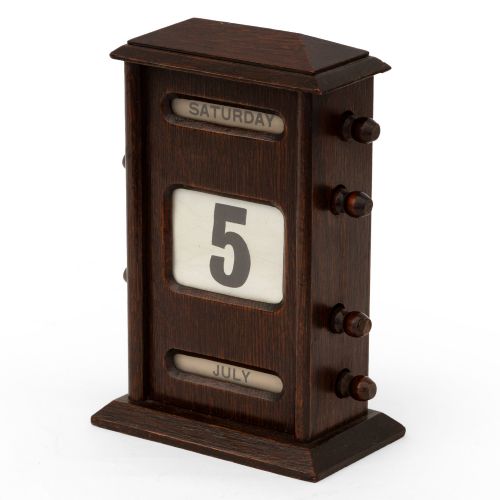
When searching for a brown wood office desk, buyers encounter a diverse selection spanning the eighteenth, nineteenth, and early twentieth centuries. The inventory on this page leans heavily towards Victorian and Edwardian examples, alongside Georgian, William IV, and Art Deco pieces.
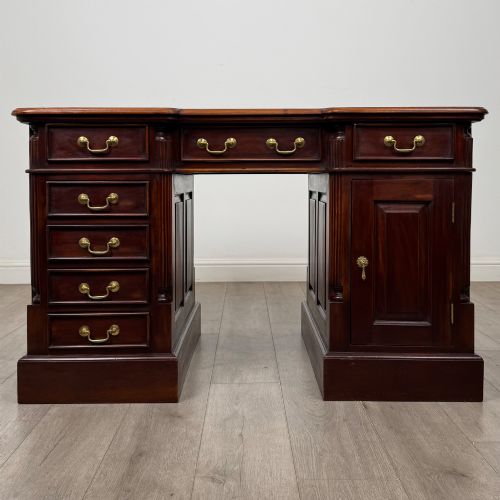
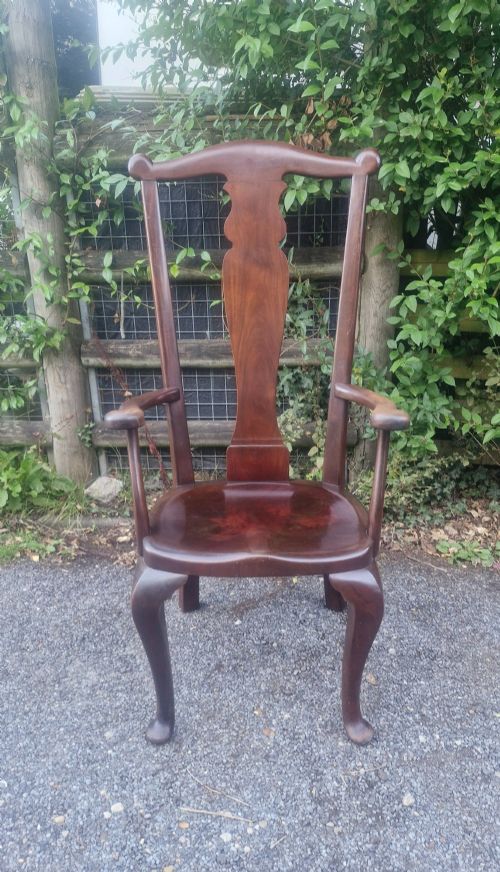
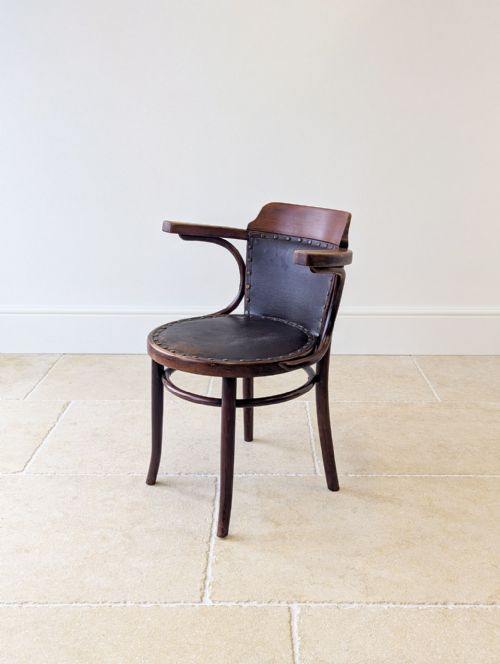
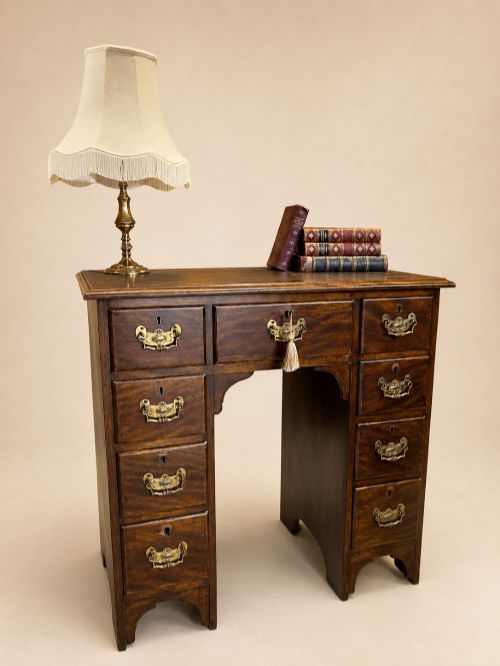
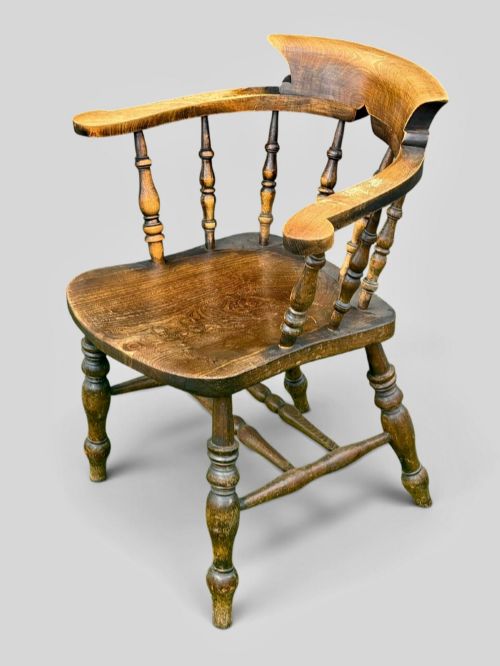
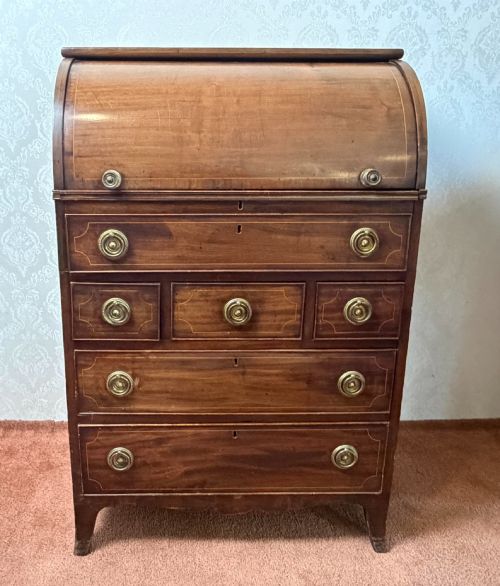
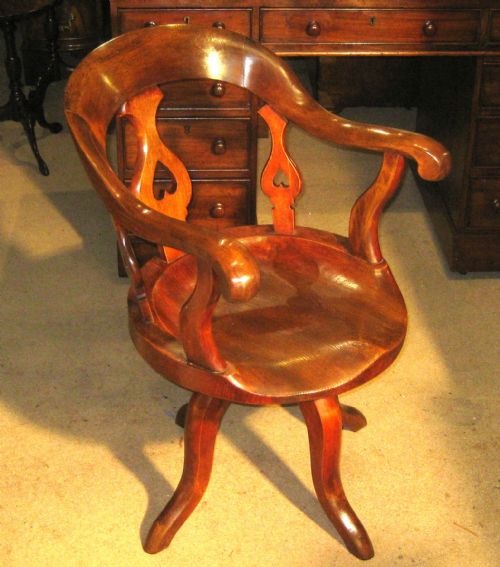
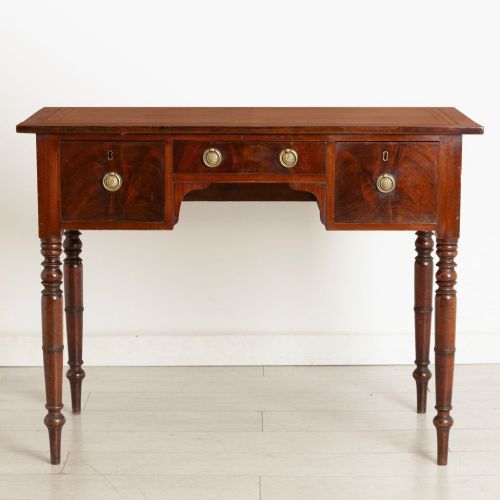
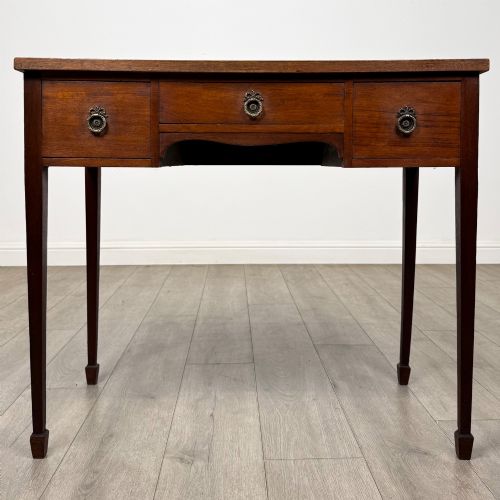
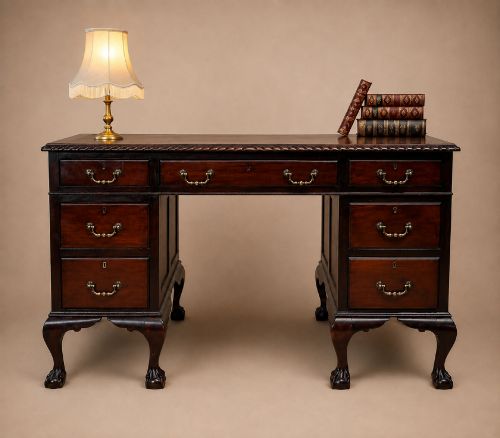
The objects themselves range from large mahogany partners desks and kneehole pedestals to compact writing tables, burr walnut cylinder desks, and oak bureaus. Associated seating appears frequently, including revolving swivel armchairs, captain chairs in beech and elm, and high-backed desk chairs.
Origins vary from English workshops to Anglo-Indian production, incorporating regional timbers such as teak and padauk alongside traditional domestic hardwoods. These pieces reflect the evolving requirements of domestic and professional studies across successive eras.
Materials and construction methods
Cabinet makers relied primarily on dense hardwoods such as mahogany, oak, walnut, and burr walnut, frequently accented with burr elm, beech, and exotic timbers like teak and padauk. These sturdy woods provided the structural integrity required for heavy daily clerical use.
Surfaces often incorporated inset leather writing panels, sometimes surrounded by fine inlay or crossbanding. Brass hardware, including original drawer pulls and handles, completed the construction, whilst specialised seating utilised bentwood techniques or sturdy turned spindles.
Listings feature woods such as mahogany, oak, walnut, burr walnut, elm, beech, teak, and padauk across periods spanning the eighteenth to the twentieth centuries.
Standards of craftsmanship and preservation
The upper tier of pieces displays superior timber selection, such as richly figured burr walnut or carefully matched mahogany veneers, paired with refined carving and precise joinery. Maker attributions or stamps from prominent cabinet makers elevate an example's standing.
Preservation of original elements, including leather writing surfaces, brass handles, and revolving mechanisms on desk chairs, separates standard functional items from superior collector pieces. The integrity of the timber finish and the crispness of any decorative carving also determine overall merit.
Trollope & sons·Hobbs & Co.·Gill & Reigate
The Brown Wood Office Desk Glossary
- Partners desk
- A large double-sided desk designed for two people to work opposite one another, featuring drawers and cupboards on both faces. These grand pieces often dominated estate libraries and administrative boardrooms.
- Kneehole desk
- A pedestal desk featuring a central recess for the user's legs, flanked by banks of smaller drawers. This configuration became standard for domestic studies from the Georgian period onward.
- Tambour
- A sliding door or shutter constructed from narrow vertical strips of wood glued to a canvas backing. It conceals pigeonholes and small drawers within writing cabinets and desks.
- Cylinder desk
- A writing desk enclosed by a curving quarter-circle wooden shutter that rolls back to reveal the writing surface and interior compartments. This sophisticated mechanism protects private papers.
- Partners writing table
- A large library or office table with drawers situated beneath the top, lacking the heavy pedestal banks of drawers found on a standard partners desk. They provide generous surface area for spreading documents.
Brown Wood Office Desk: Frequently Asked Questions
What is a partners desk?
A partners desk is a large double-sided workspace built with drawers and cupboards accessible from both the front and the back. This configuration allowed two individuals, such as business partners or legal associates, to sit and write face to face.
These substantial pieces usually require a central placement within a large study or library rather than being pushed against a wall. Their finished appearance on all four sides distinguishes them from standard single-sided pedestal desks.
How do I choose a desk chair?
Selecting a desk chair involves balancing period authenticity with comfort, paying attention to seat height and revolving mechanisms. Many available chairs feature swivel bases, wooden hooped backs, or upholstered leather pads suited for extended sitting.
Consider whether you prefer a fixed smoker bow armchair or a revolving mahogany pedestal chair with mobility. Matching the timber tone of the chair to your desk helps create a cohesive workspace.
How do I date a wooden desk?
Dating a wooden desk relies on examining the construction methods of the drawers, the timber species utilised, and stylistic indicators of the period. Dovetail joints on drawers, for instance, evolved from hand-cut irregularity in Georgian times to more uniform machine work by the twentieth century.
Secondary woods inside drawers, handles, and locks also offer clues regarding the era of manufacture. Consulting maker stamps or labels, when present, provides a more precise date.
Where should I place a large pedestal desk?
A large pedestal desk requires adequate floor space to allow comfortable access to the pedestals and surrounding chairs. Free-standing kneehole desks and partners desks look best when given room to be viewed from multiple angles.
Ensure that natural light from a window falls correctly across your writing surface to reduce strain. Positioning the desk away from direct heat sources protects the timber and leather top from drying out.