


Vintage Wooden Desk
A vintage wooden desk brings character and practical workspace into a room, offering sturdy construction and distinct period styling.
Understanding the selection
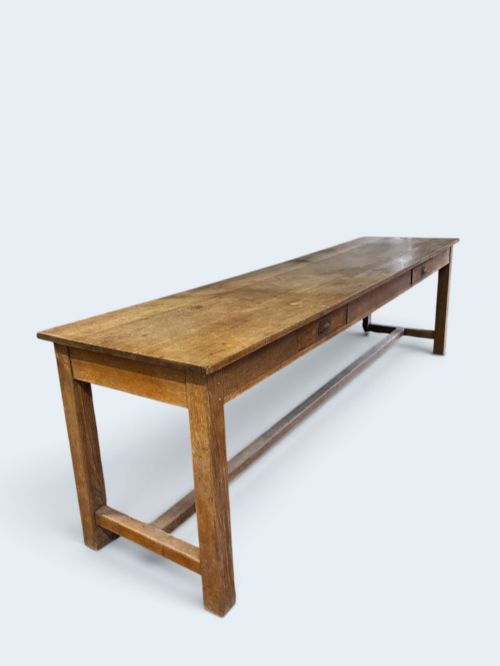
A vintage wooden desk encompasses writing tables and office furniture dating from the Victorian, Edwardian, and 1930s periods. These pieces serve as functional work surfaces while displaying the traditional craftsmanship of their respective eras.
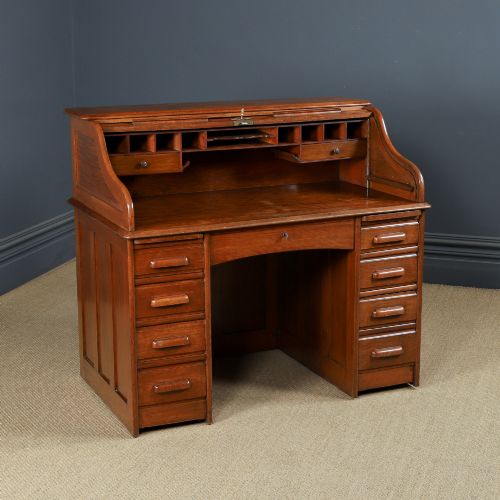
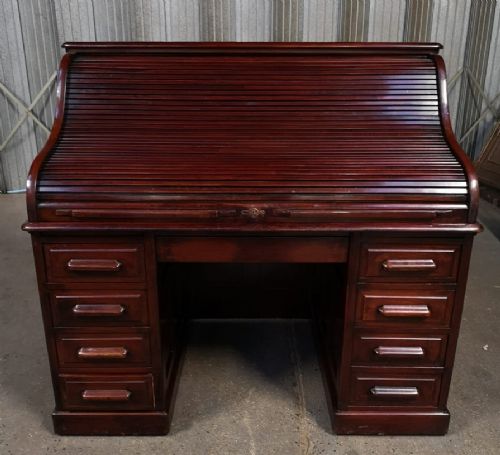
The versions most commonly met on this page include pedestal desks, roll top desks, and writing tables. They utilise woods such as oak, walnut, burr elm, and mahogany, often paired with brass or glass hardware.
Materials and construction
Construction relies on solid timbers like oak, walnut, and mahogany, occasionally accented with burr elm veneer and marquetry inlay. Joinery methods of the Victorian and Edwardian periods ensure structural rigidity across pedestals and writing surfaces.
Hardware incorporates brass and metal fittings, while specific Art Deco examples from around 1930 integrate glass elements into skyscraper pedestal designs.
Retail Price Guide 2026
Typical UK retail prices for vintage wooden desk, calculated from the Sellingantiques database of over a million retail prices indexed since 2003. This retail price guide relies exclusively on Sellingantiques data; no external sources or auction records are used, so the figures do not describe the wider market.
A good roll top hides all manner of unfinished letters.
Assessing quality
Quality separates ordinary utility pieces from finer examples through the selection of timber figures, such as burr elm and figured mahogany, and the precision of marquetry inlay. The integration of specialised hardware, like Hobbs & Co. locks, elevates the status of a desk.
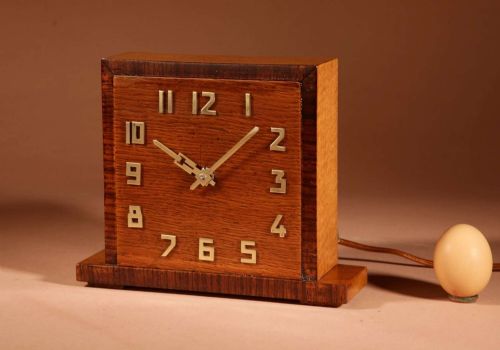
Design ambition also distinguishes the range, moving from standard Edwardian roll top and oak configurations to striking Art Deco skyscraper forms that utilise glass and stepped walnut geometry.
Hobbs & Co
The Vintage Wooden Desk Glossary
- Pedestal desk
- A freestanding office desk supported by two matching banks of drawers beneath the work surface.
- Roll top desk
- A writing desk featuring a slatted wooden tambour that pulls down to enclose the workspace and pigeonholes.
- Marquetry inlay
- Decorative patterns formed by fitting small pieces of contrasting veneer into the wooden surface.
- Skyscraper pedestal
- A stepped architectural form characteristic of Art Deco design, seen on specific 1930s office desks.
- Burr elm
- A highly figured timber prized for its swirling grain patterns and rich texture on desk panels.
Frequently Asked Questions
What is a pedestal desk?
A pedestal desk is a heavy work table supported by two vertical columns of drawers that rest directly on the floor.
This format provides substantial storage capacity while maintaining a formal presence in a study or office.
How do I identify an Edwardian desk?
Edwardian desks often feature lighter oak timbers and simpler structural lines compared to heavier Victorian predecessors.
They frequently appear as roll top configurations or paired writing tables with matching chairs.
What woods were used in these desks?
Cabinetmakers utilised a variety of hardwoods including oak, walnut, mahogany, and burr elm.
Decorative elements like marquetry inlay further enhanced the visual appeal of the primary timbers.
Are these desks suitable for daily work?
These pieces were built for administrative tasks and offer generous surface areas and drawer space for modern use.
Their sturdy timber construction accommodates contemporary writing instruments and paperwork.