




Antique Rolltop Desk
An antique rolltop desk brings architectural rhythm to a room, concealing correspondence behind tambour shutters or curving cylinders.
Antique Rolltop Desk
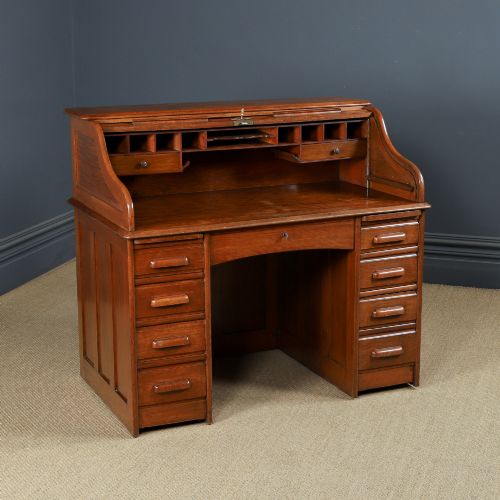
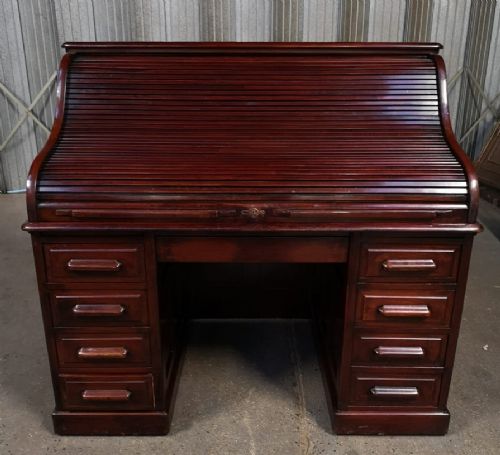
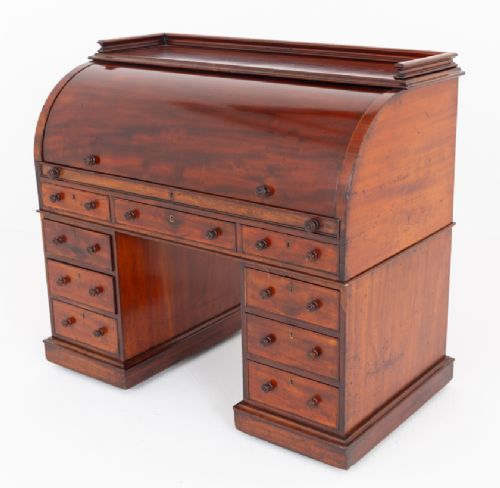
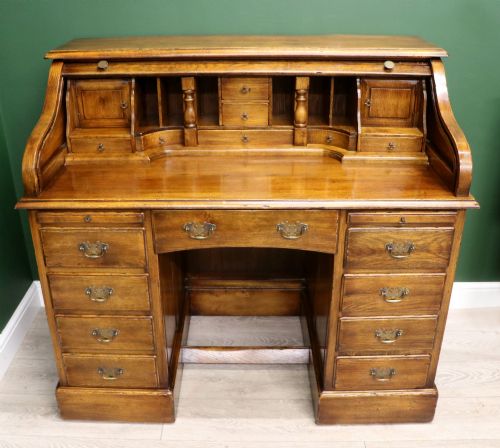
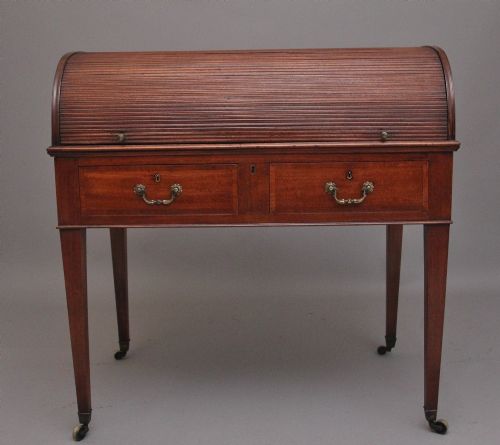
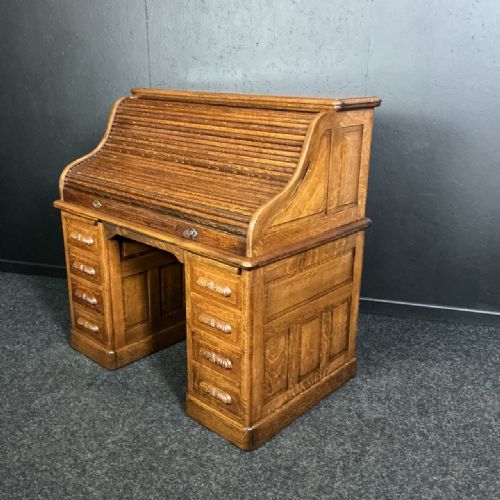
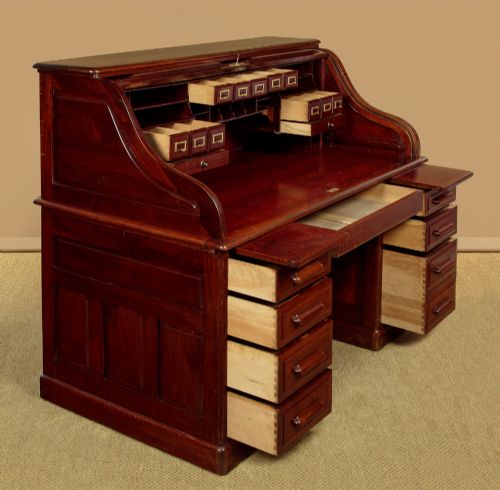
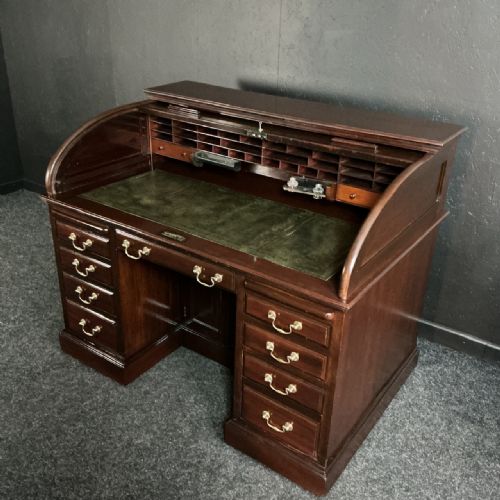
An antique rolltop desk provides a secure workspace featuring a slatted wooden tambour or a solid curving cylinder that pulls down to cover the writing surface and pigeonholes. These practical writing companions appear most frequently in substantial oak pedestal forms from the Edwardian era, alongside refined mahogany and walnut examples from the Victorian and Georgian periods.
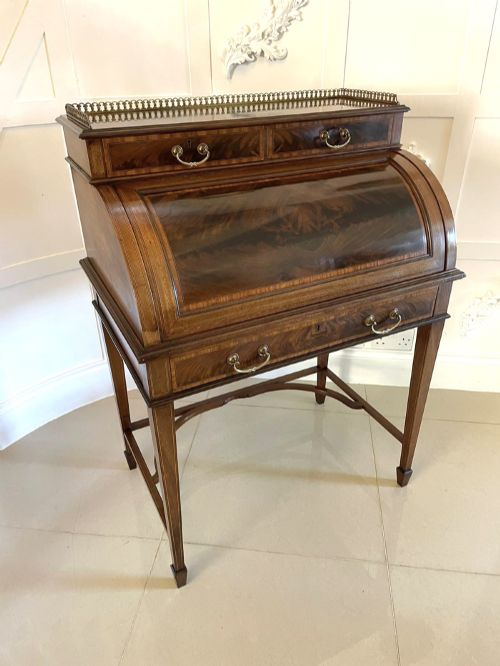
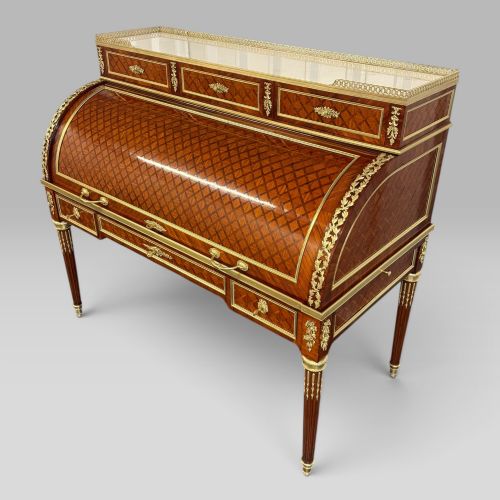
Makers adapted the form for various settings, ranging from large office pedestals designed for commercial paperwork to domestic writing tables and elaborate cylinder bureaus adorned with marquetry. Buyers encounter everything from compact Edwardian home office models to impressive nineteenth-century French and English pieces fitted with pull-out writing slides and internal drawers.
The category encompasses several related writing furniture types, including bureau bookcases, cylinder desks, and metamorphic lap boxes. Oak versions tend to present a heavy, utilitarian character suited for study spaces, while mahogany and satinwood variants lean toward formal drawing room elegance.
How they were made
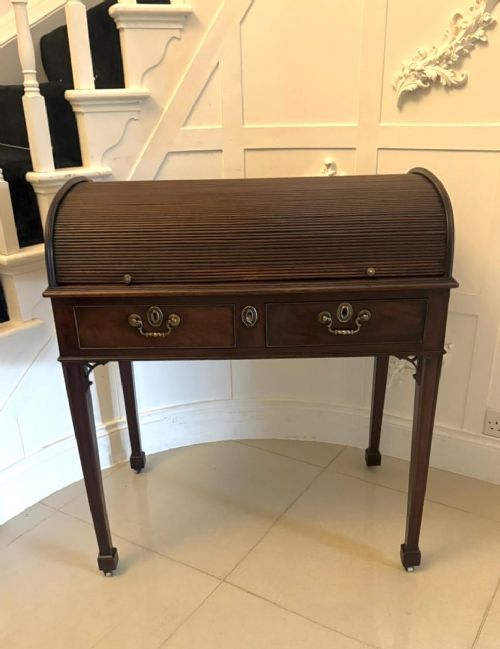
Cabinetmakers constructed the flexible tambour shutters of an antique rolltop desk by gluing narrow strips of solid wood onto a stout canvas or leather backing, allowing the curtain to slide smoothly within concealed side tracks. The primary carcasses relied on sturdy timbers like oak and mahogany, often enhanced by rich flame mahogany, walnut, or satinwood veneers.
Fine decorative examples integrate intricate marquetry, parquetry, and inlaid banding using contrasting exotic woods. Metal fittings such as brass handles, hinges, and ormolu mounts secure structural joints and add decorative contrast to the polished wood surfaces.
Antique Rolltop Desk Retail Price Guide 2026
Typical asking prices for rolltop desk among the pieces listed under this phrase on Sellingantiques today, from the lower quarter to the upper quarter. They describe what is for sale here now, not the wider market.
Listings feature oak, mahogany, walnut, satinwood, camphor wood, brass, ormolu, leather, and glass across various periods.
What varies in quality
The precision of the tambour mechanism dictates daily usability, separating smooth-running shutters from stiff or binding slats. Superior examples exhibit seamless movement where the wooden curtain travels effortlessly along its groove without catching.
Material selection and decorative execution define the upper tier of the range, distinguishing simple office furniture from elaborately inlaid salon pieces. Finely figured mahogany veneers, intricate floral marquetry, and substantial solid oak construction reflect higher craftsmanship and material cost.
Maple & Co. London·Globe Wernicke·Horrocks Desk Company·Boston Chair Company of Massachusetts
The Antique Rolltop Desk Glossary
- Tambour
- A flexible shutter formed of narrow wooden slats glued to canvas, allowing it to slide around a curved track to enclose a desk interior.
- Cylinder desk
- A writing piece featuring a solid quarter-circle wooden lid that rolls back into the desk body rather than using slatted strips.
- Marquetry
- Decorative patterns created by fitting thin pieces of wood veneer and other materials into a prepared wooden background.
- Pedestal desk
- A heavy freestanding writing table supported by two banks of small drawers rather than simple legs.
- Parquetry
- Geometric wood inlay patterns forming mosaic-like designs across the surface of a desk or bureau.
Antique Rolltop Desk: Frequently Asked Questions
How do I maintain the tambour shutter?
Keep the wooden tracks clean and apply a suitable paste wax sparingly to ensure smooth sliding action without gumming the fabric backing.
Avoid placing the desk in overly humid environments that might cause the narrow slats to swell and jam within their channels.
What is the difference between a cylinder desk and a rolltop?
A rolltop desk utilises a slatted tambour shutter made of many small strips of wood glued to fabric, which bends easily around tight curves.
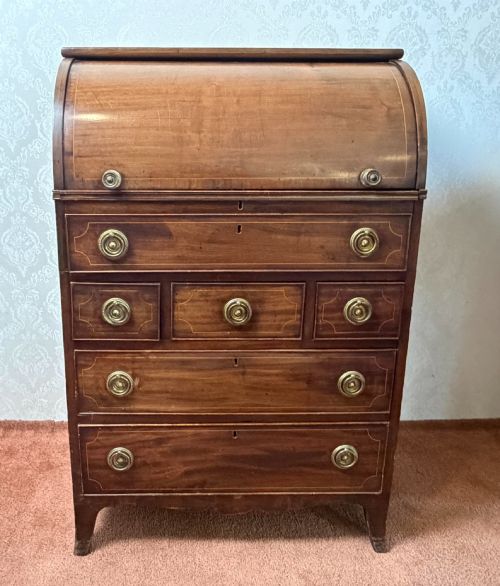
In contrast, a cylinder desk employs a single solid curved piece of wood that pivots backward on an internal pivot point.
Were these desks used for offices or homes?
Oak pedestal versions were heavily utilised in Edwardian and Victorian offices for managing paperwork, ledgers, and early typewriters.
Lighter mahogany and satinwood cylinder desks served formal residential functions in libraries, drawing rooms, and private studies.
How do I identify a Georgian piece?
Georgian examples often feature fine mahogany, subtle inlay work, and understated proportions typical of eighteenth-century cabinetmaking traditions.
They predate the mass-produced office pedestal forms and generally focus on refined domestic writing rather than commercial clerical storage.