

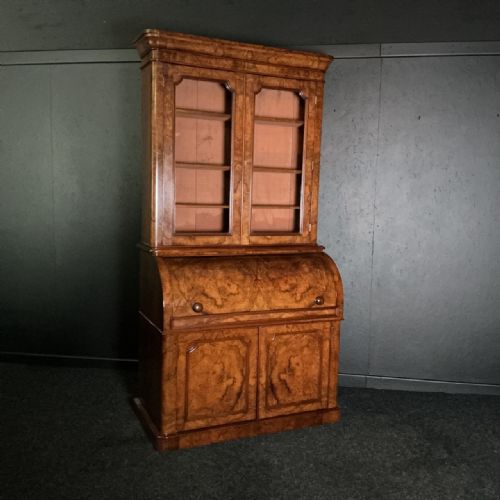


Edwardian Cylinder Desk
An Edwardian cylinder desk offers a concealed workspace through a curved wooden roll front, combining compact writing utility with classical revival elegance.
Edwardian Cylinder Desks
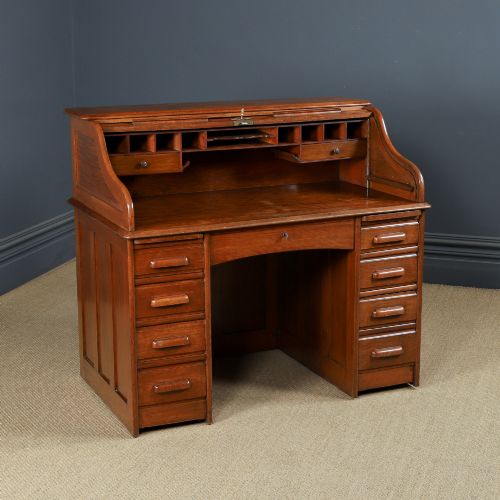
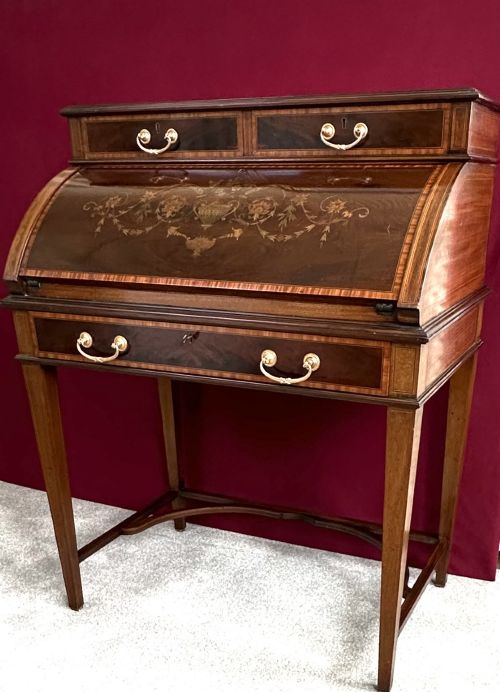
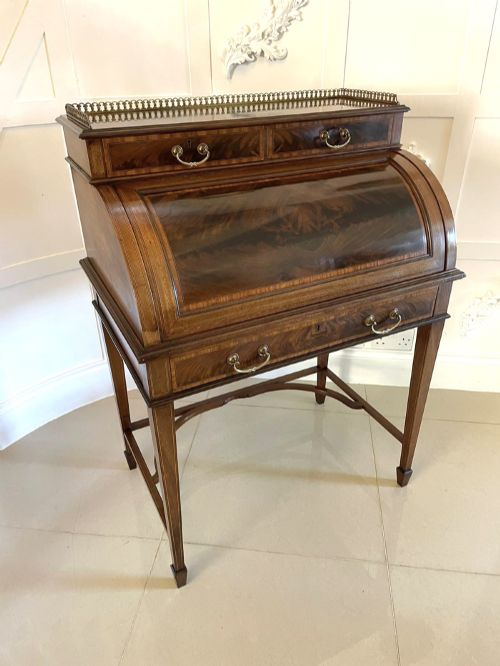
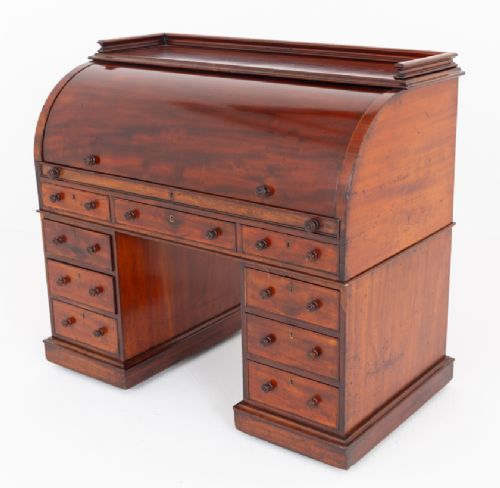
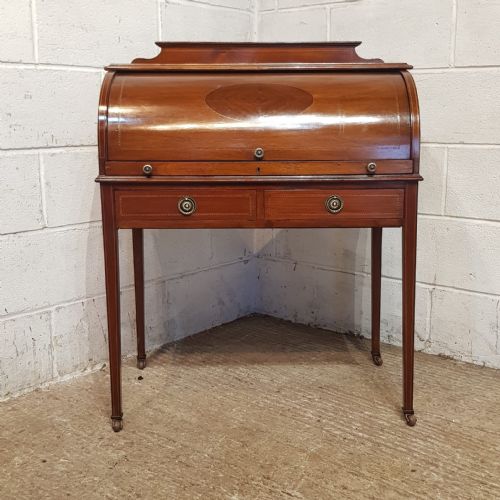
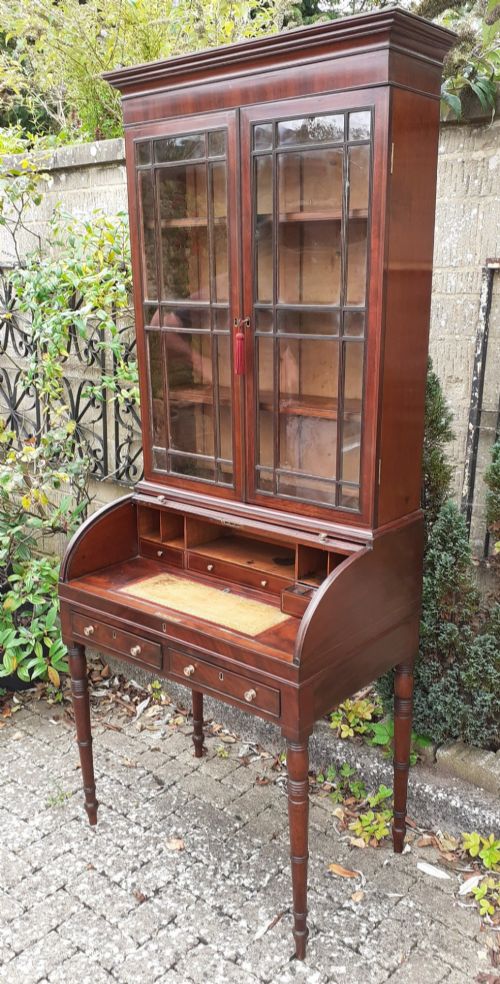
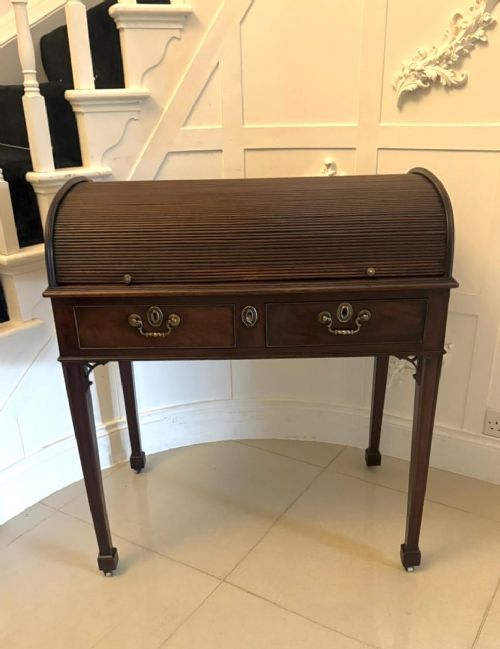
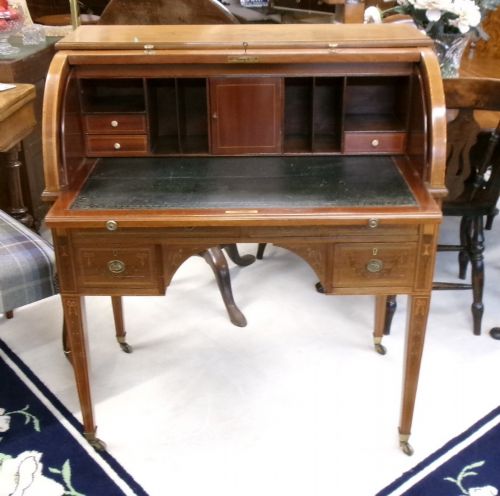
An edwardian cylinder desk provides a writing surface hidden beneath a rounded wooden tambour or barrel shutter. When closed, the curved front conceals the interior drawers and pigeonholes, keeping correspondence out of sight.
The pieces on this page span the Edwardian era, Victorian period, and nineteenth century. The standard form encountered here is the mahogany cylinder desk, frequently associated with the Sheraton Revival style.
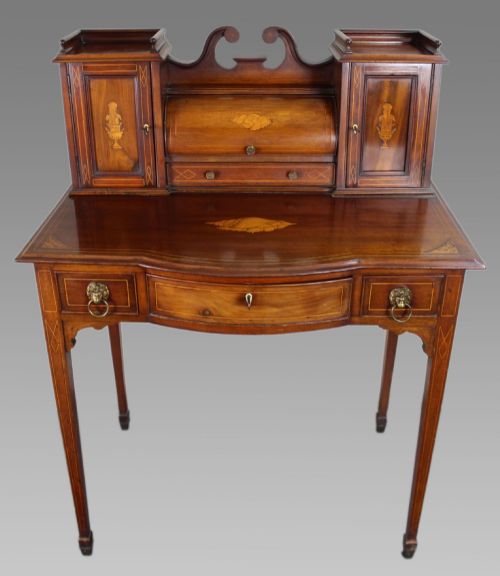
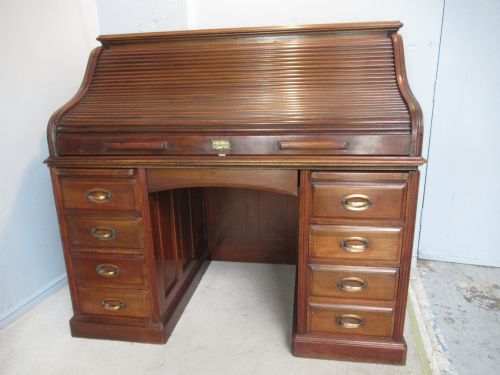
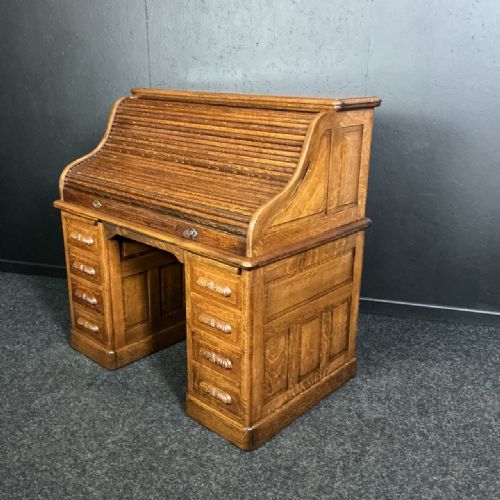
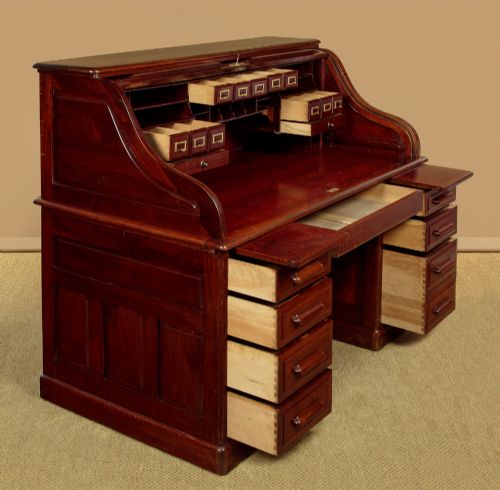
Makers adapted these writing tables for both large offices and smaller domestic spaces, resulting in variations ranging from freestanding pedestal desks to neat ladies writing tables.
Materials and Construction
Cabinet makers constructed these desks primarily using mahogany timber, sometimes applying flame mahogany or rosewood veneers. Satinwood and boxwood provided contrasting stringing and marquetry inlay across the drawer fronts and cylinder shutters.
Writing surfaces frequently incorporated inset leather panels for a durable work area. Brass hardware, including handles and key escutcheons, finished the structural components.
Retail Price Guide 2026
Typical UK retail prices for edwardian cylinder desk, calculated from the Sellingantiques database of over a million retail prices indexed since 2003. This retail price guide relies exclusively on Sellingantiques data; no external sources or auction records are used, so the figures do not describe the wider market.
This selection includes pieces from the Victorian and Edwardian periods, utilising mahogany, satinwood, boxwood, brass, and leather.
Gradations of Quality
Superior examples distinguish themselves through the precision of their timber selection, such as closely matched flame mahogany veneers and intricate satinwood and boxwood marquetry. The smoothness of the mechanical cylinder action also marks the distinction between standard production and workshop-made pieces.
Maker attribution elevates certain examples, particularly those bearing stamps from established firms. Finer desks maintain balanced proportions and crisp inlay work across the internal fittings.
Maple & Co. London·Ray & Miles of Liverpool
The Edwardian Cylinder Desk Glossary
- Cylinder desk
- A writing desk featuring a curved, quarter-circle wooden shutter that rolls back to reveal the writing surface and interior compartments. This mechanism encloses the desk contents completely.
- Sheraton Revival
- A late nineteenth and early twentieth-century design movement drawing inspiration from eighteenth-century neoclassical furniture. It utilises classical symmetry, fine mahogany, and delicate marquetry.
- Marquetry
- Decorative woodwork where pieces of various coloured timbers are applied to a veneer structure to form pictorial or geometric patterns. Boxwood and satinwood frequently serve this purpose on mahogany grounds.
- Cross banding
- A border technique where thin strips of veneer are laid perpendicular to the grain of the main panel. This frames the top or drawer fronts with a contrasting wood grain.
- Pigeonhole
- A small vertical compartment fitted inside the desk interior for sorting papers and letters. These sit above the pull-out writing slide.
Frequently Asked Questions
How does a cylinder desk work?
The curved wooden cylinder slides along tracks within the cabinet frame, pivoting backward to open and expose the internal drawers and writing platform.
Pulling the cylinder forward conceals the desktop and secures the interior compartments when locked.
What is the difference between a roll top and a cylinder desk?
A cylinder desk uses a solid, curved wooden shutter that forms a smooth quarter-circle arc when closed. The mechanism relies on a single curved panel rather than multiple slatted strips.
Traditional roll top desks typically employ tambour slats joined together to achieve the flexible rolling movement.
Where were these desks placed?
These pieces served as writing tables in libraries, studies, and drawing rooms. Freestanding versions stood toward the centre of rooms, while smaller ladies desks sat against walls.
Commercial offices also utilised pedestal variants for daily administrative tasks.
How do I identify the Sheraton Revival style?
Sheraton Revival pieces display classical proportions, tapered legs, and refined proportions drawn from eighteenth-century design. They rely on mahogany timbers decorated with satinwood inlay and stringing.
These desks avoid heavy ornamentation in favour of lighter neoclassical elegance.