
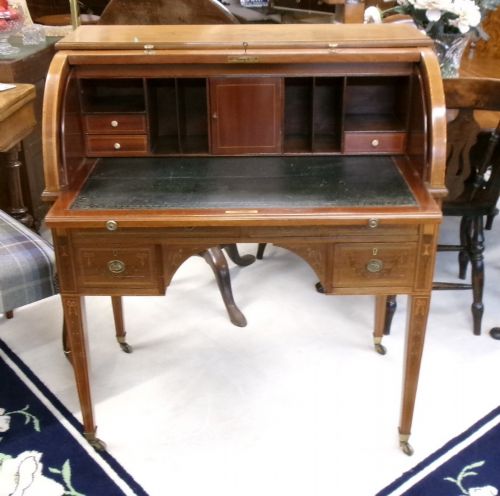
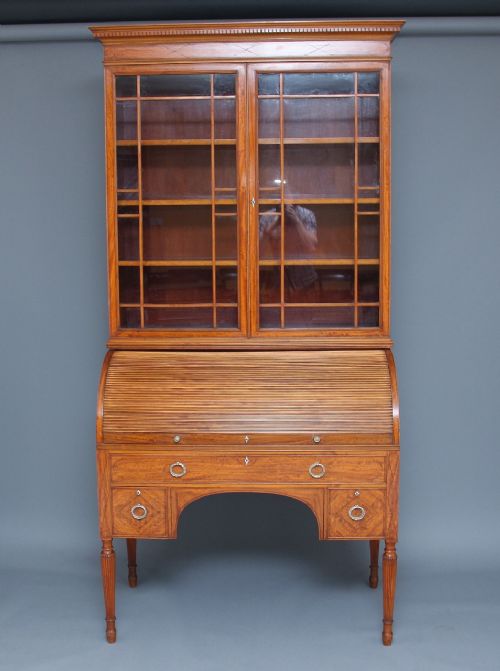


Satinwood Cylinder Bureau
Satinwood cylinder bureaus are sophisticated writing desks featuring a curved rolltop hiding internal fitted drawers, offering elegant concealed workspace.
Satinwood Cylinder Bureau
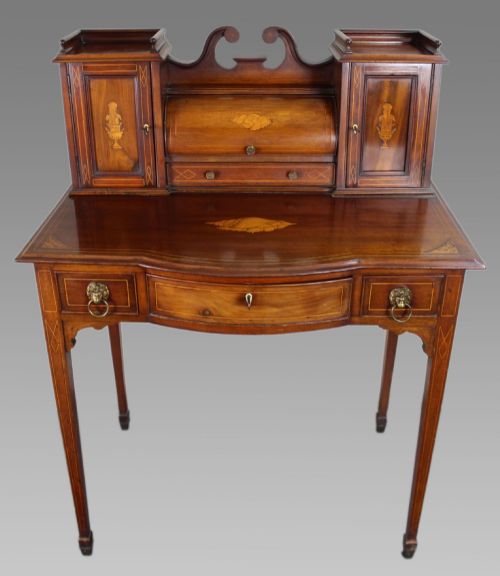
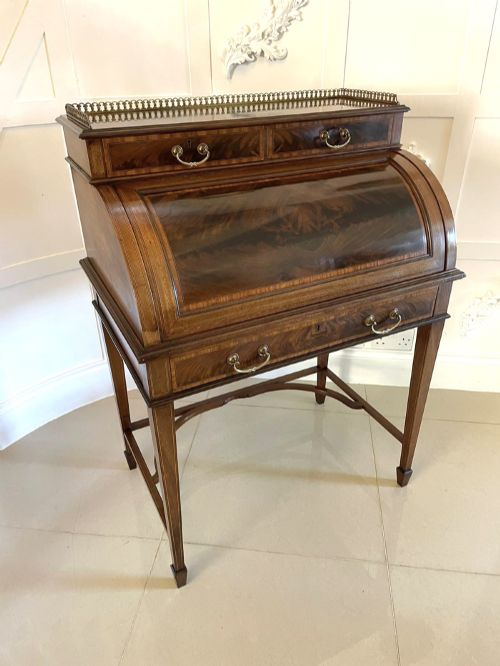
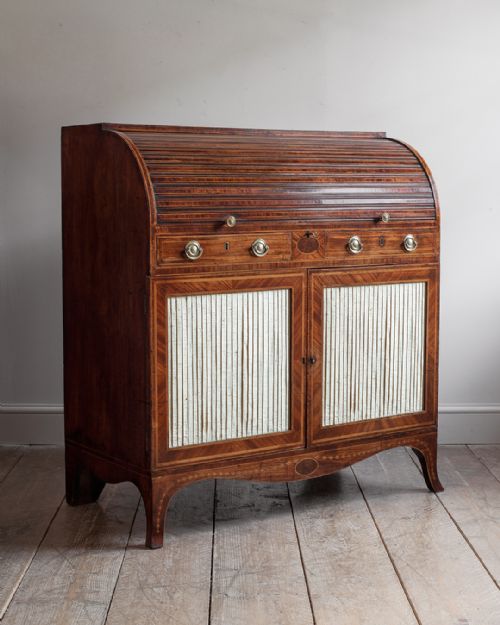
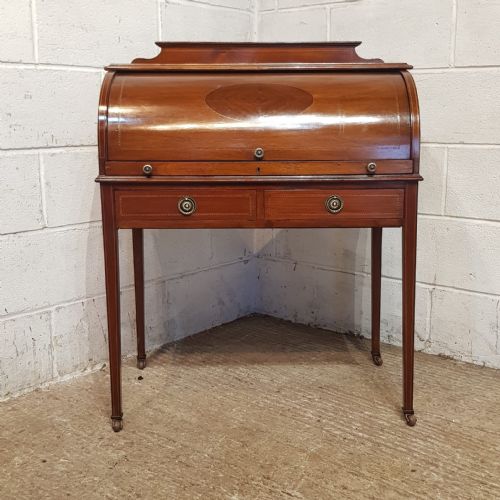
When you search for a satinwood cylinder bureau, you encounter writing furniture designed with a rounded shutter that retracts to reveal a writing surface and compartments. These pieces span George III, Georgian, Victorian, and Edwardian periods, frequently demonstrating Sheraton Revival design influences.
The versions most commonly met on this page include freestanding desks and taller bureau bookcases constructed primarily during the Edwardian era and the late nineteenth century. Smaller ladies desks and miniature display formats also appear alongside grander eighteenth-century examples.
The form combines the enclosed security of a traditional bureau with the smooth mechanical action of a cylindrical or tambour shutter. Makers utilised light timbers, often contrasting rich mahogany with pale satinwood veneers and delicate inlay work.
What varies in quality
The distinction between standard production and exceptional craftsmanship lies in the precision of the cylinder action and the depth of timber selection. Superior pieces display seamless tracking where the rolltop glides effortlessly without binding.
Artistry in the veneer work and marquetry separates finer workshops from simpler output. The complexity of the internal fittings, including secret compartments and finely dovetailed small drawers, marks the upper tier of construction.
Satinwood Cylinder Bureau Retail Price Guide 2026
Typical asking prices for satinwood cylinder bureau among the pieces listed under this phrase on Sellingantiques today, from the lower quarter to the upper quarter. They describe what is for sale here now, not the wider market.
Several miniature cylinder desks survive, proving that even eighteenth-century correspondence required proper proportions.
Maple & Co. London·Edwards & Roberts·Henry Samuel
The Satinwood Cylinder Bureau Glossary
- Cylinder bureau
- A writing desk with a curved, quarter-circle wooden shutter that rolls back to uncover the desk interior. This mechanical cover conceals letters and writing equipment when closed.
- Satinwood
- A lustrous, hard timber native to Ceylon and India with a golden, reflective grain. Cabinet makers prized it for decorative veneers.
- Tambour
- A flexible shutter made from narrow vertical strips of wood glued to a canvas backing. It allows the writing surface to be covered by sliding along a curved groove.
- Sheraton Revival
- A late nineteenth and early twentieth-century design style emulating the neoclassical furniture of George Thomas Sheraton. Pieces feature delicate proportions, tapered legs, and subtle marquetry.
- Secretaire
- A piece of furniture containing a pull-down or sliding writing drawer disguised as a standard drawer. It often forms part of a larger cabinet or bookcase.
Satinwood Cylinder Bureau: Frequently Asked Questions
How does a cylinder bureau work?
The curved wooden shutter runs along a concealed track within the sides of the desk. Pushing the rolltop back causes it to rotate downward into the body of the cabinet.
This movement simultaneously uncovers the writing surface and pulls out the attached writing slide in certain mechanical designs.
What is the difference between a bureau and a cylinder desk?
A traditional bureau utilises a sloping hinged flap that folds down to form the writing surface. A cylinder desk employs a rotating curved drum that slides entirely out of sight.
Cylinder desks generally offer a fixed writing platform that remains accessible while the mechanism opens.
How do I date a satinwood bureau?
Dating relies on timber construction methods, hardware styles, and prevailing design revivals. Georgian examples show structural framing methods from the eighteenth century, while Edwardian pieces reflect lighter proportions and machine-sawn internal components.
Maker stamps and trade labels found inside drawers provide precise attribution when present.
Where should I place a freestanding cylinder desk?
These desks suit studies, drawing rooms, or home offices where the finished back panel remains visible. Freestanding models were designed to sit away from walls rather than flush against them.
Keep the timber away from direct sunlight and heat sources to prevent the satinwood veneer from drying and lifting.