
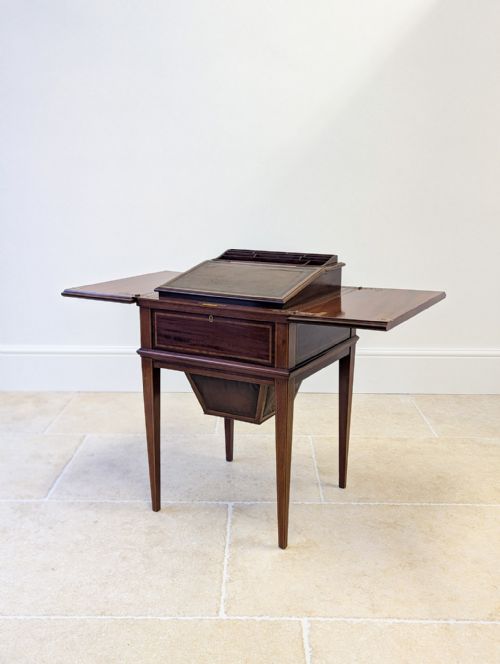
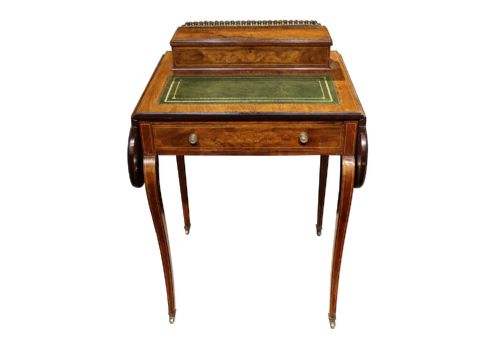
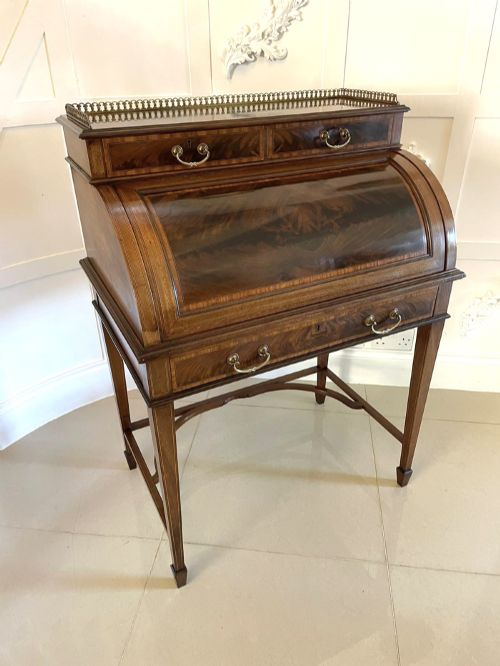
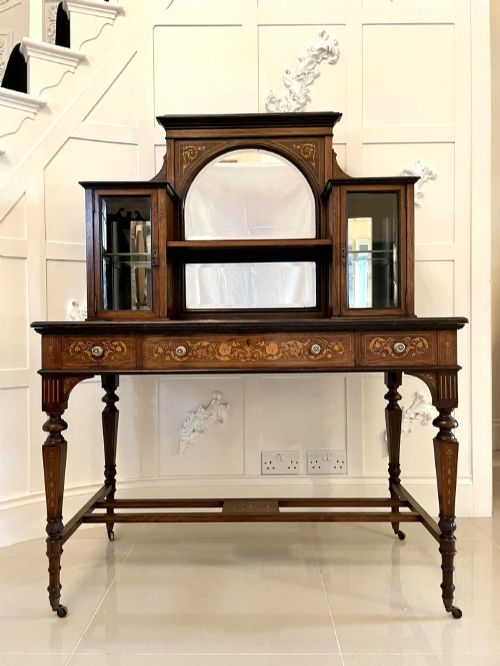

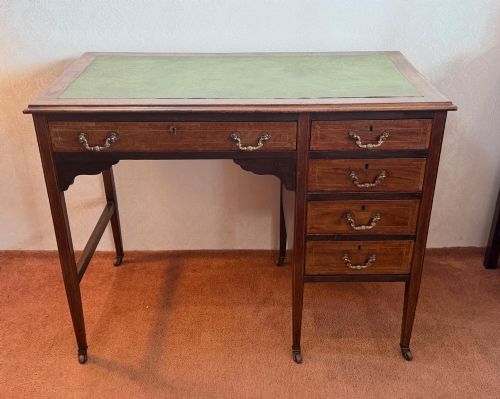
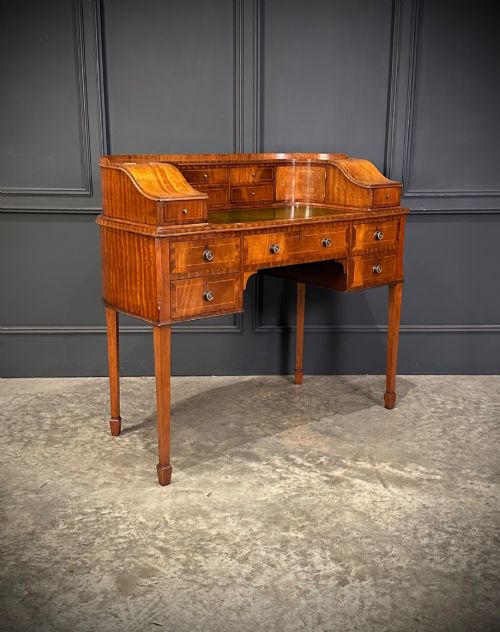
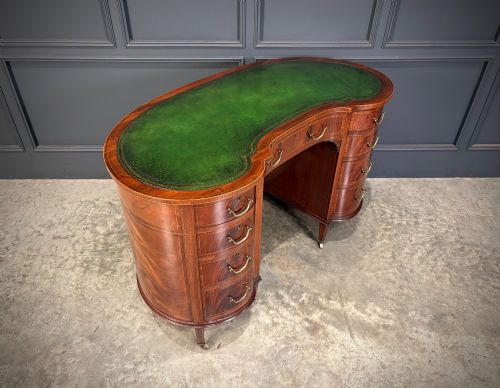
Edwardian Inlaid Bureau
An edwardian inlaid bureau brings together fitted fall fronts and delicate woodwork, offering a practical writing slope with period charm.

Understanding the edwardian inlaid bureau
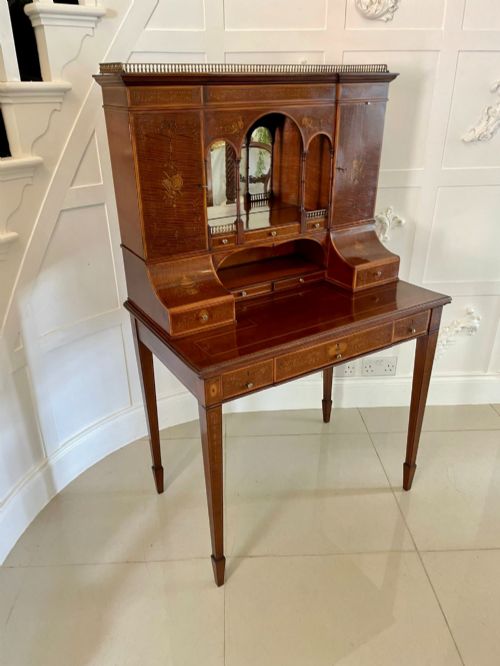
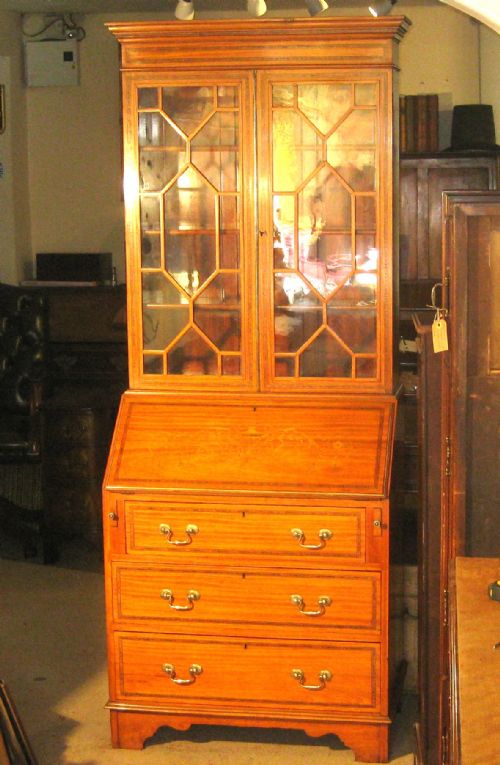
The edwardian inlaid bureau combines a sloping fall front that conceals inner compartments with drawer storage below, primarily appearing in mahogany alongside oak and satinwood. These writing pieces frequently take the form of compact writing desks or tall bureau bookcases topped with glazed doors.
Most items you encounter belong to the Edwardian period or the Sheraton Revival style, carrying characteristic decorative banding. Variations range from small writing bureaus to large cabinet combinations featuring four drawers.
Materials and construction
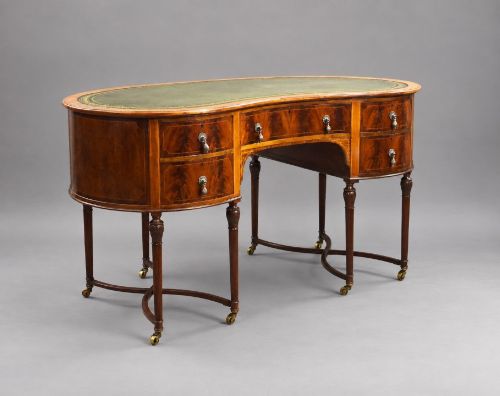
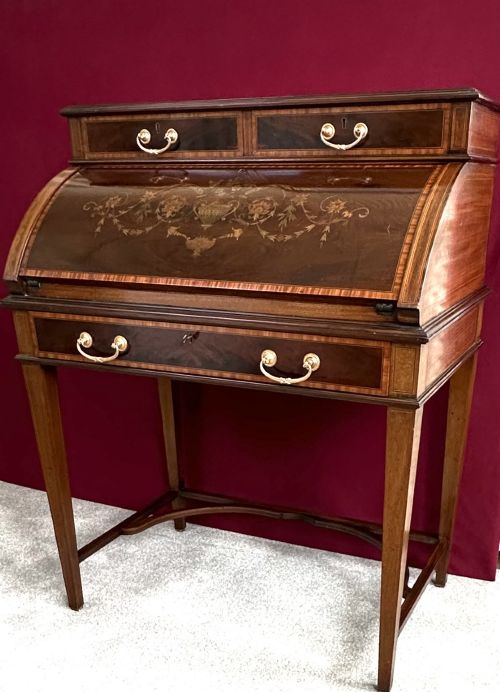
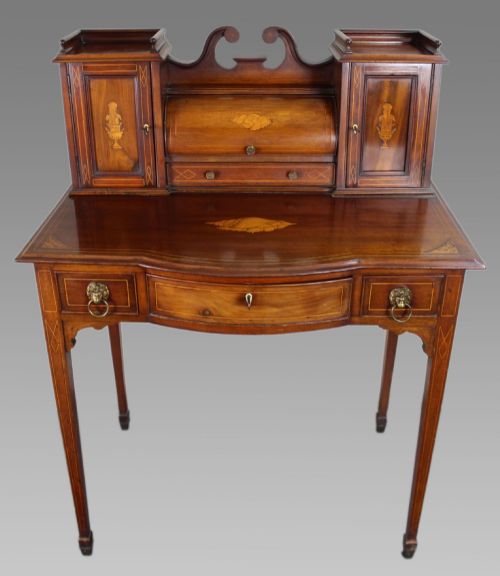
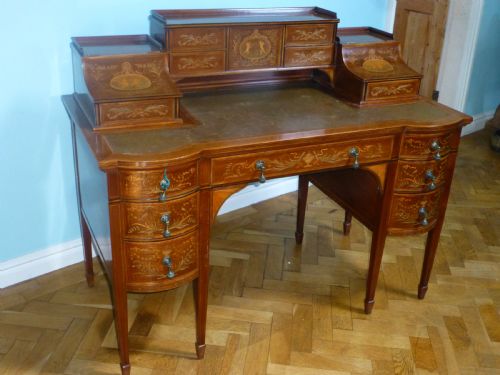
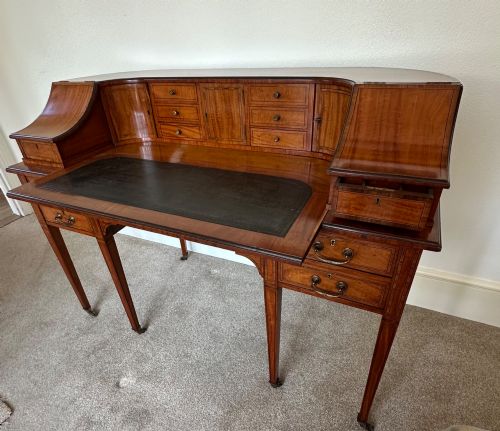
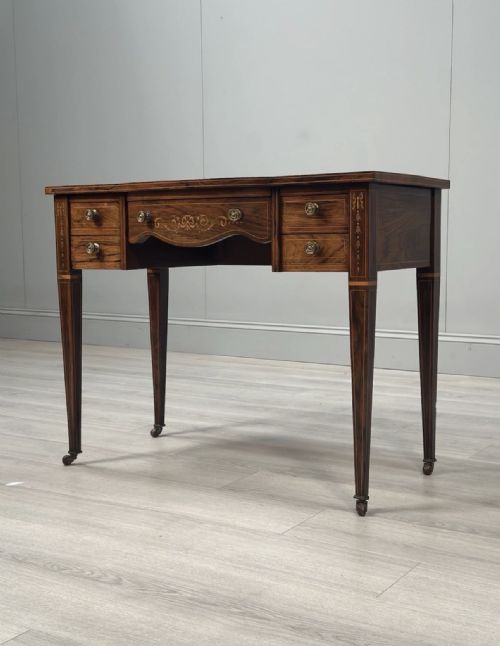
Cabinet makers utilised solid and veneered timbers including mahogany, rosewood, and satinwood, often applying marquetry patterns and shell inlays to the exterior surfaces. Brass handles and leather writing inserts complete the functional composition of the desk interiors.
Glazed upper sections appear on bookcase variants, joining fitted internal pigeon holes and small drawers secured behind the fall front flap.
Retail Price Guide 2026
Typical UK retail prices for edwardian inlaid bureau, calculated from the Sellingantiques database of over a million retail prices indexed since 2003. This retail price guide relies exclusively on Sellingantiques data; no external sources or auction records are used, so the figures do not describe the wider market.
Hidden interior compartments often reward a thorough search with secret miniature drawers.
Distinguishing quality
Quality rests upon the crispness of the marquetry and the choice of timber figure, where finer examples display complex grain patterns and detailed floral or shell inlays. The integration of the fitted interior and the precision of the drawer dovetailing separate standard production from exhibition pieces.
The Edwardian Inlaid Bureau Glossary
- Fall front
- A hinged writing flap that pulls down to create a horizontal desk surface. This panel conceals internal compartments when closed.
- Marquetry
- Decorative patterns formed by fitting together thin veneers of different coloured woods. It creates detailed pictorial or geometric designs on the bureau exterior.
- Satinwood
- A pale, lustrous timber utilised for fine cabinet work and decorative banding. Its golden sheen provides strong visual contrast against darker mahogany.
- Cylinder bookcase
- A writing cabinet featuring a rolling curved shutter instead of a flat fall front. This mechanism opens to reveal the writing surface and inner drawers.
Frequently Asked Questions
What is an edwardian inlaid bureau?
An edwardian inlaid bureau is a compact writing desk featuring a sloping fall front panel that opens to reveal internal pigeon holes and small drawers.
These pieces typically stand on four legs or a chest base, decorated with contrasting wood inlays and marquetry details.
How do I use a fall front bureau?
You lower the hinged writing flap to a horizontal position, supported by internal wooden arms, to provide a flat writing surface.
Inside, you will find small compartments for stationery and letters that remain hidden when the bureau is closed.
Are bureau bookcases practical for modern rooms?
Bureau bookcases combine a lower writing desk with upper display shelving behind glass doors, offering dual storage and workspace functions.
Their upright proportions allow them to fit into home offices or living areas without occupying excessive floor space.
How do I identify a Sheraton Revival bureau?
Sheraton Revival pieces replicate late eighteenth-century classical designs using Edwardian manufacturing methods, often featuring satinwood and delicate floral marquetry.
They display lighter proportions and refined classical motifs compared to heavy Victorian furniture.