
Cylinder Front Bureau
These cylinder front bureau pieces offer concealed writing surfaces and refined storage, bringing timeless utility and cabinet-making skill to any room.

What the cylinder front bureau is
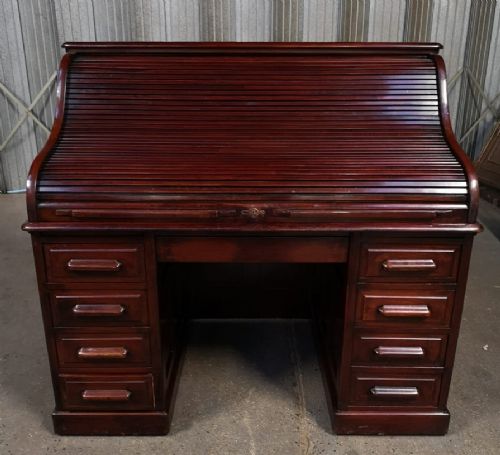
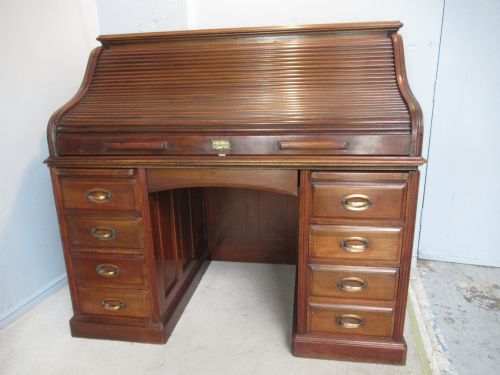
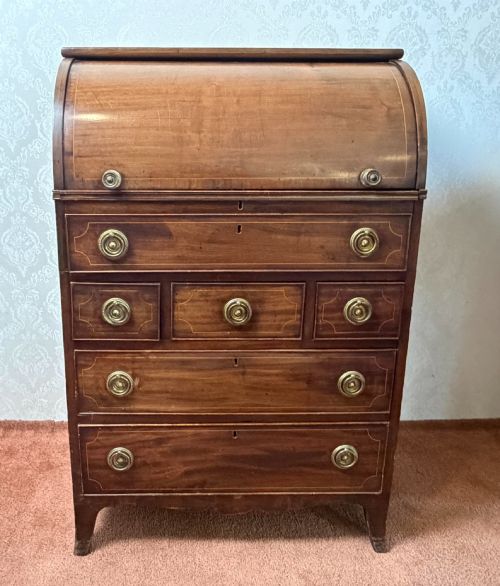
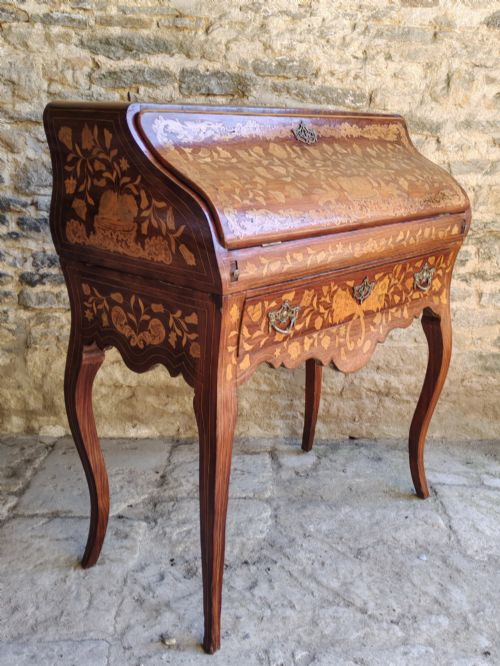
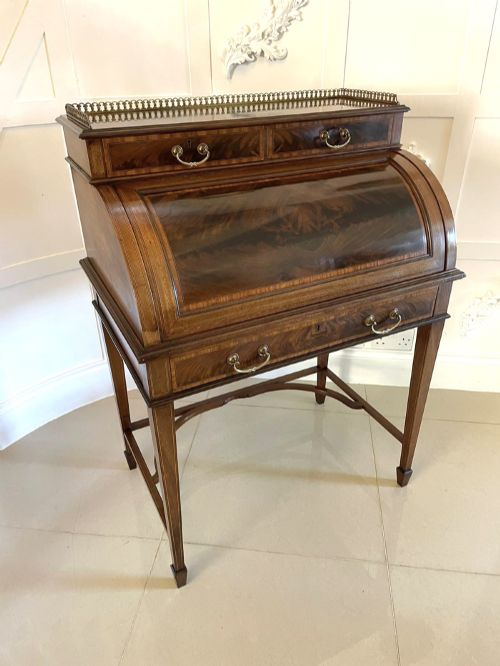
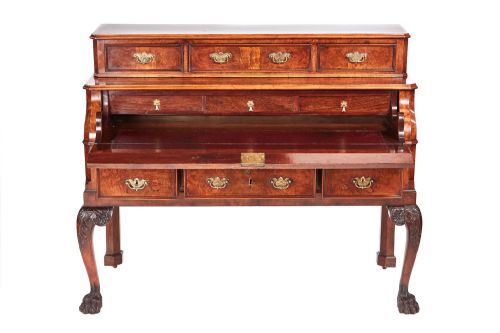
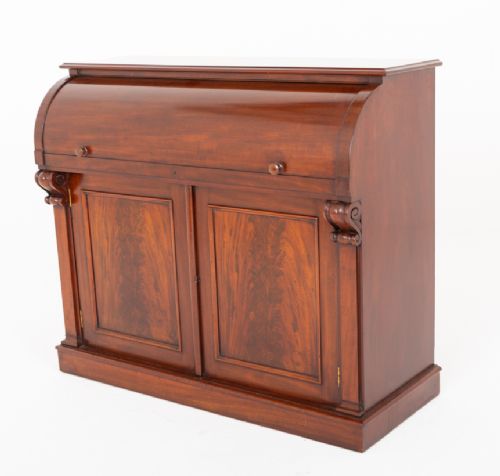
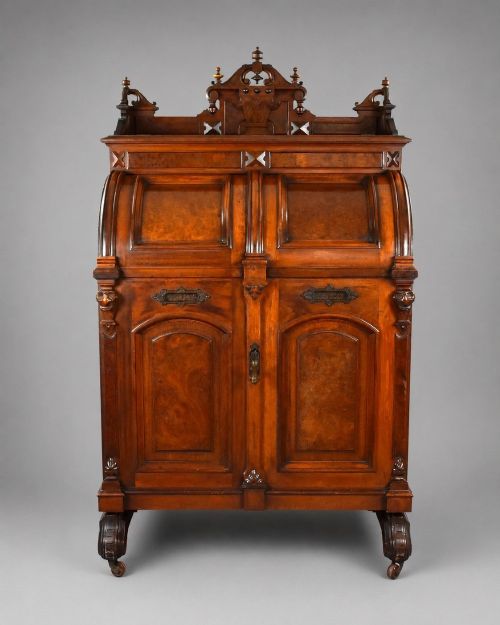
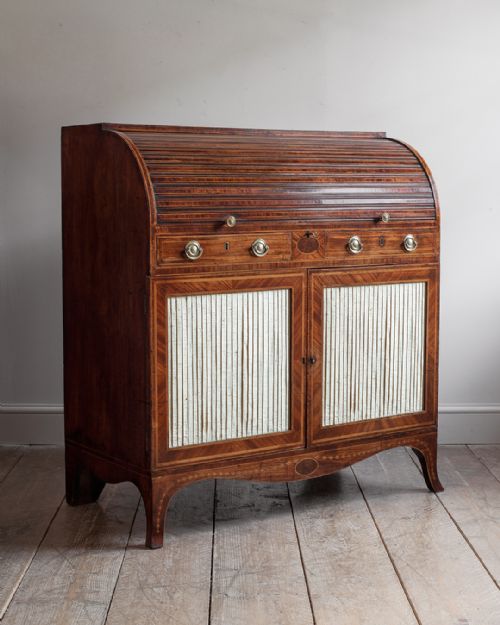
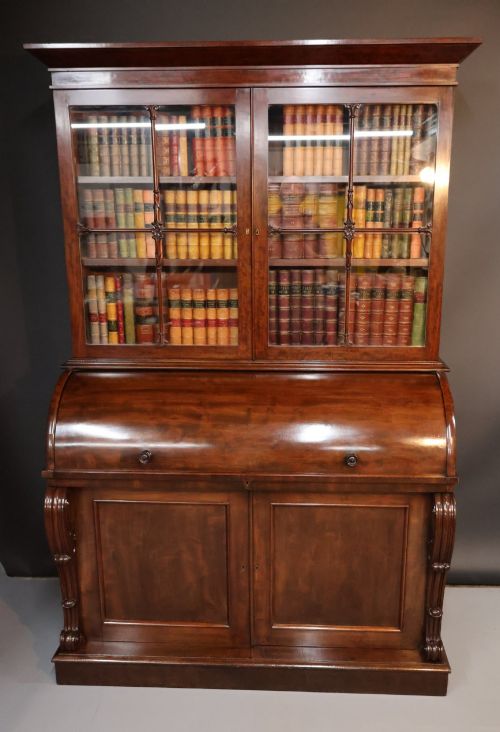
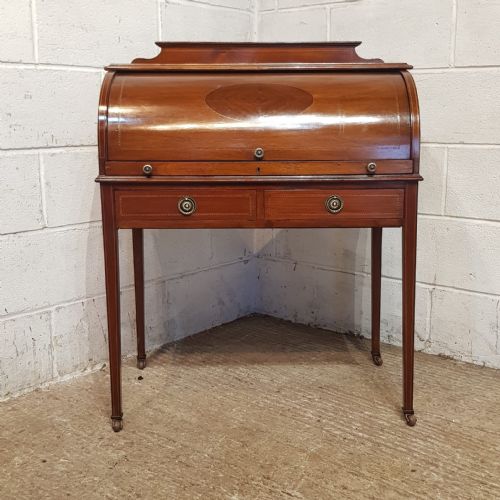
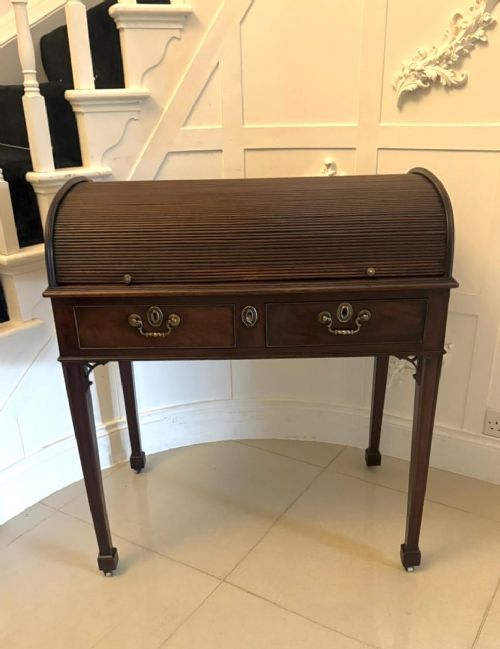
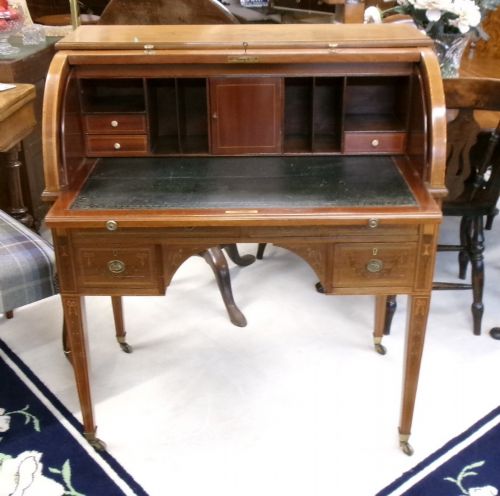
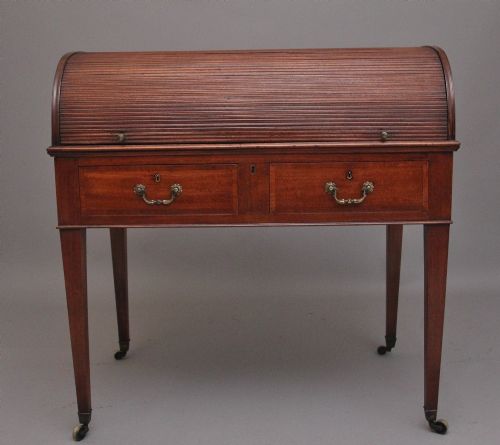
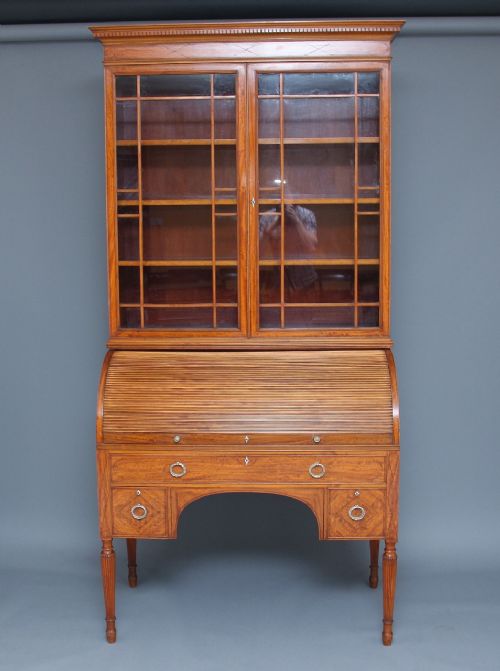
A cylinder front bureau combines a roll or curved cylinder front concealing a fitted writing surface with lower drawers or an upper bookcase section. When you search for a cylinder front bureau, you encounter freestanding desks and tall bookcase combinations designed for private correspondence and storage.
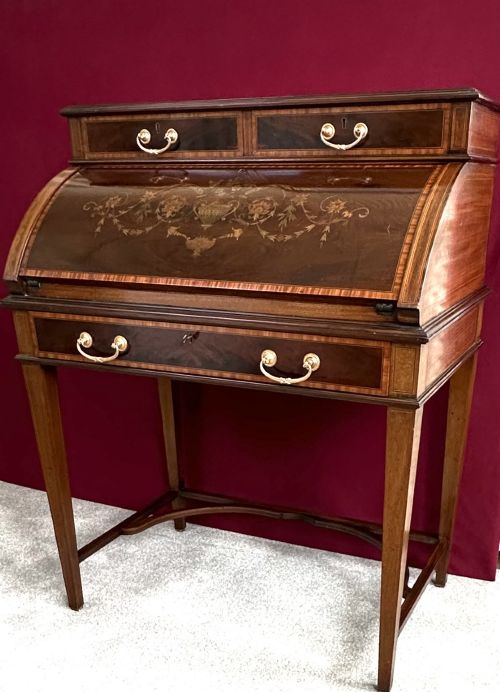
The examples on this page span the George III, William IV, Victorian, Edwardian, and Biedermeier periods, reflecting shifting tastes from neoclassical restraint to heavier nineteenth-century forms and Sheraton Revival elegance.
Most pieces you meet here are executed in mahogany, occasionally paired with satinwood stringing or flame mahogany veneer, highlighting the rich figuring favoured by period cabinet-makers.
How they were made
Cabinet-makers constructed these desks primarily from solid mahogany and flame mahogany veneers, applying contrasting satinwood inlays to accentuate the linear geometry of the carcase. The curved cylinder shutter itself requires precise timber selection and joinery to travel smoothly within its rebated tracks.
Internal fittings often incorporate miniature drawers, pigeonholes, and pull-out leather-lined writing slides that reveal themselves as the main cylinder rolls back. Metal hardware such as brass handles and escutcheons completes the construction, alongside glazed doors on the bookcase variants.
Retail Price Guide 2026
Typical UK retail prices for cylinder front bureau, calculated from the Sellingantiques database of over a million retail prices indexed since 2003. This retail price guide relies exclusively on Sellingantiques data; no external sources or auction records are used, so the figures do not describe the wider market.
Current listings span the eighteenth to the early twentieth century, featuring mahogany, satinwood, brass, and glass across various desk and bookcase formats.
What varies in quality
Quality rests in the choice of timber figuring, particularly where flame mahogany veneers are matched across the curved cylinder front and drawer faces. Finer examples display meticulous inlay work and substantial secondary timbers within the internal drawers.
The engineering of the rolling mechanism dictates everyday utility; a superior piece operates with balanced, smooth action that retracts the writing slide simultaneously. Maker attribution, such as work bearing the stamp of Maple and Co, elevates the standing of an individual desk.
Maple and Co London
The Cylinder Front Bureau Glossary
- Cylinder desk
- A writing desk featuring a quarter-circle or half-cylinder wooden shutter that rolls back to reveal a fitted interior and writing surface. This form conceals papers while maintaining a tidy exterior.
- Flame mahogany veneer
- A thin slice of mahogany timber cut from the fork of the tree where branches meet the trunk, producing a distinctive flickering wave pattern. Cabinet-makers used this to create decorative symmetry on prominent surfaces.
- Bureau bookcase
- A dual-purpose furniture form combining a lower writing desk with an upper glazed shelving cabinet for books. These taller pieces maximise vertical storage.
- Satinwood
- A pale, hard exotic timber from tropical trees used extensively for contrasting stringing and banding in eighteenth and nineteenth-century furniture. It provides a bright golden accent against darker mahogany.
- Biedermeier
- A Central European style spanning the nineteenth century characterised by utilitarian comfort, clean lines, and minimal ornamentation. Biedermeier pieces showcase the natural grain of the wood over complex carving.
Frequently Asked Questions
What is a cylinder front bureau?
A cylinder front bureau is a writing desk with a curved wooden shutter that rolls back to expose a fitted interior and pull-out writing surface. They often include lower drawers or upper bookcase sections.
These pieces served as private secretary desks in period homes, keeping correspondence and ledgers secure and out of sight.
How do I date a cylinder desk?
Dating relies on timber selection, secondary woods, construction methods, and stylistic markers such as neoclassical satinwood inlays or heavier Victorian proportions. Comparing the hardware and internal drawer dovetails also helps establish the era.
Reference points range from George III craftsmanship through to Edwardian interpretations.
Where were they used?
These desks were typically positioned in libraries, studies, or private withdrawing rooms where gentlemen and gentlewomen managed estate accounts and correspondence.
Their enclosed design allowed owners to leave writing materials undisturbed while keeping the room orderly.
How do I care for mahogany?
Maintain mahogany furniture by keeping it away from direct sunlight and sudden temperature shifts that can cause timber to split or veneer to lift. Dust gently with a soft cloth and apply appropriate wax sparingly.
Avoid placing damp items directly onto the polished writing surfaces.