


Antique Partners Desks
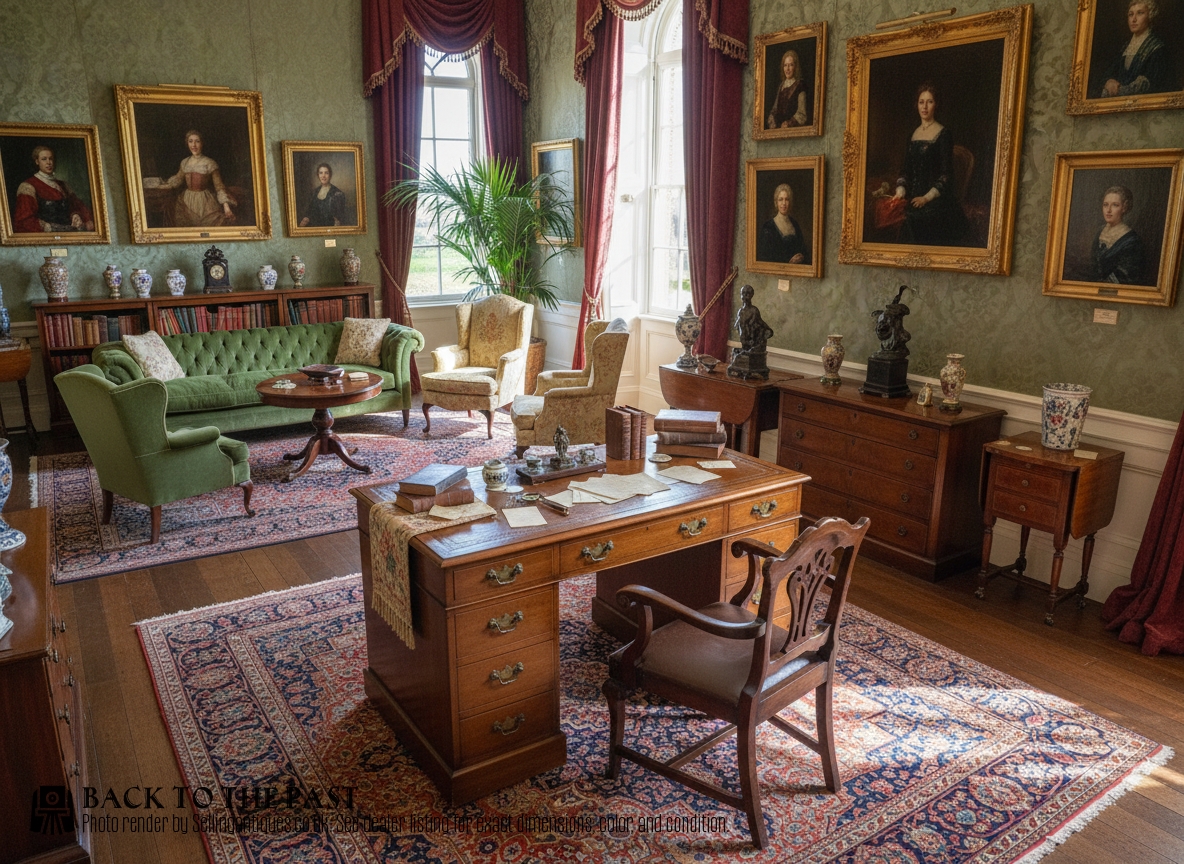
A partners desk is a large writing desk finished on both sides, built so two people can sit facing each other across one piece of furniture.
What They Are
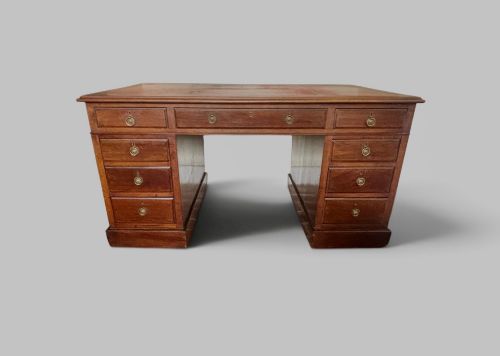
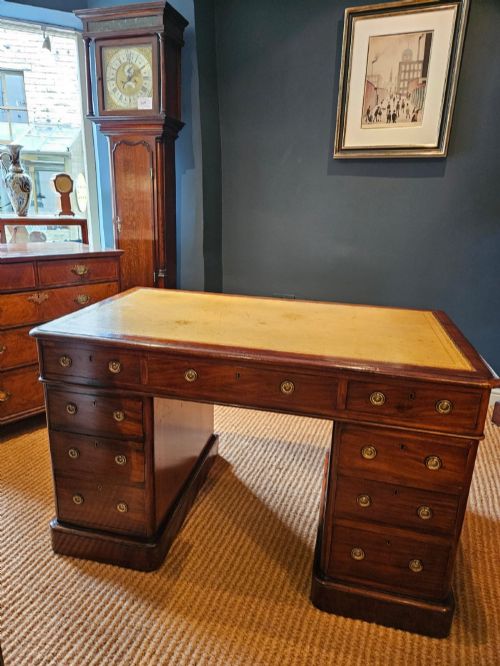
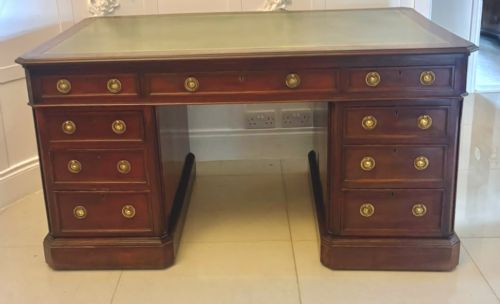
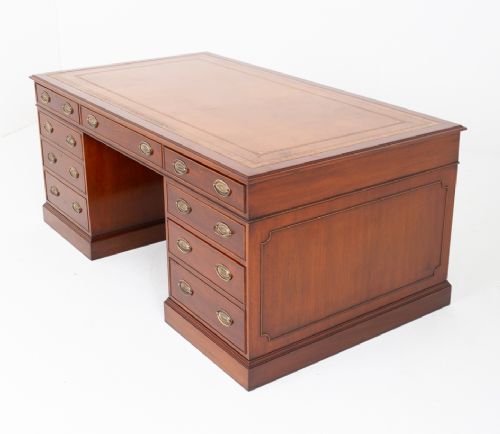
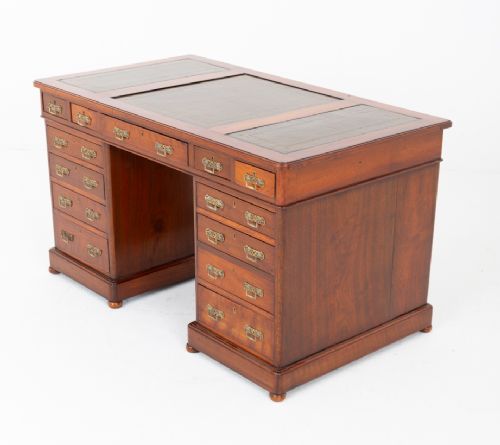
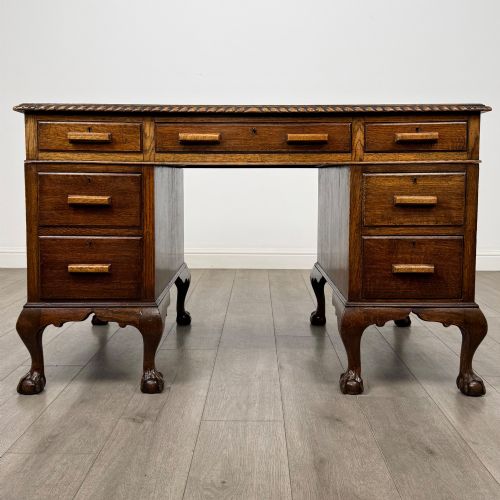
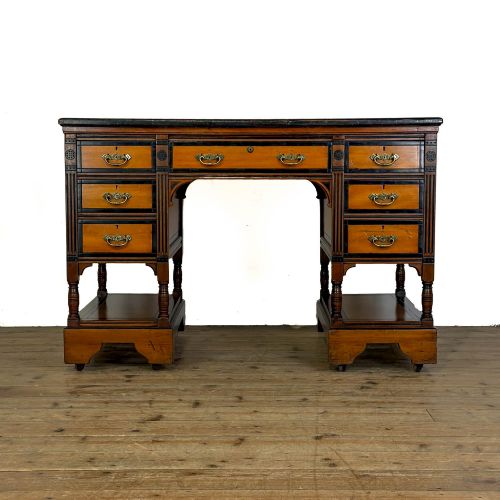
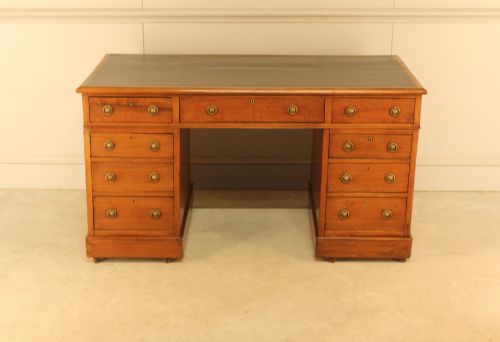
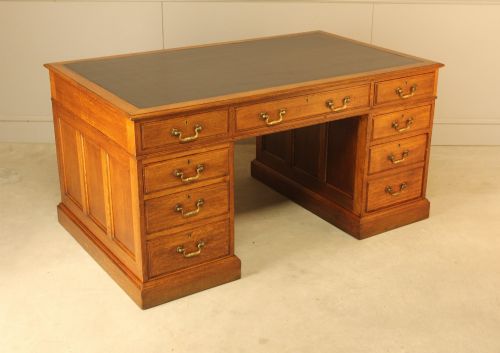
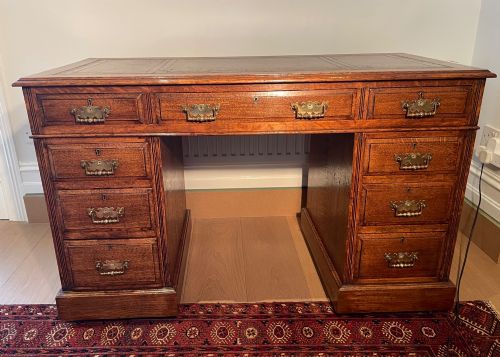
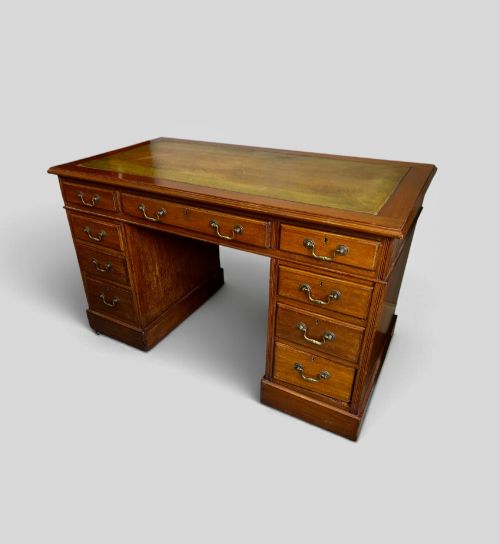
The form is a top over two drawer pedestals, with drawers on both faces, or drawer fronts on the reverse that don't open. It came out of 18th-century Britain as a library and office desk, and by the 19th century it was what you used where two clerks, or a master and secretary, worked face to face. Many are sold in three parts, top plus two pedestals, so they can be moved.
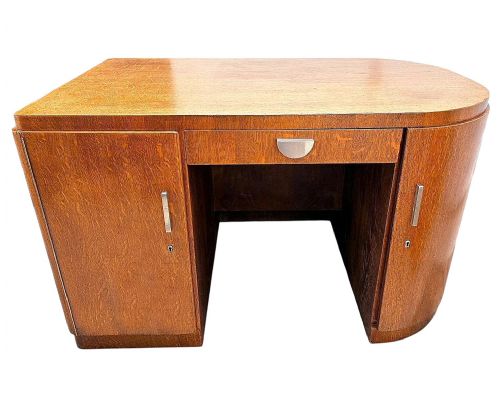
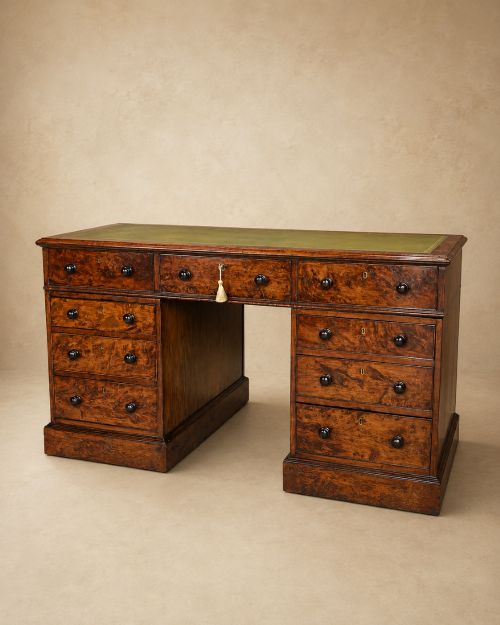
One timber dominates. Mahogany runs through more than half the titles on Sellingantiques, and Victorian through a good third. Put those together and the desk you're most likely to meet is a Victorian mahogany twin-pedestal with an inset leather writing surface. Oak is the clear second, taking in golden oak, limed and bleached oak, pollard and burr oak, with the odd pitch pine country-house piece. Walnut follows, often burr walnut, and stretches from Victorian into Art Deco and Queen Anne revival shapes.
Dating is broad rather than precise. Victorian is the largest label and a century-wide '19th Century' the second, so a good part of the dated field is a bracket, not a year. Decade labels bunch from the 1850s to the 1900s, with the 1920s and Edwardian carrying the early 20th century, and Georgian a smaller group. The field as a whole runs 1700 to 1950.
Two things sit at the edges. Georgian and Regency desks, George III, George IV and William IV, are a small minority and tend toward the high end. Continental and colonial pieces are scarcer still: French bureau plat and Empire desks, Swedish Biedermeier-style satin birch, Anglo-Indian carved hardwood, Italian, American and a single Chinese example. Single-sided pedestal and kneehole desks are catalogued in the category too, and they're a substantial part of it.

What Sets Them Apart
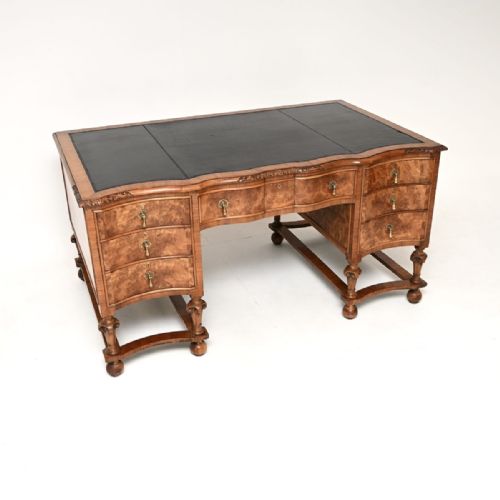
Timber and figure do most of the work. At the top sit burr walnut, flame and plum pudding mahogany, figured walnut, pollard oak, birdseye maple, satinwood and rosewood. At the bottom, plain oak and pine. Since mahogany and oak account for the bulk of the category between them, figure is what separates one mahogany desk from the next.
Then scale. 'Large' appears in a good number of titles, and drawer counts get advertised: four and six drawers at the modest end, then nine, twelve, thirteen, a run of eighteen-drawer desks and one oak example with twenty-two. Stated sizes cluster around 5ft and 6ft by 4ft, the biggest sampled at 7ft by 52 inches. Small proportions and 'mini' partners desks recur often enough to count as a sub-type of their own.
Shape and decoration lift the rest. Serpentine, bow-front, kidney, oval and one hour-glass top turn up rarely and cluster in the upper half of the range, against the plain rectangle that is the norm. Ormolu mounts, marquetry, parquetry, boullework and tortoiseshell, japanning, inlay and carving all push a desk upward, and so does a stamp, a maker's label or a named-house provenance.
Retail Price Guide 2026
Typical UK retail prices for partners desks, calculated from the Sellingantiques database of over a million retail prices indexed since 2003. This retail price guide relies exclusively on Sellingantiques data; no external sources or auction records are used, so the figures do not describe the wider market.
The most expensive partners desk ever sold on Sellingantiques was an 18th century mahogany freestanding example, in November 2021.

Maple & Co·Edwards & Roberts·Thomas Myers of Gillows
The Antique Partners Desks Glossary
- Pedestal
- One of the two drawer banks holding up the top. The word turns up in a large share of titles, which tells you how central the construction is to the form.
- Kneehole
- The open recess between the pedestals where the sitter's legs go. Used in a few dozen titles, often on single-sided desks catalogued alongside true partners desks.
- Leather top
- The inset writing surface, frequently tooled or gilt-tooled at the border. A recurring phrase in titles across the category.
- Faux or dummy drawers
- Drawer fronts on the reverse face that don't open, there so the back reads the same as the front.
- Three part
- Top and two pedestals that come apart for moving, a recurring phrase in descriptions and the reason these desks travel at all.
- Bureau plat
- The French flat writing table form, used for a handful of Continental desks in the category.
- Breakfront
- A front whose centre section steps forward, or back for an inverted breakfront.
Frequently Asked Questions
What wood are partners desks usually made from?
Mahogany, in more than half the titles on Sellingantiques. Oak is second and walnut third.
After that comes a long tail of one-off timbers: rosewood, satinwood, satin birch, sycamore, ash, padouk, kingwood, thuya, birdseye maple, pollard and burr oak, pitch pine and plain pine.
Are both sides of the desk fitted with drawers?
Usually the desk is finished on both faces, which is the point of the form. Some carry working drawers front and back.
Others have dummy drawer fronts on the reverse, matching the front visually without opening. Listings tend to say which.
How big do these desks get?
Stated sizes cluster around 5ft and 6ft by 4ft. The largest in the sample was 7ft by 52 inches.
At the other end, 'small proportions' and 'mini' partners desks come up often enough to be a recognised sub-type, though 'large' is the far commoner word in titles.
Can a partners desk be taken apart?
Many are sold in three parts: the top lifts off and the two pedestals separate. It's a recurring phrase in descriptions.
That construction is how a desk of this scale gets through a doorway or up a stair.
Do partners desks come with a maker's name?
Rarely. Only three names clear three dealers in the archive, so the overwhelming majority reach the market unattributed.
Where a name does appear it comes from a stamp or a paper label, and some pieces are catalogued only as attributed.
Which periods do these desks come from?
The dated field runs 1700 to 1950, and fewer than half the listings carry a clean year. Victorian and a century-wide '19th Century' are the two biggest labels.
Decades bunch from the 1850s to the 1900s, with the 1920s and Edwardian covering the early 20th century. Georgian and Regency pieces are a smaller group, and the 18th-century entries sampled were all mahogany.