




Antique Pine Desks
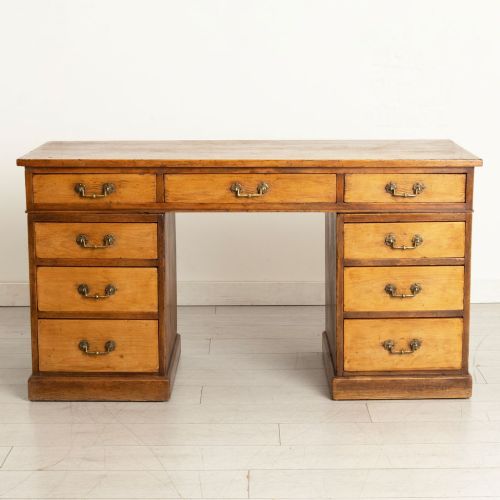
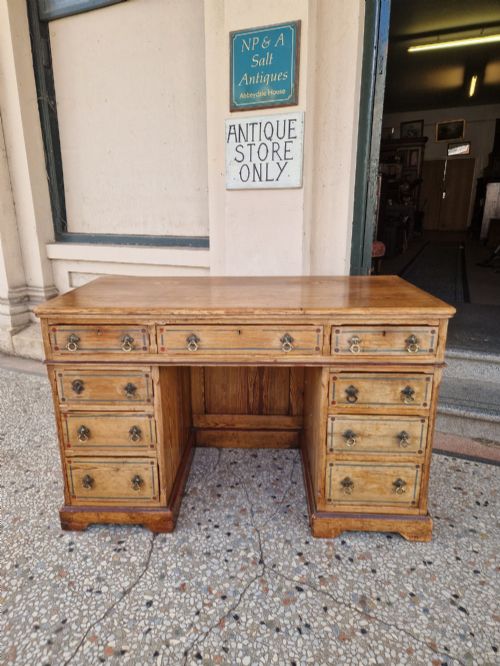
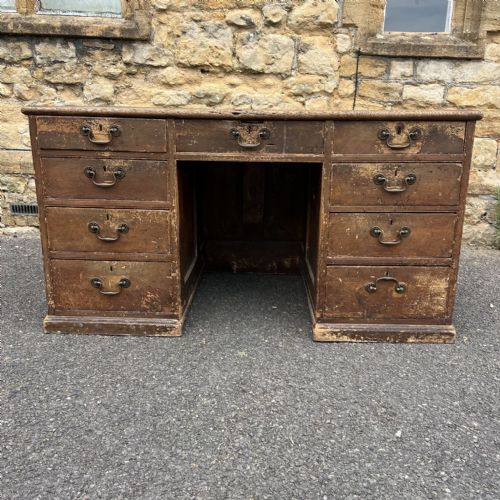
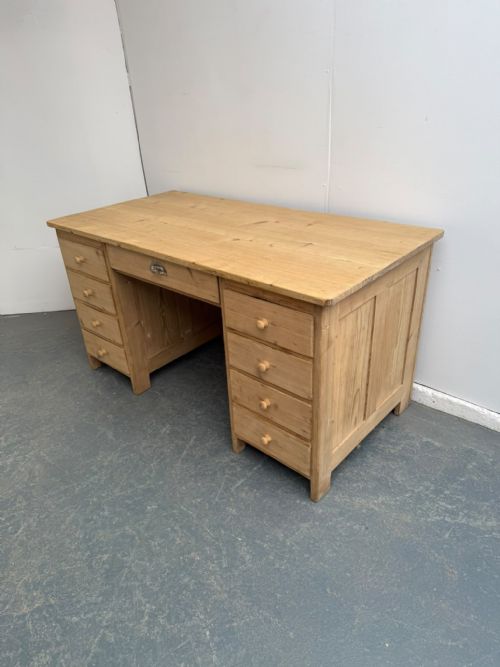
Working writing furniture in pine, built for offices, schoolrooms and estate rooms rather than drawing rooms, and most often a Victorian pedestal desk with a bank of drawers each side.
Antique Pine Desks
Pine was the working timber of British furniture: cheap, plentiful and usually painted or grained rather than left bare. Desks in it were made for schools, counting houses, estate offices and servants' quarters. Pitch pine, dense and resinous, came into heavy use for institutional and church furniture from the middle of the 19th century.
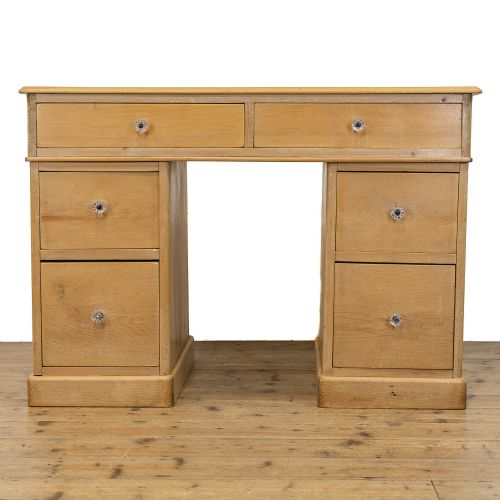
The pedestal or kneehole desk dominates. 'Pedestal' appears in 31 of 113 titles and 'kneehole' in 16, often on the same object, so a Victorian pitch pine pedestal desk with a flat working top is the single most likely thing you'll meet. Surfaces run from plain wax to stripped, stained or painted.
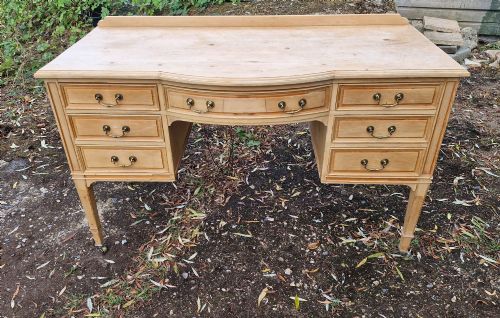
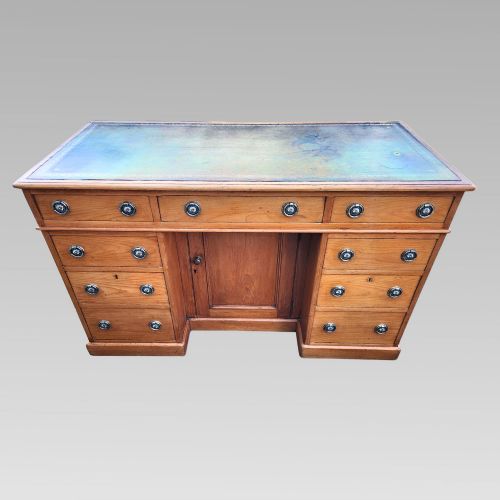
Around them sit smaller runs: writing tables and side writing desks, some with a leather insert; painted and grained desks; school, teachers' and children's desks; and clerks', standing and institutional pieces. That last group throws up one-offs, among them a railway signalman's desk, a concierge desk and a schoolmaster's lectern.
Dating on Sellingantiques runs 1800 to 1950. Victorian is the largest single label and '19th Century' is nearly as common, which places more than half the archive somewhere in the 1800s without a year. The 1920s, 1900s and Edwardian entries are real but thinner, and Regency work is scarce.
Where The Range Splits
Surface separates the top from the bottom more than anything else. Painted and grained desks are the exception rather than the rule, and they sit high: original paint, rosewood-effect graining, chinoiserie decoration. Plain examples are often described as ready to paint or wax, and they sit at the other end.
Form and scale do the rest. Partners' desks, finished both sides, and twin-pedestal pieces sit in the upper half, while small kneehole writing tables and school desks hold the bottom. Size counts too, with 'large' in 11 titles and nine-drawer examples among them.
Pitch pine is the timber dealers name most, and it runs right across the range including the Gothic and partners' desks. Documented origin lifts a piece as well: a three-part pedestal desk said to come from York Minster, another from Holkham Hall. Gothic Revival and inlaid detailing cluster near the top.
Antique Pine Desks Retail Price Guide 2026
Typical UK retail prices for pine desks, calculated from the Sellingantiques database of over a million retail prices indexed since 2003. This retail price guide relies exclusively on Sellingantiques data; no external sources or auction records are used, so the figures do not describe the wider market.
Pitch pine is the timber named most often in pine desk titles on Sellingantiques, and Victorian pitch pine is the commonest pairing.
The Antique Pine Desks Glossary
- Pedestal desk
- A desk whose top rests on two banks of drawers or cupboards, one each side. The commonest form in this category.
- Kneehole
- The open recess between the pedestals, where the sitter's legs go. Some listings use it as the name of the whole desk.
- Pitch pine
- A dense, resinous, strongly figured pine, used heavily for institutional and church furniture.
- Three-part
- A pedestal desk that separates into top and two pedestals for moving. Sometimes written three piece.
- Partners' desk
- Finished on both sides so two people can work facing each other.
- Graining
- Paint applied to imitate a costlier timber. The archive holds a rosewood-effect example.
Antique Pine Desks: Frequently Asked Questions
What sort of pine desk turns up most often?
The pedestal or kneehole desk. 'Pedestal' appears in 31 of 113 titles and 'kneehole' in 16, frequently combined as 'kneehole pedestal writing desk'.
Add the timber and the period and the picture narrows further: 'Victorian' is in 37 titles and 'pitch' in 26, with 'Victorian pitch' alone in ten.
How old are these desks?
Dealers' own dating spans 1800 to 1950, with 36 listings carrying a clean year and the rest given as a period label.
Victorian is the largest single label, and '19th Century' is almost as common, which is a bracket rather than a date. Twentieth-century pieces are thinner on the ground, and the latest in the samples is a 1950 school desk and bench.
Why is pitch pine mentioned so often?
It's the signature timber here, named in a quarter or so of titles. Dense and resinous with strong figure, it was used widely for institutional and ecclesiastical furniture from the mid-19th century.
Pitch pine desks appear across the whole range, including the Gothic Revival and partners' examples.
Are painted pine desks common?
No. 'Painted' appears in about one title in ten, which makes decorated surfaces the exception.
When they do appear they sit toward the top of the range: original paint, rosewood-effect graining, chinoiserie decoration on pine.
Do any pine desks come with a known history?
A few. Two samples carry country-house or cathedral provenance, a three-part pedestal desk said to come from York Minster and another from Holkham Hall.
One-off institutional forms are the other kind of story: a railway signalman's desk, a concierge desk, a folding school desk, a school desk with its bench still attached.
Were these desks made in Britain?
Almost all of them. Non-UK origins are the rarity in this category.
Between them, a French twin clerks' desk, a Continental office desk, a Swedish painted writing desk and a French faux bamboo partners' desk make up the whole of it.