
Antique Victorian Desks
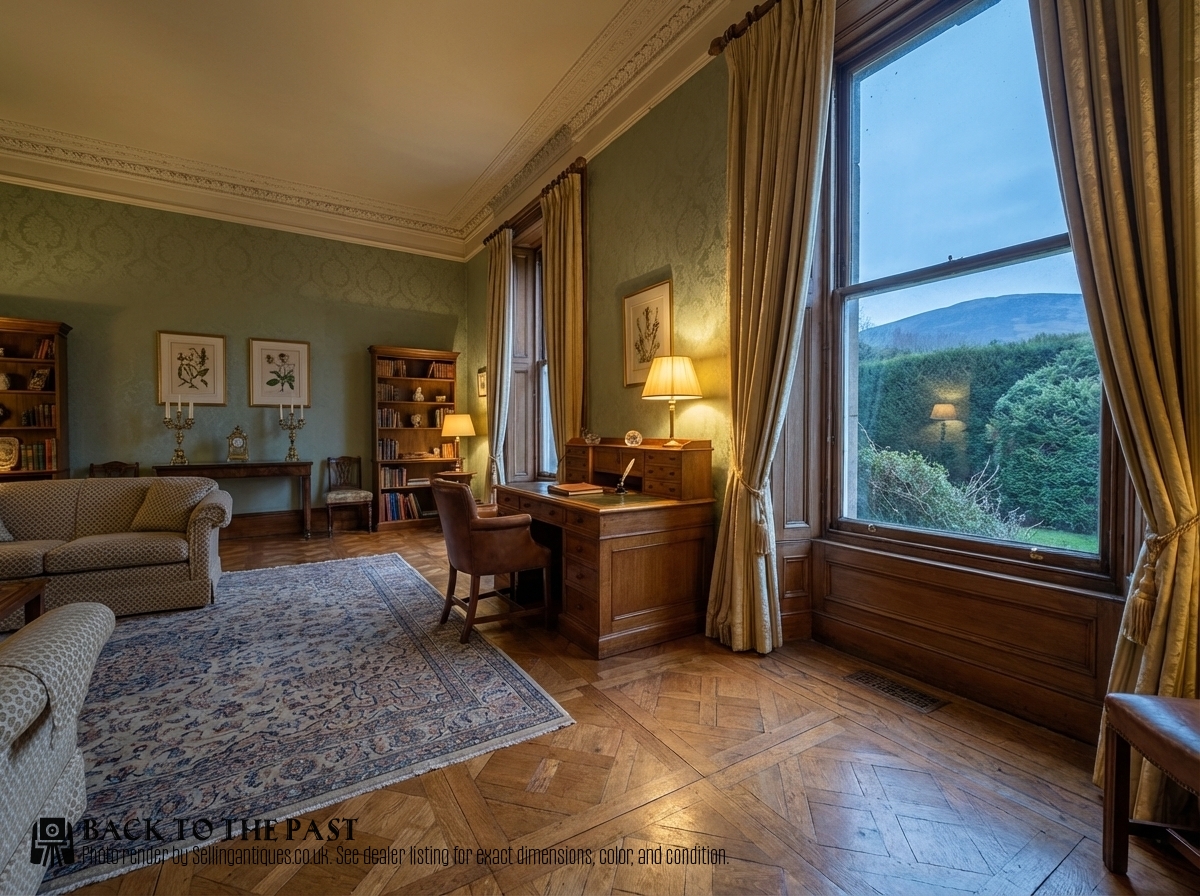
Victorian writing furniture, most often a mahogany pedestal desk with a leather-inset top and a kneehole between two banks of drawers, made for offices, libraries and studies.
Antique Victorian Desks
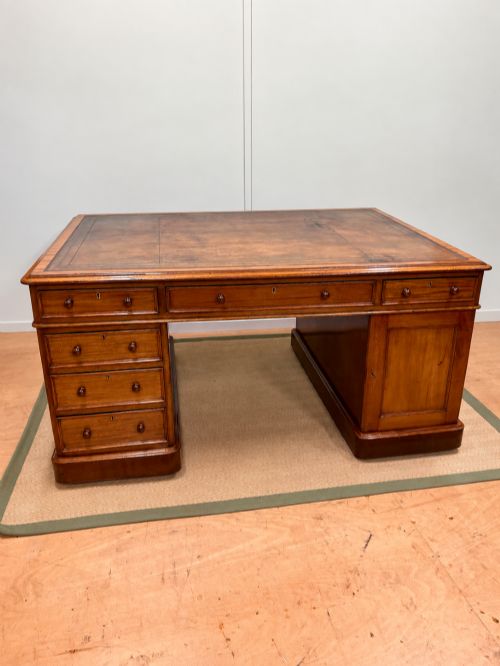
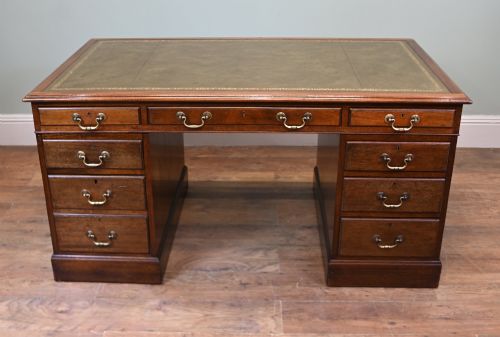
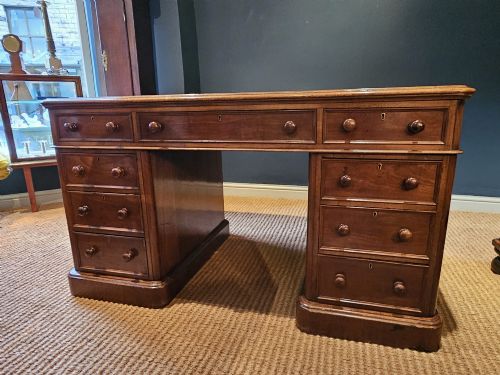
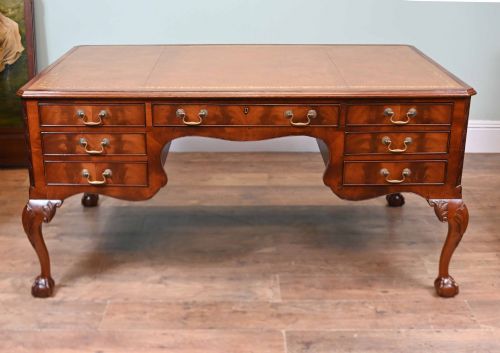
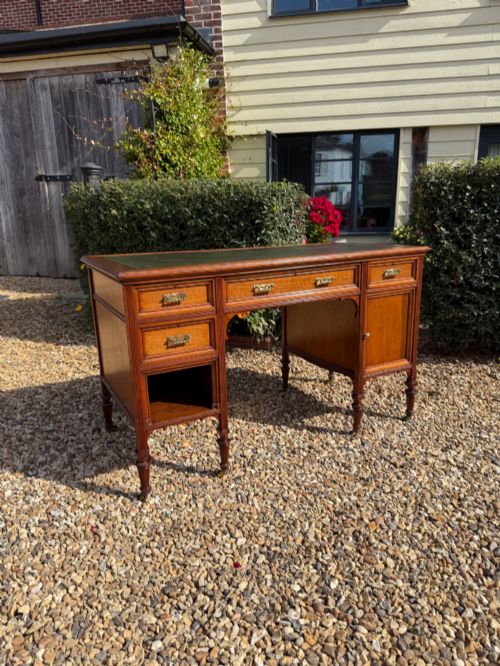
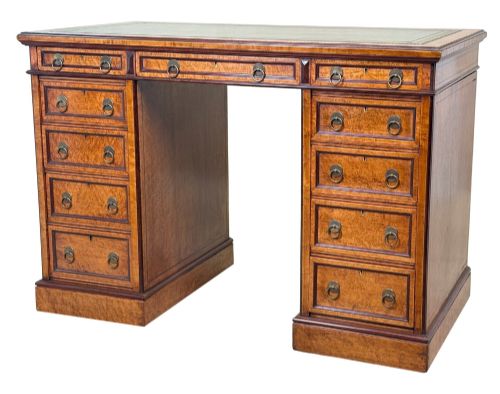
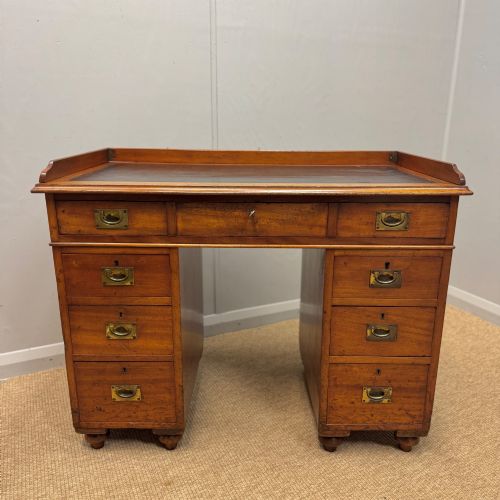
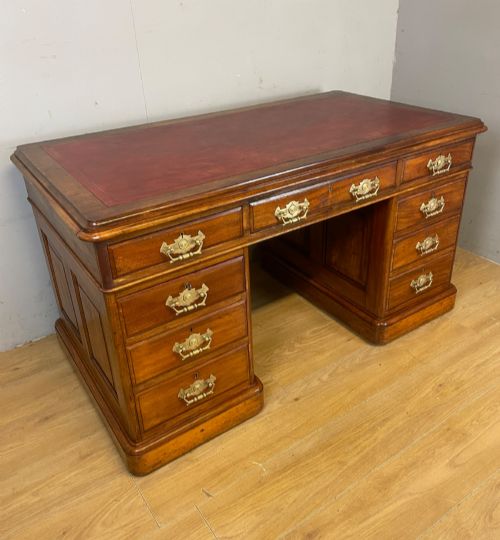
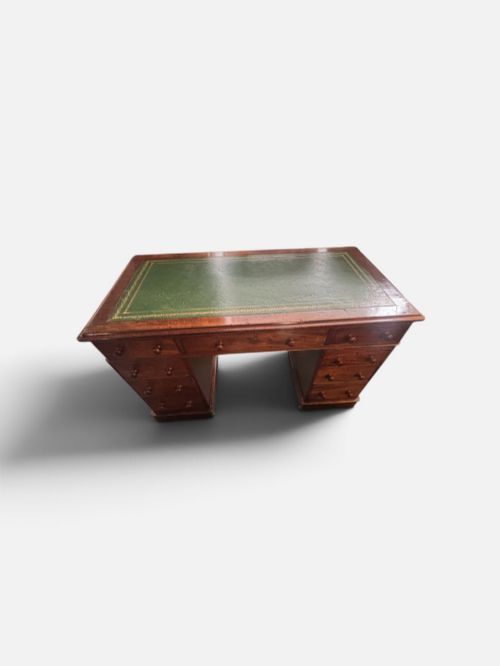
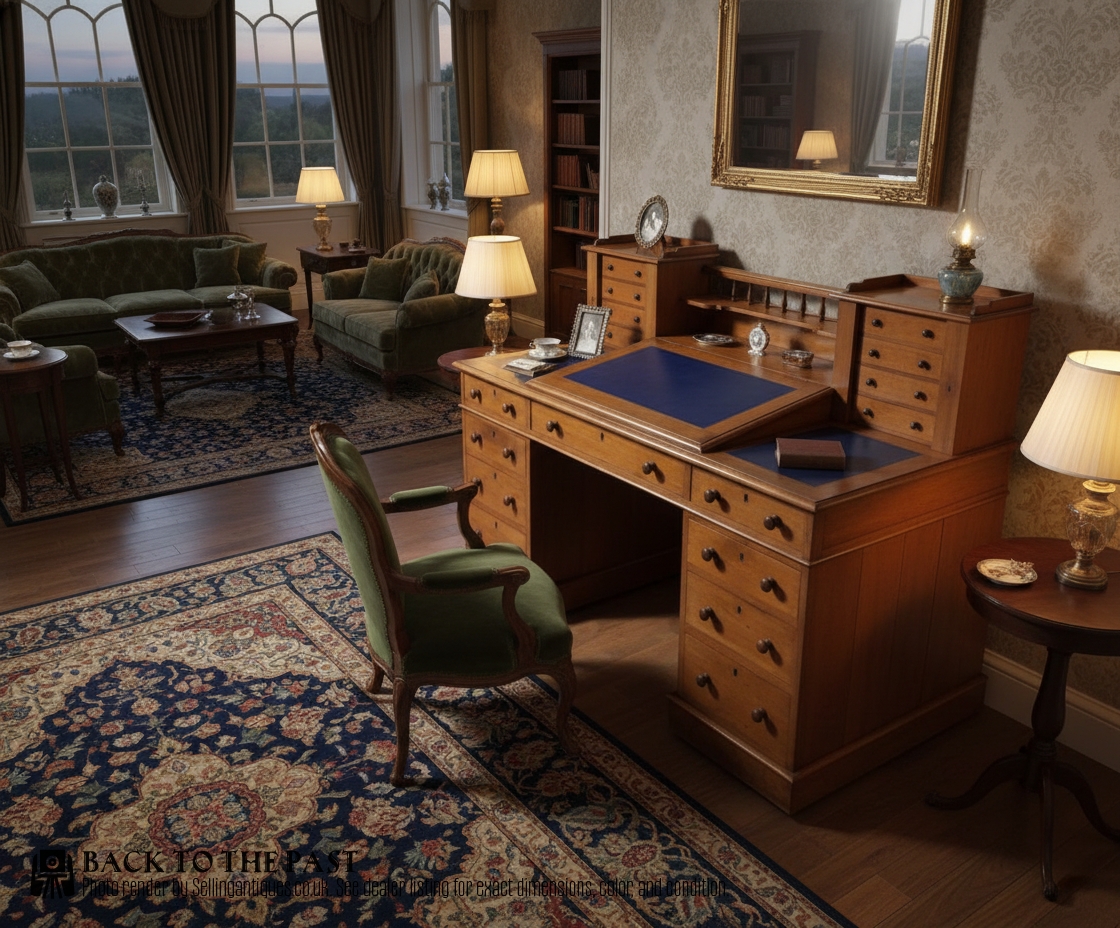
The pedestal desk dominates. Around two fifths of titles on Sellingantiques carry the word, and the single most common description is plain enough: Victorian mahogany pedestal desk. A writing top, a leather inset, a kneehole, drawers to either side. Mahogany leads the timbers, with walnut and oak behind it.
Partners desks are the next thing you'll meet. Finished and fitted on both sides so two people could work facing one another, they run through the listings in numbers, often at 5ft or 6ft wide. Twin-pedestal and three-part constructions turn up alongside them, and 'kneehole' does double duty as both a feature and a name for the smaller form.
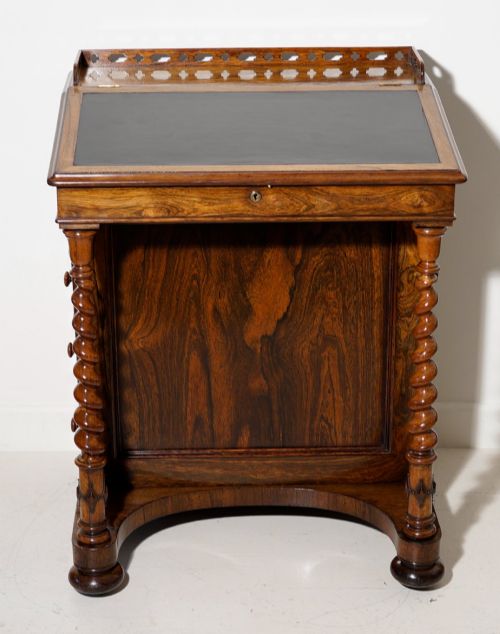
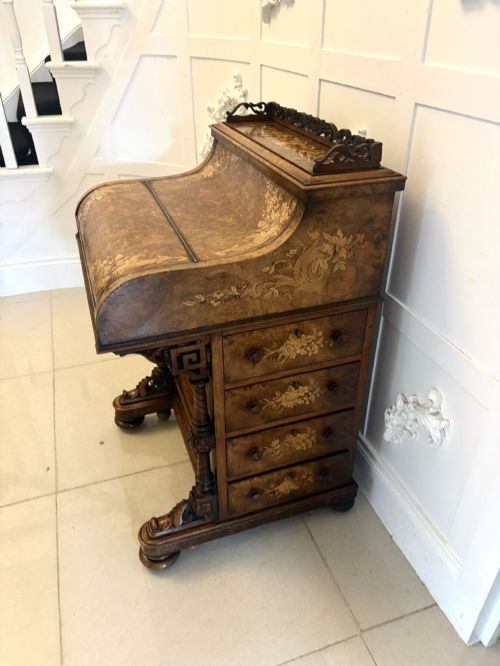
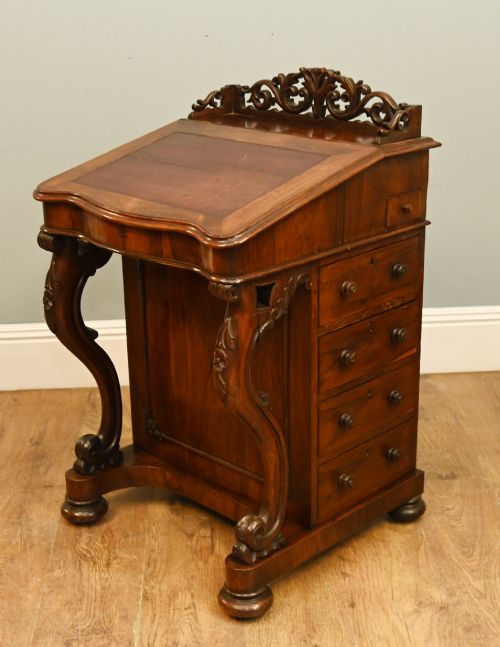
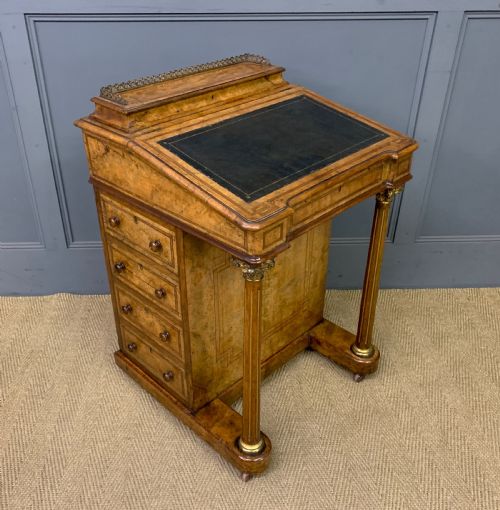
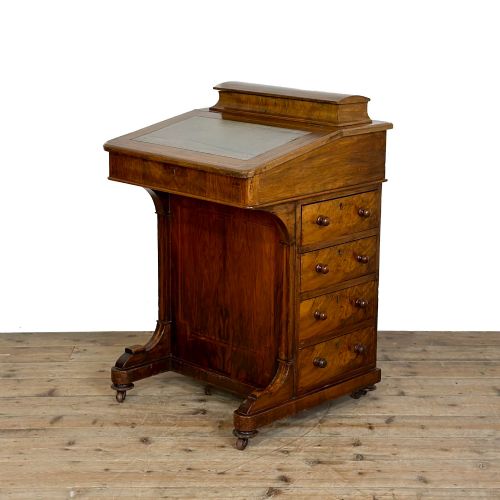
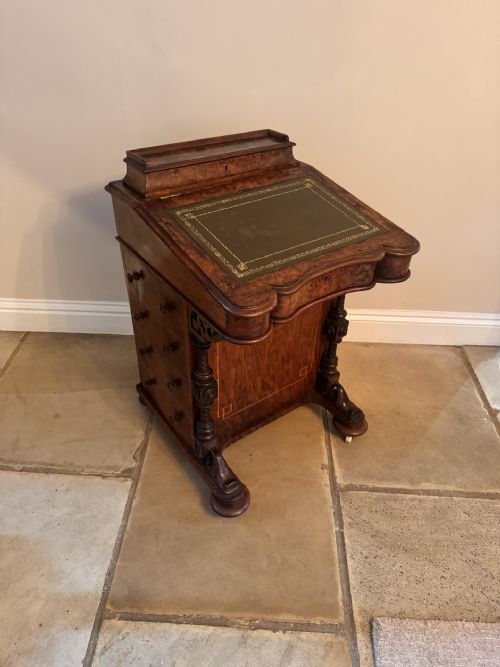
About one in six pieces is a davenport, the compact sloping-lid writing cabinet with drawers down one side. It appeared around 1800 and settled into the Victorian drawing room, walnut more than anything else, with pop-up stationery compartments, piano tops and slide tops all named in titles. Beyond that sit writing and library tables, cylinder and roll-top desks, and a scattering of kidney, Carlton House and ladies' writing desks.
Dating is loose by habit. Most listings simply say Victorian or 19th century rather than a year; where a decade is given the 1860s is busiest, with the 1880s close behind. The full span recorded runs 1800 to 1930, so a few pieces sit either side of the reign, some labelled Regency, William IV or Edwardian.
Where The Money Sits
Timber does much of the work. Burr walnut is named in hundreds of titles and sits high in the range, and the upper band brings in satinwood, rosewood, coromandel, thuya, amboyna and kingwood. Plain oak and pine gather at the other end, where the kneehole and pedestal desks are simply serviceable office furniture.
After timber, it's construction and decoration. A partners desk, double-sided and usually large, sits above a single-sided one of the same wood. Inlay and carving appear in a good many titles, and the pieces described as marquetry, ormolu-mounted, parcel gilt or set with Wedgwood plaques cluster near the top.
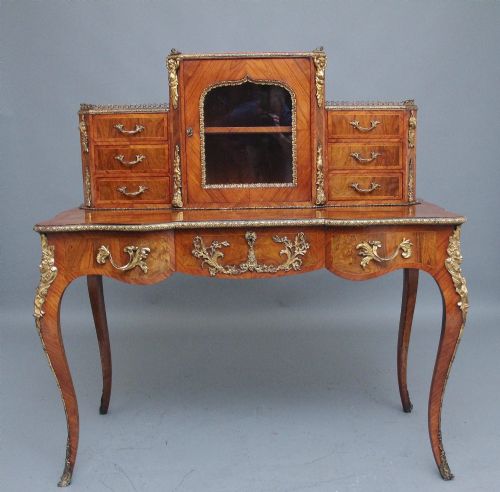
Form counts too. Kidney and Carlton House desks, and davenports with rising compartments, sit above the plain pedestal. A named firm pushes a desk upward as well: the retailers' names in this category appear almost entirely in the upper band, while cheaper pieces are more often described as carrying a maker's stamp with no firm attached.
Antique Victorian Desks Retail Price Guide 2026
Typical UK retail prices for victorian desks, calculated from the Sellingantiques database of over a million retail prices indexed since 2003. This retail price guide relies exclusively on Sellingantiques data; no external sources or auction records are used, so the figures do not describe the wider market.
The largest measured on Sellingantiques run to 5ft and 6ft partners pedestal desks, with one recorded at 178 by 124cm.
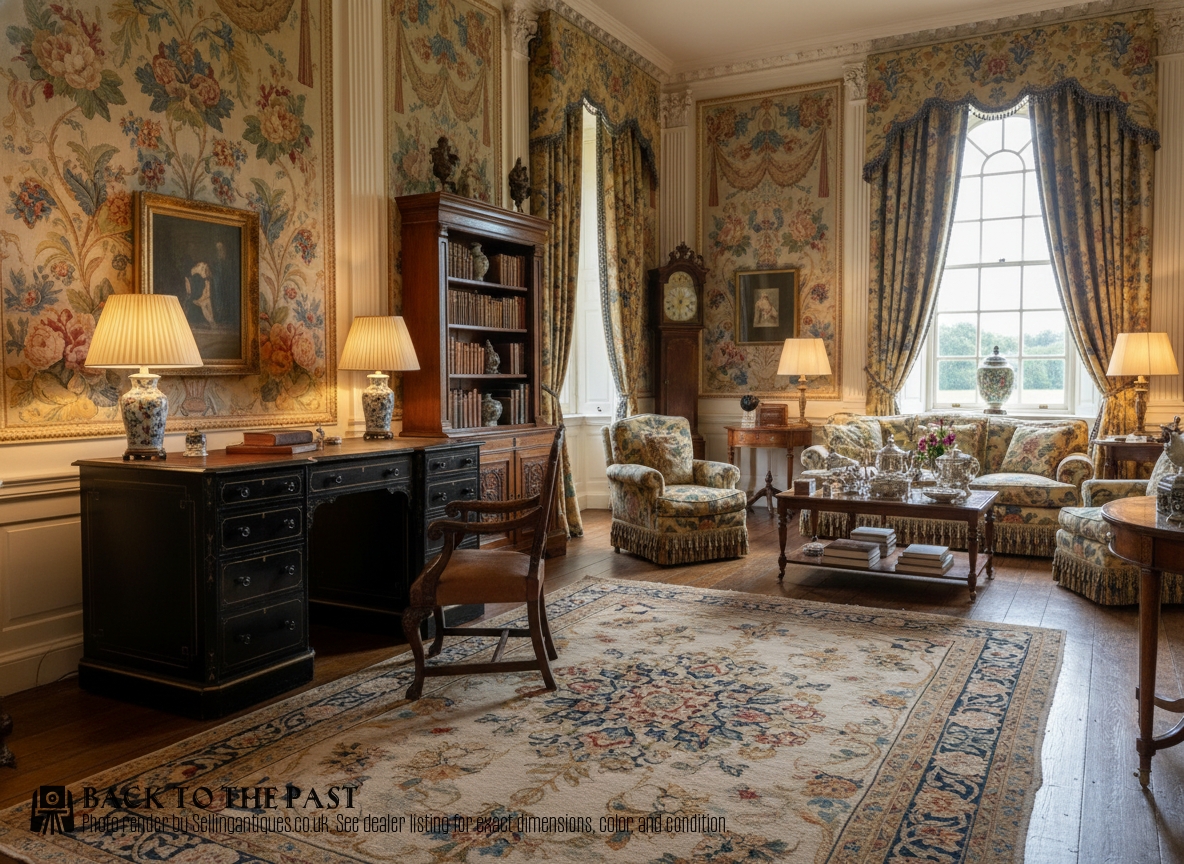
Maple & Co·Edwards & Roberts·Jas Shoolbred·Gillows of Lancaster·Holland & Sons
The Antique Victorian Desks Glossary
- Pedestal desk
- A writing top supported on one or two banks of drawers with a kneehole between. The default form in this category.
- Partners desk
- Finished and fitted on both sides so two people can work facing each other. Often the widest desks in the listings.
- Davenport
- Small writing cabinet with a sloping lid over a bank of side drawers. Walnut is the timber named most often.
- Leather top
- An inset writing surface of leather, frequently tooled and described by colour: red, green or tan.
- Burr walnut
- Veneer cut from a burr growth, giving the swirled figure named in hundreds of titles across the category.
- Cylinder or roll top
- A curved or slatted cover that closes down over the writing surface. Tambour describes the slatted kind.
Antique Victorian Desks: Frequently Asked Questions
What is the most common Victorian desk?
The mahogany pedestal desk, by a wide margin. Roughly two fifths of titles carry the word pedestal, and mahogany appears in more titles than any other timber.
After that come walnut and oak pedestals, then davenports, which account for about one in six pieces listed.
How does a partners desk differ from a pedestal desk?
A partners desk is a pedestal desk finished and fitted on both sides, so two people can sit facing each other and both have drawers.
It shows up in the listings at 5ft and 6ft widths. Double-sided construction sits above single-sided in the range.
A plain pedestal desk is usually finished at the back but has drawers on one side only.
What is a davenport desk?
A compact writing cabinet with a sloping lid over a bank of drawers running down one side. It emerged around 1800 and became a standard drawing-room piece through the Victorian decades.
Listings name several variants: pop-up and piano-top davenports with rising stationery compartments, slide tops, freestanding examples finished on all four sides, and Tunbridge ware inlaid ones.
Which woods were used for Victorian desks?
Mahogany, walnut and oak carry the overwhelming bulk of the category, in that order. Burr walnut is a large group in its own right, and golden oak turns up mostly late in the period.
The archive also throws up ash, pitch pine, satin birch, teak, yew, pollard oak, birdseye maple, satinwood, coromandel, padauk, thuya and amboyna.
Are Victorian desks always dated to a year?
No. Most listings on Sellingantiques simply say Victorian or 19th century rather than giving a year.
Where a decade is stated, the 1860s is the busiest, followed by the 1880s, then the 1890s, 1870s and 1850s. Numbers thin sharply after 1900.
Do unusual forms of desk turn up?
They do, though sparingly. Kidney-shaped desks, Carlton House desks with a raised tier of drawers and pigeonholes, cylinder and roll-top desks, bonheurs du jour and ladies' writing desks all appear.
Odder things surface too: a railway signalman's desk in pine, a Green Man carved oak pedestal desk, a harlequin davenport and a 'Jack in a Box' davenport.