



Antique Cylinder Desks
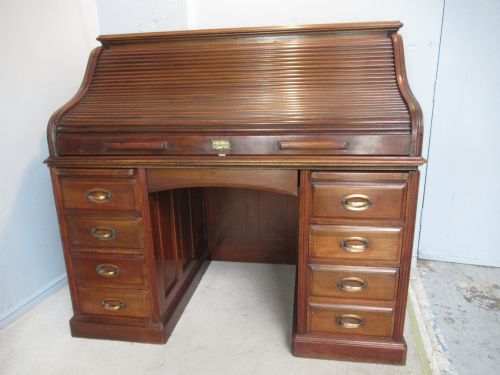
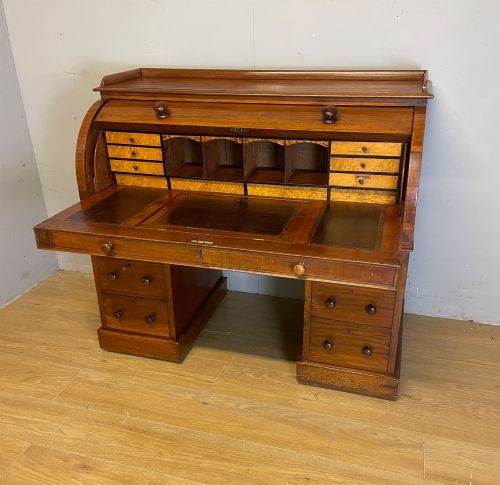
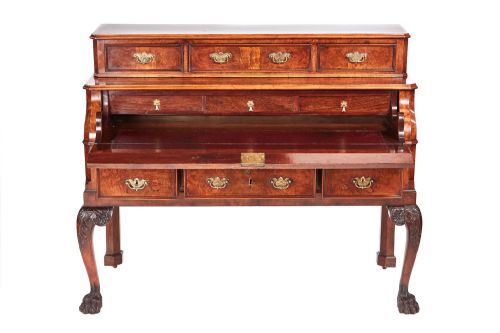
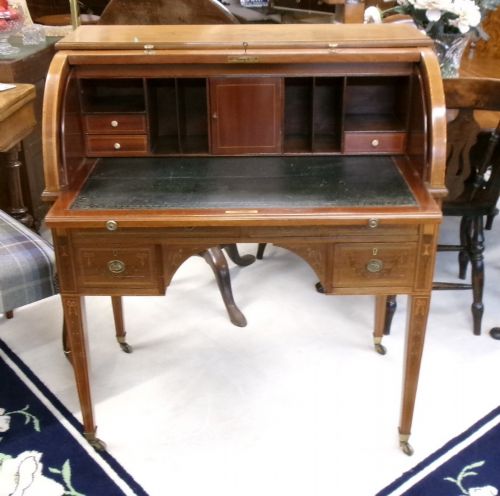
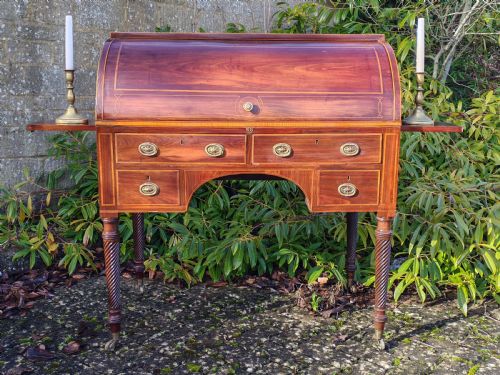
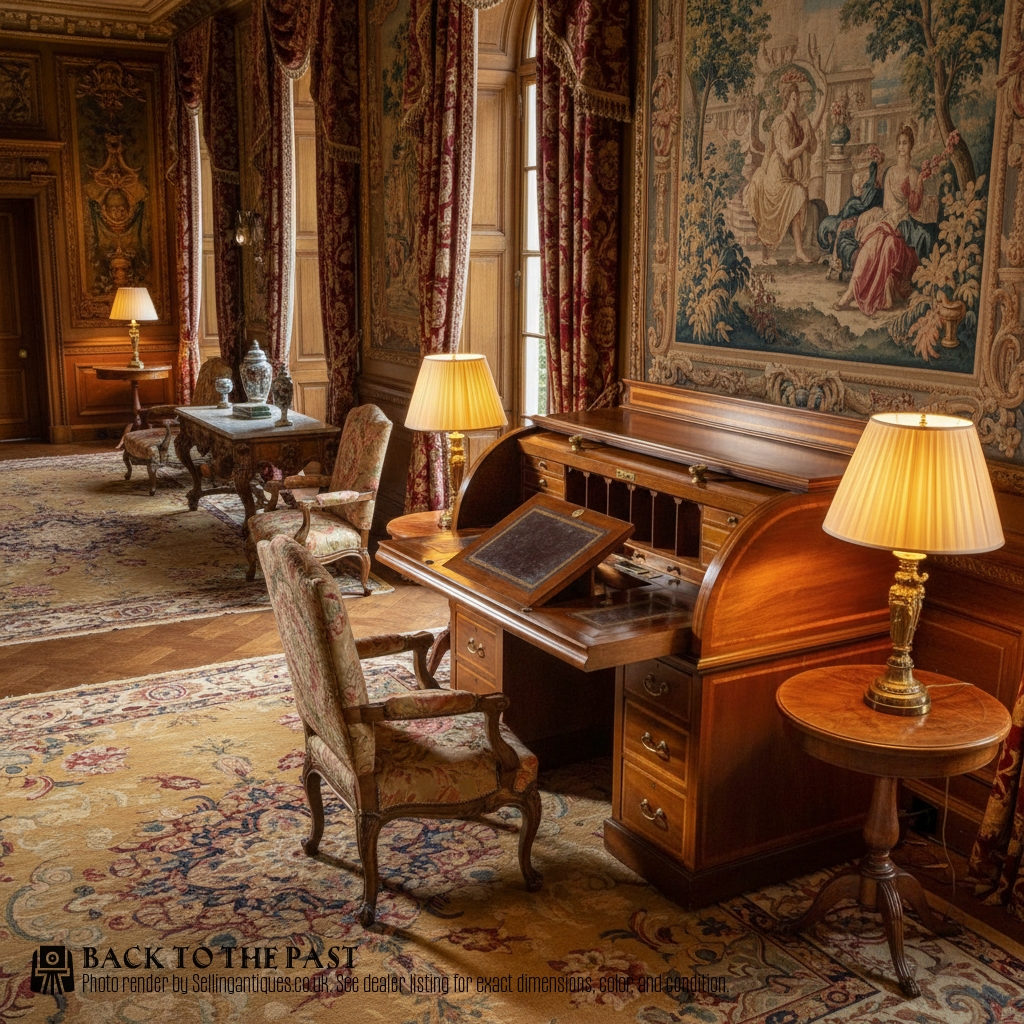
A writing desk closed by a curved front, either a solid quarter-round cylinder or a slatted roll shutter, shutting the drawers, pigeonholes and writing surface away behind it.
What Is A Cylinder Desk?
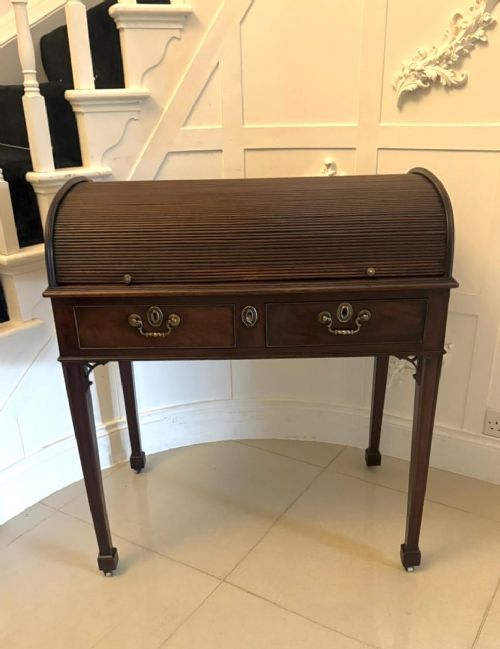
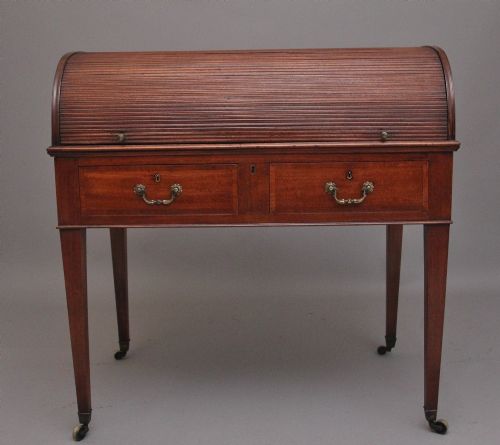
The form came out of the later 18th century: an interior of small drawers and pigeonholes that could be shut in one movement behind a curved front. Two versions of that front exist. One is a solid quarter-cylinder that swings down or back. The other is a tambour, narrow slats glued to canvas, running in grooves.
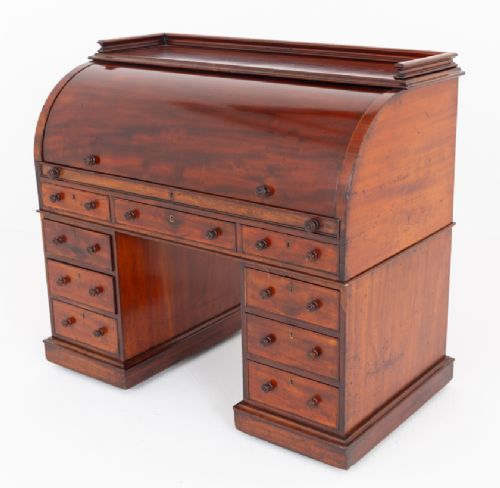
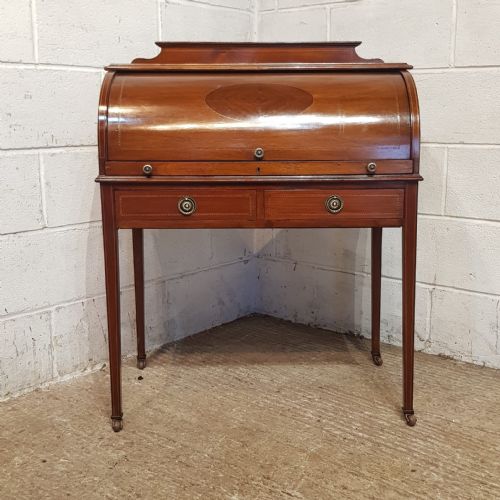
Mahogany is close to a defining term. It appears in 100 of the 180 titles on Sellingantiques, more than half, and the one you are most likely to meet is a Victorian or Edwardian mahogany cylinder-top writing desk, standing either on twin pedestals with a kneehole between them or on drawers below. Inlay is the decoration named most often.
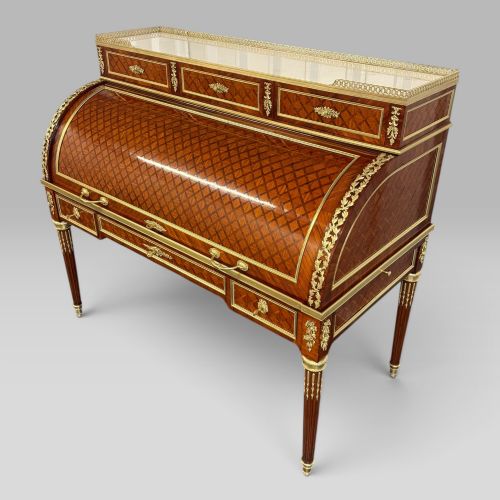
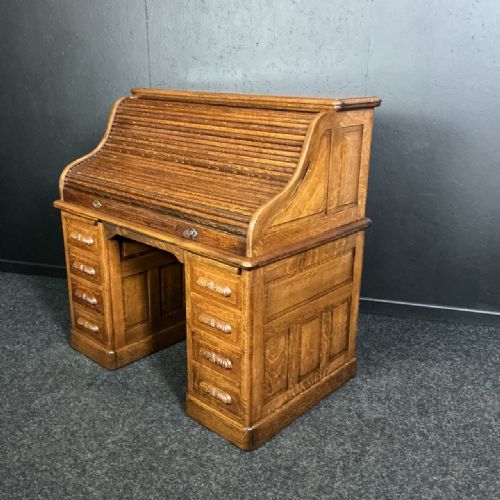
Roll-top and tambour language covers around a fifth of the archive and is rising in current stock. Oak turns up in far fewer titles and leans towards office use, one of them a typewriter roll-top desk. A smaller continental group runs through French Louis XV, Louis Philippe, Louis XVI style parquetry and Empire pieces, with single Dutch marquetry, Swedish and Biedermeier examples.
Dating is often broad. The dated field runs from 1800 to 1920, but only 52 listings carry a clean year; Victorian, 19th Century, Edwardian, Georgian and Regency do the rest of the work, so much of the archive is placed to a reign or a century. Where decades are given they cluster in the 1890s and 1900s.

Where The Range Splits
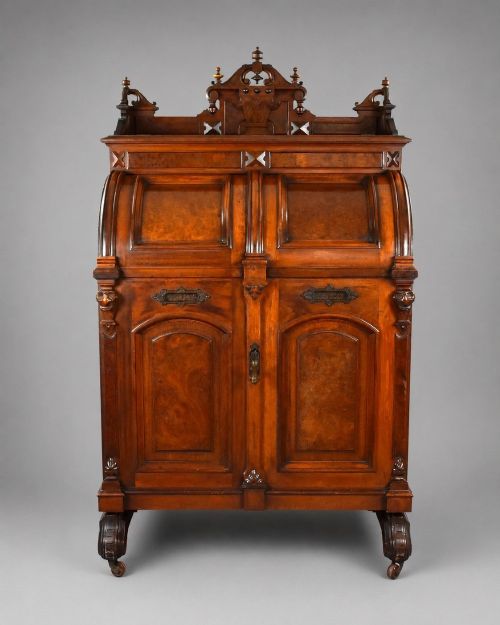
Timber sets the floor and the ceiling. Plain mahogany fills the middle of the category, and the pieces that climb are the ones in burr walnut, burr ash, kingwood, rosewood, satinwood, partridgewood or plum pudding mahogany. Figure does more for a cylinder desk than size does, because the curved front is the first surface anyone looks at.
Decoration follows the same line. Inlay is spread across the whole range, named in 28 titles, so it marks out little on its own. Marquetry, parquetry and gilt bronze mounts behave differently: they show up in the upper part of the sampled range, and the top of the category is held by continental work, French parquetry and ormolu desks and a French Empire flame mahogany one, rather than by British pieces.
Then two practical things. A desk finished on all sides can stand in the middle of a room, and dealers advertise that in the title when it applies. Scale pays at both ends, with huge twin-pedestal three-part desks at one extreme and miniature or small ladies' desks at the other. Names help too, though they are scarce here.
Retail Price Guide 2026
Typical UK retail prices for cylinder desks, calculated from the Sellingantiques database of over a million retail prices indexed since 2003. This retail price guide relies exclusively on Sellingantiques data; no external sources or auction records are used, so the figures do not describe the wider market.
At the large end of the Sellingantiques archive sit twin-pedestal desks in three parts, and one listed simply as 'Huge'. At the small end, miniatures.
Maple & Co
The Antique Cylinder Desks Glossary
- Cylinder
- A solid quarter-round front that swings down or back to close the writing surface. The term that gives the category its name.
- Tambour
- A flexible shutter of narrow slats glued to canvas, running in grooves at either side. Named in eight titles.
- Roll top
- The slatted shutter form, used interchangeably with tambour across these listings, and covering 33 titles.
- Pedestal
- A drawer-filled column supporting the desk top. Twin-pedestal examples run through the category, with the kneehole as the recessed leg space between them.
- Freestanding
- Finished on all sides, so the desk can sit in the middle of a room rather than against a wall.
- Sheraton Revival
- Late Victorian and Edwardian taste for light, inlaid, satinwood-banded forms. Eight titles use the word sheraton, and another eight name satinwood.
Frequently Asked Questions
How many cylinder desks come up each year?
About fifteen reach the market in a year on Sellingantiques, and seventy different dealers have listed one at some point.
That spread means most dealers handle a cylinder desk only occasionally rather than stocking them as a line.
What is the difference between cylinder and roll top?
A cylinder front is a solid quarter-round of timber that swings down or back in one piece. A roll top is a shutter of narrow slats glued to canvas, flexing as it runs in its grooves.
In these titles roll top and tambour are used interchangeably for the slatted version. Roll-top language covers 33 titles, tambour eight.
Which timbers turn up most?
Mahogany, by a distance: 100 of the 180 titles name it, and Victorian mahogany alone accounts for a good number of those.
Oak appears in only fifteen titles and skews towards office pieces, including a typewriter roll-top desk and a Scottish oak example.
Burr walnut, burr ash, kingwood, rosewood, satinwood and partridgewood sit in the upper part of the sampled range.
Are there French cylinder desks?
Yes, and they hold the top of the range. French titles run through Louis XV style, Louis Philippe, Louis XVI style parquetry and Empire flame mahogany.
Single continental pieces widen it further: a Dutch marquetry desk, a Swedish inlaid and marquetry one, and a Biedermeier example.
Do small cylinder desks exist?
They do. The archive includes a miniature mahogany cylinder desk and a 19th century parquetry miniature, alongside desks described as small and neat ladies' pieces.
At the other end sit twin-pedestal three-part desks and one titled simply Huge. Both extremes carry a premium over the middle.
How old are these desks usually?
The dated field spans 1800 to 1920, though only 52 listings carry a clean year. The rest are placed by reign: Victorian, Edwardian, Georgian, Regency, or just 19th Century.
Where decades appear they cluster late, in the 1890s and 1900s. A few sampled titles carry an 18th Century label on Sheraton-period pieces, sitting outside that dated range.