

Antique Burr Walnut Desk
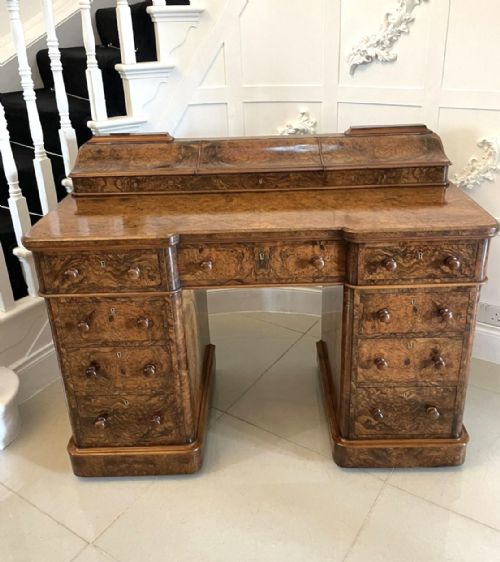
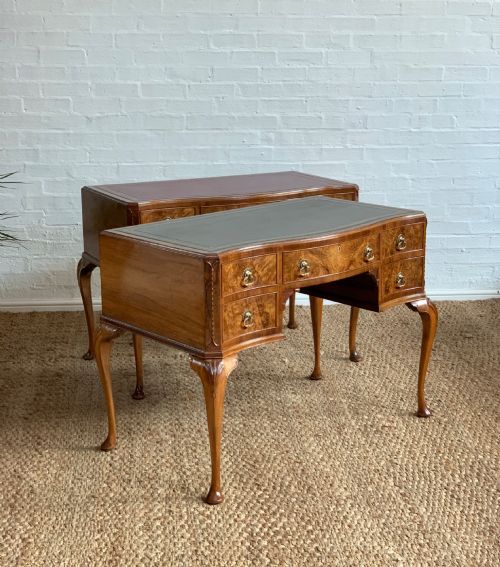
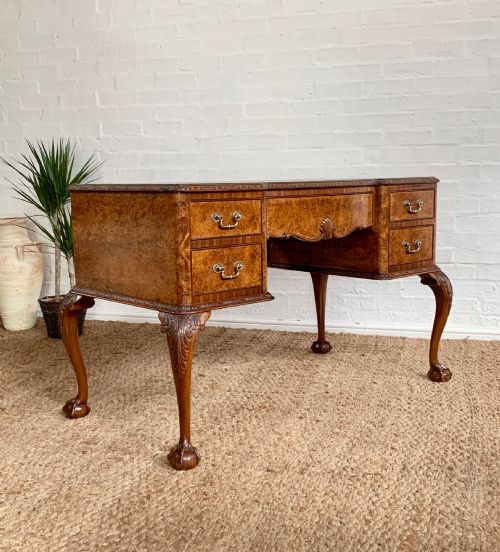
Writing furniture veneered in burr walnut, the swirling figure cut from a burr on the tree, made to give you a surface to write on with drawers for paper, ink and documents.

What You're Looking At
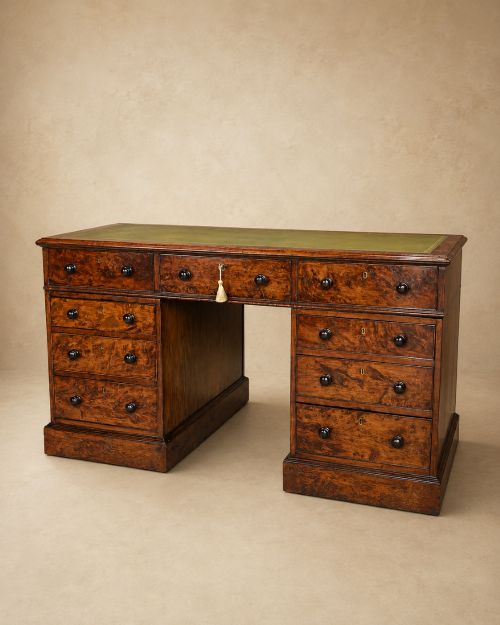
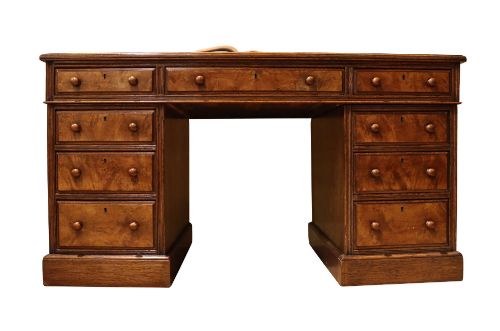
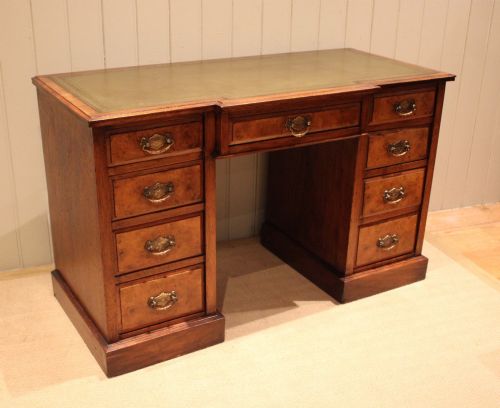
The heading covers a broad group, but two forms dominate. The Victorian davenport, a compact desk with a sloping lid above a stack of side drawers, is the single most named form in the archive at 229 titles. Pedestal desks, flat-topped and standing on two banks of drawers, follow at 165.
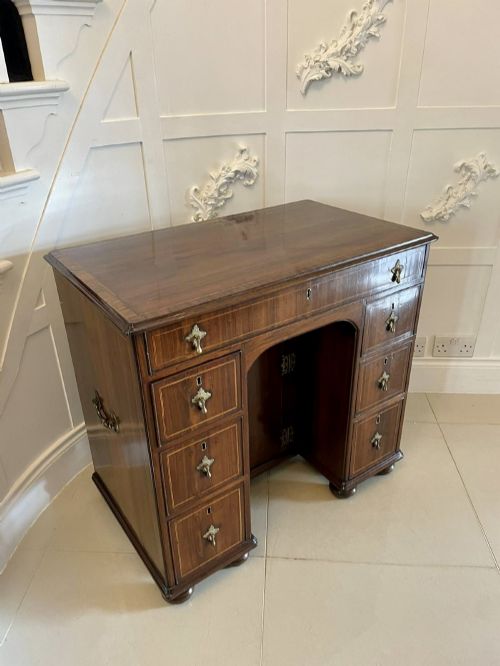
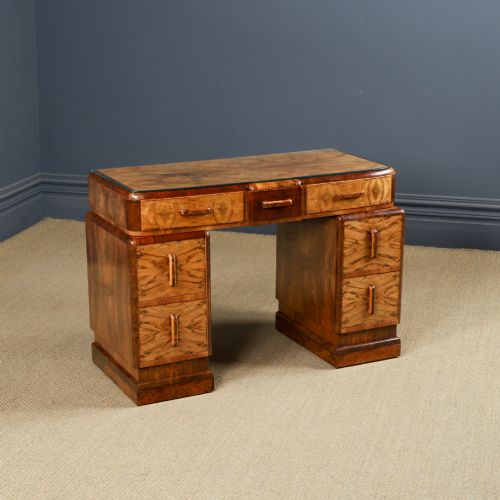
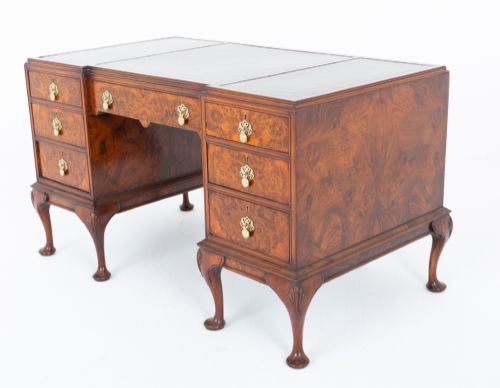
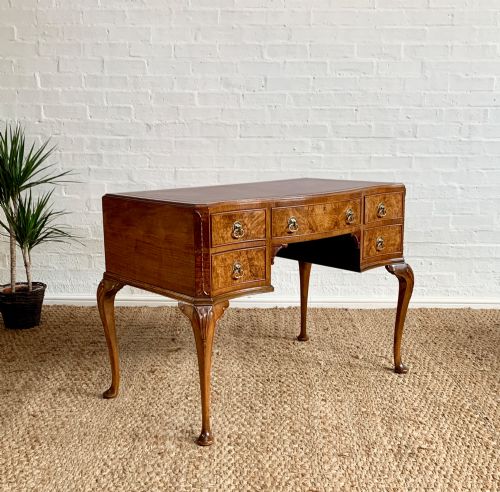
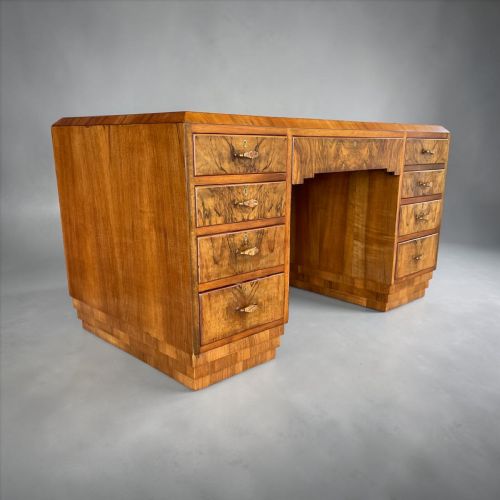
Around those sit flat-top writing tables and writing desks with no pedestals, kneehole desks with a recessed space for the sitter, partners desks finished on both faces, and shaped kidney and serpentine outlines. A run of 1920s and 1930s pieces, including Queen Anne style and Art Deco, makes up a little over a fifth.
Burr walnut desks belong to two moments. The early eighteenth century, when walnut was the fashionable cabinet timber for kneehole desks, and the mid-nineteenth century revival, when figured veneers went onto compact domestic writing furniture. Eighteenth-century pieces exist in the record but are scarce, and two listings carry a date of 1700.
Dating is often broad. Of 715 listings, 436 give a clean year, while 177 say only 'Victorian' and 48 only '19th Century'. Where dealers commit to a decade, the 1860s dominate the nineteenth-century material and the 1920s the twentieth. Around 74 come up a year on Sellingantiques, handled by 141 different dealers.
Where The Range Splits
Mechanism separates davenports. Plain ones sit at the bottom of the range, while the titles carrying 'pop up', 'rise and fall', 'piano top', 'harlequin' and 'Jack in a Box' cluster in the upper half. That vocabulary is the most inventive in the category, and it tracks price closely.
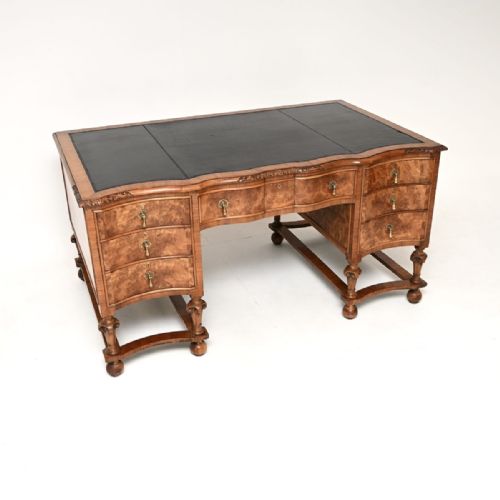
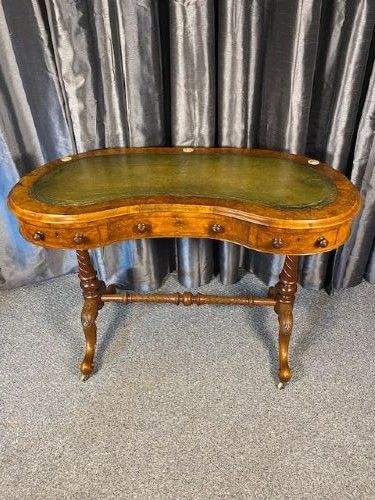
Outline matters as much as form. Kidney-shaped and serpentine desks run above plain rectangular pedestal and writing desks, and the highest-priced piece in the record is a kidney shape. Size and double-sided construction push the same way: partners and twin-pedestal desks sit well above single-sided ones, and 'small' turns up low and mid-range.
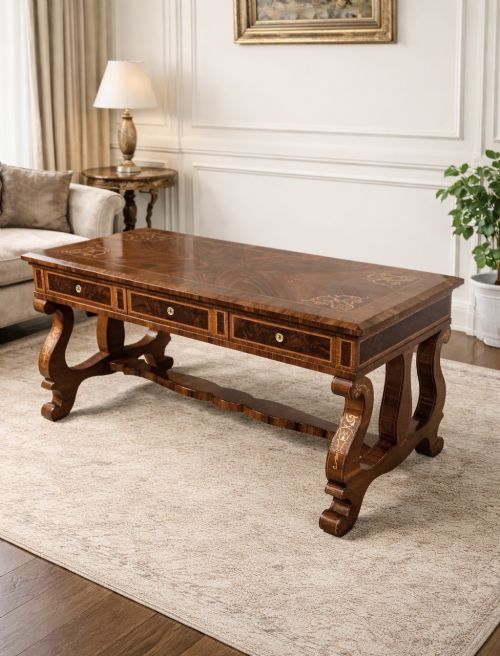
Decoration draws the line higher still. Inlay and figured veneer appear throughout the range, but marquetry, ormolu mounts, kingwood, amboyna and satinwood interiors show up only near the top. So do the named eighteenth-century kneehole desks, a small group that holds the upper end alongside the shaped Victorian pieces.
Retail Price Guide 2026
Typical UK retail prices for burr walnut desk, calculated from the Sellingantiques database of over a million retail prices indexed since 2003. This retail price guide relies exclusively on Sellingantiques data; no external sources or auction records are used, so the figures do not describe the wider market.
The davenport is the most named form in the archive, and its tops get called pop up, rise and fall, piano front, harlequin and Jack in a Box.
Maple & Co
The Antique Burr Walnut Desk Glossary
- Burr walnut
- Veneer cut from a burr or wart on the tree, giving dense swirling figure rather than straight grain.
- Davenport
- Small compact desk with a sloping writing lid above a stack of drawers to one side, and the most named form in the category.
- Pedestal desk
- Flat-topped desk standing on two banks of drawers. Where the top is an inset hide surface, listings say leather top, sometimes tooled.
- Partners desk
- Double-sided pedestal desk, finished and fitted on both faces so two people can work at it. Twin pedestal describes the same two-bank construction.
- Pop up and piano top
- Two davenport features: a spring-loaded stationery compartment that rises from the top, and a curved lid that lifts like a piano fall. Harlequin and Jack in a Box name the rising interior.
- Bonheur du jour
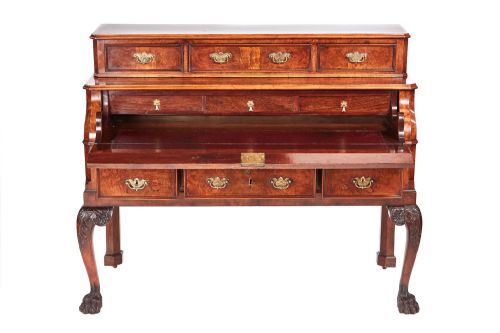
- Small lady's writing desk with a raised superstructure above the writing surface. A handful appear, including one pair.
Frequently Asked Questions
What is a davenport desk?
A small, compact desk with a sloping writing lid over a bank of drawers set to one side. It appears in 229 titles, making it the most named form under this heading.
Most sit in the Victorian material, and the 1860s account for the largest run of nineteenth-century dates in the archive.
Which forms turn up most often?
Davenports and pedestal desks between them account for well over half the record. Writing tables and flat-top writing desks with no pedestals make up around a fifth.
Kneehole desks run to roughly one in ten, counting both spellings. Partners desks, kidney and serpentine shapes and the 1920s and 1930s revival pieces fill out the rest.
Are eighteenth-century burr walnut desks common?
No. The eighteenth-century group is small, with '18th' appearing in only eleven titles, and two listings carry the earliest date in the record at 1700.
These are the Queen Anne, George I and George II kneehole desks, and they occupy the top of the range.
What does piano top mean on a davenport?
It describes a curved lid that lifts like the fall on a piano. The term appears in 26 titles.
Related wording includes pop up and rise and fall for a stationery compartment that springs from the top, and harlequin or Jack in a Box for a rising interior section.
Do these desks come with maker's names?
Rarely. Only one name recurs across dealers in this category, Maple & Co, and the archive carries no evidence about how such names appear on the furniture.
Country of origin is barely recorded either. English appears on twelve titles, French on a small handful, Swedish on one.
How large are burr walnut desks?
Sizes are seldom stated. Only three or four titles in the whole record give a figure.
The largest of those is a six-foot partners pedestal desk. A kidney-shaped example is given as 42 by 40 inches. Beyond form names like davenport, small size or twin pedestal, listings tend not to commit to measurements.