



Antique Roll Top Desks
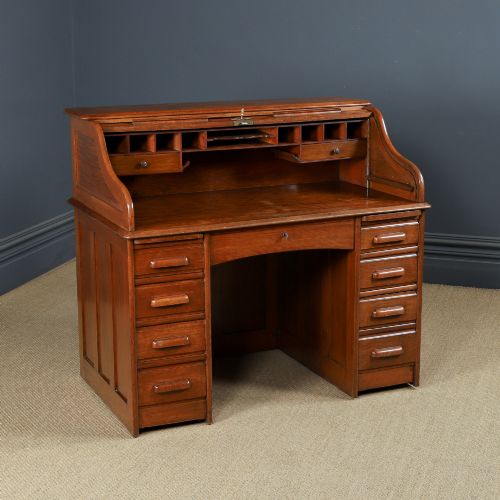
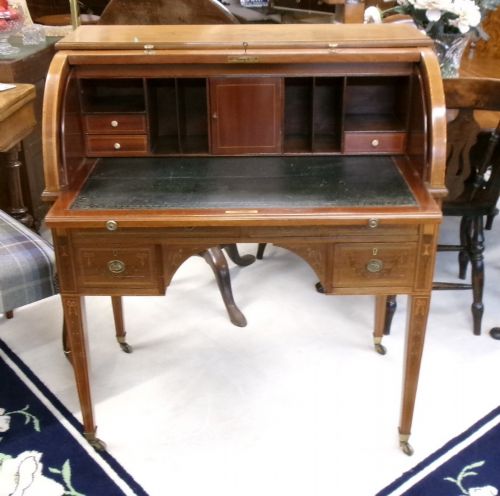
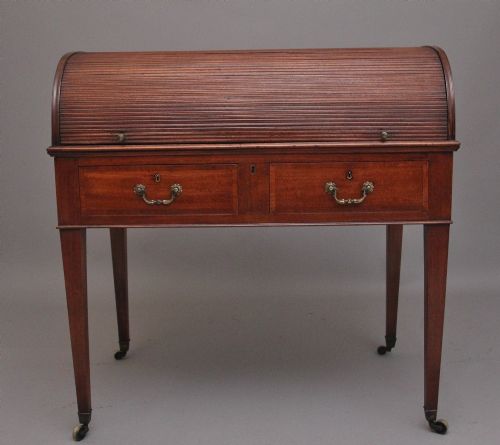
A writing desk closed by a sliding slatted shutter or a rigid curved cylinder front, usually set over a kneehole between drawer pedestals, so papers could be shut away and locked where they lay.
Antique Roll Top Desks
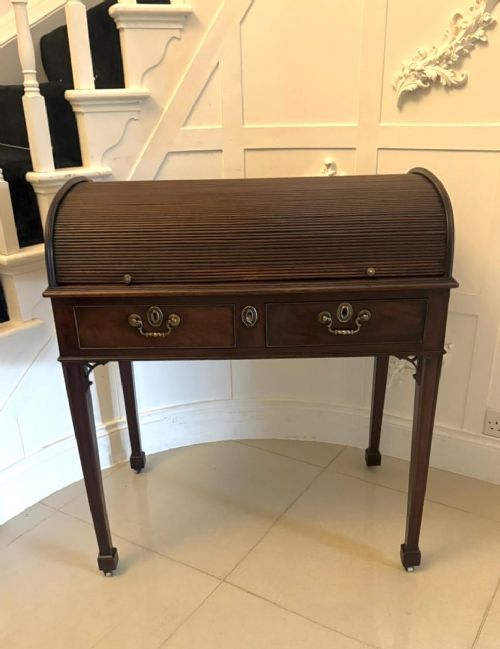
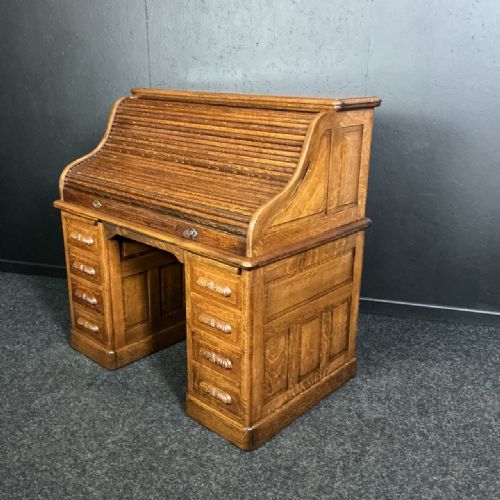
The form grew out of the 18th-century cylinder-fall writing desk, where a rigid quarter-round front swung back in one piece. Replacing that with narrow slats glued to canvas gave a shutter that could flex and roll into the carcass, and the roll top became the standard clerical desk through the later 19th century and into the early 20th.
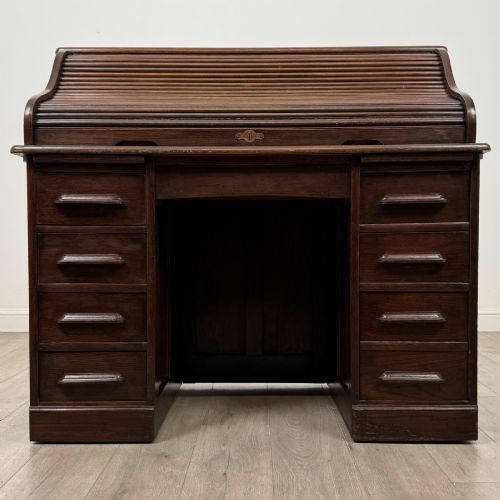
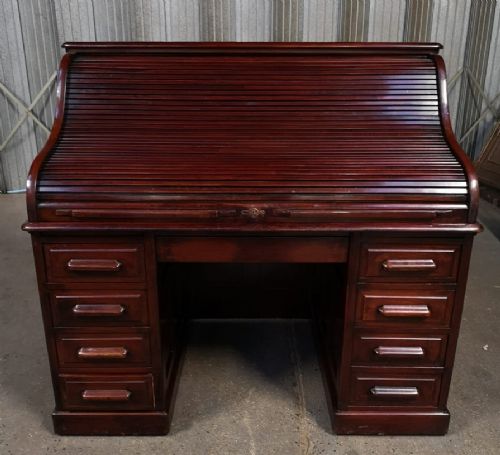
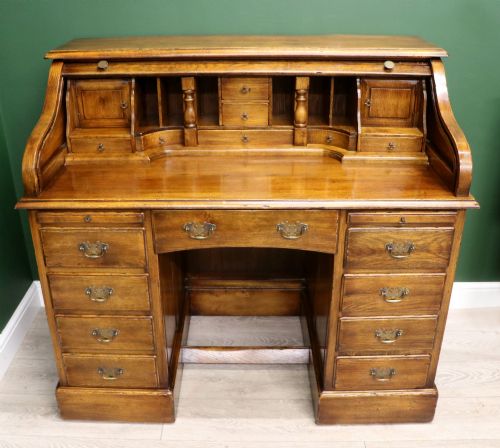
The desk you are most likely to meet on Sellingantiques is an oak office desk of about 1900 to 1930, single or twin pedestal. Oak is named in 190 of 345 titles, and the dealers' own dating puts 79 in the Edwardian bracket, 73 in the 1910s, 38 in the 1900s and 36 in the 1920s. Golden oak and solid oak turn up as title words, each a dozen times or fewer.
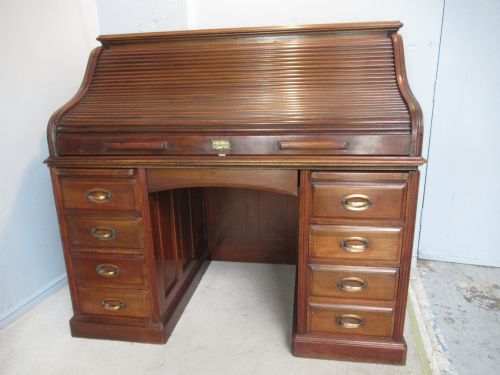
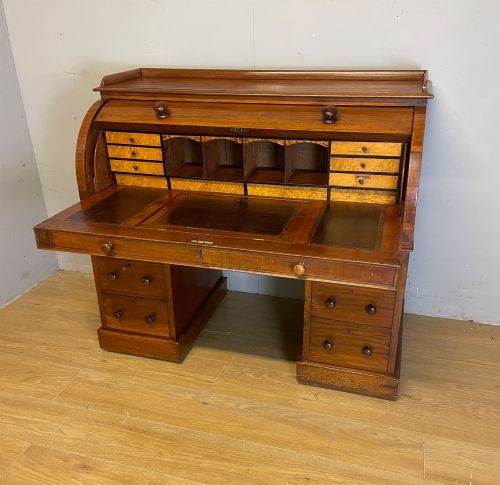
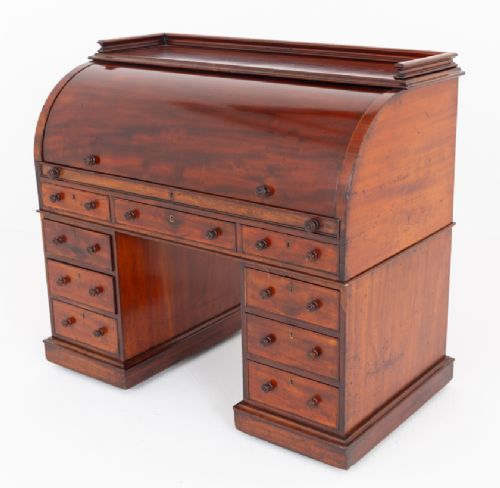
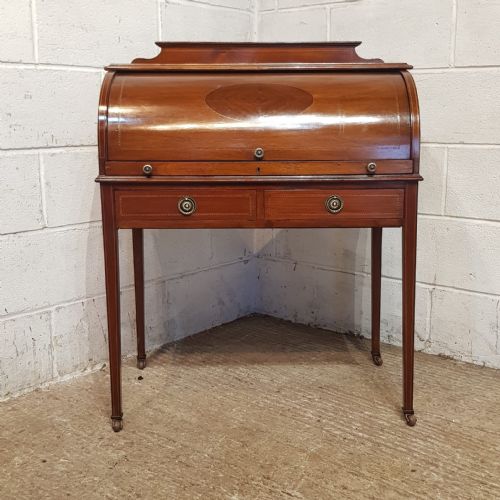
Behind that sits a smaller mahogany group, generally earlier and grander, where the front is a cylinder rather than a roll. Mahogany appears in 69 titles and cylinder in 38, and this group makes up the bulk of live stock. Walnut, including American-made desks, is a thinner seam again, and a handful of Georgian and 18th-century cylinder and tambour writing desks sit apart from the rest.
Sizes run from small single-pedestal desks to twin-pedestal pieces described as massive, grand or huge. Titles rarely quote a width, so size is settled in the description rather than the heading. Around 35 come to market a year, spread across 85 different dealers, which makes this a form the whole trade touches rather than anyone's specialism.
The Range
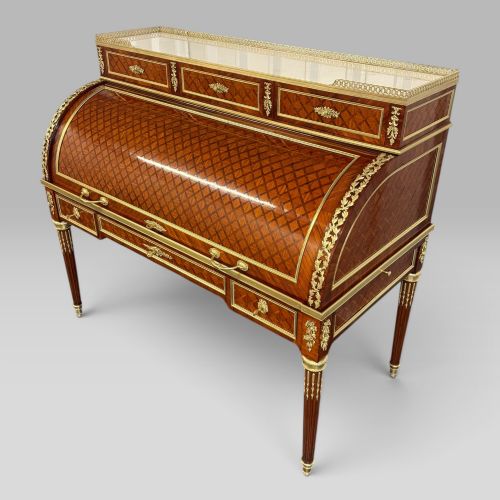
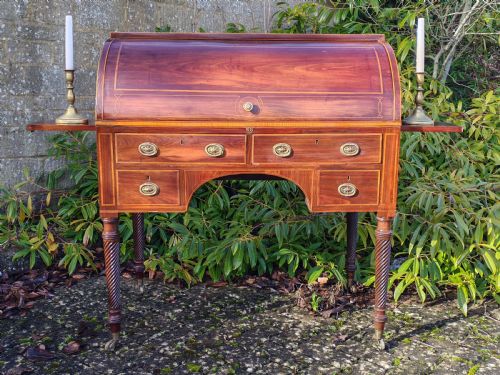
Timber and decoration do most of the work. At the top of the range are satinwood, kingwood, parquetry and ormolu, Dutch marquetry and inlaid mahogany, all on cylinder-fronted desks. At the bottom sit plain oak and a single pine desk, honest office furniture with nothing on the surface but the grain.
Date pulls in the same direction. Georgian and 18th-century desks, including those titled to George III, cluster in the top fifth of the range, while the 1900s to 1920s oak desks fill the lower and middle. Size follows: large appears in 35 titles and small in 12, and twin-pedestal desks stand above single-pedestal ones.
Two smaller things lift a desk. A freestanding desk, finished on all four sides so it can face into a room, sits well above the middle even though only nine titles say so. And attribution counts: only one maker name clears three dealers on Sellingantiques, so nearly every desk reaches the market unattributed, and the named ones gather in the upper half.
Antique Roll Top Desks Retail Price Guide 2026
Typical UK retail prices for roll top desks, calculated from the Sellingantiques database of over a million retail prices indexed since 2003. This retail price guide relies exclusively on Sellingantiques data; no external sources or auction records are used, so the figures do not describe the wider market.
Dated roll top desks on Sellingantiques run from 1750 to 1930, though only 178 of 345 listings carry a clean year.
Angus
The Antique Roll Top Desks Glossary
- Tambour
- A shutter of narrow wooden slats glued to canvas so it can bend as it rolls back into the carcass. Named in 18 titles.
- Cylinder
- A rigid quarter-round front that swings back in one piece instead of rolling in slats. Named in 38 titles, and the usual arrangement on the mahogany desks.
- Pedestal
- The drawer-filled column each side of the kneehole. It appears in 56 titles, single or twin.
- Freestanding
- Finished on all four sides, so the desk can stand away from a wall rather than backing onto one.
- Golden oak
- The warm honey-toned oak finish typical of the 1900s to 1920s, named in a dozen titles.
- S type
- A roll whose profile curves in and out rather than following a plain quarter circle. Listings also use barrel front for a rounded cylinder, and low back for a shallower superstructure.
Antique Roll Top Desks: Frequently Asked Questions
What is the difference between a roll top and a cylinder desk?
A roll top closes with a tambour, narrow slats glued to canvas so the shutter flexes and rolls back into the body of the desk. A cylinder front is rigid, a quarter-round panel that swings back in one piece.
Both sit under the same heading on Sellingantiques. Cylinder is named in 38 titles, tambour in 18, and the cylinder desks lean mahogany and earlier.
Which wood is most common?
Oak, and by a distance. It is named in 190 of 345 titles, close to being the definition of the category on this site.
Mahogany follows at 69 titles, walnut at 30. Satinwood, kingwood and marquetry appear only on the earliest and highest-priced desks.
How old is a typical roll top desk?
The dealers' dating clusters hard at the turn of the century: 79 Edwardian, 73 in the 1910s, 38 in the 1900s, 36 in the 1920s. Victorian accounts for 41.
The full span runs 1750 to 1930. Only 178 of 345 listings carry a clean year, the rest being era labels such as Edwardian or simply 19th Century, and those labels should be read as broad brackets.
Were roll top desks made outside Britain?
Yes. Titles name American and Scottish desks, French examples in the Louis XV, Louis XVI and Louis Philippe manner, Austrian work and Dutch marquetry.
One Japanese yosegi cylinder desk has come through, appearing once and nowhere else.
Are these desks usually signed or stamped?
Rarely. Only one maker name clears three dealers across the whole archive, which means nearly every roll top desk reaches the market unattributed.
Where a name does appear, whether stamped, labelled or given only as an attribution, those desks sit in the upper half of the range.
Do unusual variants of the form turn up?
They do, one at a time. A pivoting roll top, a typewriter desk, an autotype desk, a piano-top cylinder desk and a miniature parquetry desk have each passed through.
A desk sold together with its chair has also appeared.