
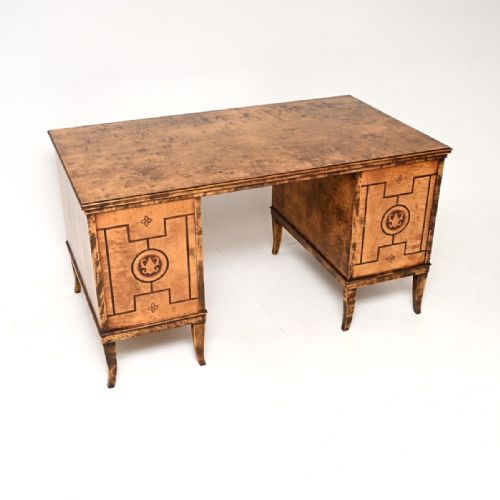
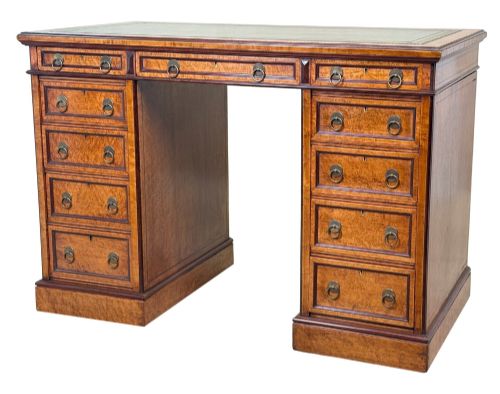
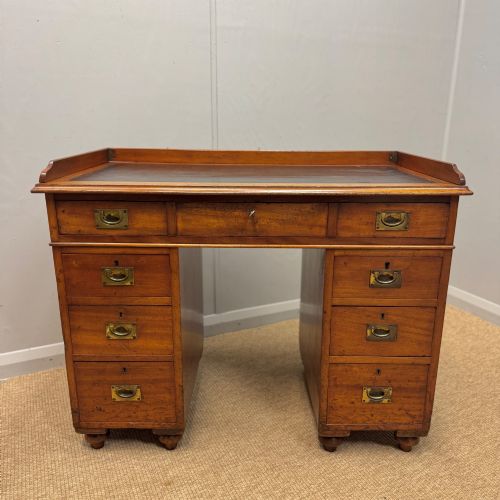
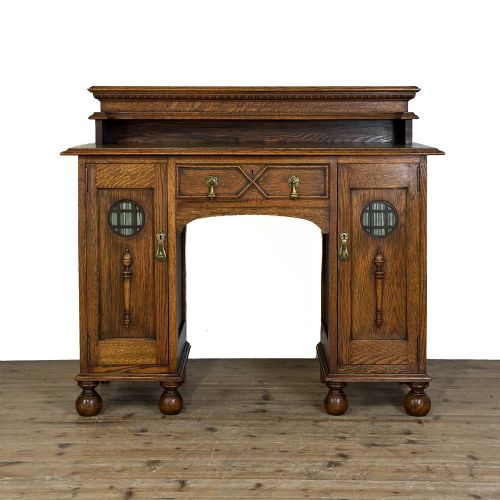
Antique Pedestal Desks
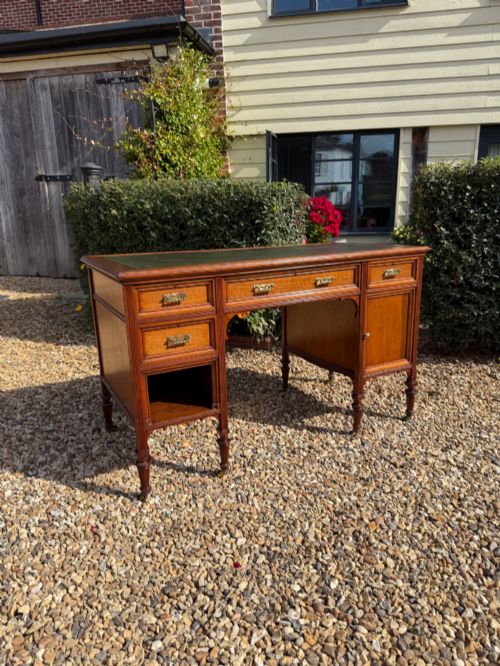
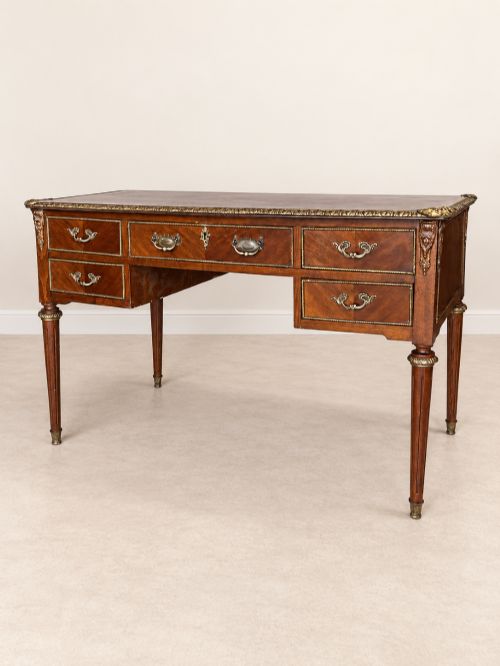
A flat writing desk whose top sits on two banks of drawers with a kneehole between them, made free-standing so it could be worked at from a chair drawn in.
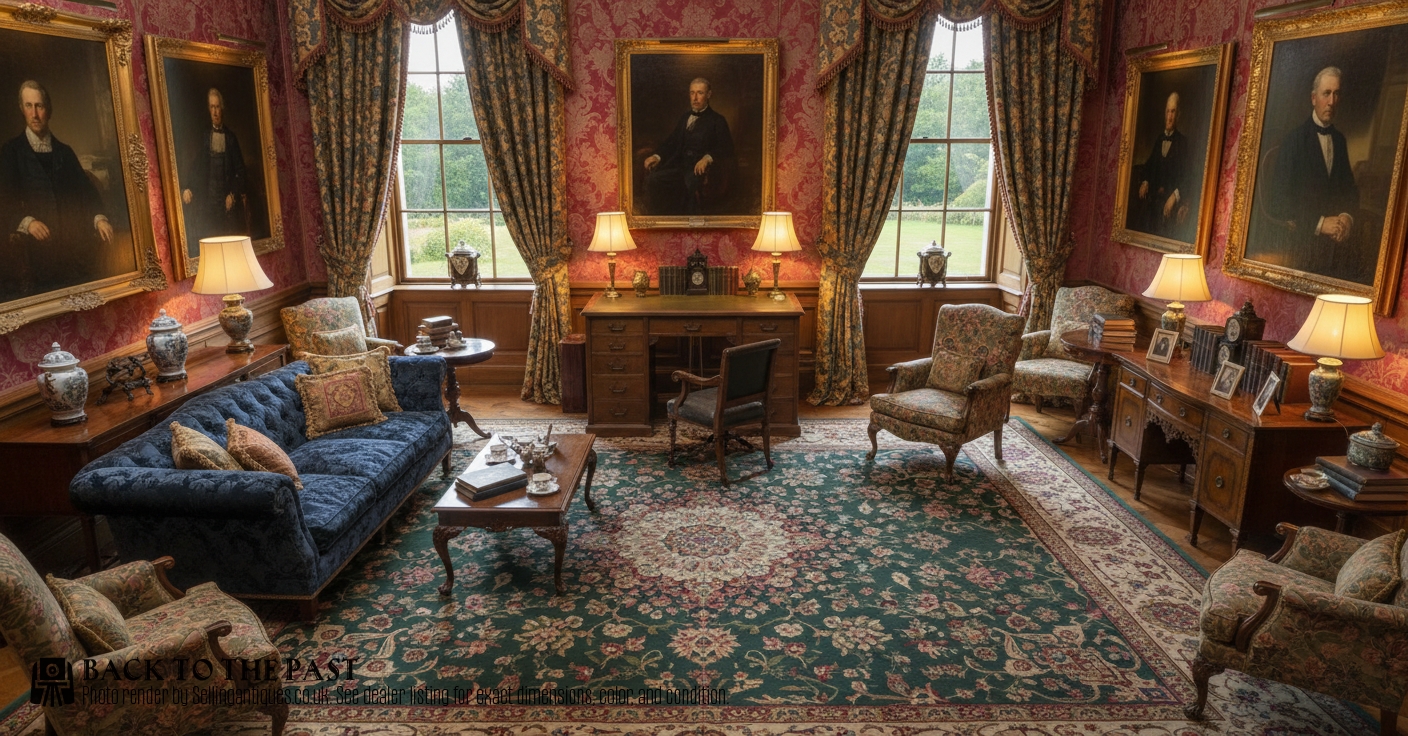
Antique Pedestal Desks
The form came out of Britain in the 18th century as a writing desk for a library or study, its top carried on two drawer-filled pedestals. The partners' version, fitted with drawers or cupboards on both sides, was made so two people could work facing each other.
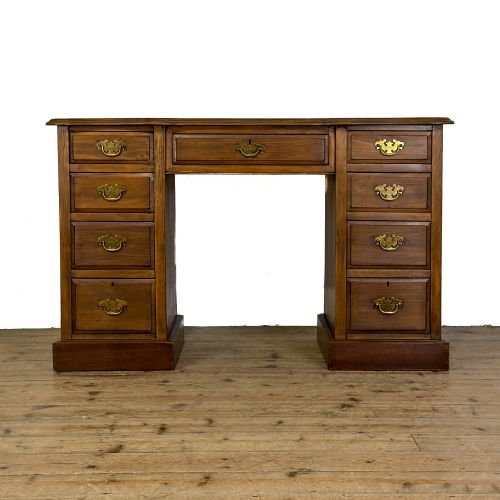
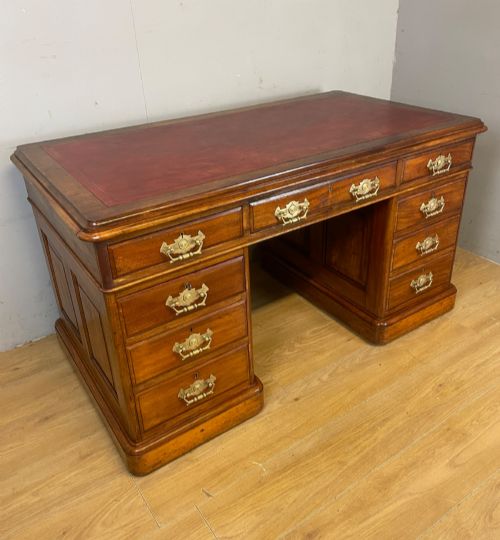
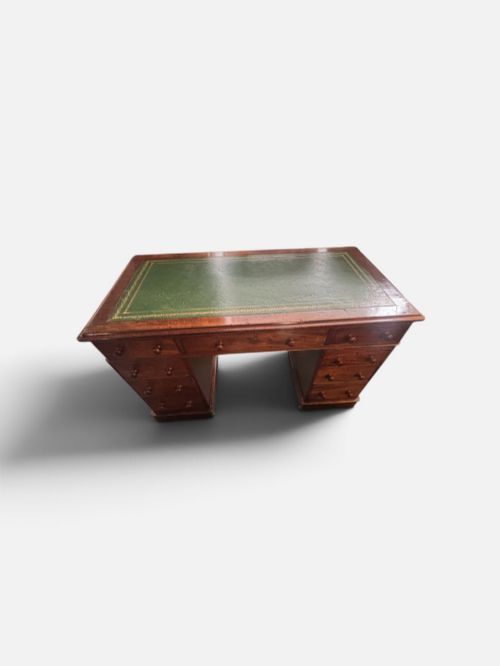
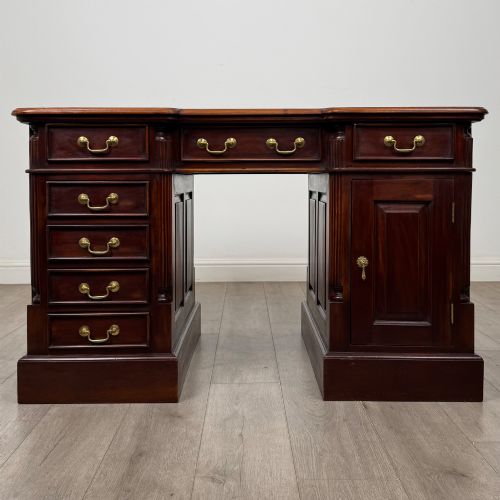
The desk you are most likely to meet on Sellingantiques is a Victorian or Edwardian twin-pedestal mahogany one with a leather-inset top, around four to five feet wide, often in the nine-drawer arrangement of three across the frieze and three down each pedestal. Mahogany dominates the titles, with oak and walnut behind it, and Victorian is the single commonest period word.
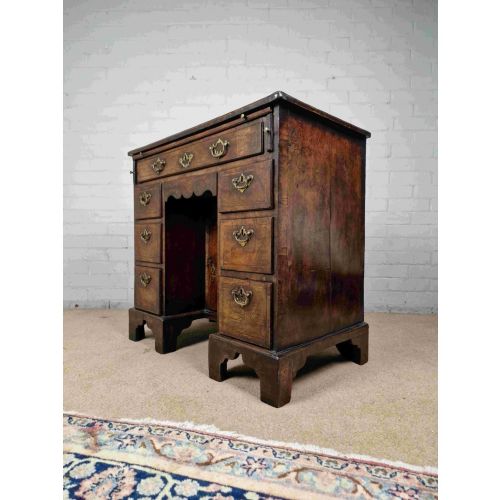
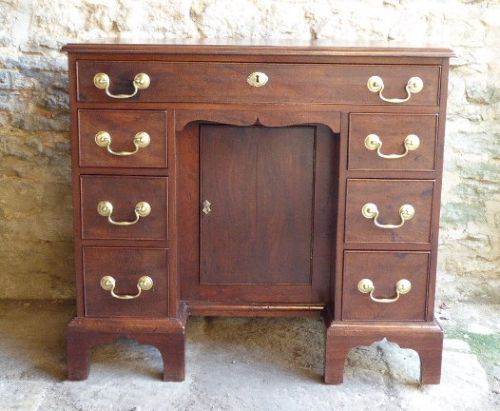
Many are described as "three part", meaning the top lifts off the two pedestals for moving. Single-pedestal desks sit mostly at the lower end. Kneehole desks, where the drawers run in one continuous carcase, come under the same heading and carry most of the 18th-century entries.
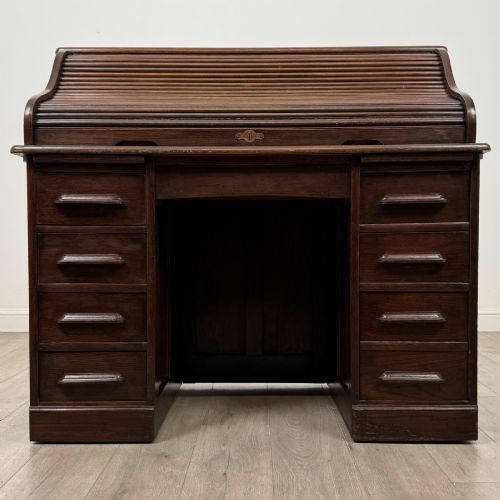
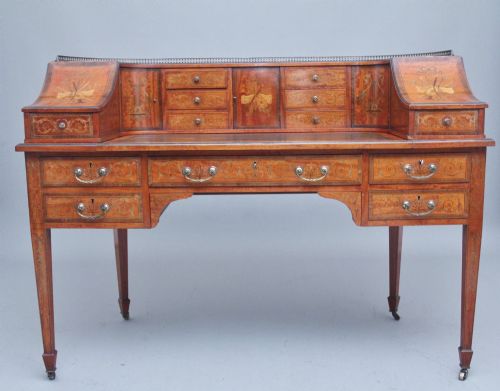
The heading also gathers the related closing-top forms: roll-top, cylinder and tambour desks are a small but steady part of it. Davenports, kidney and Carlton House desks appear alongside them. Dealer dates run from 1700 to 1960, so 20th-century oak office desks and Art Deco pieces are here in quantity, while pre-1800 examples are a small tail.
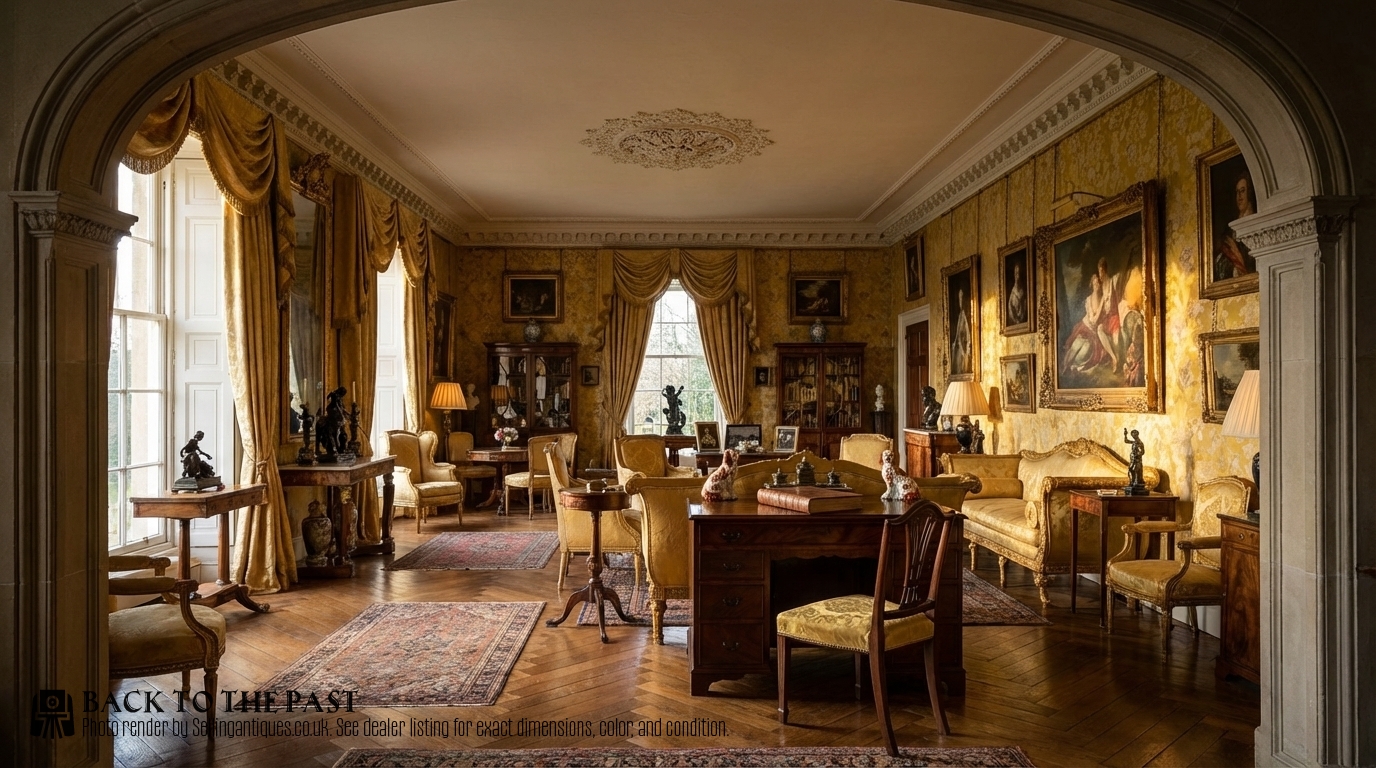
What Separates Them
Timber and figure do most of the work. Burr walnut is named in 178 titles, and flame, curl and figured mahogany, pollard and burr oak, satin birch, kingwood and rosewood mark the upper entries, while pine and pitch pine sit at the bottom. The archive keeps a long tail of odd woods too: Hungarian ash, teak, padauk, hongmu, burr elm.
Then the number of working sides. A partners' desk, finished and fitted front and back, is a bigger and costlier object than the same desk with a plain back, and the sampled ones run to twelve and eighteen drawers. Size pushes the same way: widths are quoted in feet, and the largest recorded pieces are six-foot partners' desks.
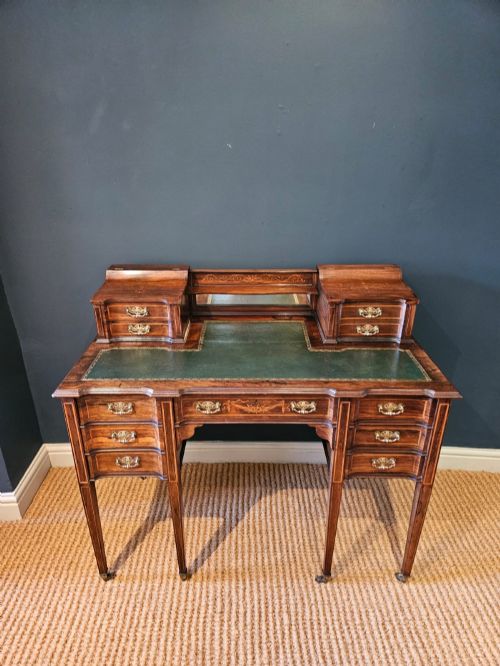
Decoration and a name lift the rest. Marquetry, brass inlay, ormolu mounts, japanning and carved work cluster at the higher end, and desks stamped or labelled by a known London firm carry that name in the title. The top of the range is held by early pieces and partners' desks, while single-pedestal oak and pine desks of about 1900 to 1930 sit at the bottom.
Antique Pedestal Desks Retail Price Guide 2026
Typical UK retail prices for pedestal desks, calculated from the Sellingantiques database of over a million retail prices indexed since 2003. This retail price guide relies exclusively on Sellingantiques data; no external sources or auction records are used, so the figures do not describe the wider market.
Maple & Co is the name that turns up from the most dealers on Sellingantiques, ahead of Edwards & Roberts and James Shoolbred.
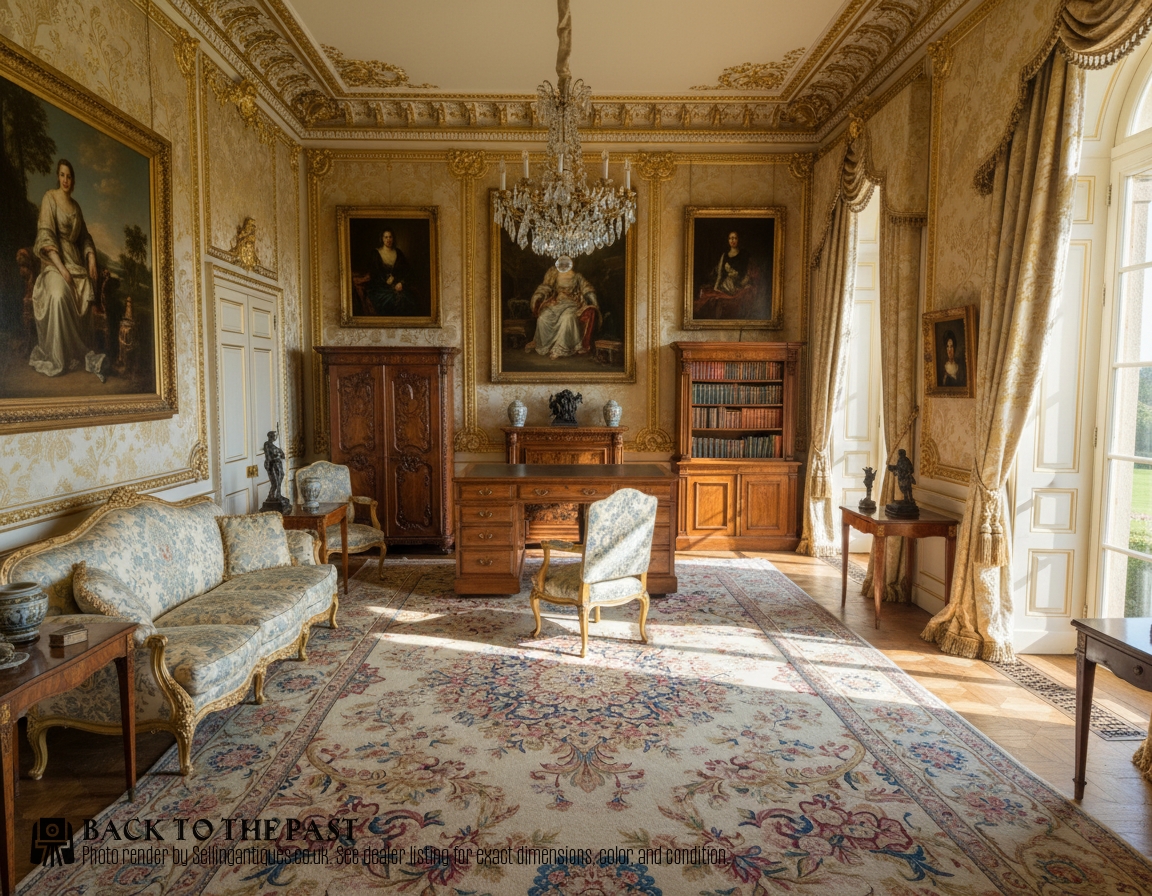
Maple & Co·Edwards & Roberts·James Shoolbred·Waring and Gillow
The Antique Pedestal Desks Glossary
- Pedestal
- One of the two drawer-filled banks that carry the desk top. A single-pedestal desk has one, with a plain leg or bracket support at the other end.
- Kneehole
- The recess between the pedestals where the sitter's legs go. It is also a desk type of its own, where the drawers sit in one continuous carcase.
- Three part
- Top and two pedestals separate, so the desk comes apart for moving. A recurring phrase in Victorian and Edwardian titles.
- Partners desk
- Fitted for use from both sides, with drawers or cupboards front and back. Named in 198 titles.
- Skiver
- The thin leather writing panel let into the top, often gilt-tooled. "Leather top" is specified in 147 titles.
- Cylinder or tambour top
- A curved or slatted cover that closes over the writing area, as on roll-top desks.
Antique Pedestal Desks: Frequently Asked Questions
What wood are pedestal desks usually made from?
Mahogany leads the titles by a wide margin, with oak next and walnut close behind it. Burr walnut alone is named in 178 of them.
Beyond those three the archive holds a scattering of satin birch, Hungarian ash, pollard and burr oak, teak, padauk, kingwood, rosewood and burr elm. Pine and pitch pine turn up at the cheaper end.
How many drawers does a pedestal desk have?
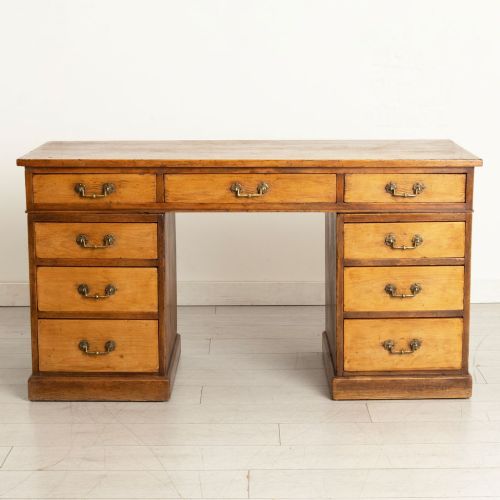
Nine is the common Victorian arrangement: three across the frieze and three in each pedestal. "9 Drawer" and "nine drawer" recur through the titles.
Partners' desks run higher, with sampled examples at twelve and eighteen drawers because both sides are fitted. Single-pedestal desks carry fewer.
Why are some described as three part?
The top lifts off the two pedestals, so the desk travels as three pieces rather than one. It is a construction note dealers put in the title.
It turns up regularly on Victorian and Edwardian twin-pedestal desks, which are the bulk of what comes through.
Are pedestal desks and kneehole desks the same thing?
They sit under the same heading and both have a recess for the legs. The difference is construction: a pedestal desk has two separate banks of drawers under a top, a kneehole desk has its drawers in one continuous carcase.
Kneehole desks are roughly a tenth of the archive and include most of the 18th-century entries.
What dates do these desks cover?
Dealer-entered dates run from 1700 to 1960. Victorian is much the commonest label, followed by Edwardian and then decade labels through the 1860s to the 1930s.
A further group is given only as "19th Century". Pre-1800 pieces are a small tail, with "georgian" in 78 titles and "18th" in 36.
Which makers are named on pedestal desks?
Four firms recur across dealer listings: Maple & Co, which appears most often, then Edwards & Roberts, James Shoolbred and Waring and Gillow. The name comes from a stamp or a label, or is given as an attribution.
Plenty of desks say only "with makers stamp" or "London Maker" without going further.