



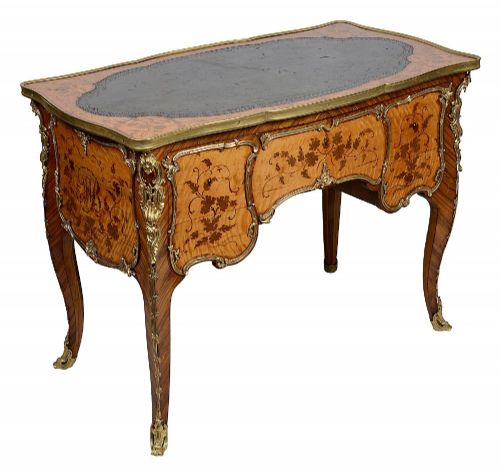
Antique Ladies Desks
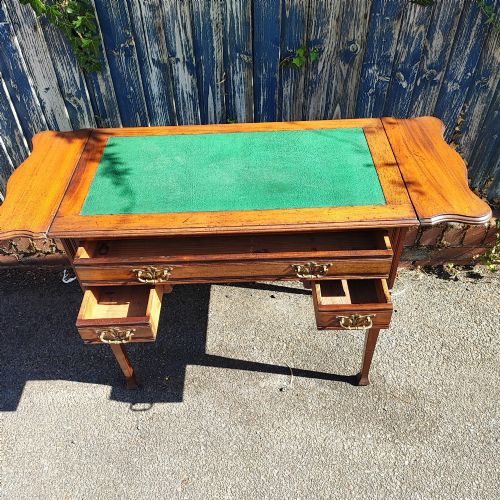
A lady's desk is small writing furniture built for a corner of a drawing room or a bedroom, made for letters rather than for business at a study table.
What You're Looking At
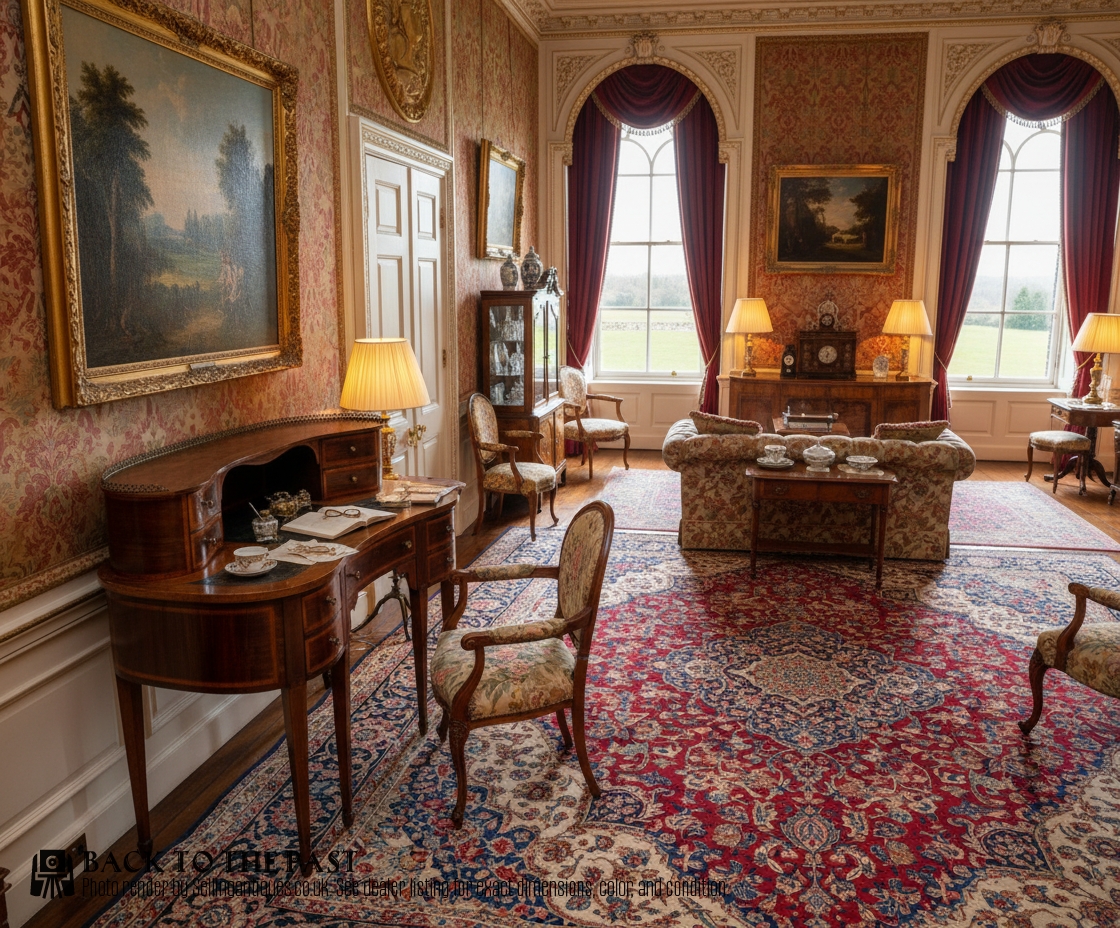
The heading gathers free-standing writing tables and small kneehole desks together with the named forms that share the same scale: bonheur du jour, davenport, Carlton House desk, cylinder and roll-top, bureau de dame. Titles lean on the timber more than the form, with mahogany ahead of walnut, rosewood and satinwood.
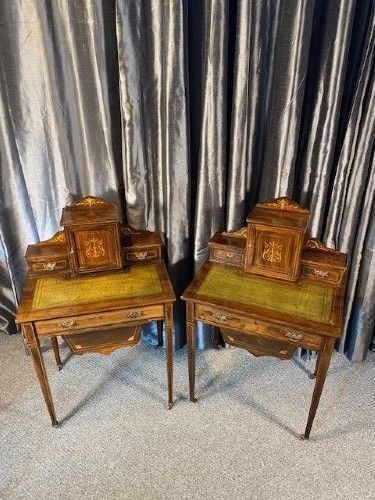
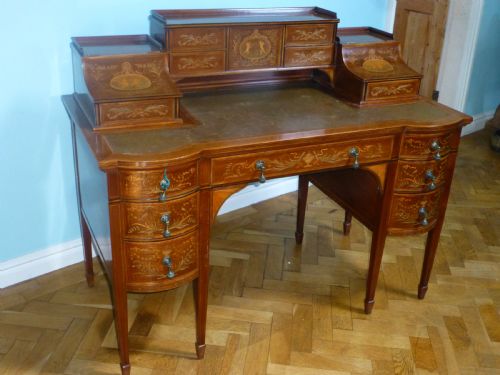
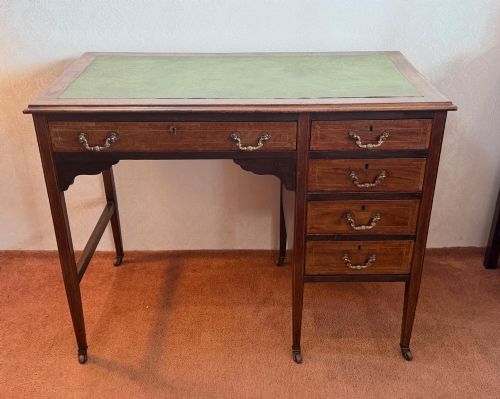
The piece you'll meet most often is an inlaid mahogany writing desk of Edwardian date. That exact combination runs through the middle of the range on Sellingantiques, sometimes word for word in the title, and the dated field puts Edwardian and the 1900s well ahead of any Victorian bracket.
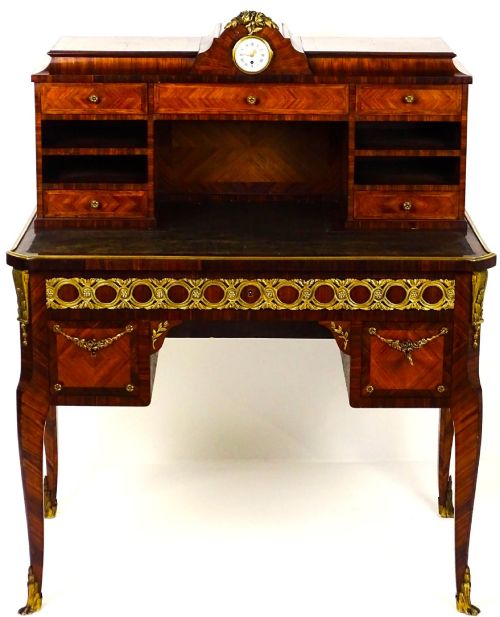
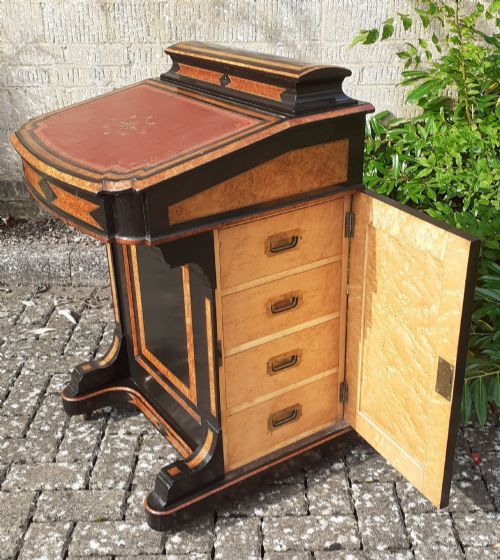
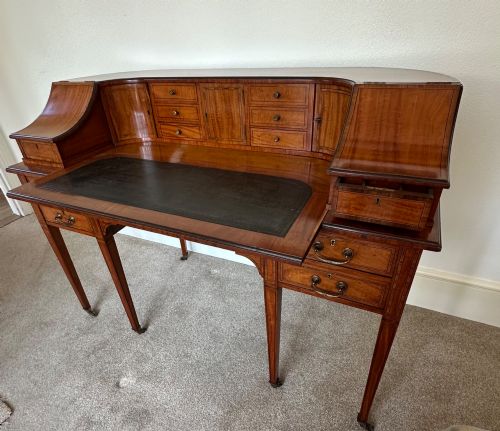
The rest divides into recognisable groups. Davenports, with a sloping lid over side drawers, turn up in burr walnut, rosewood, ebony and amboyna. Carlton House desks sit at the top, usually satinwood. Kidney-shaped desks and plain writing tables make up a further slice, and a French wing carries the bonheur du jour and bureau de dame.
Dating is often a period label rather than a year. "Victorian" here can mean anywhere across sixty years, and "19th Century" wider still. The dated listings run from 1800 to 1930, with the weight of them at the turn of the century.
Top And Bottom
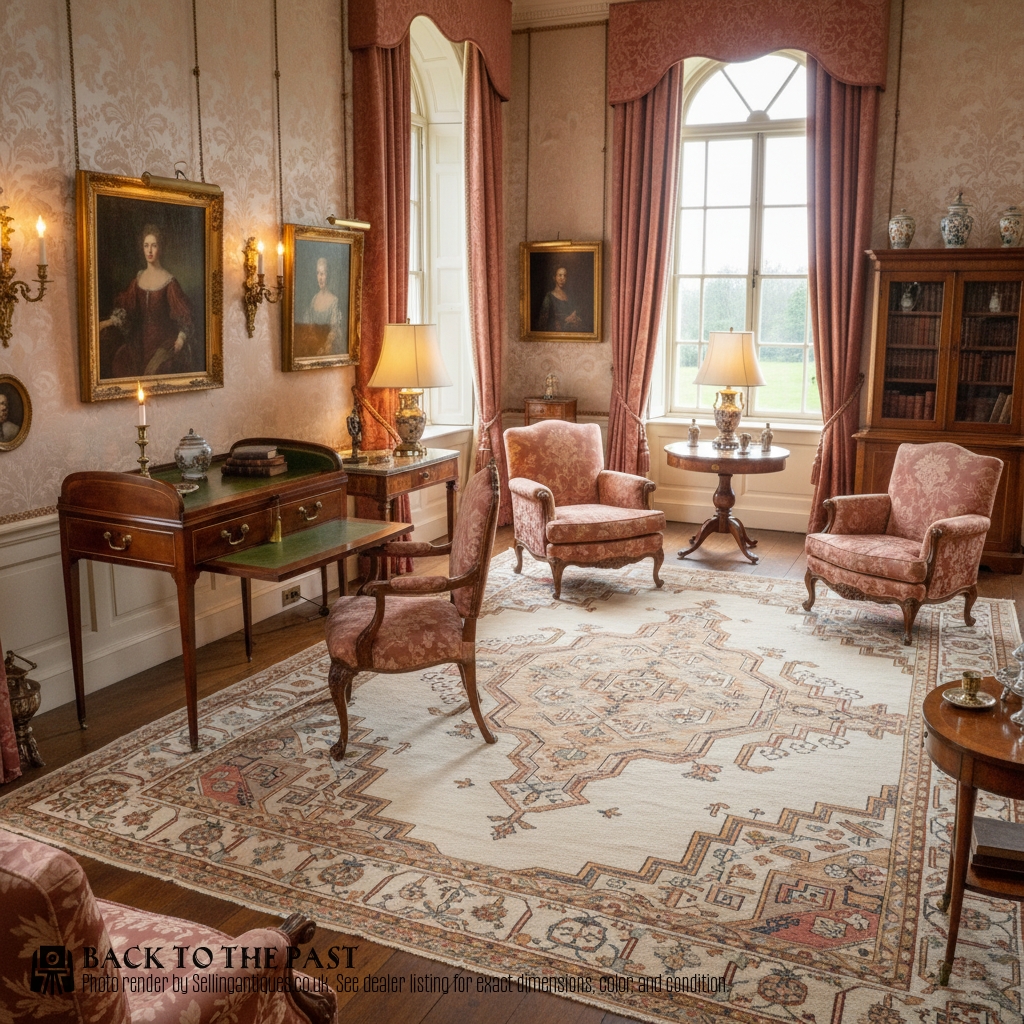
Timber sets the floor and the ceiling. Satinwood and burr walnut cluster in the upper reaches, and satinwood accounts for nearly every entry at the summit, usually as a Carlton House desk. Plain mahogany, oak and painted pieces fill the lower end.
Decoration does the rest of the lifting. Line inlay is the common currency and appears in roughly a third of titles, but marquetry, parquetry, hand-painted floral work, ormolu and gilt bronze mark out the dearer end. An undecorated desk stays where it is.
Two other things count. A named form outranks a plain writing desk, so a full bonheur du jour or a Carlton House desk sits above a desk described only as a lady's writing desk. And a piece finished on all sides carries a premium: "freestanding" recurs in upper-range titles, on davenports, satinwood desks and kidney desks alike.
Retail Price Guide 2026
Typical UK retail prices for ladies desks, calculated from the Sellingantiques database of over a million retail prices indexed since 2003. This retail price guide relies exclusively on Sellingantiques data; no external sources or auction records are used, so the figures do not describe the wider market.
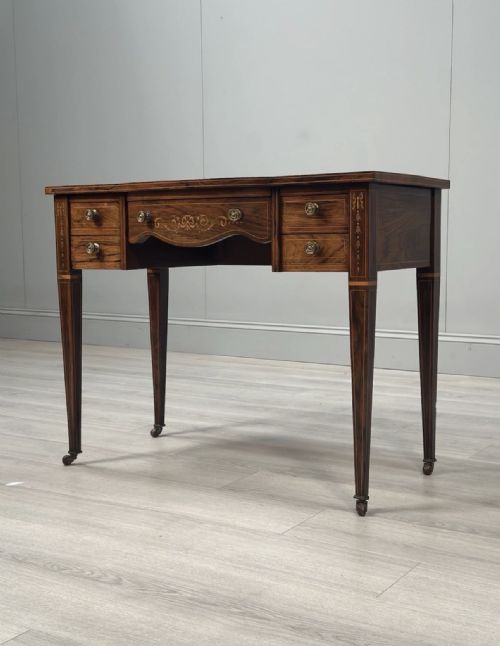
The top sale of the past year on Sellingantiques was an inlaid rosewood ladies' writing table desk, in February 2026.
Maple & Co
The Antique Ladies Desks Glossary
- Bonheur du jour
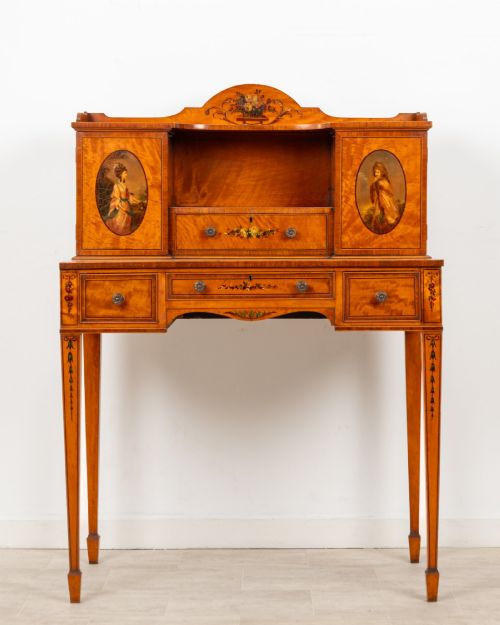
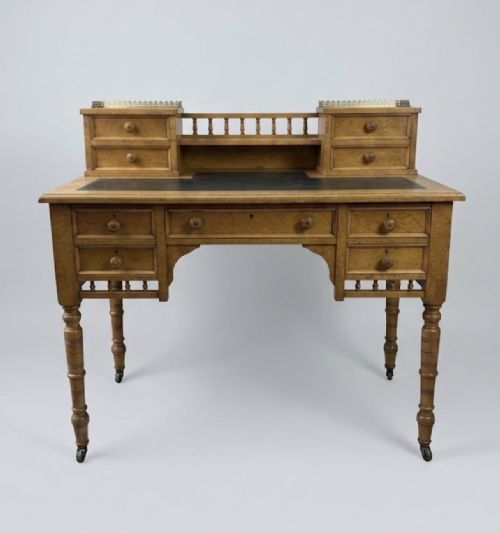
- Small writing table with a raised superstructure of drawers or a cabinet above the top. Dealers spell it several ways, including bonheur de jour and bon heure du jour, so one spelling won't find them all.
- Davenport
- Compact desk with a sloping writing lid over a bank of side drawers. Some are qualified as free-standing, others as pop-up, where the superstructure rises from the top.
- Carlton House desk
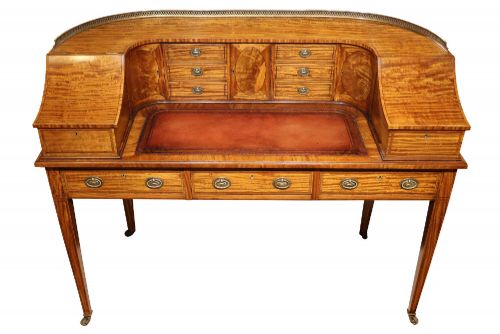
- D-shaped writing table with a tiered superstructure of drawers curving round the back. Most of the ones listed are satinwood, and the form reaches the highest prices in the category.
- Kidney shaped
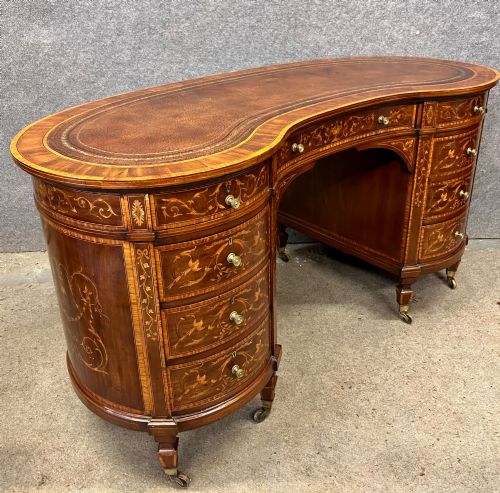
- Kidney-outline top, concave towards the sitter. It appears in around two dozen titles, on both fitted desks and flat writing tables.
- Bureau plat
- Flat writing table on legs with no superstructure, French in origin. The bureau de dame is the French term for a lady's desk and turns up as bureau du dame too.
- Marquetry
- Inlay of shaped veneer pieces forming a picture or pattern, named in 13 titles and kept separate in dealer copy from plain line inlay. Parquetry is the geometric version, seen on the French kingwood pieces.
Frequently Asked Questions
What is the most common type of ladies desk?
An inlaid mahogany writing desk of Edwardian date. Mahogany leads the timbers, inlay appears in around a third of titles, and Edwardian is the commonest period label.
That combination fills the middle of the range, and the same phrasing repeats across dealers word for word.
Which form sells at the top of the range?
The Carlton House desk. Seventeen titles carry the name, nine of them pairing it with satinwood, and the highest-priced piece in the sample is one.
Marquetry French examples also occupy several of the upper places.
How old are these desks?
The dated listings run from 1800 to 1930. Edwardian, the 1900s and the 1910s together outweigh the Victorian brackets by a clear margin.
A handful of Regency and Georgian attributions appear, and one entry dated to the eighteenth century, but those are single instances rather than a supply you'll find repeated.
About 108 of the 243 listings carry a clean year; the rest give a period name only.
Are French examples sold under this heading?
Yes, and they make up roughly a tenth of titles. Bonheur du jour, bureau de dame, bureau plat and an Empire bureau du dame all appear, often in kingwood with parquetry or ormolu mounts.
Origins beyond England and France are thin on the ground: Anglo-Indian and Scottish each show up once in the sample.
Do many desks carry a maker's name?
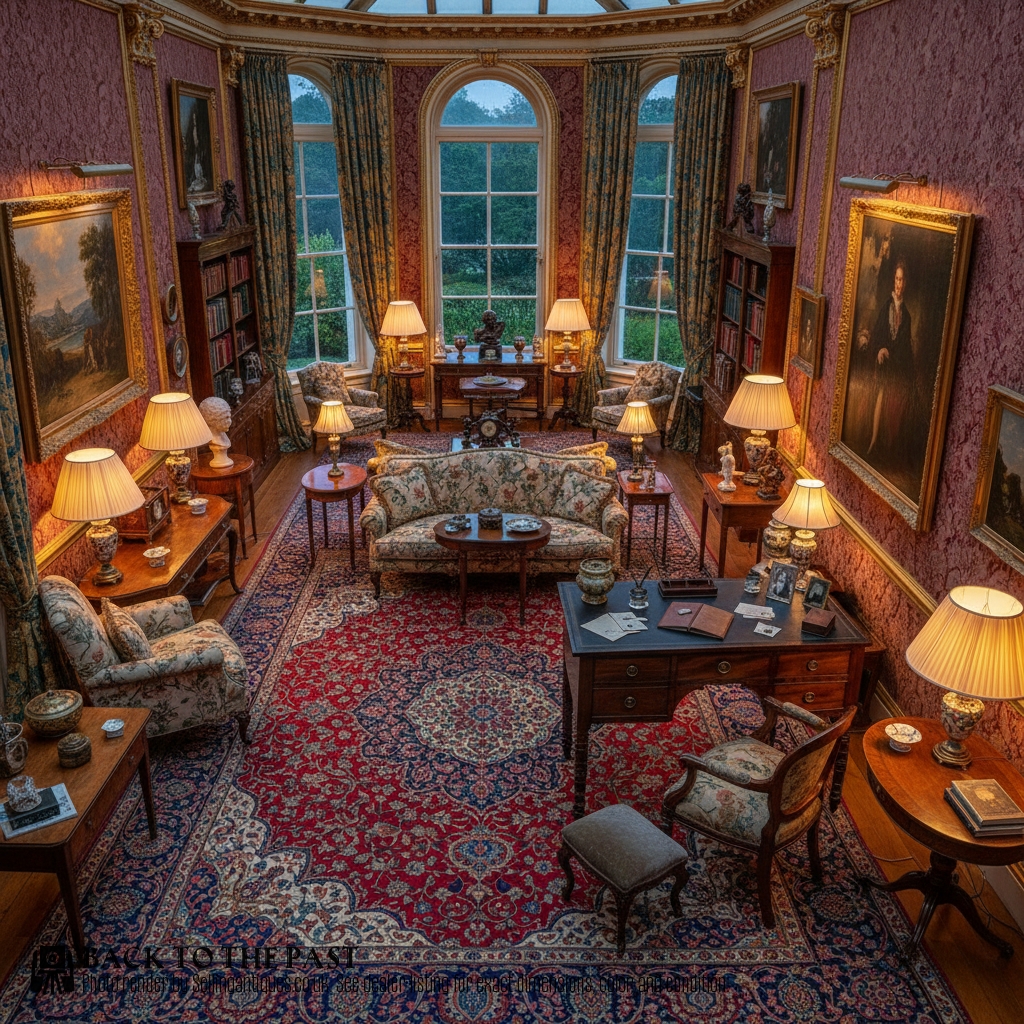
Few. Maple & Co is the one firm handled by more than a couple of dealers, and a scattering of other names appear once or twice each, stamped, labelled or given as an attribution.
Where a firm is named in the title, the piece sits in the upper half of the range.
How many come up for sale each year?
Around 21 ladies' desks are listed on Sellingantiques in a year, and 104 different dealers have handled one.
That's close to one dealer for every two listings, so the category is spread thinly across the trade rather than held by a few specialists.