

Antique Inlaid Desks
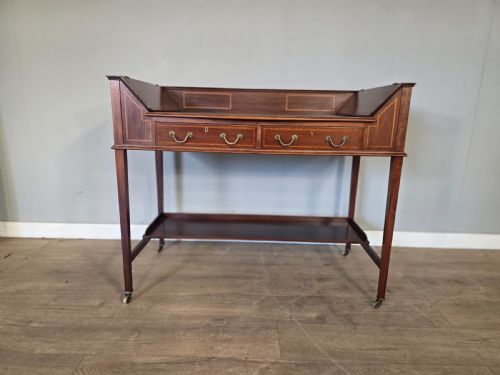
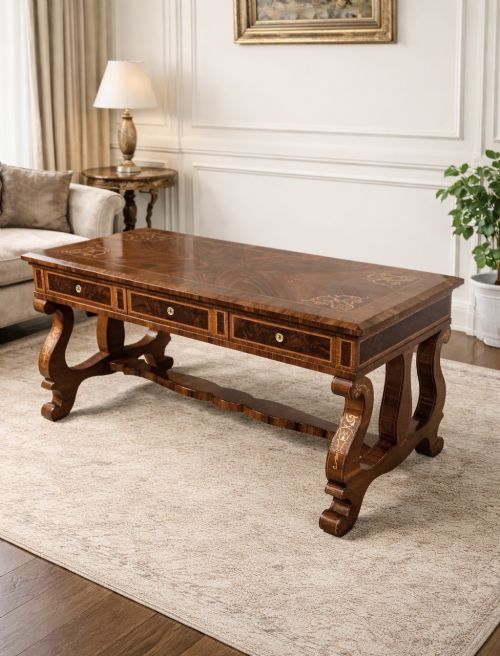
A writing desk or table decorated with banding, stringing or marquetry set flush into the surface rather than carved, made for letters and paperwork at home.
What Inlaid Desks Are
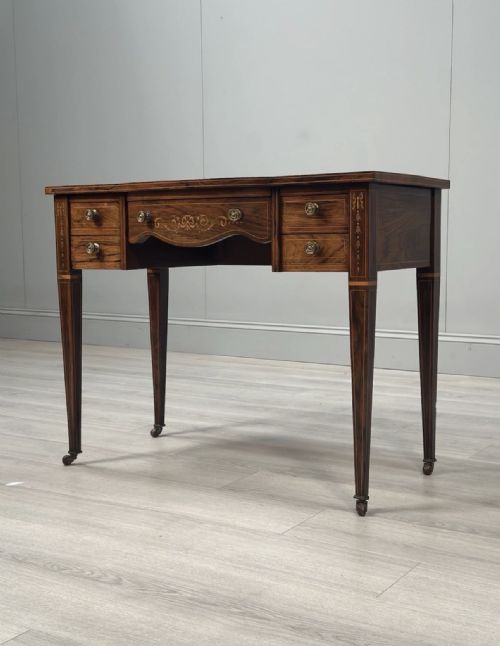
Inlay means decorative woods, brass or other materials set level with the surface. It has been used on European writing furniture since the 17th century, and when late 18th century taste came back into fashion in the later 19th century, banded and strung desks became a mainstream commercial product. That is the bulk of what turns up on Sellingantiques: late Victorian and Edwardian English writing furniture.
Mahogany dominates, appearing in nearly half of all titles, with walnut, rosewood and satinwood together making up about as many again. The word "writing" is in roughly a third of titles, so these are writing pieces first and desks second. Edwardian and Victorian are the two period words that come up most, and Georgian pieces are a small tail.
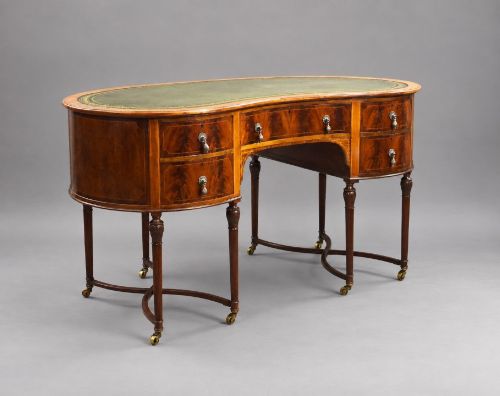
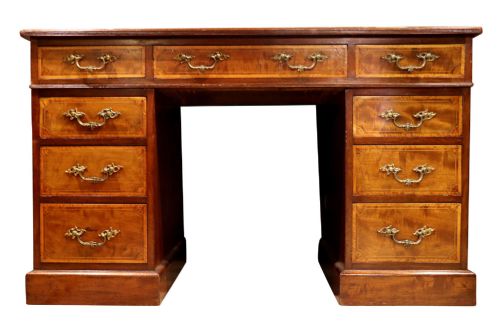
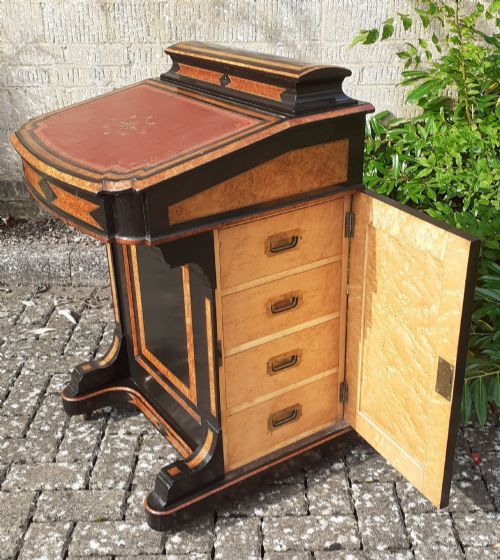
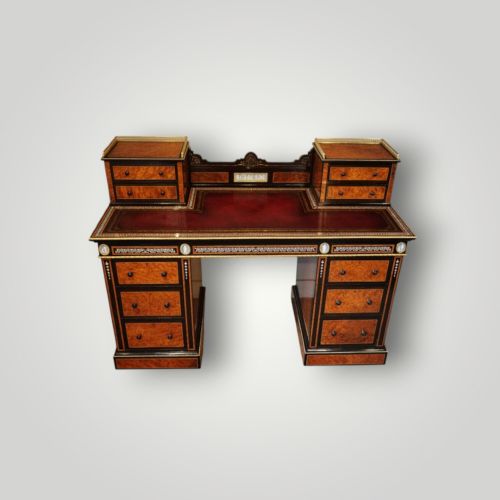
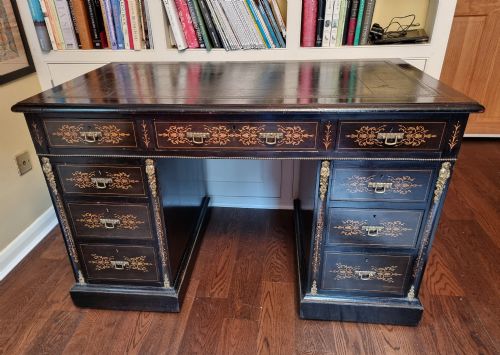
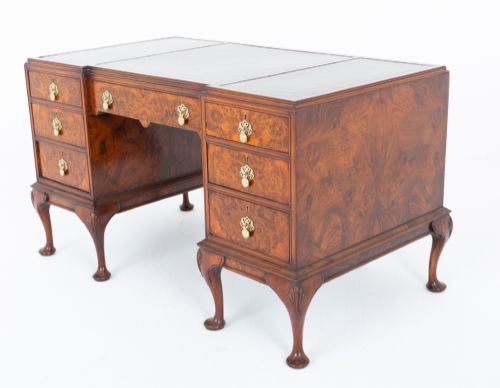
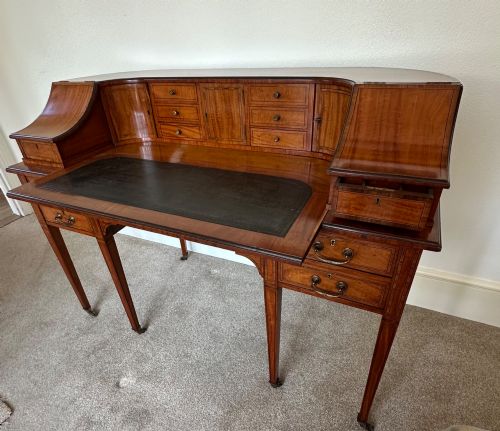
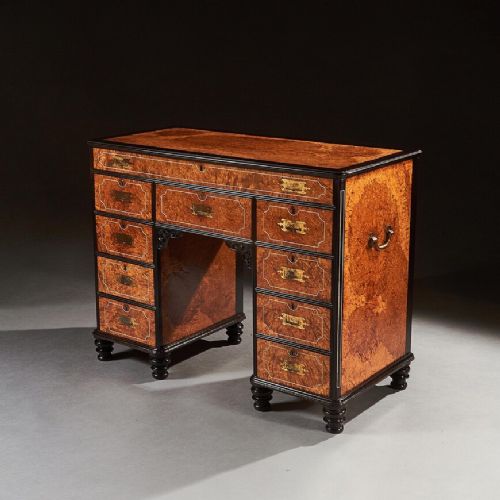
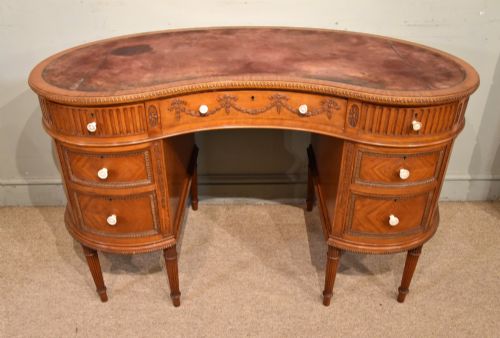
Beyond the plain writing table, the recurring forms are the davenport, with its sloping lid over a bank of side drawers, and the pedestal or kneehole desk. Kidney-shaped tops and Carlton House desks with their raised curved superstructures make up smaller groups, both weighted toward the upper end of the range.
Dating is looser than it looks. The dated field runs from 1800 to 1930, but only around half the listings carry a clean year; sixty-five are given simply as "19th Century", and "Victorian" or "Edwardian" often stands in for a date. Later pieces include 1930s French marquetry kneeholes and an Art Deco amboyna and satinwood desk.
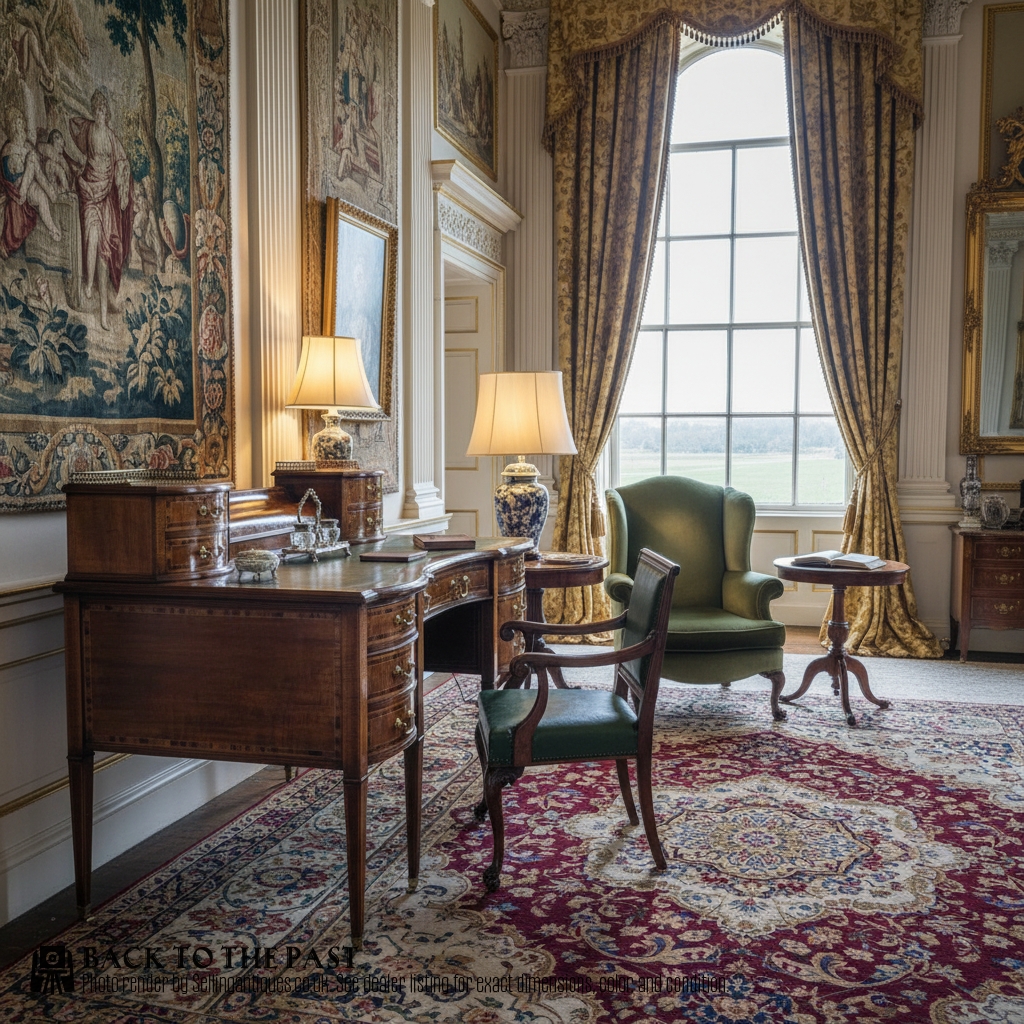
Top And Bottom
Timber does most of the work. Satinwood behaves like a top-of-the-range signal, appearing in only a few dozen titles but turning up again and again on the Carlton House and kidney desks at the upper end, often alongside kingwood, amboyna and burr and figured veneers. Plain mahogany, oak and walnut sit at the other end.
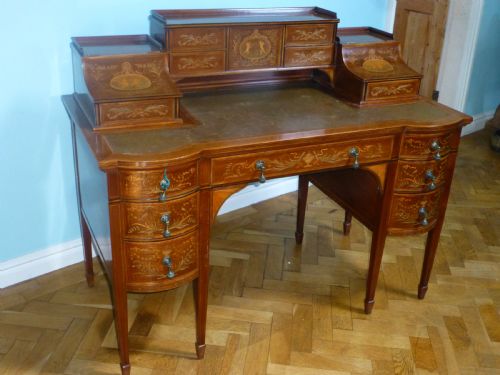
Then the extent of the inlay. Full marquetry concentrates in the dearer half of the range, while an unqualified "inlaid" and simple crossbanding and stringing round panels and edges dominate the cheaper listings. Form pulls in the same direction: Carlton House, partners and kidney desks cluster high, small ladies' desks and four-drawer davenports fill the lower band.
Two smaller things move a desk up. A named cabinet-maker, whether stamped, labelled or only attributed, sits well above the middle of the range. So does a desk finished on all sides and meant to stand free in a room rather than against a wall, a phrase used repeatedly in the upper listings.
Retail Price Guide 2026
Typical UK retail prices for inlaid desks, calculated from the Sellingantiques database of over a million retail prices indexed since 2003. This retail price guide relies exclusively on Sellingantiques data; no external sources or auction records are used, so the figures do not describe the wider market.
Edwardian is the period label used most on Sellingantiques for inlaid desks, with 1900s next and Victorian third.
Edwards & Roberts·Maple & Co·James Shoolbred
The Antique Inlaid Desks Glossary
- Inlaid
- Decoration set flush into the surface rather than applied on top or cut into it. The whole category turns on this rather than on carved ornament.
- Crossbanding and stringing
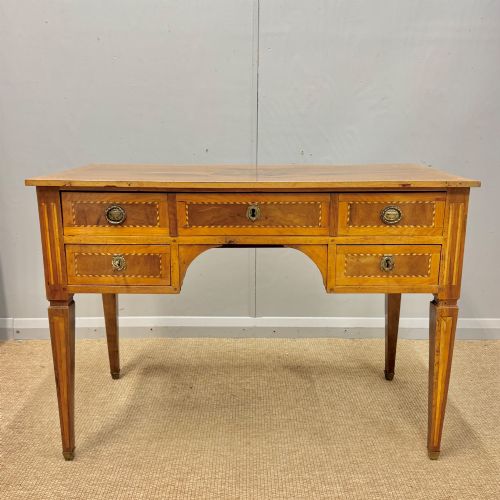
- Narrow contrasting borders and fine lines of inlay run round panels and edges. The commonest form of decoration at the cheaper end of the range.
- Marquetry
- Inlay built up from shaped pieces of veneer to form a pattern or a picture. Named in around fifty titles and weighted toward the dearer half.
- Davenport
- A small desk with a sloping lid over a bank of drawers down one side. Ninety-odd titles, often in burr walnut, some with a pop-up or piano top.
- Pedestal desk
- A top carried on two banks of drawers, sometimes written as twin pedestal or partners. The kneehole desk is the flat-topped relation, with a recessed centre for the sitter's legs.
- Carlton House desk
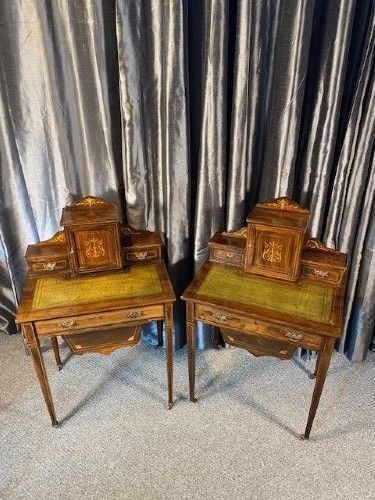
- A writing table with a raised curved superstructure of drawers around the back and sides. Written five different ways across these titles, including Carleton House and Carlton style.
Frequently Asked Questions
What wood are inlaid desks usually made from?
Mahogany accounts for very nearly half the titles on Sellingantiques. Walnut, rosewood and satinwood follow, and between them come to about the same number again.
Rarer veneers and carcase woods appear in single listings: amboyna, thuya, kingwood, partridgewood, maple and pitch pine. Ivory, mother-of-pearl, brass and bronze all show up as inlay materials in one title each.
Are inlaid desks Georgian?
Only a handful are. Georgian appears in about fifteen listings, against well over a hundred each for Edwardian and Victorian, and the 1900s are the busiest decade in the dated field.
The category is best read as late 19th and early 20th century writing furniture that revives late 18th century taste, with Sheraton Revival named in a couple of dozen titles.
What is a davenport desk?
A small desk with a sloping writing lid over a bank of drawers set into one side. Around ninety appear in this category, an eighth of the whole.
Burr walnut is the recurring timber, and several titles pair a davenport with four drawers or with a pop-up or piano top. They sit in the lower band of the range.
How common are inlaid desks on Sellingantiques?
About sixty-seven come up in a year, and 146 different dealers have handled one.
That spread matters. This is a form carried thinly across a very large part of the trade rather than the speciality of a few dealers.
Why do some listings only say 19th century?
Sixty-five listings are dated that way with no closer year, so roughly one in ten pieces is placed within a century rather than a decade.
Period words do similar work. "Victorian" and "Edwardian" stand in as dates in many titles, and a few listings pair a period word with a year that does not quite match it.
Which forms sit at the top of the range?
Carlton House desks, partners desks and kidney-shaped tops cluster in the upper listings, frequently in satinwood.
The Carlton House form is spelled five ways across these titles, and one listing offered a pair of them together, which almost never happens.