

Antique Carved Desks
Writing furniture of the 19th and early 20th centuries with carving worked into the carcase: pedestal and kneehole desks, davenports and flat writing tables, made to be looked at as well as written on.
Antique Carved Desks
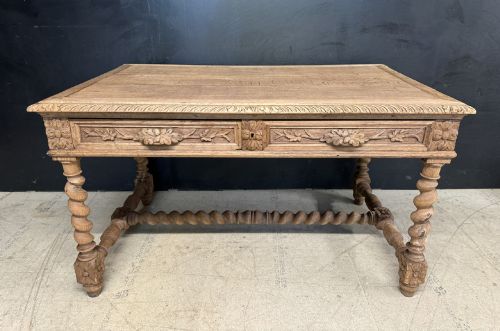
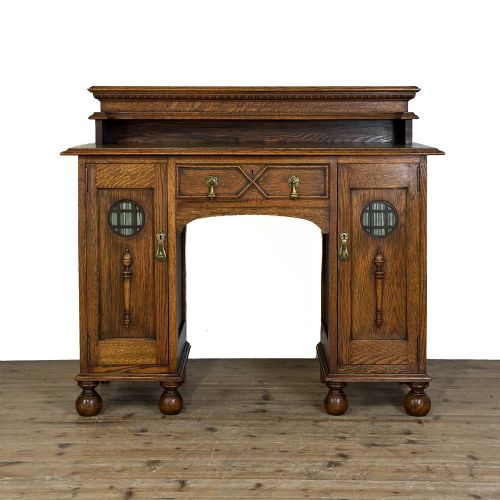
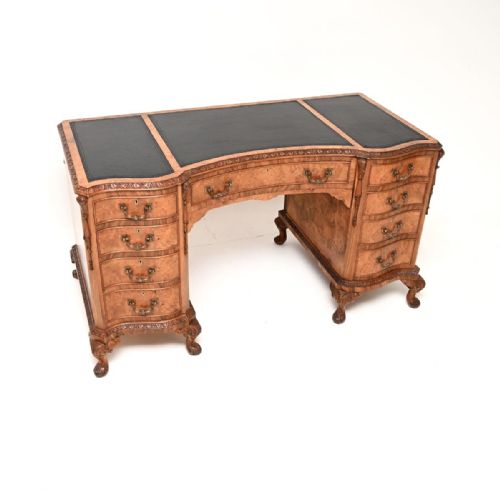
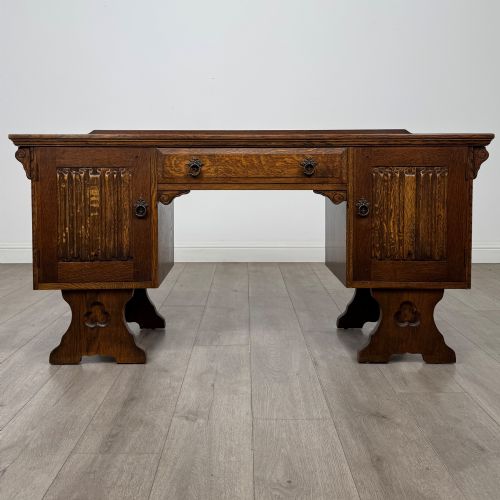
The word "carved" is the heading, not a measure of how much carving there is. Listings run from plainly titled oak pedestal desks through to profusely carved Anglo-Indian and Japanese work. What holds them together is a carcase that carries applied or relief decoration rather than a plain veneered face.
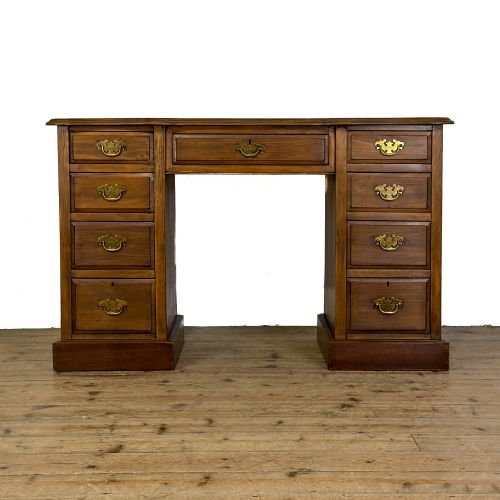
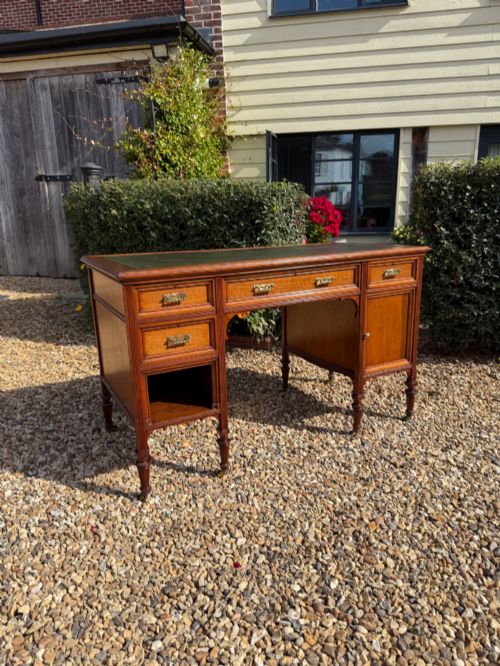
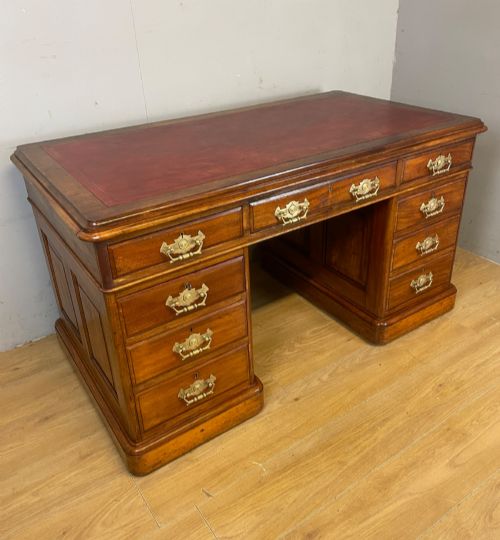
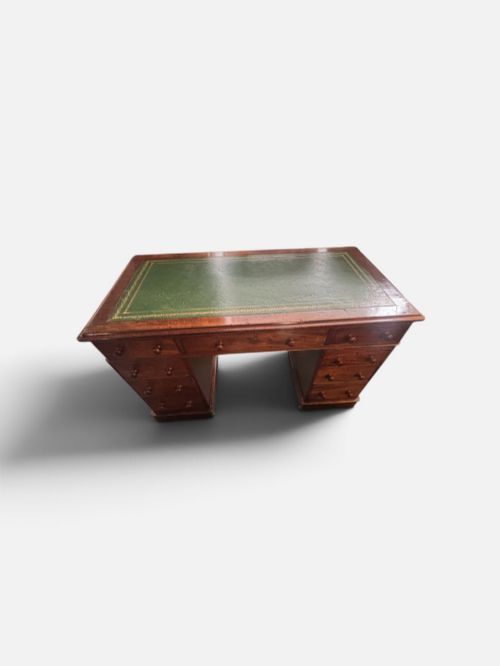
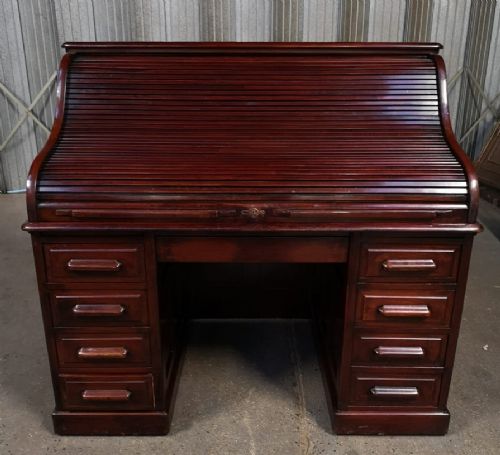
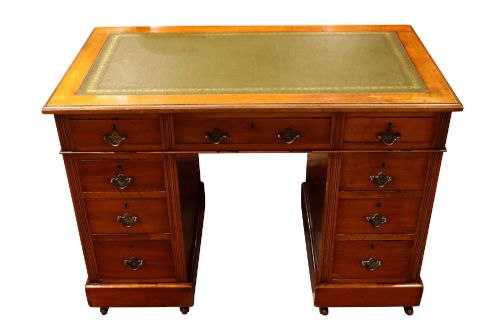
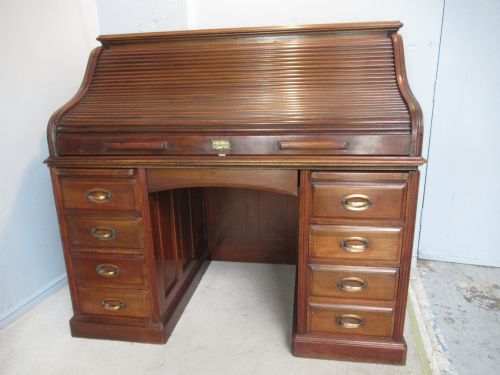
The form you'll meet most often is a Victorian pedestal desk in oak, walnut or mahogany. "Pedestal" turns up in around a quarter of titles and "Victorian" in over a third. The writing surface is more often left unnamed than described, with leather appearing in only a small fraction of titles. Kneehole desks and double-sided partners desks fill out the same branch.
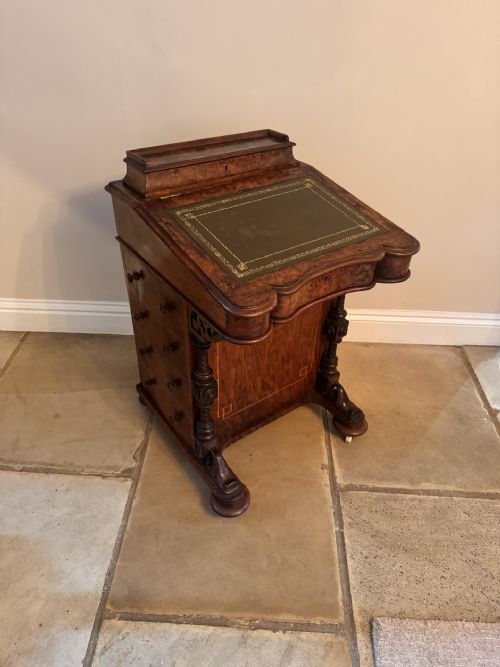
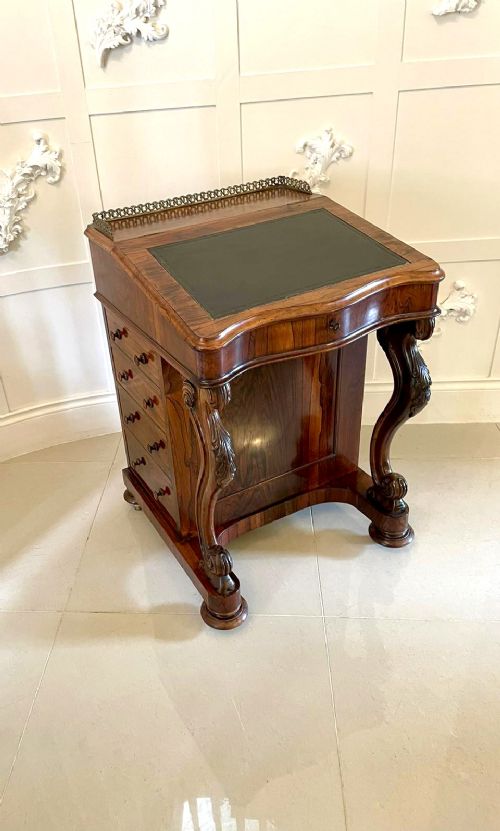
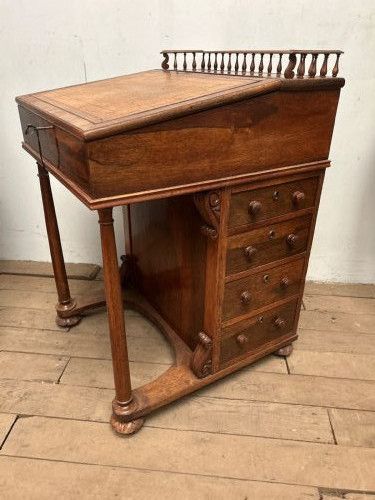
Davenports make up about a sixth of the category, most of them walnut, some with a pop-up or piano-top stationery compartment behind the slope. Writing tables and flat writing desks account for roughly a fifth. A smaller run covers revival and imported work: Chippendale-style, Gothic, French, and carved pieces from China, Japan and colonial India.
Dealer-entered dates run from 1750 to 1930, and fewer than half the listings carry a clean year, so a great many are placed to a decade or a reign instead. The 1880s, 1900s and 1890s are the busiest decades. Georgian and 18th-century kneehole desks appear, along with two entries dated before 1700, but they sit well outside the main run.
What Separates Them
Carving is the first divider. Titles that bother to specify it, heavily carved, elaborately carved, profusely carved, or that name a subject such as a lion's mask or cherub, sit well above the plainly titled carved oak desk. The Green Man foliate mask is the one carved subject that recurs across the category, named in a couple of dozen titles and almost always on oak.
Timber and figure do the rest of the work at the top. Burr walnut is the most-named surface after the plain timbers, and figured walnut, satinwood, padauk and pollard oak sit high; plain oak and pitch pine anchor the other end. Oak is the archive's signature timber across past listings on Sellingantiques, though it is a much smaller share of current stock.
Form and outline matter as much as decoration. Double-sided pieces run highest, partners desks, twin-pedestal and serpentine or kidney-shaped tops among them, while small single-pedestal and three-drawer oak desks sit at the bottom. A named maker or retailer in the title lifts a piece into the upper half of the range.
Antique Carved Desks Retail Price Guide 2026
Typical UK retail prices for carved desks, calculated from the Sellingantiques database of over a million retail prices indexed since 2003. This retail price guide relies exclusively on Sellingantiques data; no external sources or auction records are used, so the figures do not describe the wider market.
Gillows is the name that turns up from the most dealers on Sellingantiques in this category, with Edwards & Roberts behind it.

Gillows·Edwards & Roberts
The Antique Carved Desks Glossary
- Pedestal desk
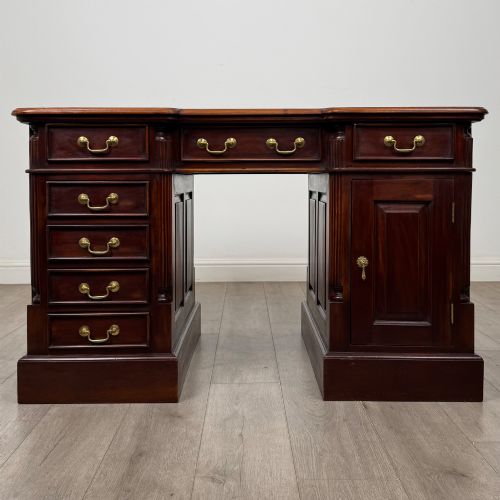
- Freestanding desk with a bank of drawers or a cupboard at each side of the knee space. It is the single most common form named in this category.
- Kneehole desk
- Desk with a recessed central opening for the sitter's knees, often built as one piece rather than three. Some dealers write it as two words, knee hole.
- Partners desk
- Double-sided desk fitted for two people working face to face, so both sides carry drawers. Named in a good number of titles and consistently among the larger pieces.
- Davenport
- Small desk with a sloping lid over a bank of side drawers. Walnut examples dominate, and a pop-up or piano top means a stationery compartment that rises behind the slope.
- Burr walnut
- Figured veneer cut from a burr growth on the tree. After the plain timber names it is the surface mentioned most often in titles.
- Three-part
- A pedestal desk that lifts apart into a top and two pedestals for moving. Dealers sometimes shorten it to 3 part.
Antique Carved Desks: Frequently Asked Questions
What timber are carved desks usually made from?
Oak, walnut and mahogany carry the category between them, and one of the three is named in the title of most listings. Oak leads across the sold archive on Sellingantiques.
Burr walnut is the figured surface named most often. Satinwood, padauk and pollard oak appear in smaller numbers, and pitch pine turns up at the plainer end.
How old are most carved desks?
Dealer-entered dates run from 1750 to 1930. Victorian is the single largest label, with a further block given only as 19th century.
Much of the rest is placed to a decade, the 1880s, 1900s and 1890s being the fullest. Edwardian pieces appear in modest numbers, and a handful of Georgian and pre-1700 entries sit at the far edge.
Do carved desks always have a leather top?
No. Leather is named in only a small fraction of titles, so the writing surface is more often left unstated than described.
Where it is mentioned, it is an inset panel and occasionally tooled.
What is a Green Man desk?
A desk carved with the Green Man, a foliate mask used as decoration. It is the one carved subject that recurs across this category, named in a couple of dozen titles.
These are almost always oak, and they appear far more often in the sold archive than among desks currently listed. The evidence names the motif and nothing about who cut it.
Which carved desks are the largest?
The double-sided ones. Partners desks and twin-pedestal forms are consistently the biggest pieces in the category, along with serpentine and kidney-shaped tops.
Small single-pedestal desks and three-drawer oak desks sit at the other end. Titles rarely carry measurements, so size is usually read from the form named.
Are unusual or imported carved desks found in this category?
Yes, in a modest minority. Anglo-Indian, Chinese and Japanese carved desks turn up, along with French and Gothic revival work and Chippendale-style pieces.
One-offs include a Japanese yosegi cylinder desk, a faux-bamboo partners desk, a folding Chinese hardwood desk and a bible box reading slope on a stand. Two samples pair a Japanese carved hardwood desk with its original chair.