

Antique Edwardian Desks
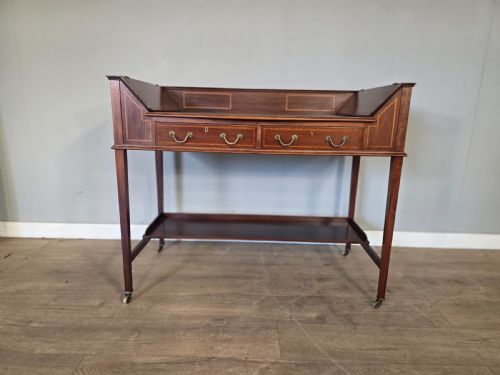
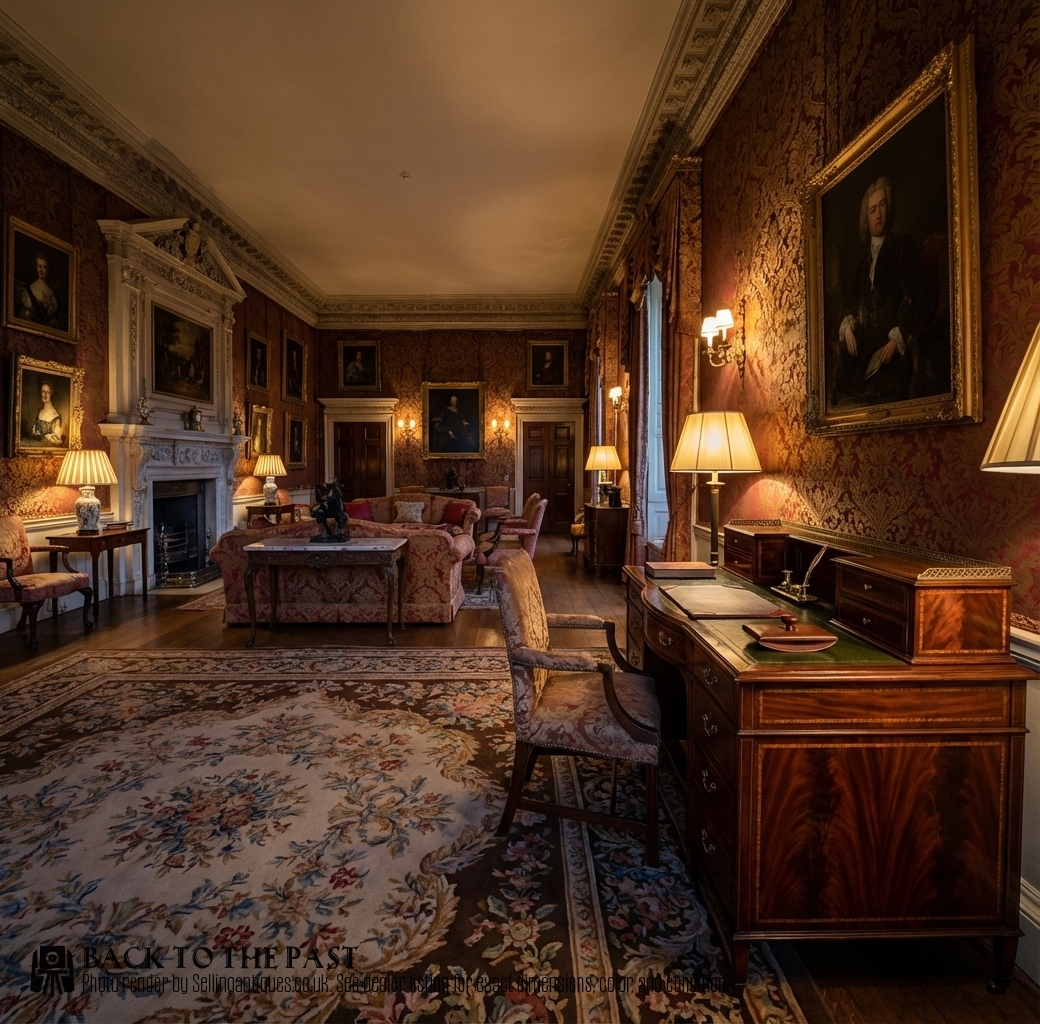
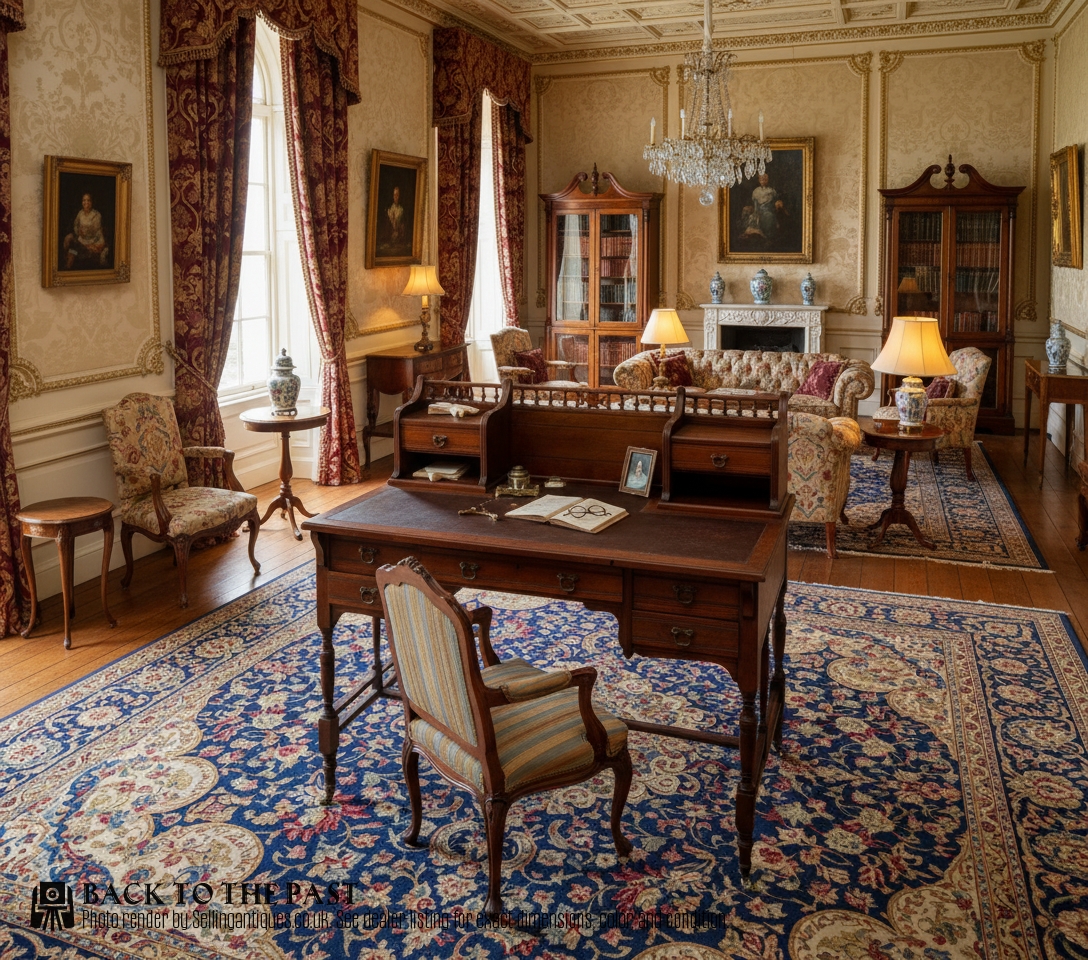
Free-standing writing furniture from the Edwardian years and its edges, made for studies, offices and drawing rooms, and most often a mahogany desk with drawers either side of a kneehole.
What They Are
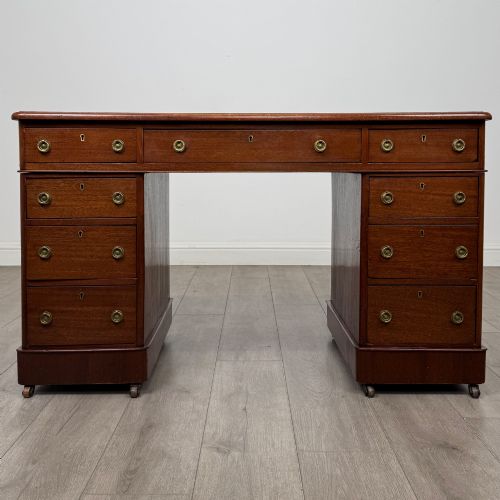
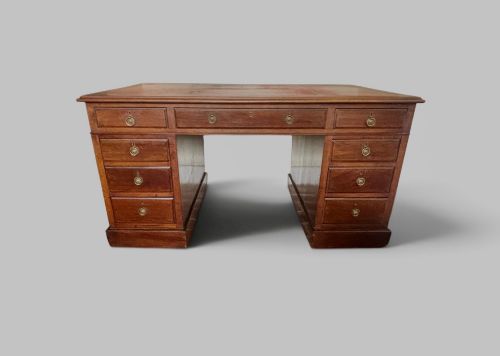
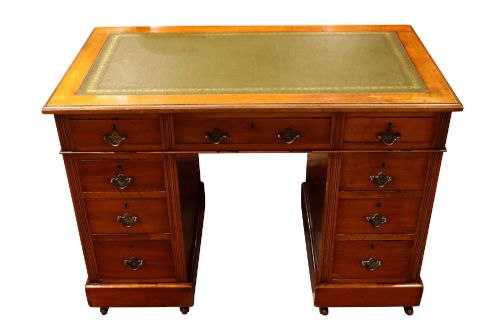
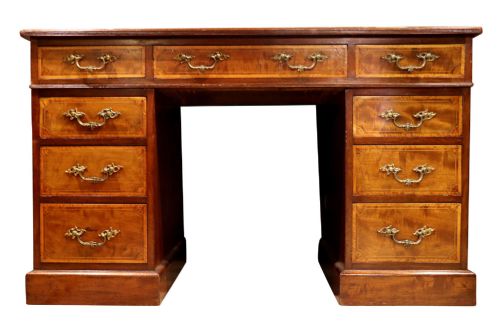
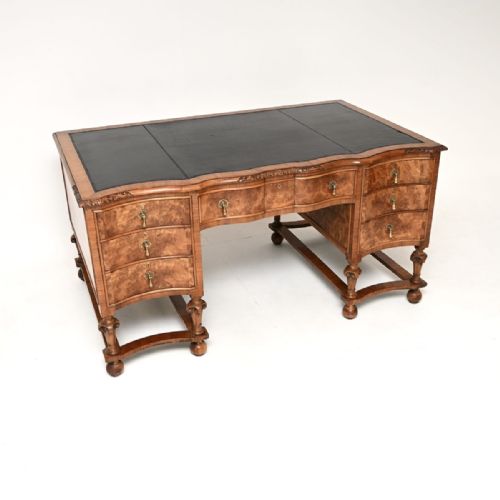
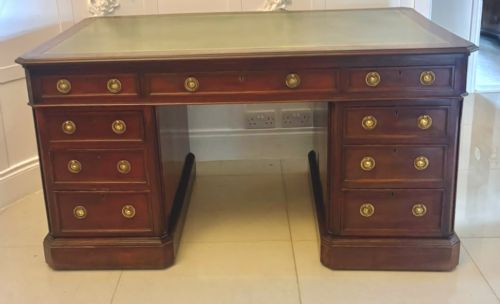
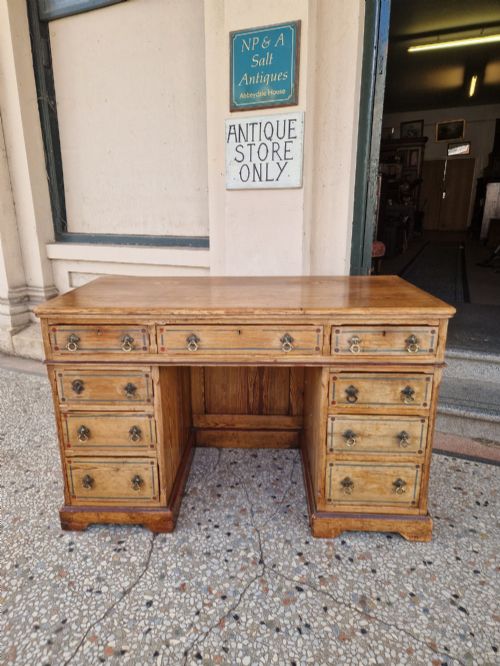
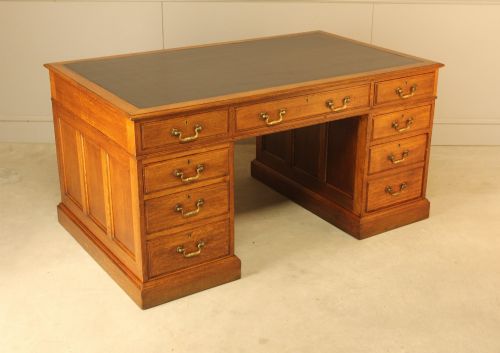
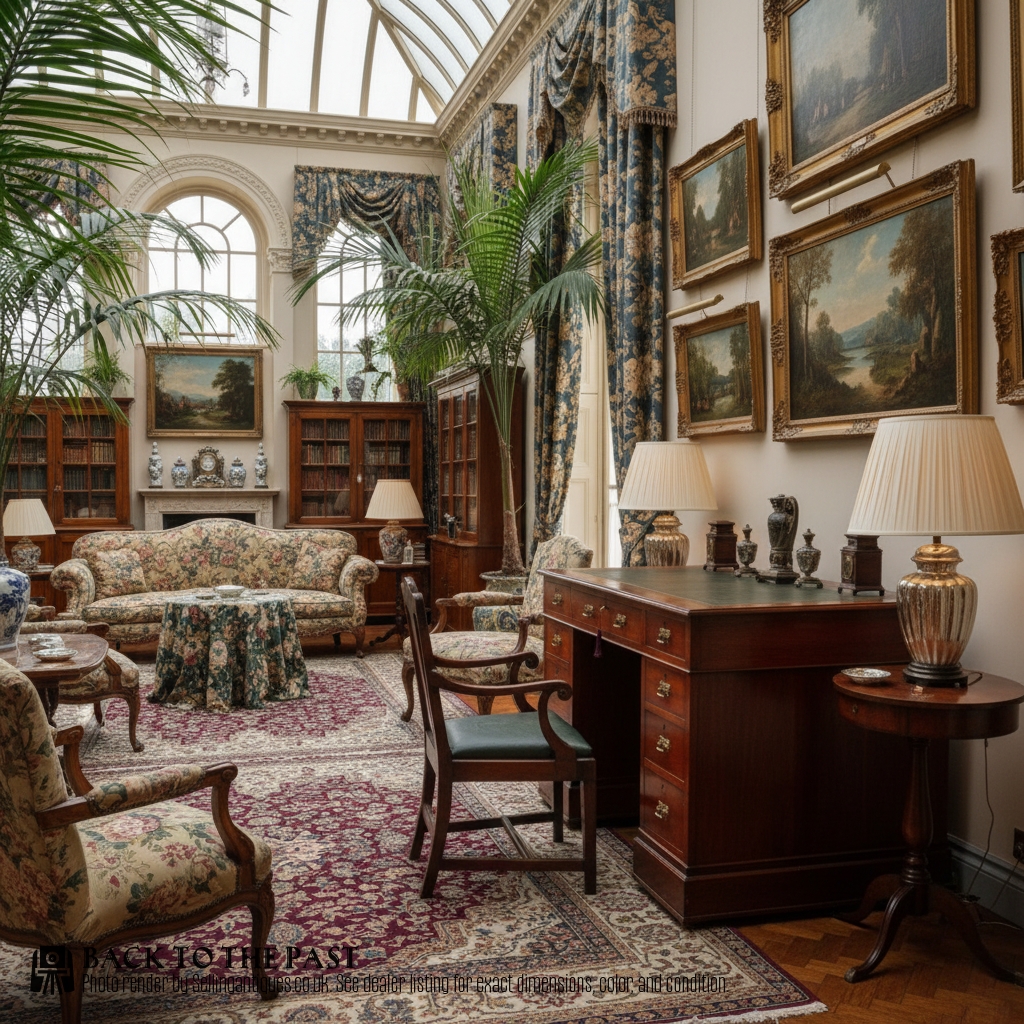
Mahogany dominates: it's named in 533 of 1,113 titles, with oak second and walnut a clear third. The version you'll meet most often is a pedestal or kneehole writing desk, a top carried on one or two banks of drawers with a recessed space for the sitter's legs. "Pedestal" alone appears in 305 titles, and "twin pedestal" in 39.
Inlay is a recurring note on these, named in around a fifth of titles, and an inset leather top turns up in a smaller share. Partners' desks, double-sided for two people, are named in 57 titles, and the biggest pieces recorded are of that kind: one quoted at 6ft by 4ft, another with eighteen drawers.
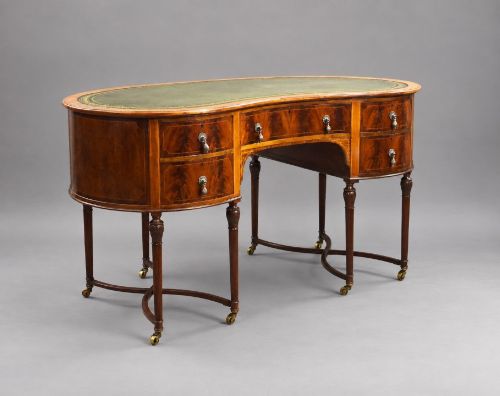
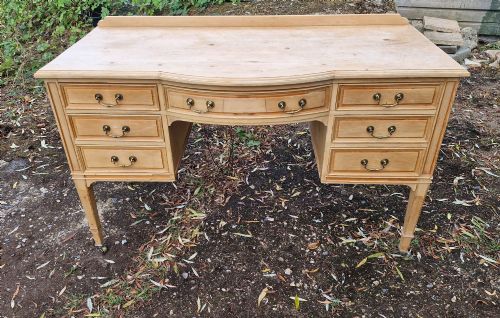
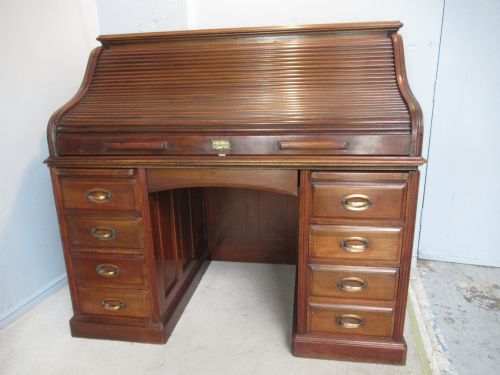
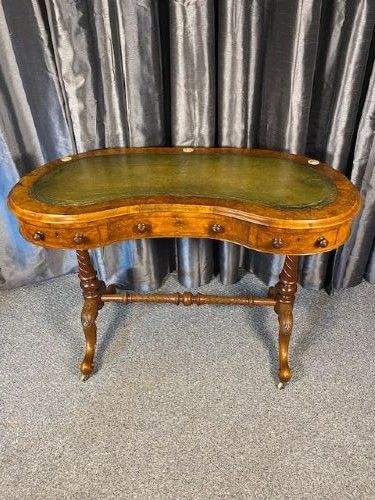
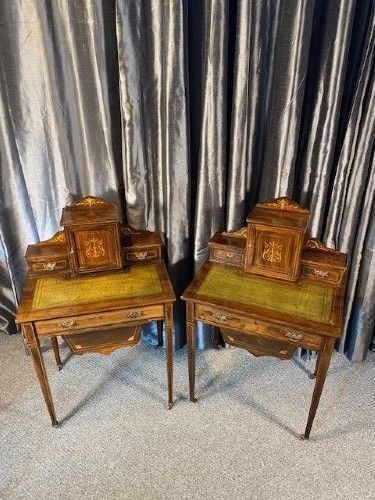
Beyond the pedestal form the heading takes in roll-top and cylinder desks, about one in ten, mostly oak and made for office work. Kidney-shaped desks and davenports each account for roughly one in twenty, Carlton House desks about the same, and ladies' writing desks, bonheurs du jour and plain writing tables fill out the rest, down to child's and clerk's desks.
The dating is broad. Dealers put 551 listings simply as "Edwardian", with more in the 1900s and 1910s, so the core sits in 1900 to 1919. The dated field as a whole runs 1800 to 1930, though, and titles mix labels freely, so "Edwardian" here often means style and character as much as reign.
The Range
Timber does most of the work. Plain oak and pitch pine kneehole and single-pedestal desks sit at the bottom of the range; satinwood, burr walnut, rosewood, amboyna and figured or flame mahogany occupy the upper end. Satinwood reaches the very top, and satinwood Carlton House desks are the highest-priced examples on Sellingantiques.
Decoration follows the same line but less predictably. Inlay is spread right across the category and turns up on modest desks as readily as good ones. It's marquetry, painted and hand-painted satinwood, and crossbanded satinwood that cluster at the highest prices.
Form and scale then separate the rest. Carlton House and kidney-shaped desks sit markedly above plain kneehole desks, and only about a tenth of what comes to market is one or the other. Drawer counts of nine, thirteen and eighteen, three-part construction and quoted dimensions all push upward, as does a maker's stamp, a stamped lock or a retailer's label.
Retail Price Guide 2026
Typical UK retail prices for edwardian desks, calculated from the Sellingantiques database of over a million retail prices indexed since 2003. This retail price guide relies exclusively on Sellingantiques data; no external sources or auction records are used, so the figures do not describe the wider market.
The most expensive Edwardian desk ever sold on Sellingantiques was a burr walnut bow front partners' desk, in April 2020.
Maple & Co·Edwards & Roberts·Gillows·Waring & Gillows·James Shoolbred
The Antique Edwardian Desks Glossary
- Pedestal desk
- A writing top supported on one or two banks of drawers. "Twin pedestal" means two of them.
- Kneehole
- The recessed space between the pedestals for the sitter's legs. Titles also write it "knee hole".
- Partners desk
- Double-sided, with drawers or cupboards on both faces, for two people working opposite each other.
- Roll top
- Closed by a slatted shutter that rolls back into the carcase. Sometimes called an S-shaped or low-back roll top, and the shutter itself is the tambour.
- Cylinder
- A solid quarter-round front that swings up to open, rather than a flexible tambour.
- Davenport
- Small sloping-topped desk with drawers to the side. "Pop-up" and "tilt top" versions have a rising stationery compartment.
Frequently Asked Questions
What wood are these desks usually made from?
Mahogany, in nearly half of all titles. Oak comes second and walnut third.
At the upper end you'll see satinwood, burr walnut, rosewood and amboyna, and at the lower end plain oak and pitch pine.
Which form turns up most often?
The pedestal or kneehole writing desk. "Pedestal" is in 305 titles and "kneehole" in another 70, with 28 more written as "knee hole".
Roll-top and cylinder desks are about one in ten. Kidney-shaped desks, davenports and Carlton House desks each account for roughly one in twenty.
Do they all have leather tops?
No. Leather is named in 75 titles, so it's a feature rather than the norm for the category.
Inlay is more widely spread, appearing in around a fifth of titles, with "inlaid mahogany" the commonest pairing.
How strictly is the Edwardian date used?
The core is 1900 to 1919, with 551 listings dated simply "Edwardian" and more given to the 1900s and 1910s.
Only 404 of the 1,113 listings carry a clean year, though, and the dated field runs from 1800 to 1930. Titles combine labels too, along the lines of "Late Victorian Edwardian".
What is a Carlton House desk?
A writing table with a raised, curved superstructure of small drawers running round the back and sides.
On Sellingantiques these are often paired with satinwood and Sheraton Revival in the title, and they sit at the top of the range.
Are named makers common in this category?
Not especially. A handful of firms recur, cited through makers' stamps, stamped locks or retailers' labels, and some pieces are only given as attributed.
Where a name is there, those desks sit well above the median for their form.