
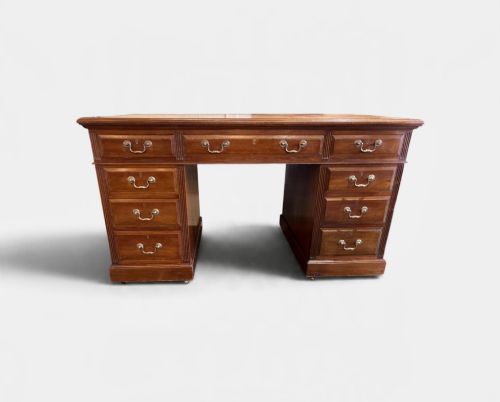
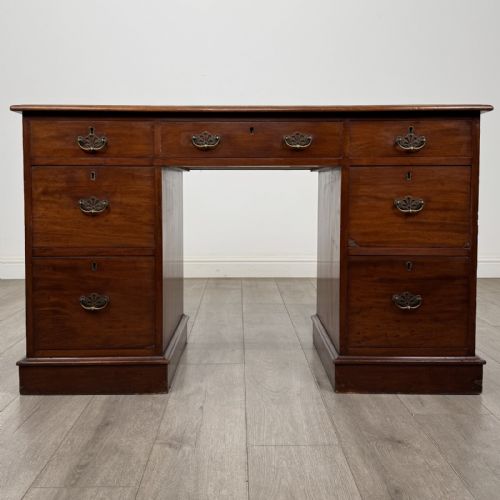
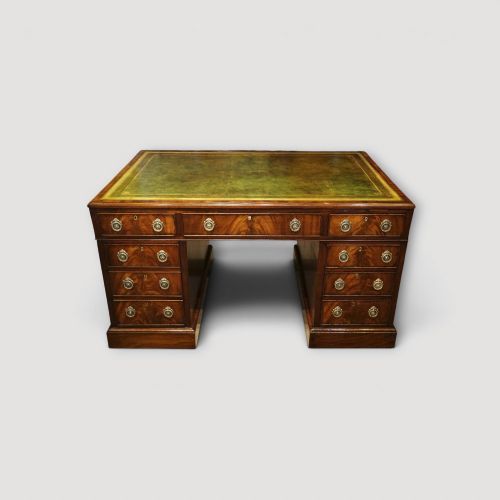
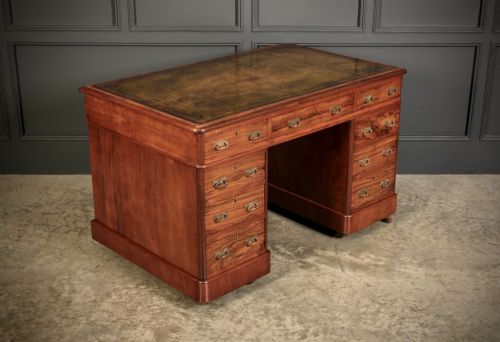
Executive Desk
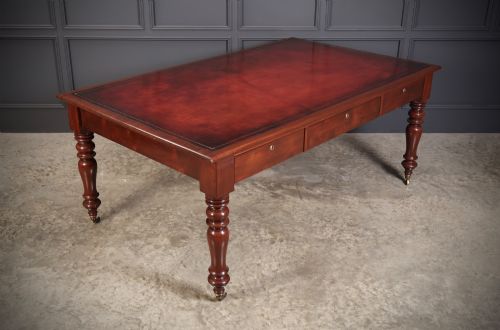
An executive antique desk delivers gravity to a room while offering a broad timber surface for correspondence and study.
Executive Desk
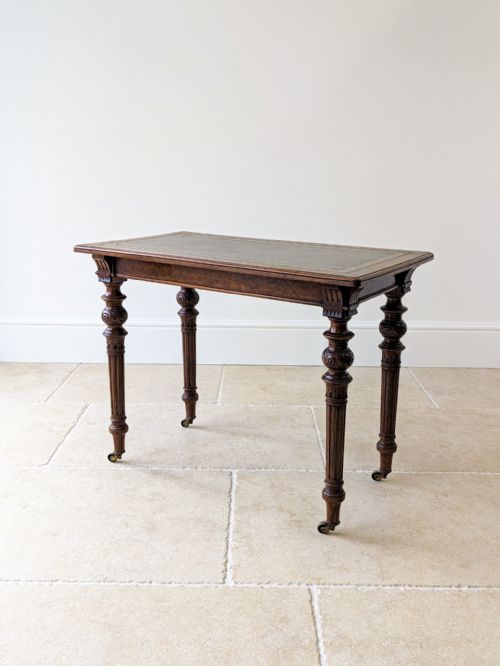
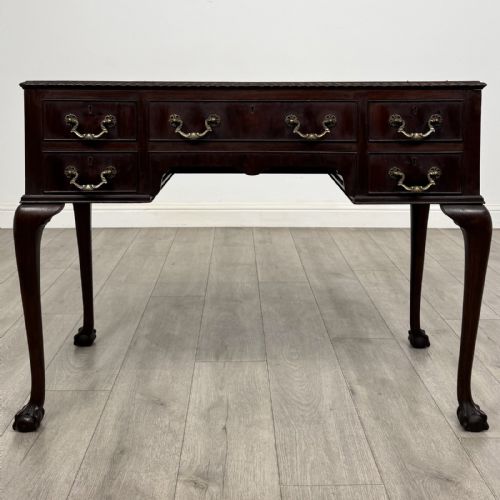
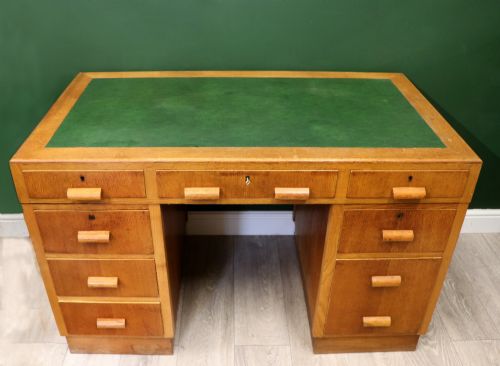
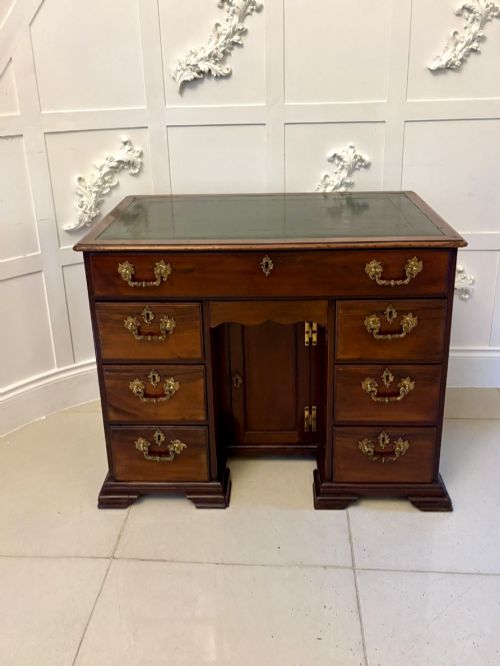
The selection spans from eighteenth-century George III kneehole models to robust Victorian and Edwardian iterations, interspersed with lighter Art Deco oak and walnut designs from the twentieth century. Alongside standard pedestal formats, the material evidence includes specialist writing tables, Carlton House desks, and bureau plats mounted with ormolu.
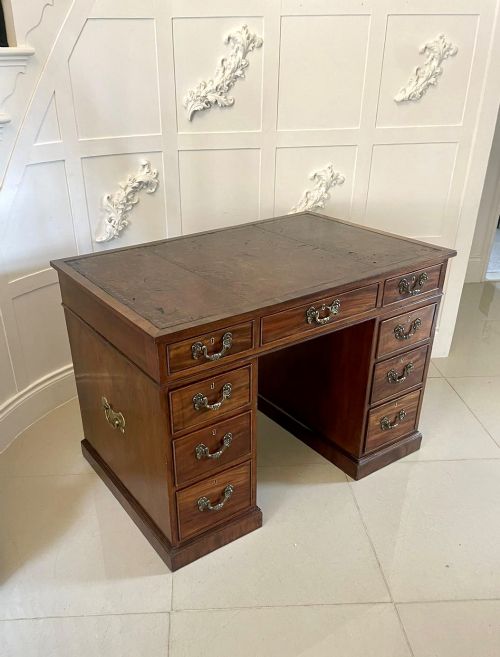
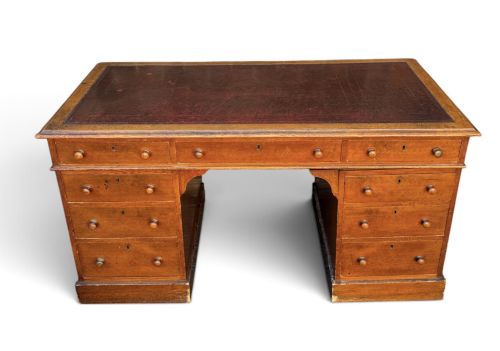
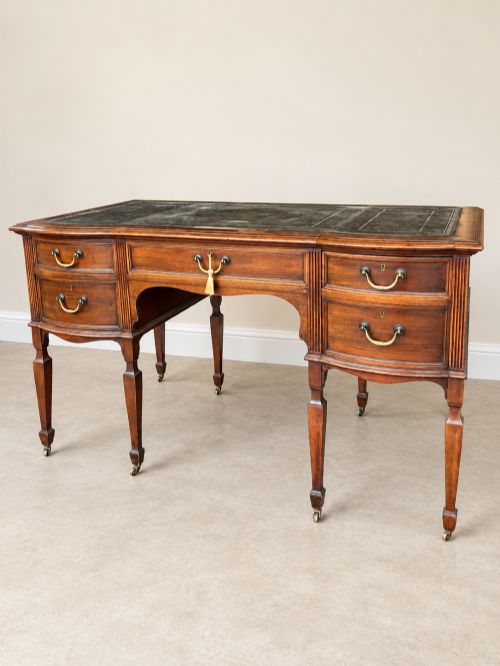
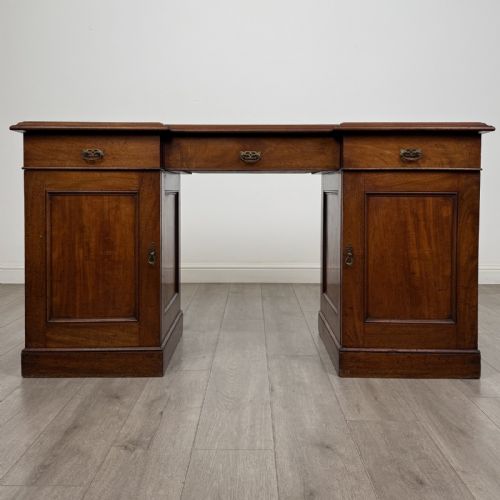
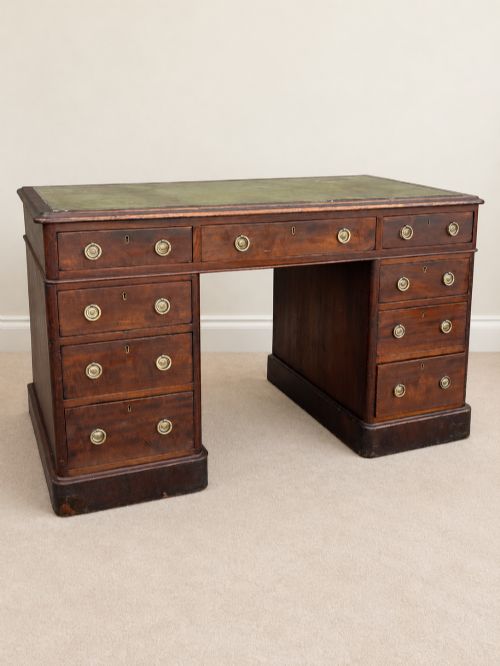
Victorian examples dominate the listings, frequently constructed in mahogany or walnut with inset leather writing surfaces and swan neck handles. Buyers also meet larger partners desks intended for shared workspace, alongside occasional French and Swedish regional interpretations utilising satin birch, kingwood, and parquetry.
Materials and construction
Cabinetmakers relied heavily on dense hardwoods such as mahogany, oak, and walnut, frequently selecting figured burr veneers, satinwood, and birdseye maple for decorative primary surfaces. Structural elements were joined using traditional dovetails for drawer construction and sturdy framing to support substantial top boards.
Writing surfaces were traditionally inset with tooled leather, whilst hardware components incorporated cast brass pulls, swan neck handles, and gilt bronze ormolu mounts. Finer pieces integrated specialised internal fittings including stationery drawers, writing slides, and secret compartments.
Some Victorian pedestal desks conceal pull-out writing slides and secret stationery compartments designed for private correspondence.
Judging execution
Quality reveals itself in the selection of timber figures, such as matched burr walnut or figured mahogany veneers that wrap continuously across drawer fronts. Superior execution appears in clean, tight dovetail joints, smooth drawer operation, and the presence of finished panelling that allows the desk to stand freely away from a wall.
Howard and Sons
The Executive Desk Glossary
- Pedestal desk
- A heavy writing desk comprising two supporting columns of drawers separated by a central recess for the user's legs.
- Partners desk
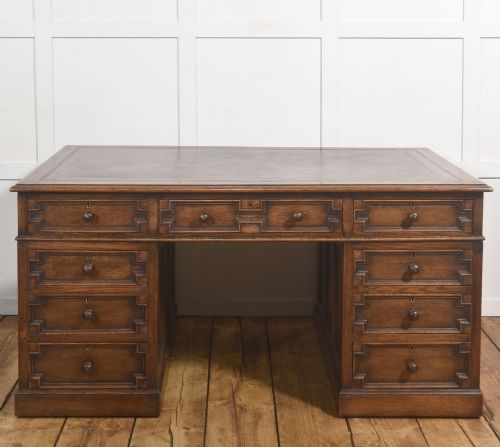
- A large freestanding desk designed for two people to work opposite one another, featuring opposing banks of drawers or cupboards.
- Ormolu
- Gilded bronze ornamentation applied to furniture, frequently found on French revival and nineteenth-century writing desks.
- Kneehole desk
- A compact writing desk featuring a central recessed space beneath the desktop, often flanked by narrow cupboards or stacks of drawers.
- Bureau plat
- A flat-topped French writing table, typically freestanding and fitted with one or more drawers beneath the writing surface.
Executive Desk: Frequently Asked Questions
What is a partners desk?
A partners desk is a large, double-sided writing table designed with drawers and cupboards accessible from both front and back. This configuration allowed two individuals to sit and work opposite each other in a library or study.
Such pieces are typically freestanding and finished in high-grade timber across all visible elevations, making them central statement furniture for large rooms.
How do I date a pedestal desk?
Dating relies on examining construction methods, timber choices, and hardware styles alongside overall architectural proportions. Earlier eighteenth-century models show finer dovetailing and bracket feet, while Victorian examples often utilise heavier mahogany proportions and brass swan neck handles.
Twentieth-century Art Deco pieces introduce lighter oak or figured walnut treatments with streamlined profiles distinct from nineteenth-century revival styles.
Can these desks stand in a room centre?
Many pedestal desks and partners tables are designed to be freestanding, meaning the rear side is panelled and finished to match the front. This allows placement away from walls without exposing unfinished timber or raw secondary woods.
Listings specifically note freestanding or breakfront formats when a piece is intended to be viewed from all angles within an interior.
What woods were used for these desks?
Cabinetmakers predominantly utilised dense timbers including mahogany, oak, and walnut for primary structural elements. Decorative surfaces frequently featured figured veneers such as burr walnut, satinwood, and birdseye maple.
Regional European pieces also incorporated exotic timbers like kingwood alongside marquetry and parquetry geometric inlay patterns.